
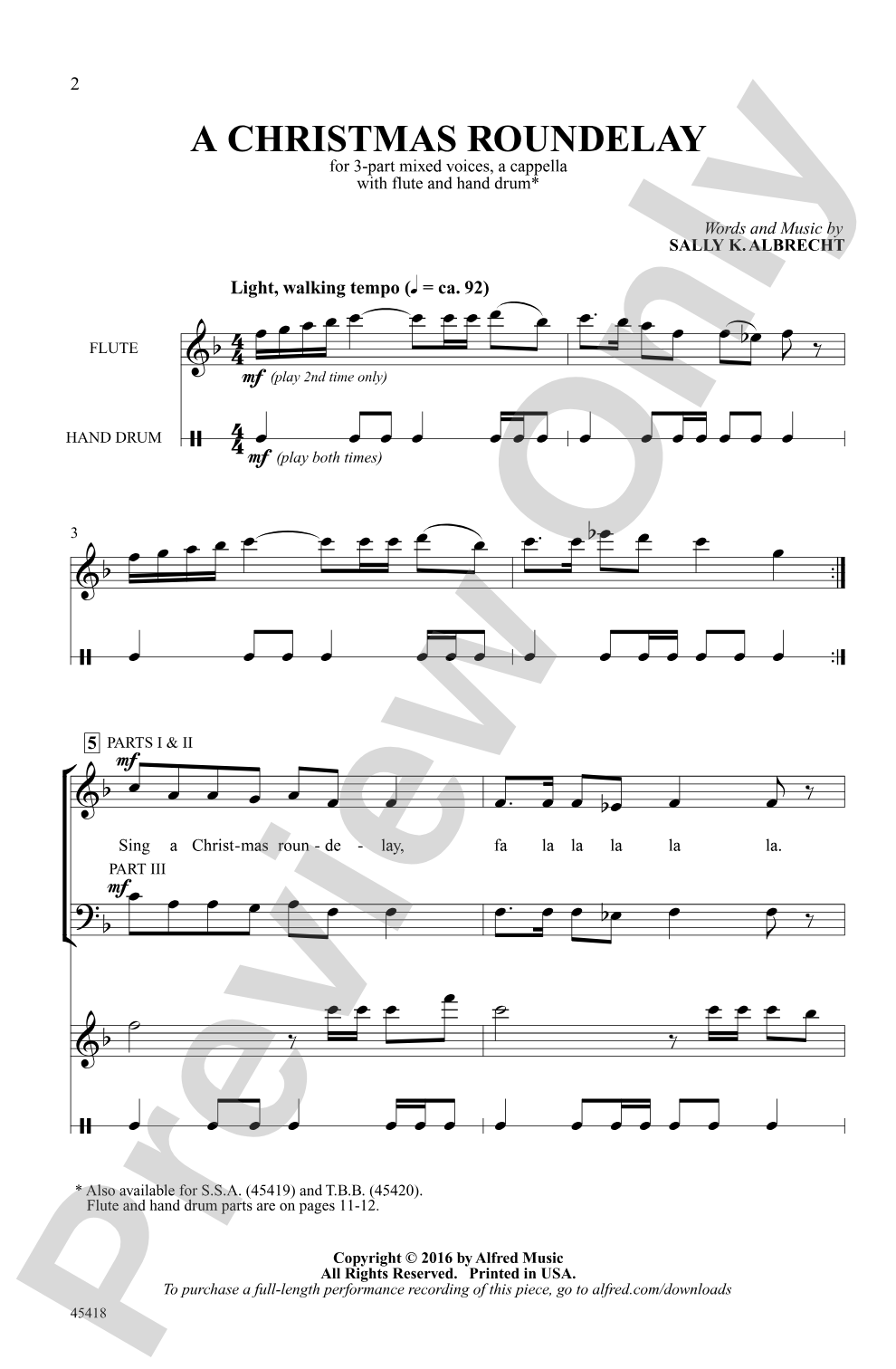
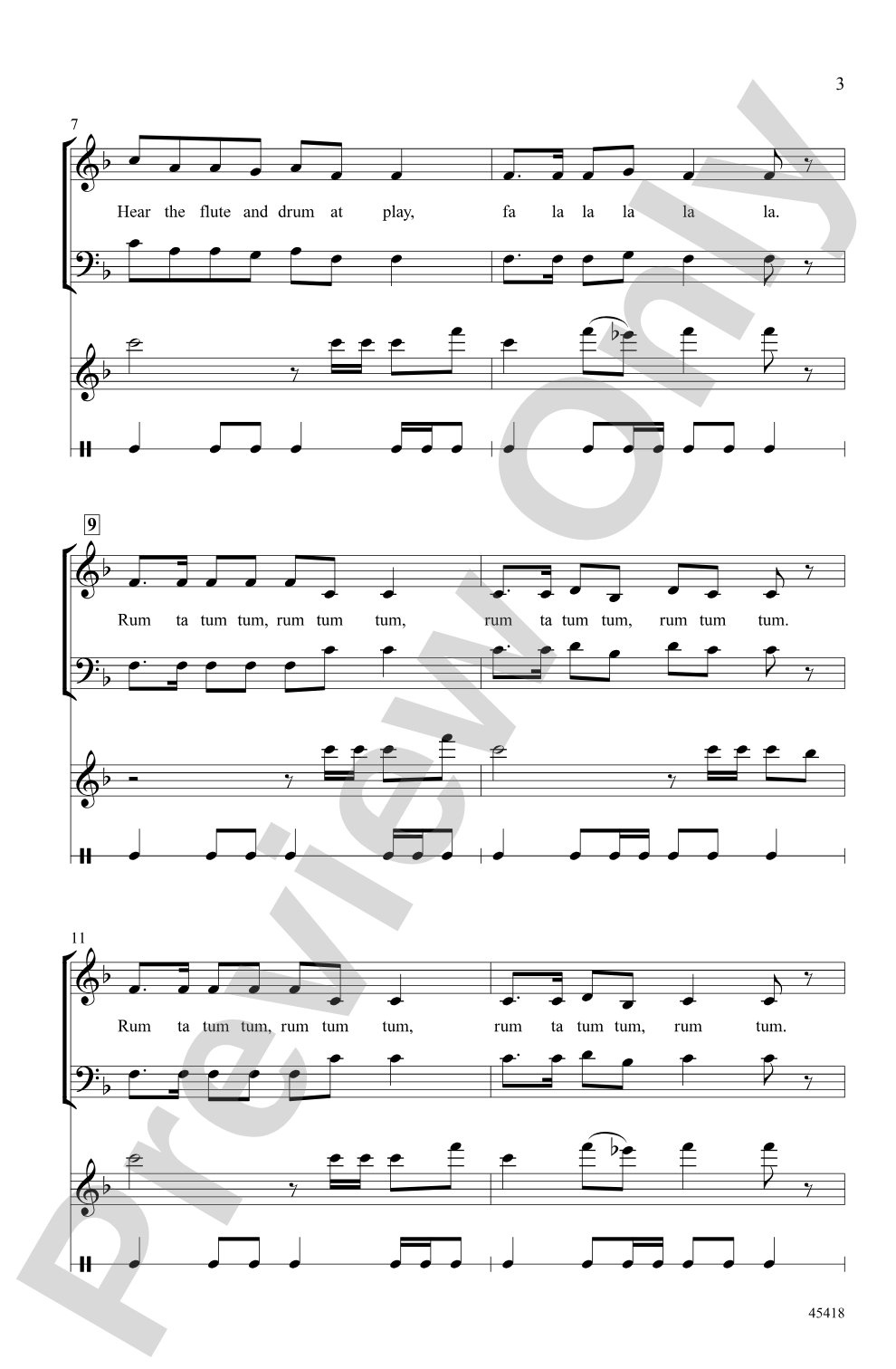
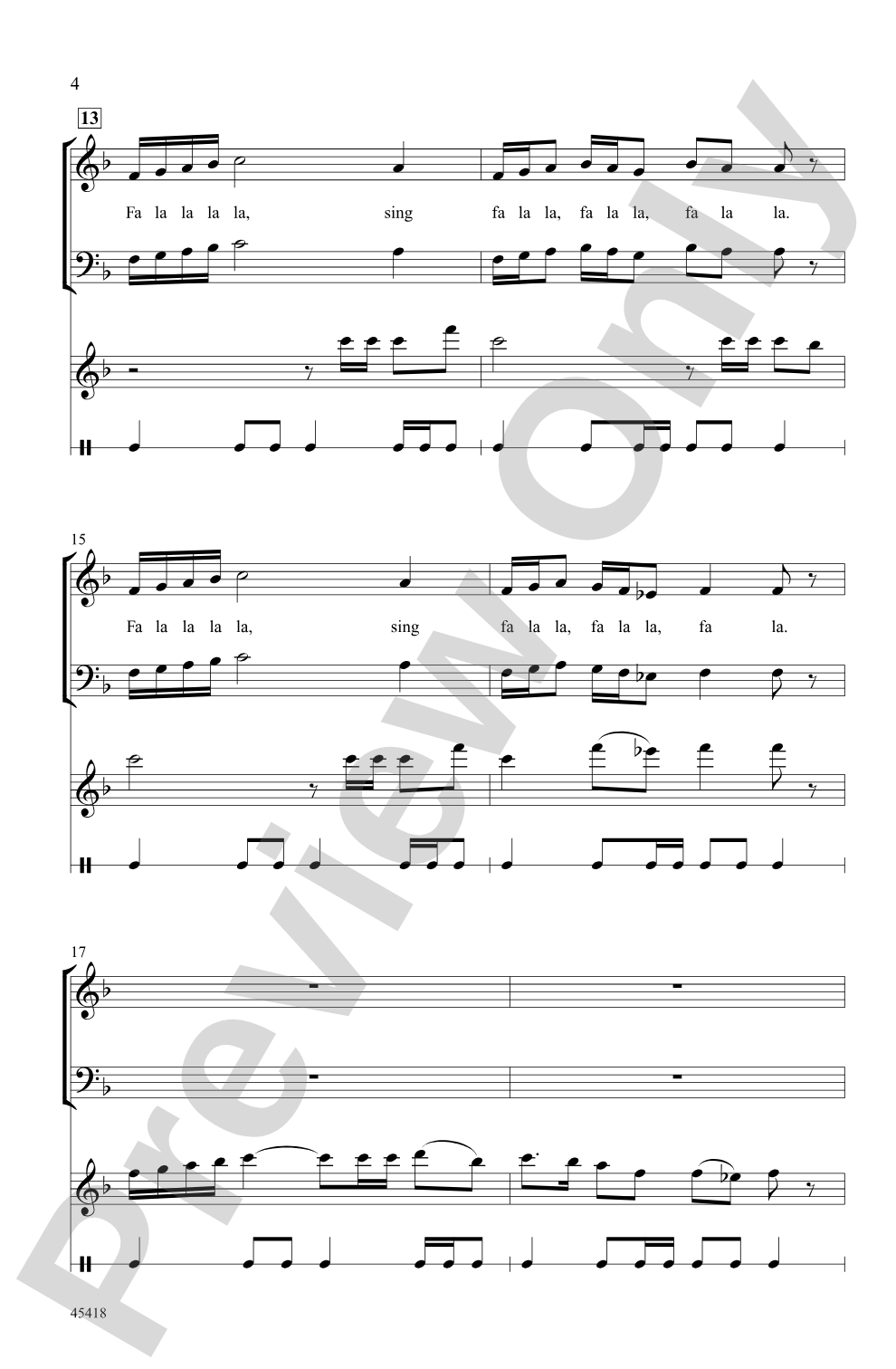

A Christmas Roundelay: 3-Part Mixed, a cappella Choral Octavo
Words and music by Sally K. Albrecht
Item: 00-PO-0003661
$2.05
Minimum order quantity: 20 copies
Pickup currently not available
Related Items
A Christmas Roundelay: SSA, a cappella Choral Octavo |
$1.90
|
View | |
A Christmas Roundelay: TBB, a cappella Choral Octavo |
$1.90
|
View | |
A Christmas Roundelay: 3-Part Mixed, a cappella Choral Octavo |
$2.05
|
View | |
A Christmas Roundelay: SSA, a cappella Choral Octavo |
$1.90
|
View | |
A Christmas Roundelay: TBB, a cappella Choral Octavo |
$1.90
|
View |
Description
A mixolydian melody becomes the foundation for this stately three-part canon with madrigal style counterpoint. Festive flute and hand drum parts add a Renaissance music touch to a piece with only 12 bars of singing to teach. Ideal for processionals, madrigal feasts, or as a concert opener.


A Christmas Roundelay: 3-Part Mixed, a cappella Choral Octavo isn't in MakeMusic Cloud just yet...but it could be. Let us know you'd like to see it, and you'll help shape what comes next. In the meantime, start a free trial and dive into thousands of interactive titles your students can play along with today.
Request This Title
Tell us you want it.
Start Your Free Trial
Explore everything that's ready to play right now.
Sample Audio
1
Audio File
--:--
0:00
0:00
Sample Video
Additional Details
Series:
Alfred Choral Designs
Publisher:
Alfred Music
Page Count:
12
SKU:
00-PO-0003661
Instrumentation:
Flute & Hand Drum
More about this title
About the Composer: Sally K. Albrecht

Sally K. Albrecht has shaped choral music education for over thirty years, first as Director of School Choral, Vocal, and Elementary Publications at Alfred Music and before that at another major educational publisher. Her catalog includes more than 600 choral works and 75 larger musicals and songbooks currently in print, making her one of the most widely performed contemporary choral composers in schools.
Albrecht's contributions to choral pedagogy have been recognized consistently since 1987 with annual ASCAP Special Music Awards. She has guest-conducted honor choirs at prestigious venues including Lincoln Center, Carnegie Hall, and The Kennedy Center. She earned her B.A. from Rollins College (Florida) in Music and Theater, followed by graduate degrees from the University of Miami: an M.A. in Drama and an M.M. in Accompanying. Albrecht has taught at Oakland University (Michigan), Jersey City State College (New Jersey), and Meredith College (North Carolina). She currently resides in Wake Forest, North Carolina, with her husband, composer and arranger Jay Althouse.
Why we love this
The Renaissance flavor here comes through genuine musical choices, not decoration. Albrecht frames a mixolydian melody as the heart of a three-part canon with real madrigal-style counterpoint, and the optional flute and hand drum parts expand the character without overwhelming a compact 12-bar singing section. This piece opens concerts with sophistication and finishes quickly, leaving audiences wanting more.
What to expect
Stately and festive at once, with a touch of Old English ceremony. The mixolydian mode gives it a folk-like warmth while the three-part canon creates gentle layering and motion. Add the flute and hand drum, and the whole piece steps into a Renaissance fair, but the restraint and brevity keep it elegant rather than theatrical.
Who it's for
Choirs with mixed voices and limited rehearsal time will find this especially useful. The short singing duration makes it accessible for groups building a holiday program without extensive staging, yet the madrigal writing and optional instrumentation give it enough musical substance for experienced singers.
How to get the most out of it
- Establish the mixolydian sound clearly in the opening statement before the canon entries. Let singers hear the raised seventh degree so the mode feels intentional, not accidental.
- If adding the flute and hand drum parts, rehearse them separately first to ensure they lock with the vocal canon without doubling the melody unintentionally.
- Balance the three voice parts so no single line dominates the counterpoint. SAB often gravitates toward melody in the soprano; dial back soprano volume slightly in the middle section to let alto and bass lines sing through.
- Keep the tempo stately but not draggy. A processional gait gives the piece its festive character without turning it into a funeral march.
How to use it
This works beautifully as a concert opener, setting a seasonal or historical tone before moving into larger works. Its processional character makes it ideal for holiday services, madrigal feasts, or other events where choirs can move while singing. The 12-bar duration also makes it a natural fit between longer pieces, giving audiences and singers a moment of contrast.
Skills your students will build
- Reading and singing in mixolydian mode
- Entering and maintaining voice parts in a three-part canon
- Balancing independent melodic lines in madrigal-style counterpoint
- Coordinating vocal parts with optional instrumental accompaniment
- Phrasing and breath management within short, compact musical units