

A Broadway Song: 2-Part Choral Octavo
(A Partner Song with "Give My Regards to Broadway")
Words and music by George M. Cohan / arr., with additional words and music, by Sally K. Albrecht and Jay Althouse
Item: 00-PO-0003581
$1.90
Minimum order quantity: 20 copies
Pickup currently not available
Description
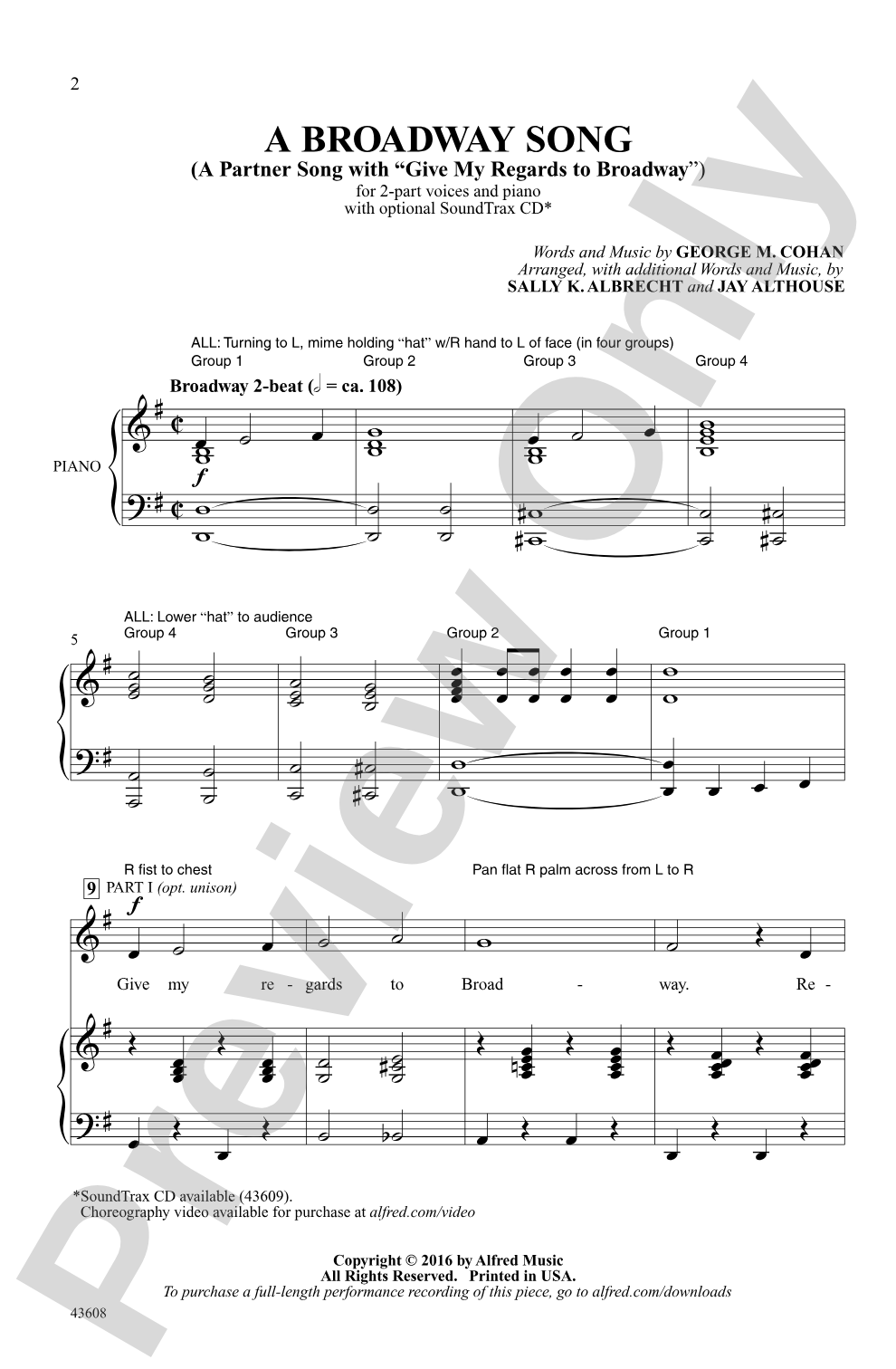
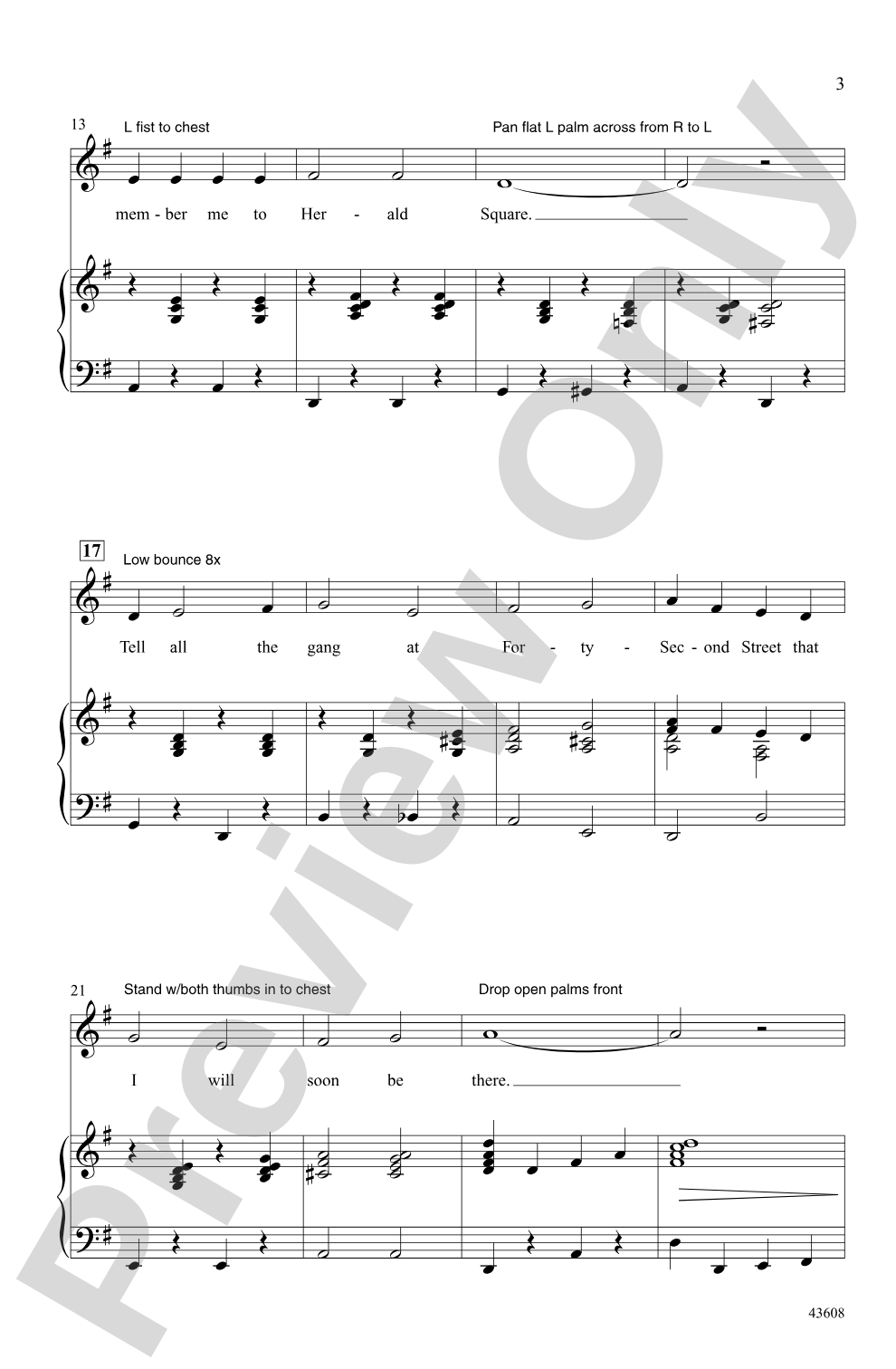
Cohan's famous show tune gets a lively partner song treatment! A complimentary countermelody ensures that developing singers will perform the independent musical lines with success. Add the optional choreography (printed in the publication and on the Step One! DVD and at alfred.com/video) to create the ultimate show-stopper!


A Broadway Song: 2-Part Choral Octavo isn't in MakeMusic Cloud just yet...but it could be. Let us know you'd like to see it, and you'll help shape what comes next. In the meantime, start a free trial and dive into thousands of interactive titles your students can play along with today.
Request This Title
Tell us you want it.
Start Your Free Trial
Explore everything that's ready to play right now.
Sample Audio
1
Audio File
--:--
0:00
0:00
Sample Video
Additional Details
Series:
Alfred Choral Designs
Publisher:
Alfred Music
Page Count:
12
SKU:
00-PO-0003581
More about this title
About the Composer: George M. Cohan
George M. Cohan (1878-1942) was a composer, lyricist, playwright, and performer who defined American musical theater in the early 20th century. His ability to craft instantly memorable melodies paired with clever, singable lyrics made him a dominant force on Broadway, and his work remains foundational repertoire for understanding the roots of American musical comedy.
Cohan's songs are essential teaching tools in choral programs because they sit at the intersection of accessibility and craftsmanship. His melodies are designed to stick with singers and audiences alike, yet they demand genuine musicianship to perform well. For developing choirs, his straightforward harmonic language and rhythmic clarity provide a clear window into theatrical songwriting.
Why we love this
This arrangement strips away the intimidation factor while keeping the charm and energy of Cohan's original intact. The partner song structure means you're not asking singers to sustain a single melodic line for two minutes; instead, they lock into a complementary countermelody that feels independent and satisfying. Add the choreography option and you have a piece that works equally well as a warm-up showcase or as a genuine concert moment.
What to expect
There's an irresistible vaudeville spirit running through this arrangement. The lively tempo and straightforward major key create an immediate sense of fun and confidence, even as singers navigate the two-part texture. The optional choreography transforms the piece from a pleasant vocal exercise into something with genuine theatrical presence.
Who it's for
This piece serves developing two-part choirs, middle school ensembles, and community groups seeking accessible theatrical material. Singers who are still building independence in ensemble voicing benefit from the partner song structure, which gives each part melodic interest without demanding advanced harmonic awareness.
How to get the most out of it
- Balance the two vocal lines by having singers listen across parts during rehearsal, not just to their own melody. Mark a few spots where one line clearly leads and the other supports.
- Keep the rhythmic energy steady even at moderate tempos. Cohan's melodies have a built-in bounce; let it breathe naturally rather than rushing.
- If you use the choreography, teach the movement separately first, then layer it in gradually. Singers need security in their lines before adding the physical commitment.
How to use it
Program this early in a concert as an energy-building piece that engages the audience immediately and showcases your singers' ability to blend and balance. It also works beautifully as a rehearsal warmer when you need to reset focus and remind singers that ensemble singing can be playful. If you're building a show tune themed concert or a program celebrating American musical theater history, this is a natural anchor point.
Skills your students will build
- Singing independent melodic lines in a two-part texture
- Listening and balancing between two simultaneous vocal lines
- Maintaining rhythmic precision in a syncopated, theatrical style
- Coordinating singing with choreography
- Building confidence in ensemble performance through accessible, lively material