
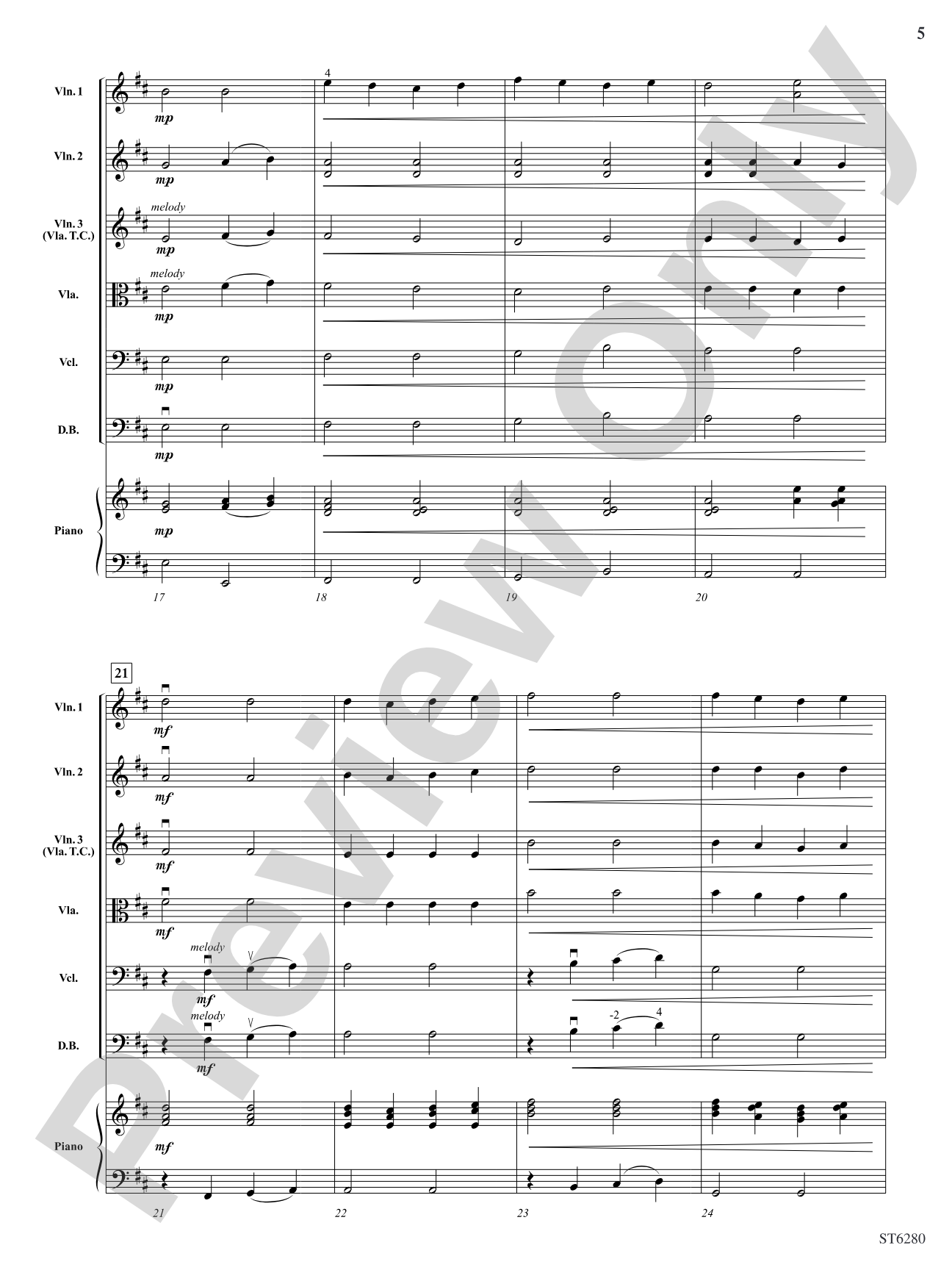
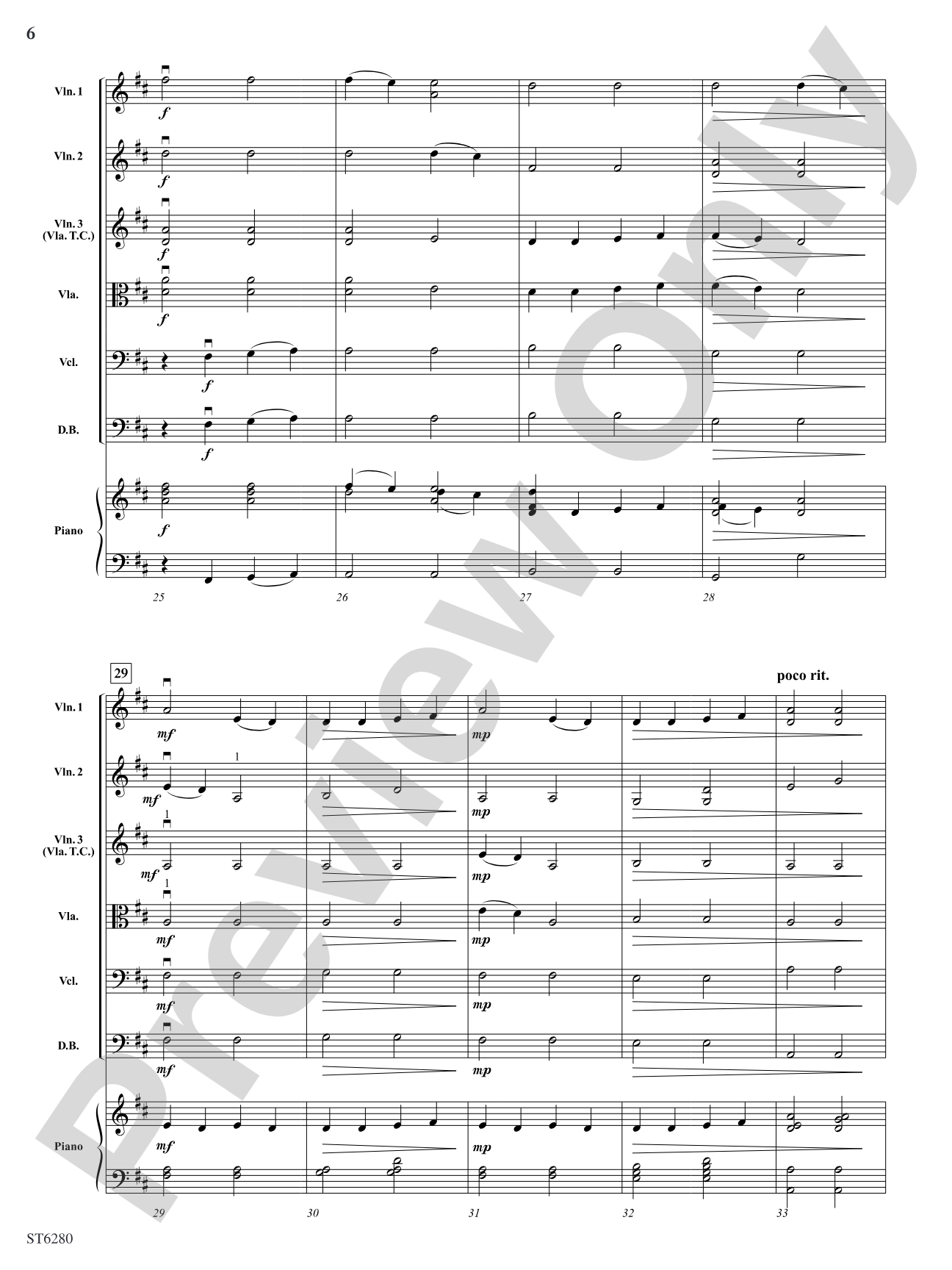
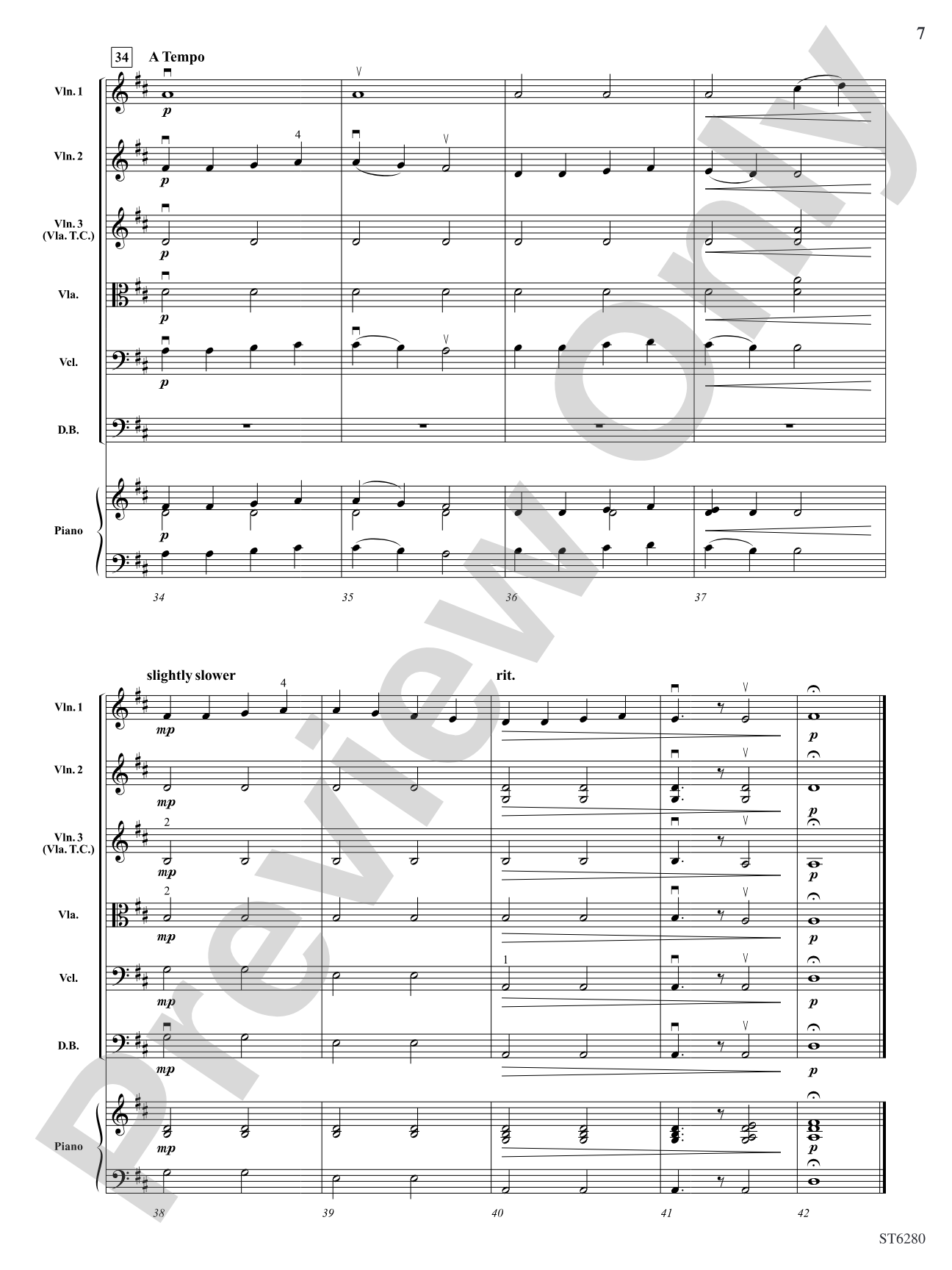

A Beethoven Lullaby: String Orchestra Conductor Score & Parts
By Brian Balmages
Grade: 1
Item: 98-DST6280

$50.00
Pickup currently not available
Buy Extra Parts (Digital PDF Download)
| Product | Price | Quantity |
|---|---|---|
| A Beethoven Lullaby: Score | $10.00 | |
| A Beethoven Lullaby: Violin 1 | $7.00 | |
| A Beethoven Lullaby: Violin 2 | $7.00 | |
| A Beethoven Lullaby: Violin 3 (Viola T.C.) | $7.00 | |
| A Beethoven Lullaby: Viola | $7.00 | |
| A Beethoven Lullaby: Violoncello | $7.00 | |
| A Beethoven Lullaby: Double Bass | $7.00 | |
| A Beethoven Lullaby: Piano | $7.00 |
Parts Added to Cart!
Description
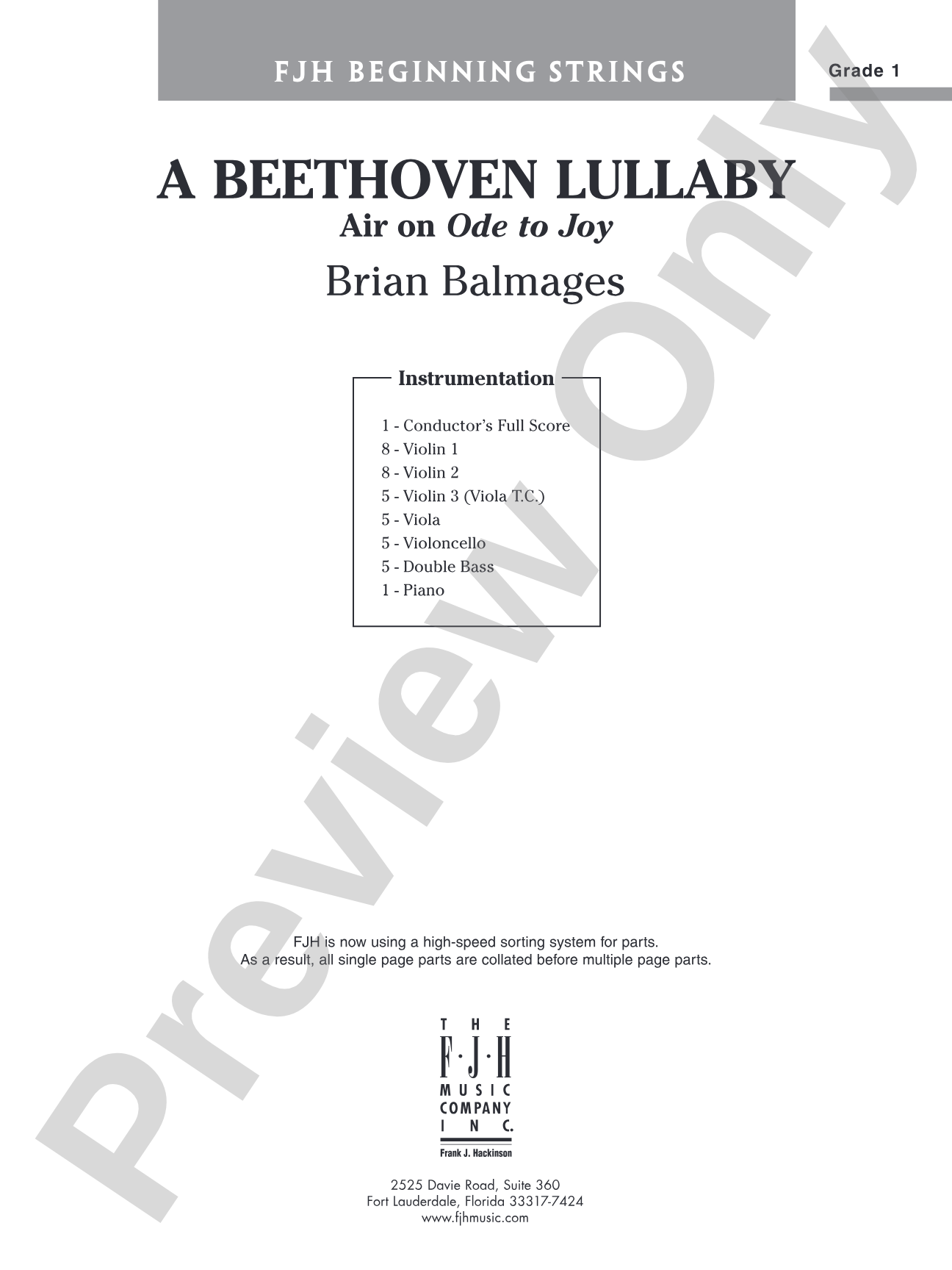
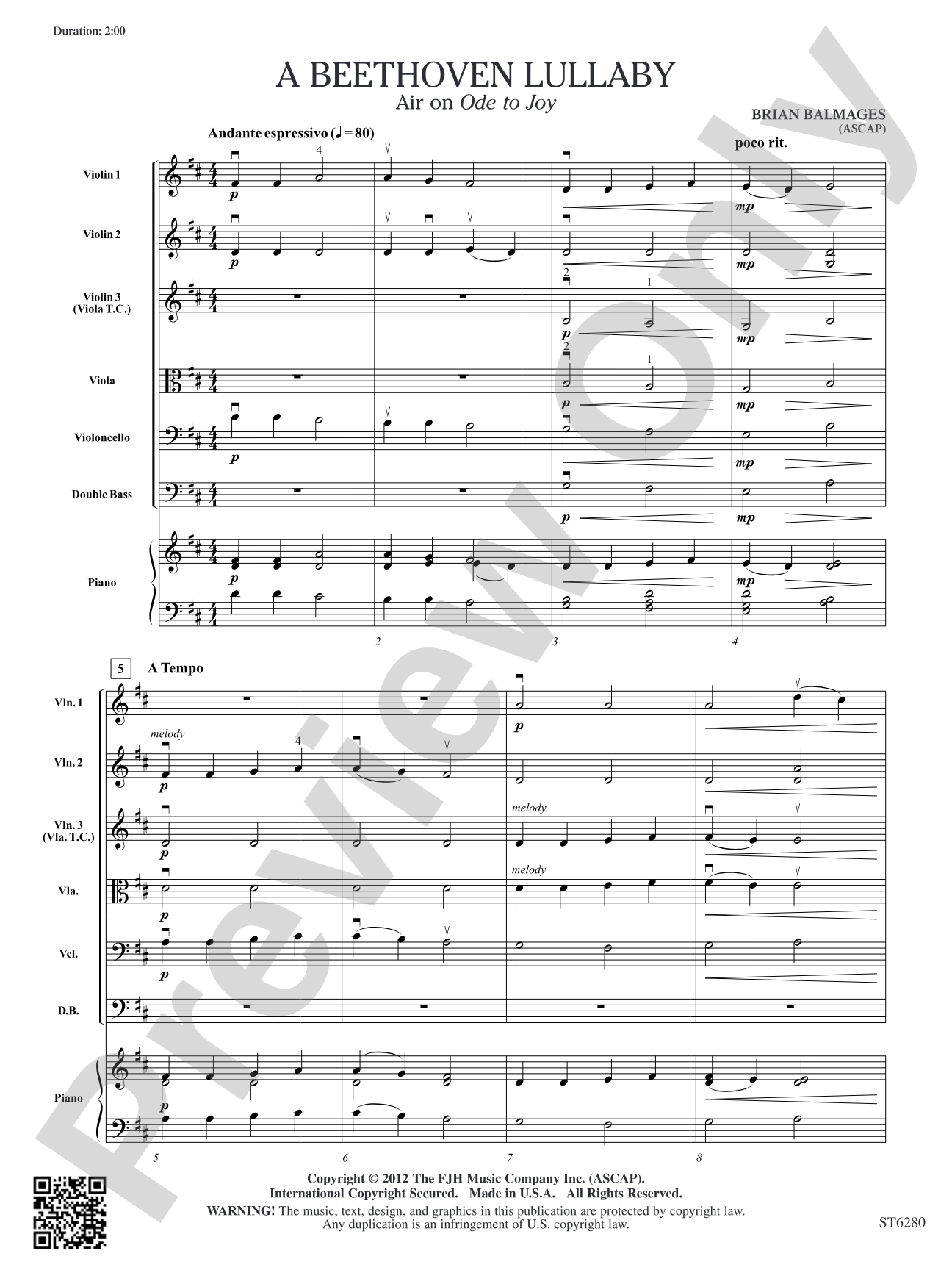
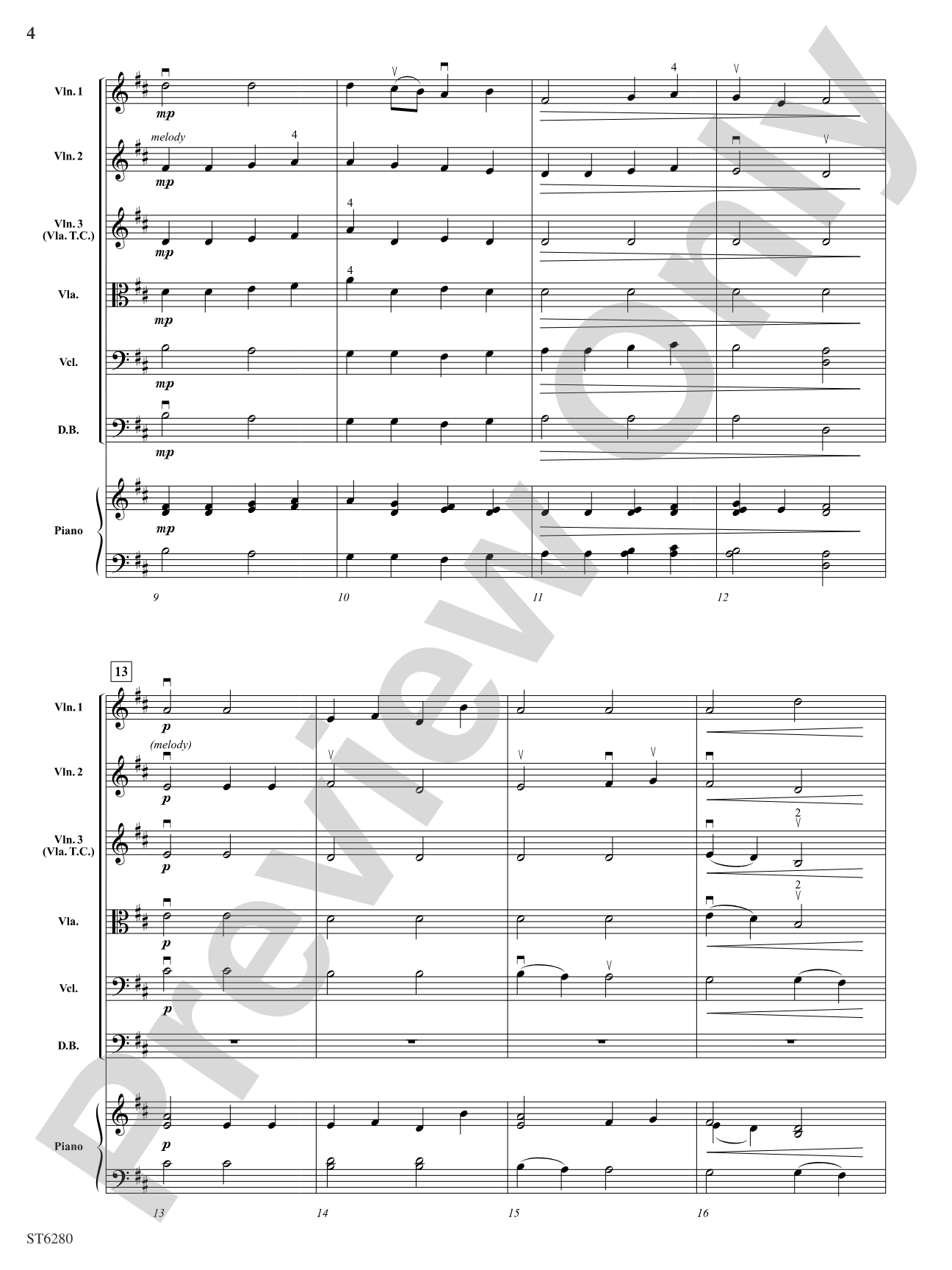
Inspired by the endless possibilities of this incredible melody from Beethoven's Symphony No. 9, Brian Balmages presents it in a sensitive and harmonically intricate setting while also making the work accessible to the youngest of players. The melody works its way through a series of transitions that also include original material. An artistic gem with boundless musical potential.


Don't just read it, hear it, play along with it, and watch your students grow with it. In MakeMusic Cloud, A Beethoven Lullaby: String Orchestra Conductor Score & Parts comes alive with professional accompaniment, adjustable tempo, and built-in practice tools that turn solo practice into real progress.
Open in the Player
Jump straight in and assign it today.
Start Your Free Trial
Open this title and explore the full library in minutes.
Sample Audio
1
Audio File
--:--
0:00
0:00
Sample Video
No sample videos found.
Additional Details
Series:
FJH Beginning Strings
Publisher:
The FJH Music Company, Inc.
SKU:
98-DST6280
More about this title
About the Composer: Brian Balmages

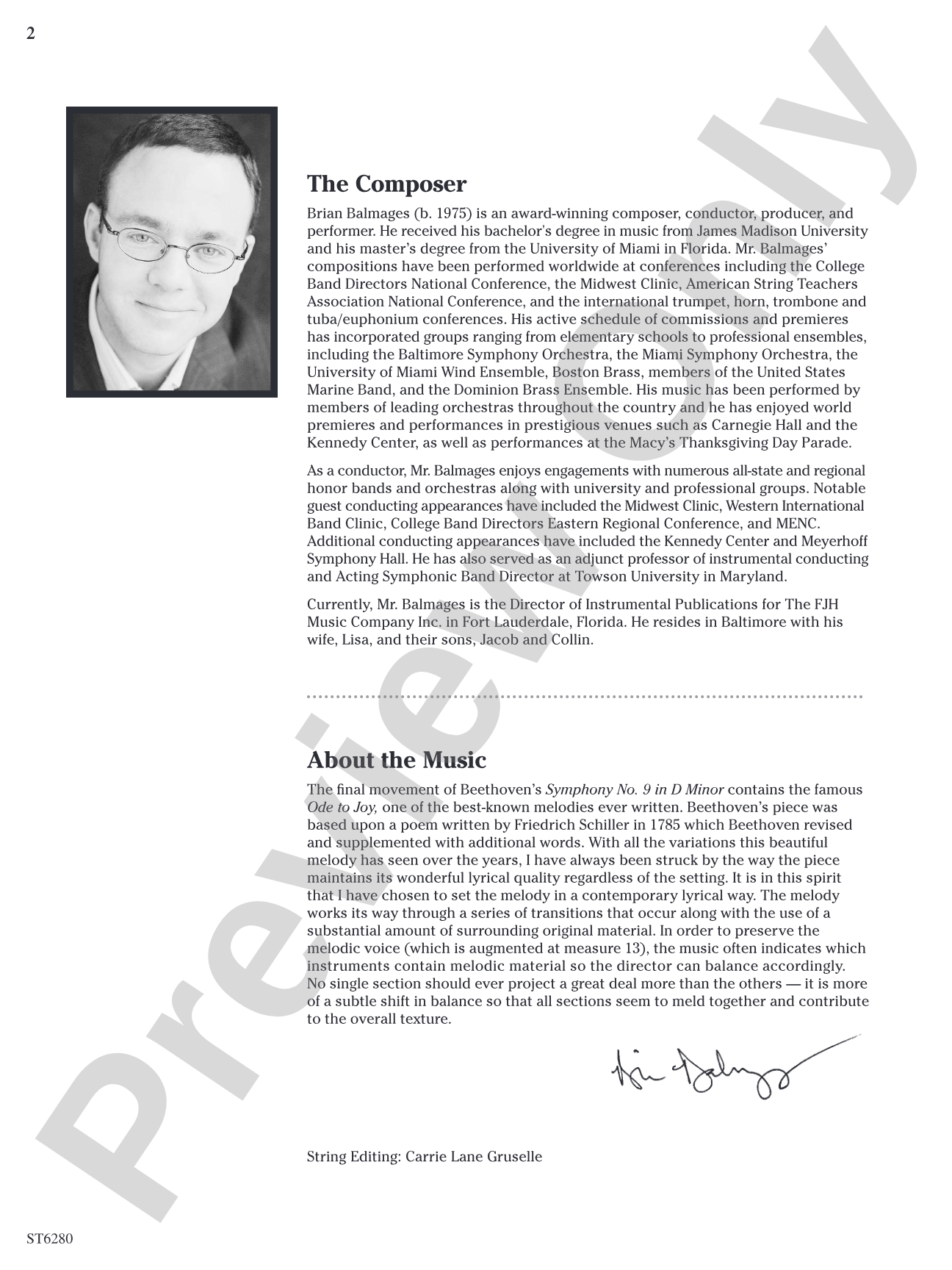
Brian Balmages has established himself as a composer and conductor with an uncommon gift for writing across orchestral, band, and chamber idioms. His works have reached audiences from Carnegie Hall and the Kennedy Center to the Sydney Opera House and venues in over a dozen countries, performed by ensembles ranging from professional orchestras to school groups. He earned the A. Austin Harding Award from the American School Band Directors Association, won the 2020 NBA William D. Revelli Composition Contest, and was inducted into the American Bandmasters Association.
Balmages holds degrees from James Madison University and the University of Miami, where he later received commissions and recognition including the inaugural Distinguished Alumni Award. His music was performed at the 2013 Presidential Inaugural Prayer Service, and he maintains an active guest conducting schedule with all-state ensembles, university orchestras, and professional groups worldwide. He currently serves as Director of MakeMusic Publications and Digital Education for Alfred and MakeMusic.
Why we love this
Balmages takes one of music's most beloved melodies and lets it breathe across Grade 1 strings without sacrificing musical substance. The harmonic language deepens what feels like a simple tune, and the original transitions between statements keep both players and listeners engaged. This is repertoire that sounds more sophisticated than its difficulty level suggests, making it rewarding to teach and genuinely satisfying to perform.
What to expect
Gentle and reflective, like hearing a cherished lullaby through new harmonic colors. The piece hovers between familiar comfort and quiet discovery; Beethoven's melody anchors the ear while Balmages' compositional additions suggest emotional depth beneath the surface.
Who it's for
Young string orchestras at the earliest levels of ensemble playing who are ready for more musically sophisticated material. This work suits programs introducing students to how composers can reimagine familiar themes while keeping technical demands manageable and within reach of developing players.
How to get the most out of it
- Shape each phrase of the familiar melody with gentle dynamic contours rather than playing it straight through; small crescendos into the peak notes will awaken the lyrical character without requiring aggressive playing.
- Bring out the original compositional material during transitions by ensuring those passages have the same musical weight as the Beethoven theme itself, helping young musicians understand that Balmages' additions are integral to the whole.
- Establish a clear, steady pulse in the accompaniment parts so the melodic line can breathe freely; Grade 1 string orchestras often benefit from a conductor who marks the beat clearly but allows expressive flexibility above it.
- Encourage violins to listen across the section as they trade or share the main theme; blended tone on the melody creates the lyrical quality the title promises.
How to use it
Feature this as a concert opener or a quiet moment in the middle of a program where younger orchestra members can show their lyrical side. It works well alongside other Grade 1 repertoire of contrasting character, or as a standalone piece for festival play where judges appreciate writing that honors both the learner and the listener.
Skills your students will build
- Sustaining sustained tones with steady vibrato control
- Playing expressively across phrase boundaries without technical strain
- Listening to harmonic movement and tuning to sonorities beyond unison
- Recognizing compositional techniques such as theme variation and transition writing