
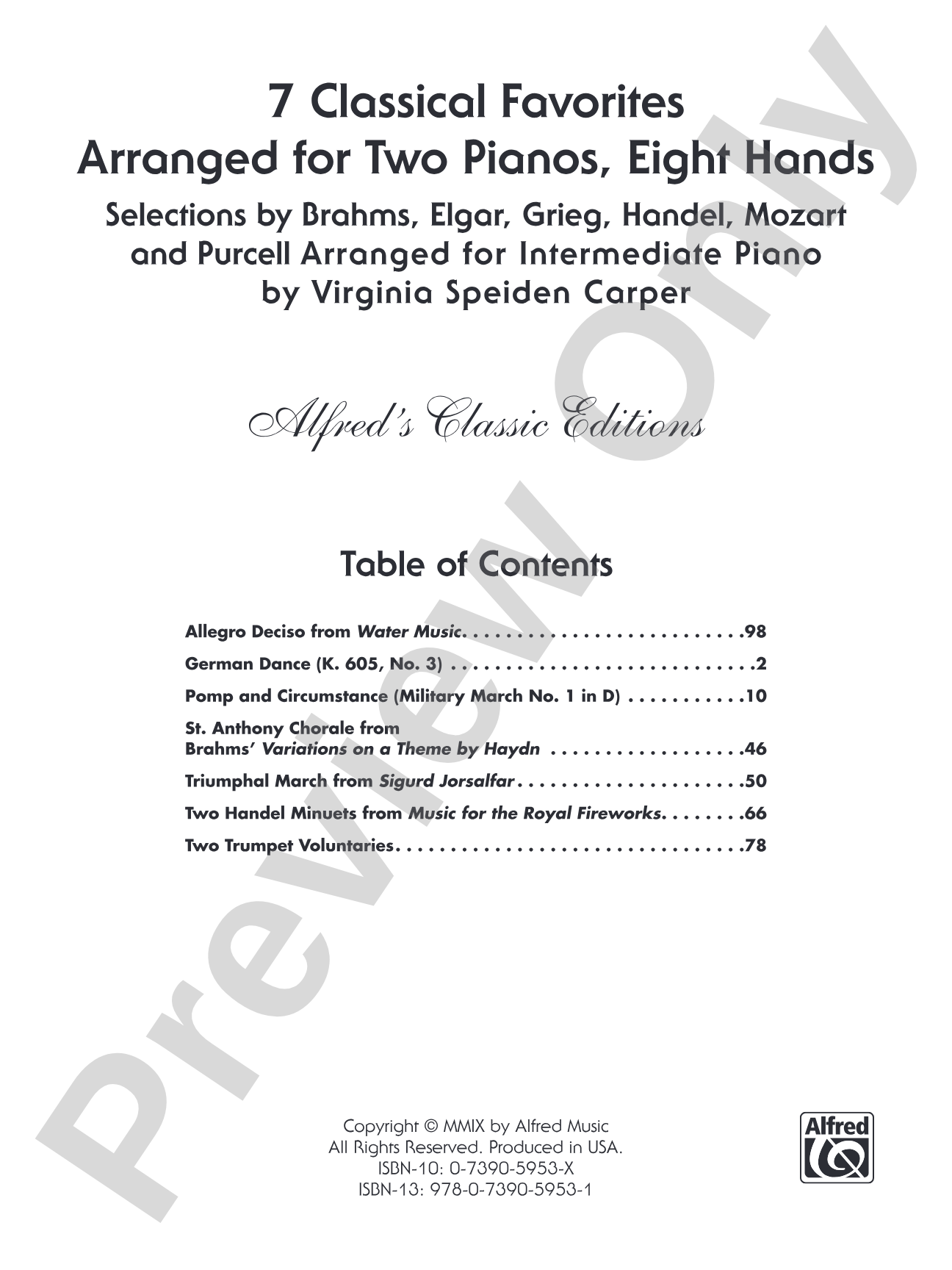
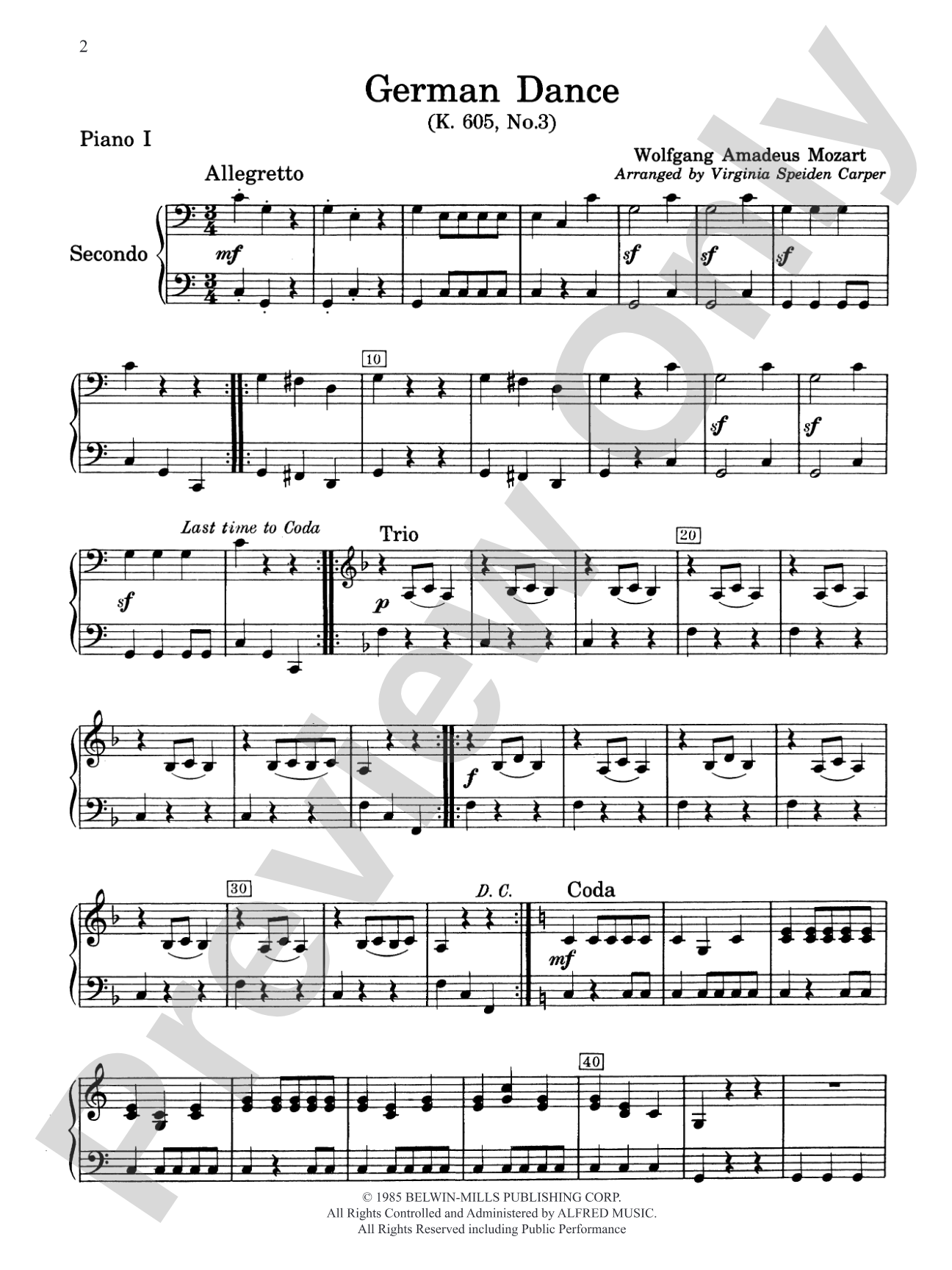
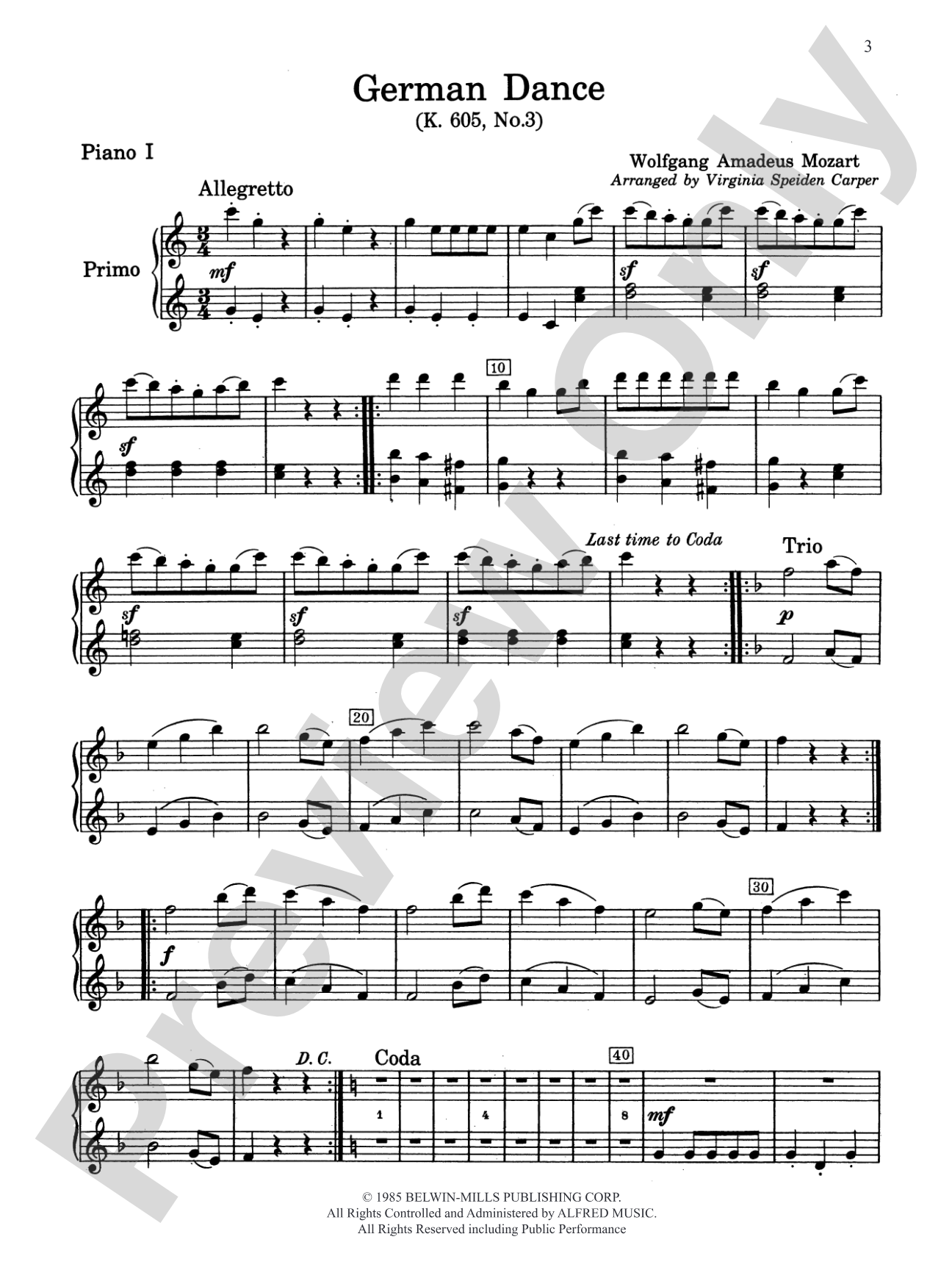
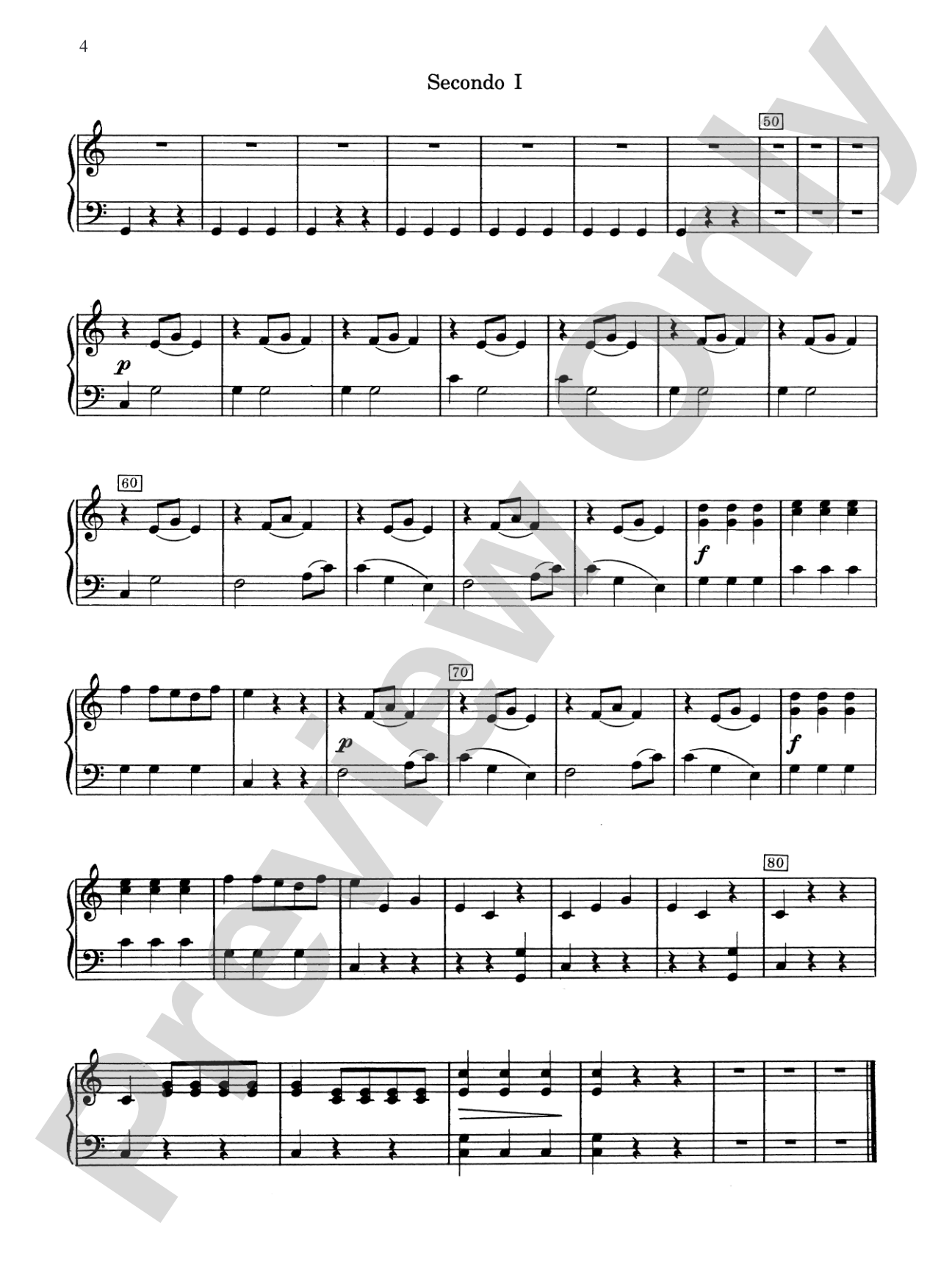
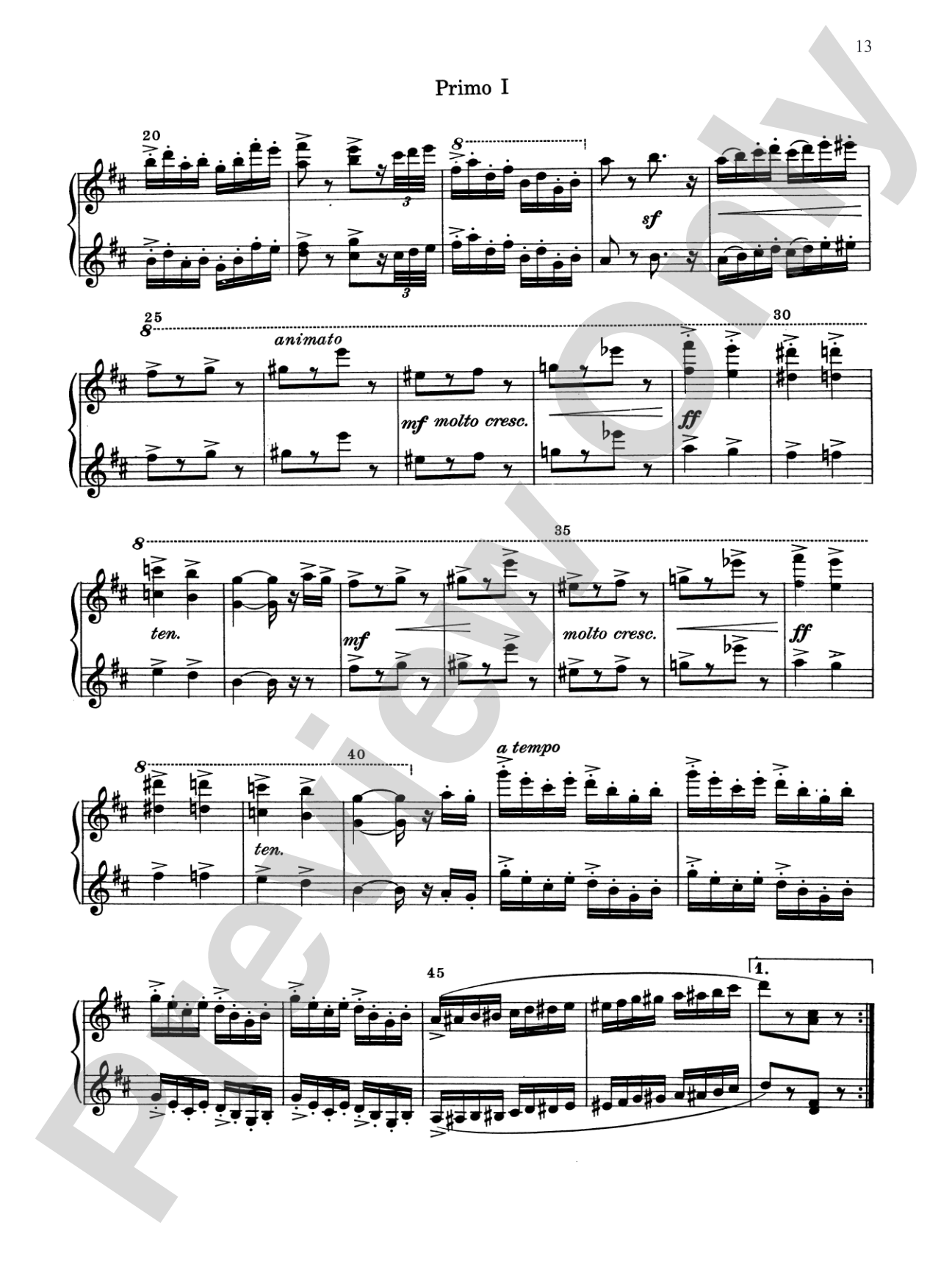
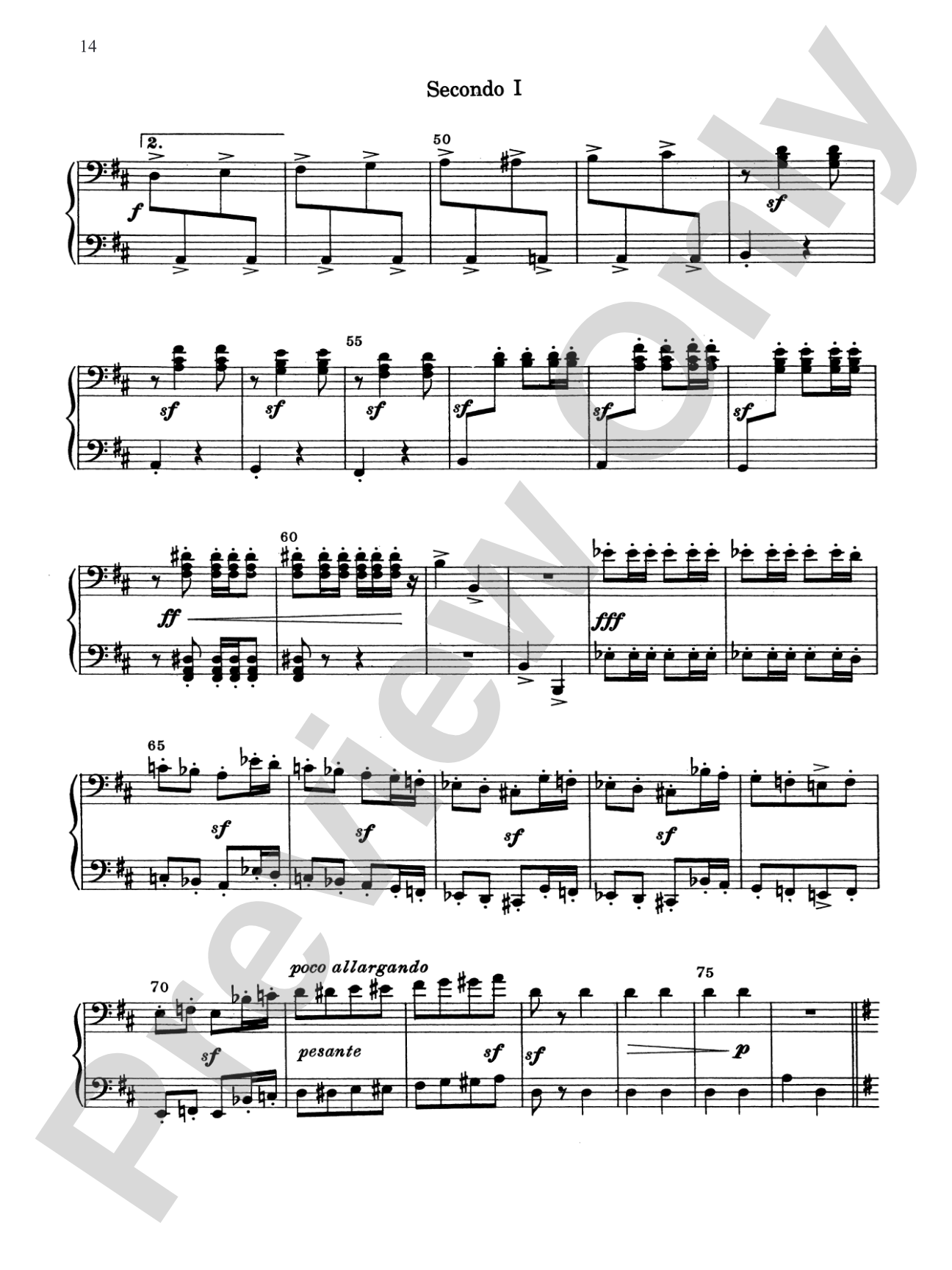
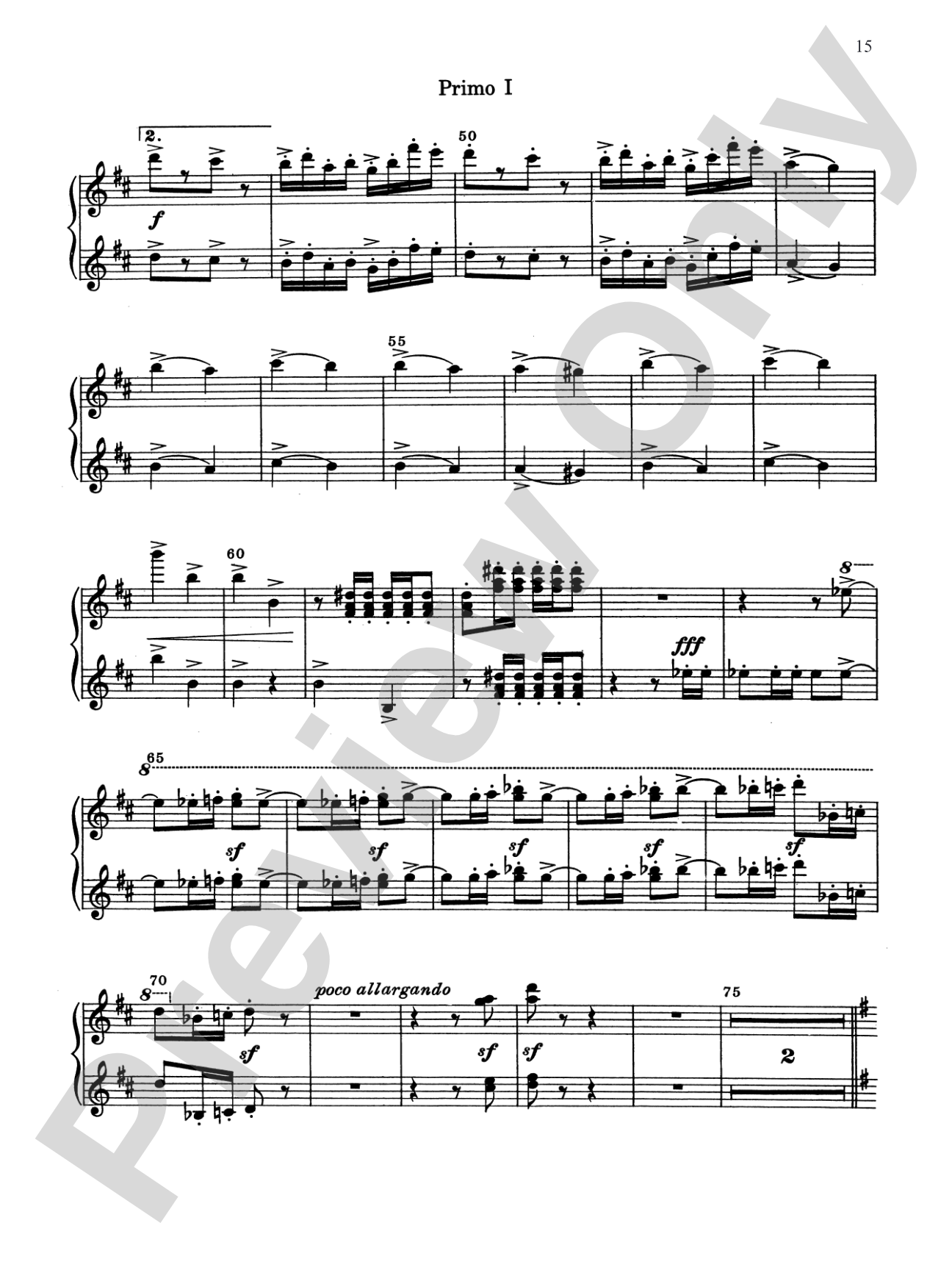
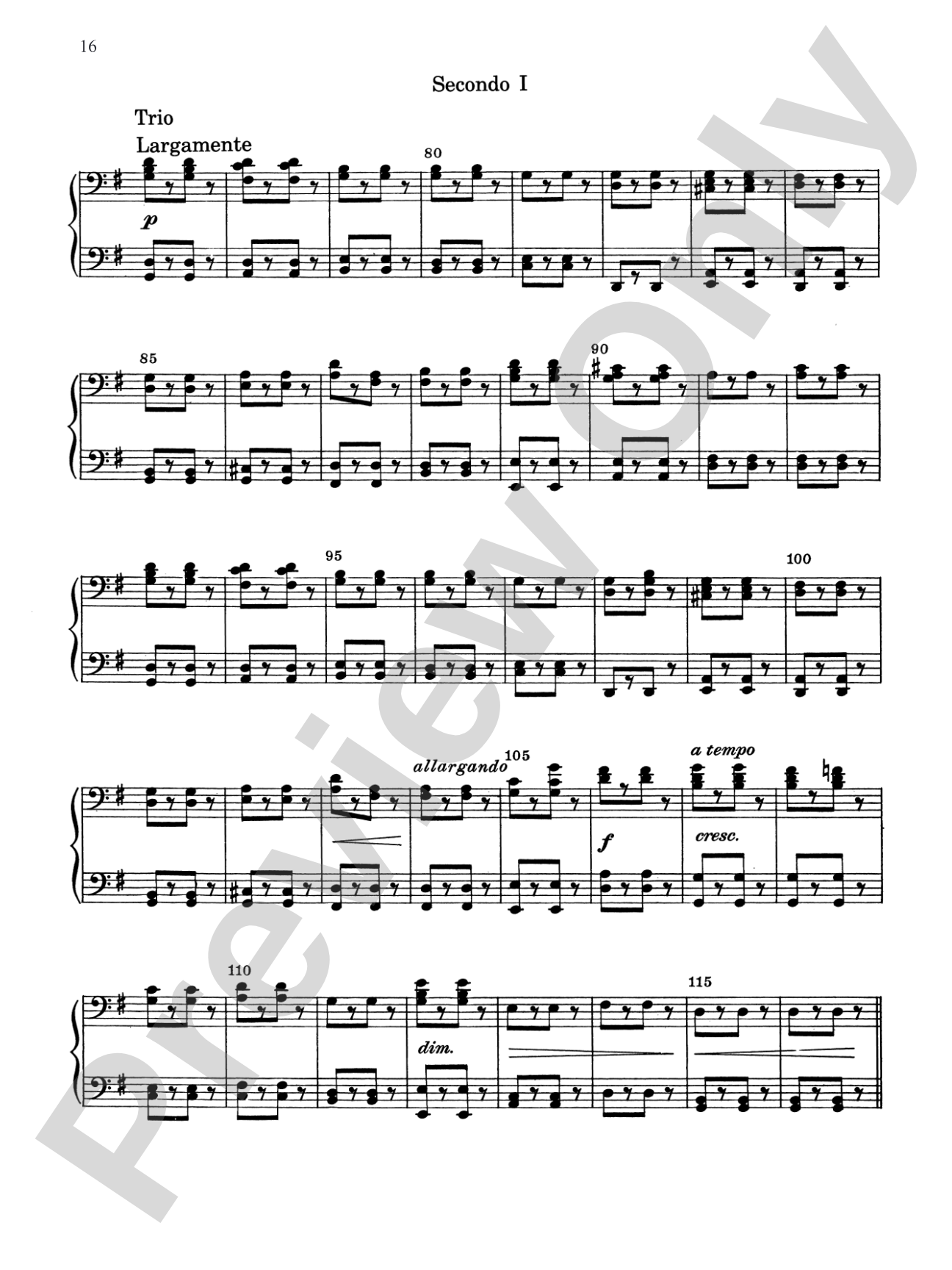
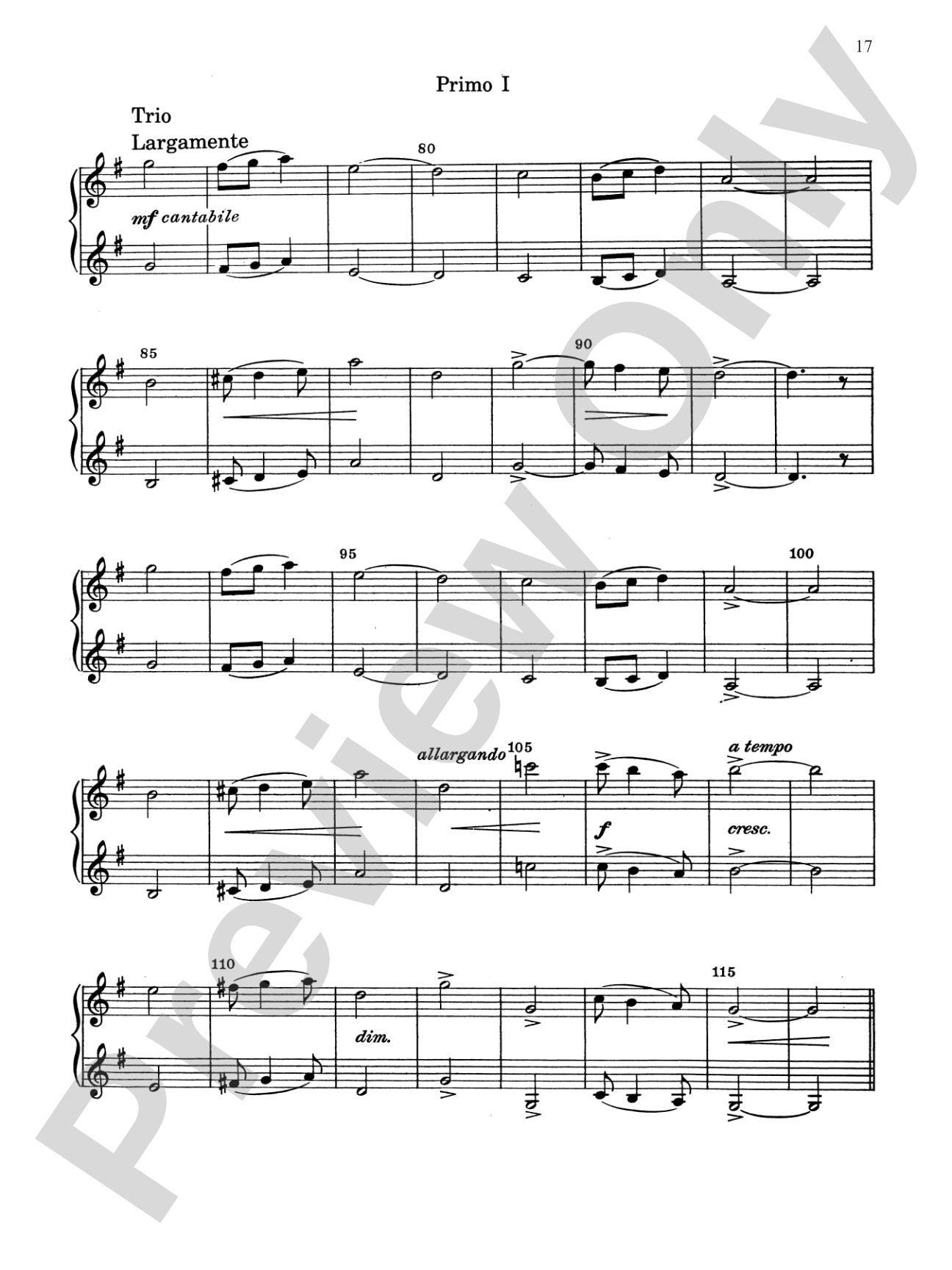
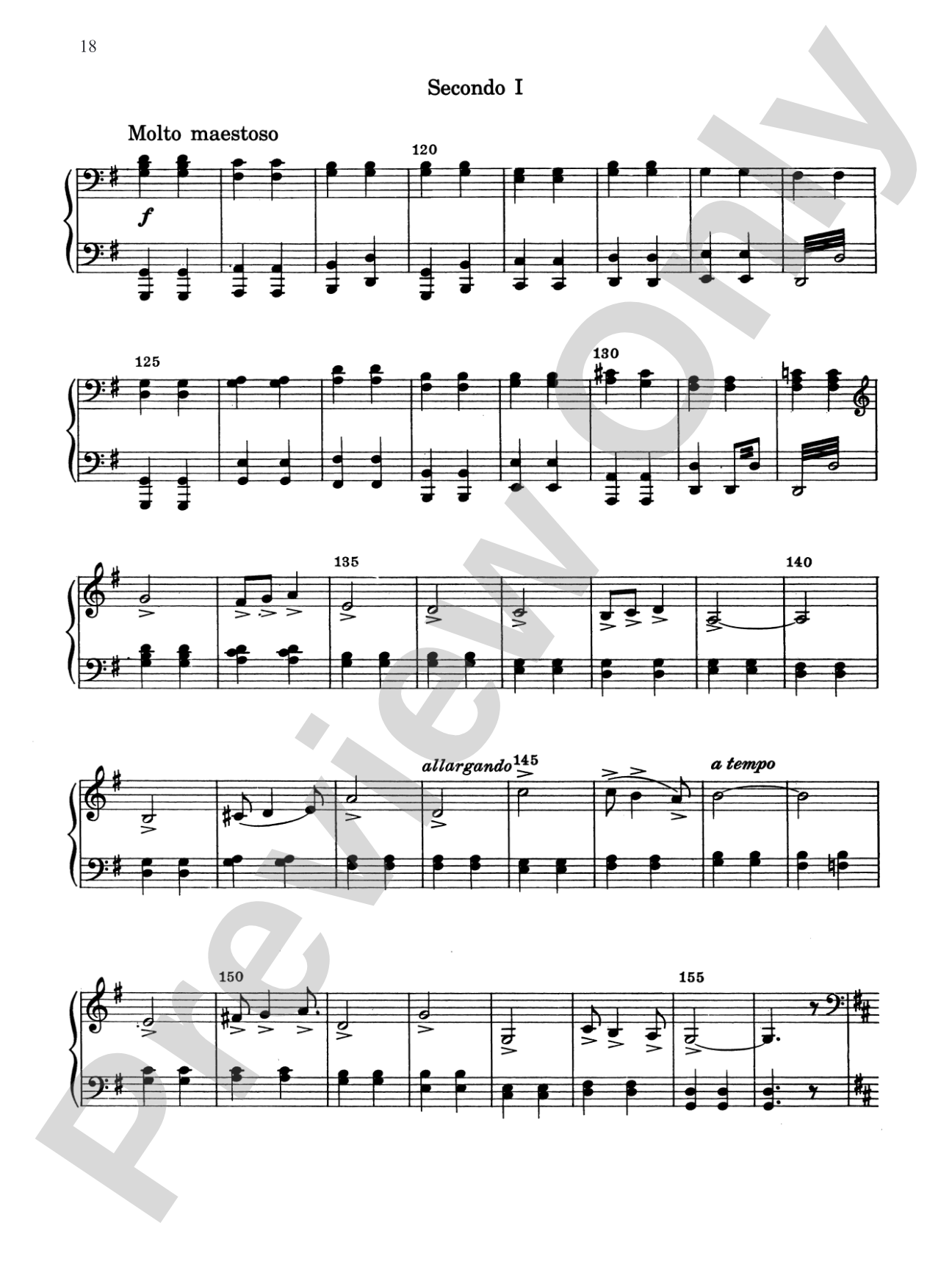
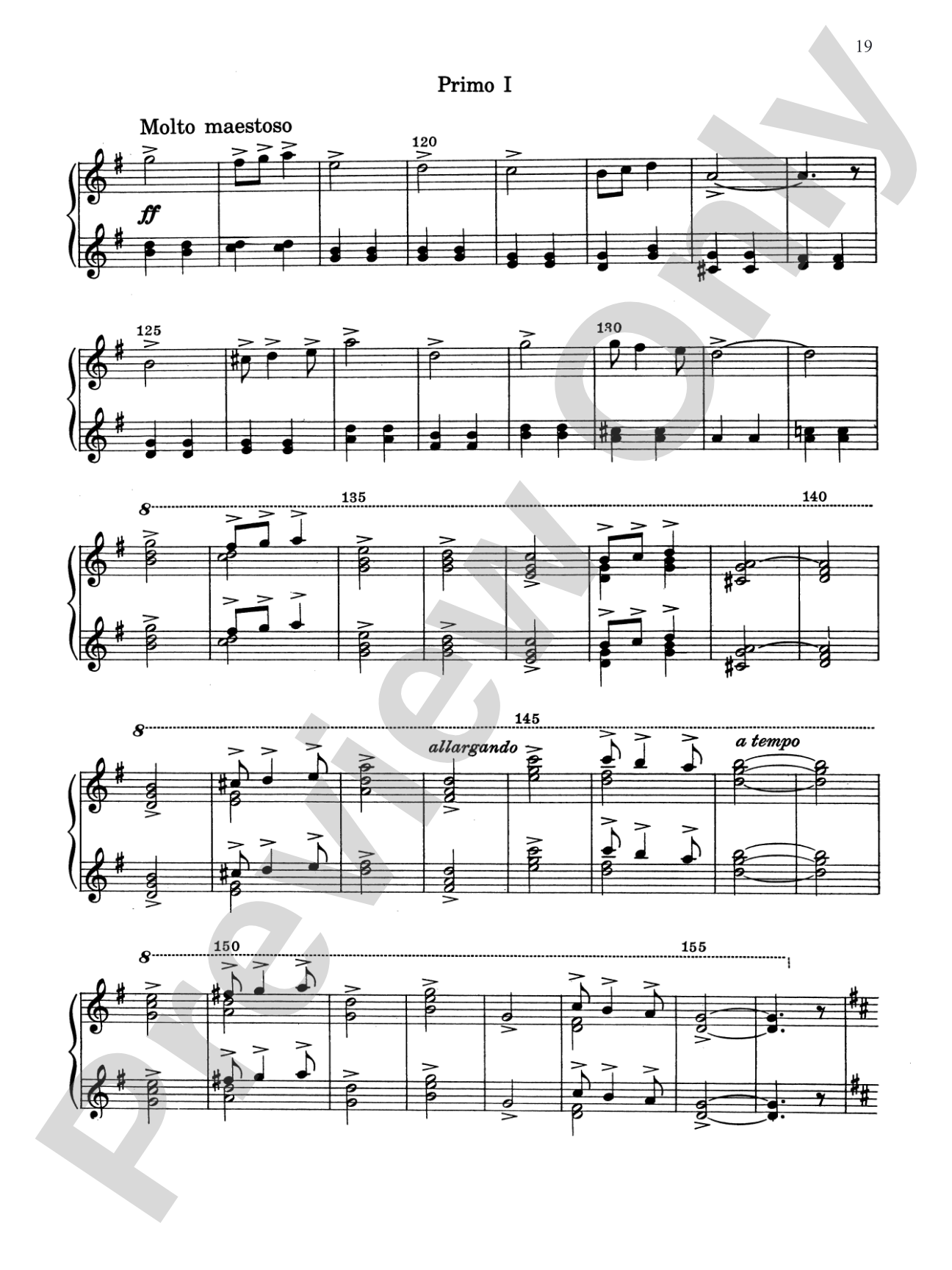
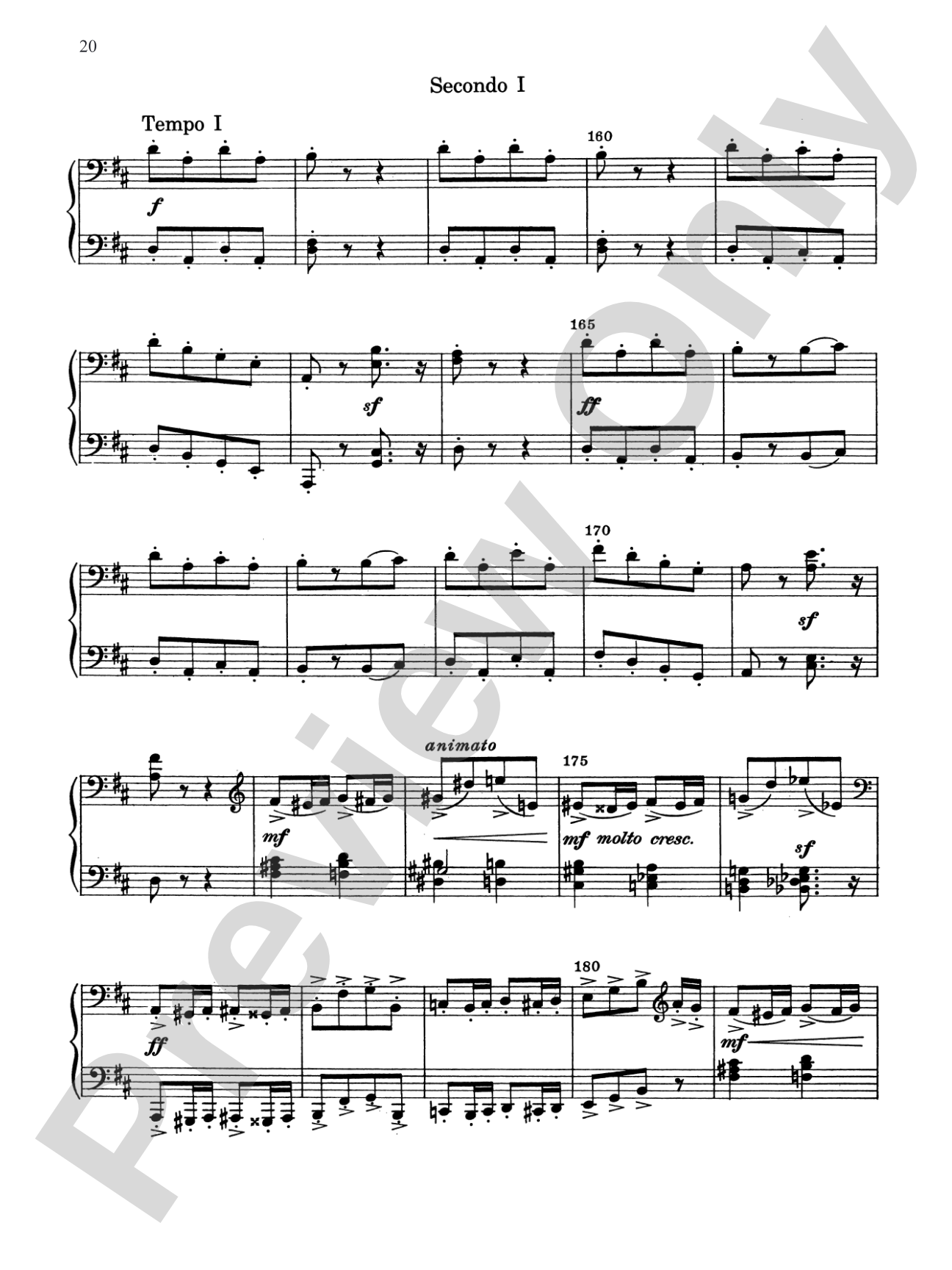

7 Classical Favorites Arranged for Two Pianos, Eight Hands - Piano Quartet: Piano
Selections by Brahms, Elgar, Grieg, Handel, Haydn, Mozart, and Purcell Arranged for Intermediate Piano
Arranged by Virginia Speiden Carper
Level: Intermediate
Item: 00-PB-0000643
$19.99
Pickup currently not available
Related Items
7 Classical Favorites Arranged for Two Pianos, Eight Hands: Piano Quartet (2 Pianos, 8 Hands) Book (2 copies required) |
$19.99
|
View |
Description
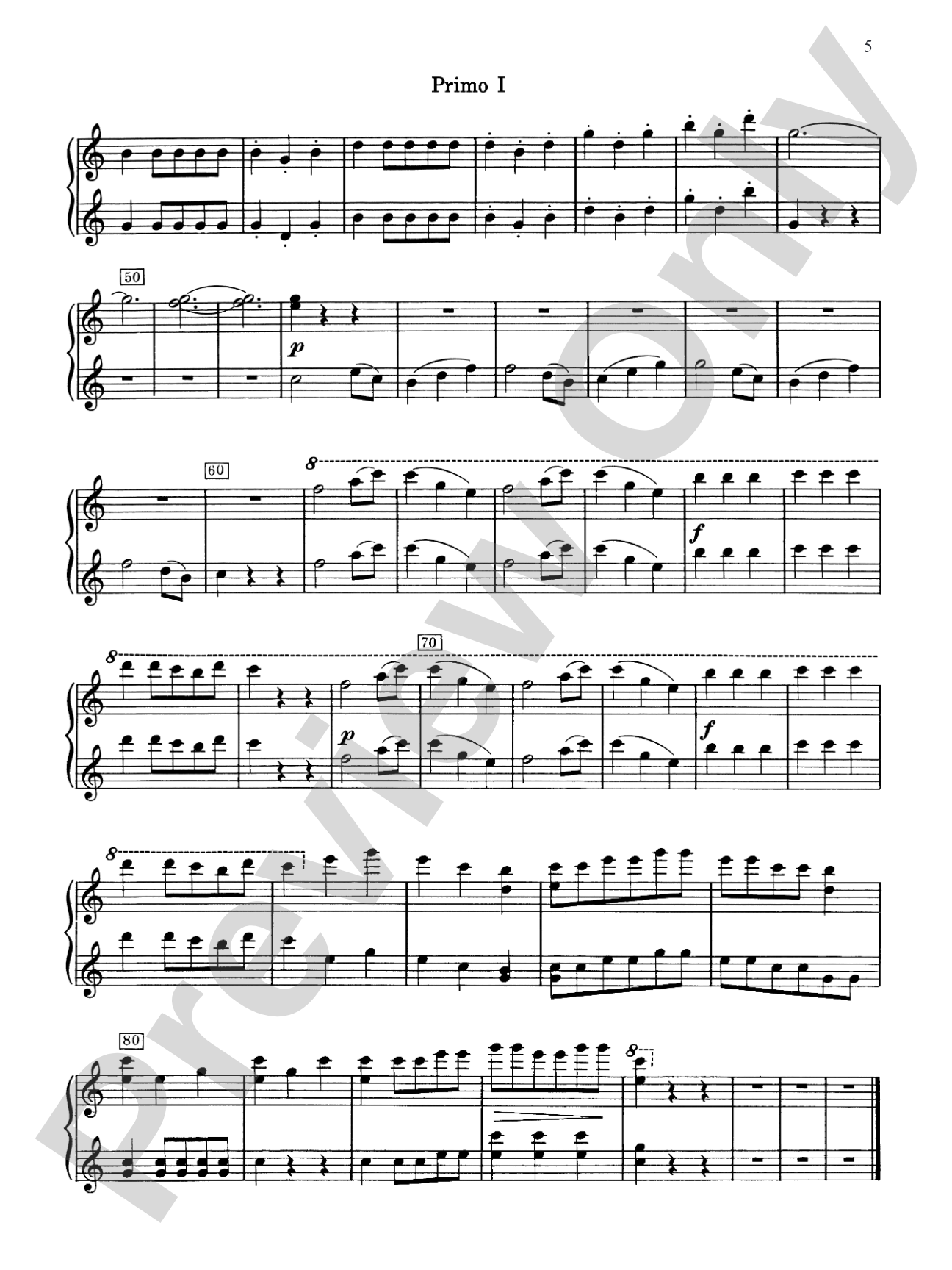
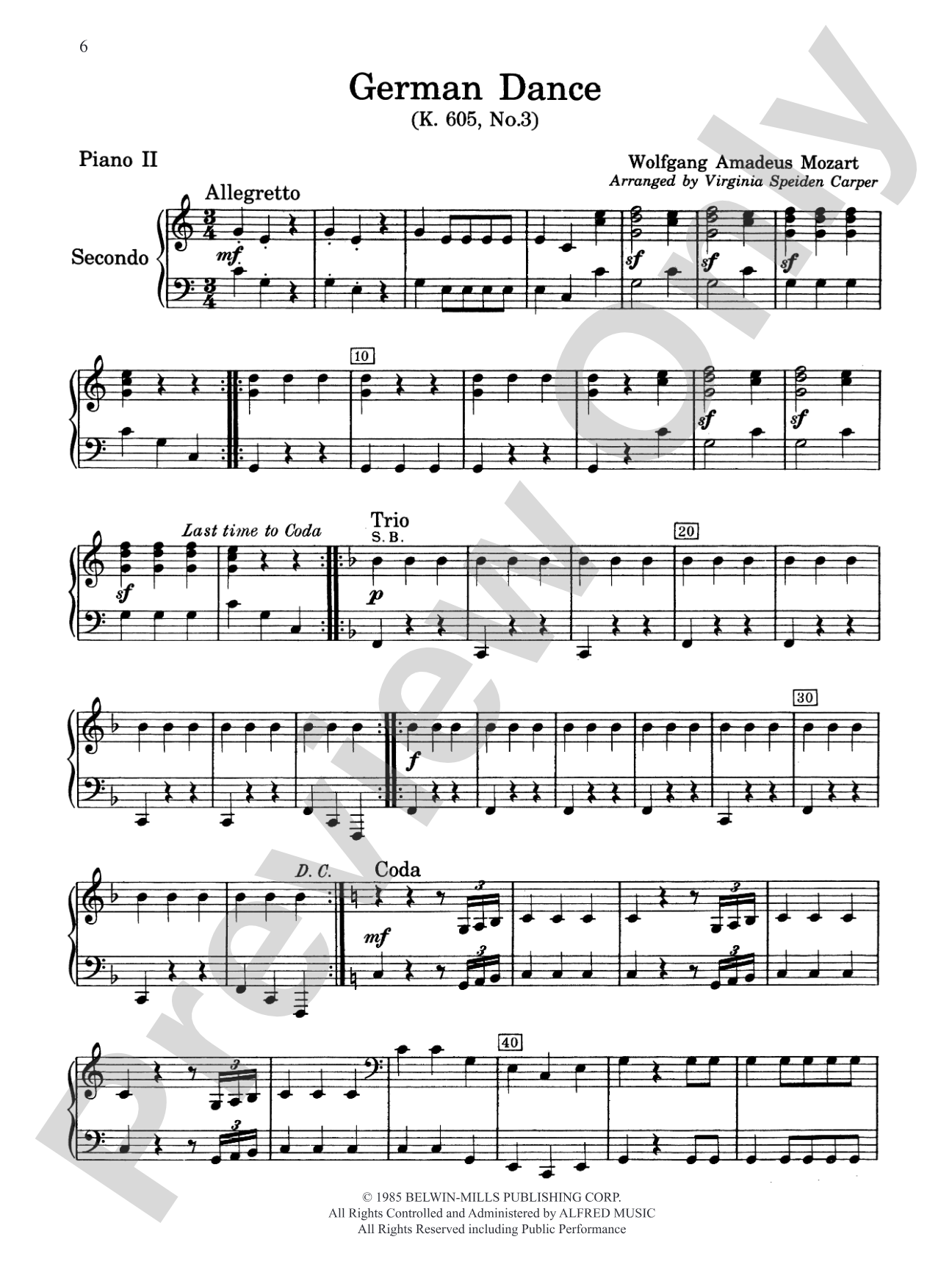
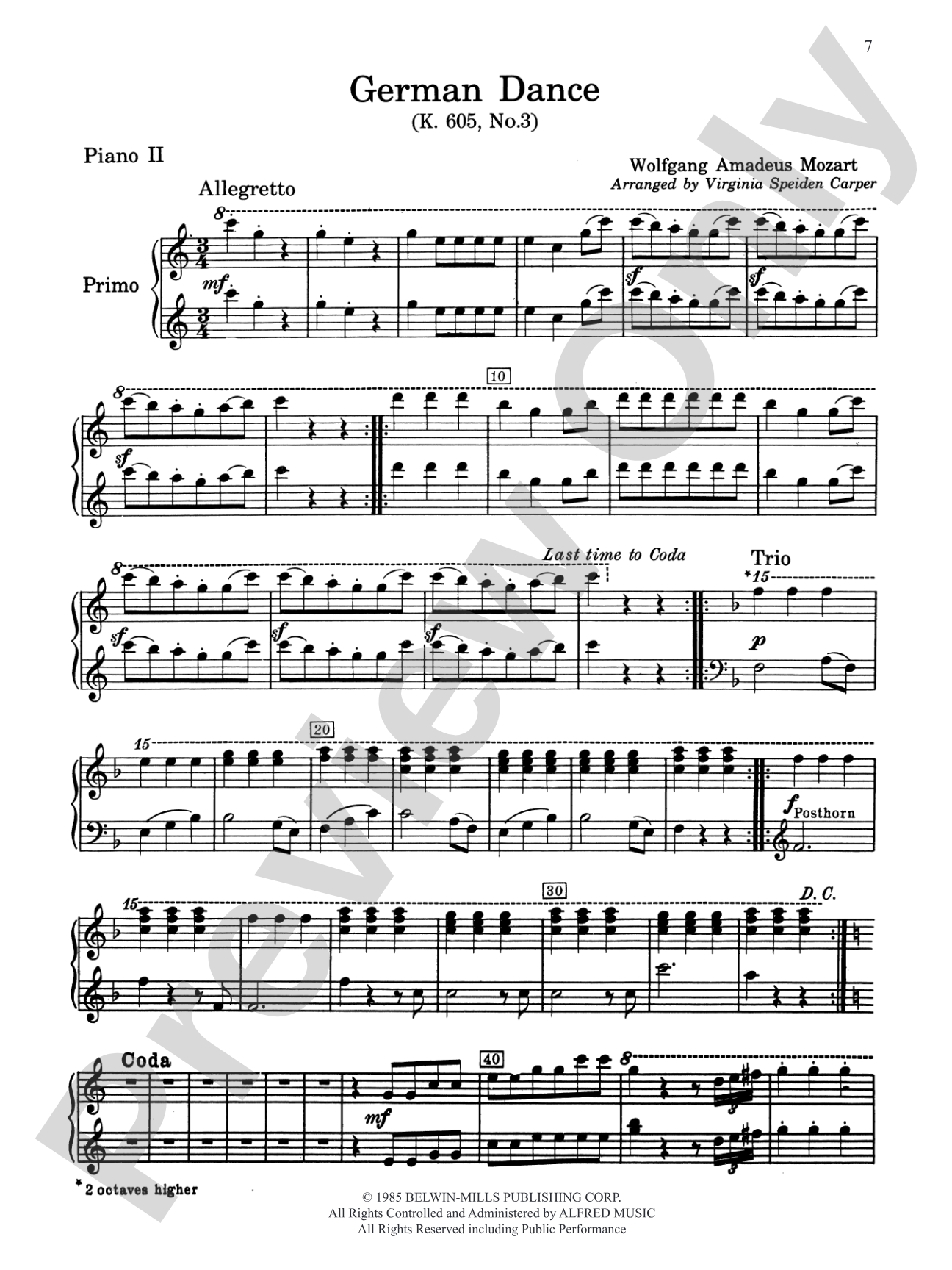
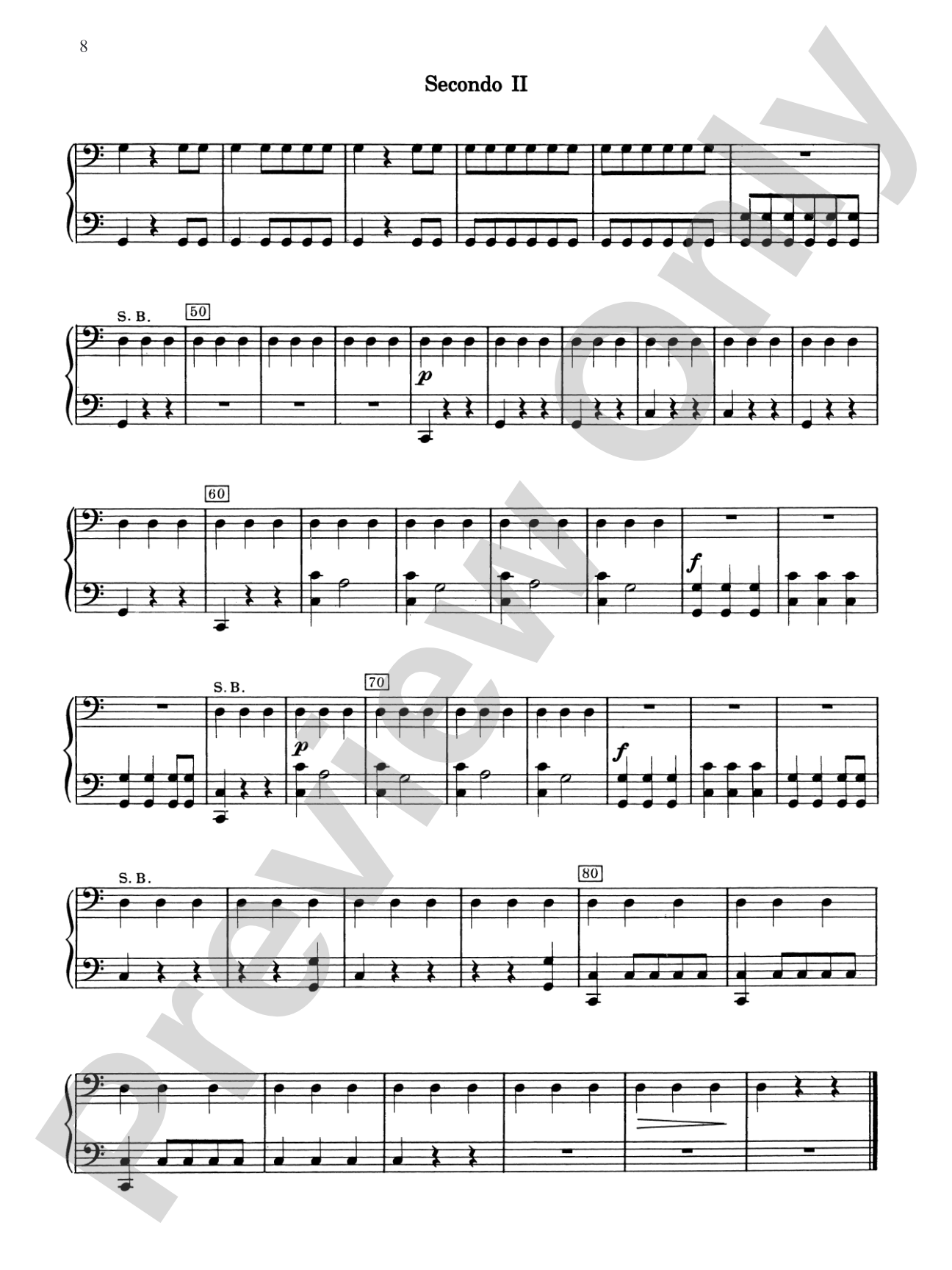
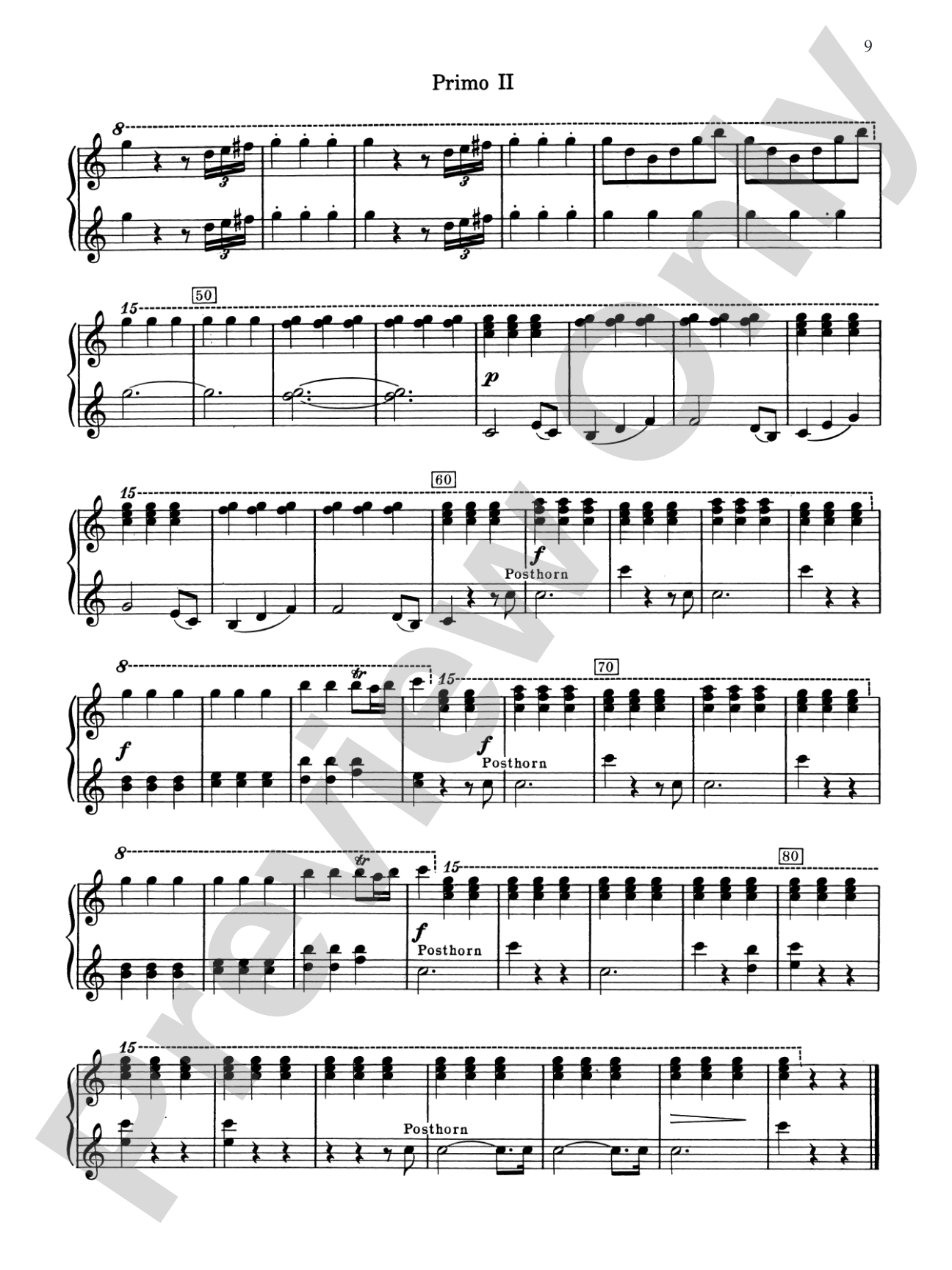
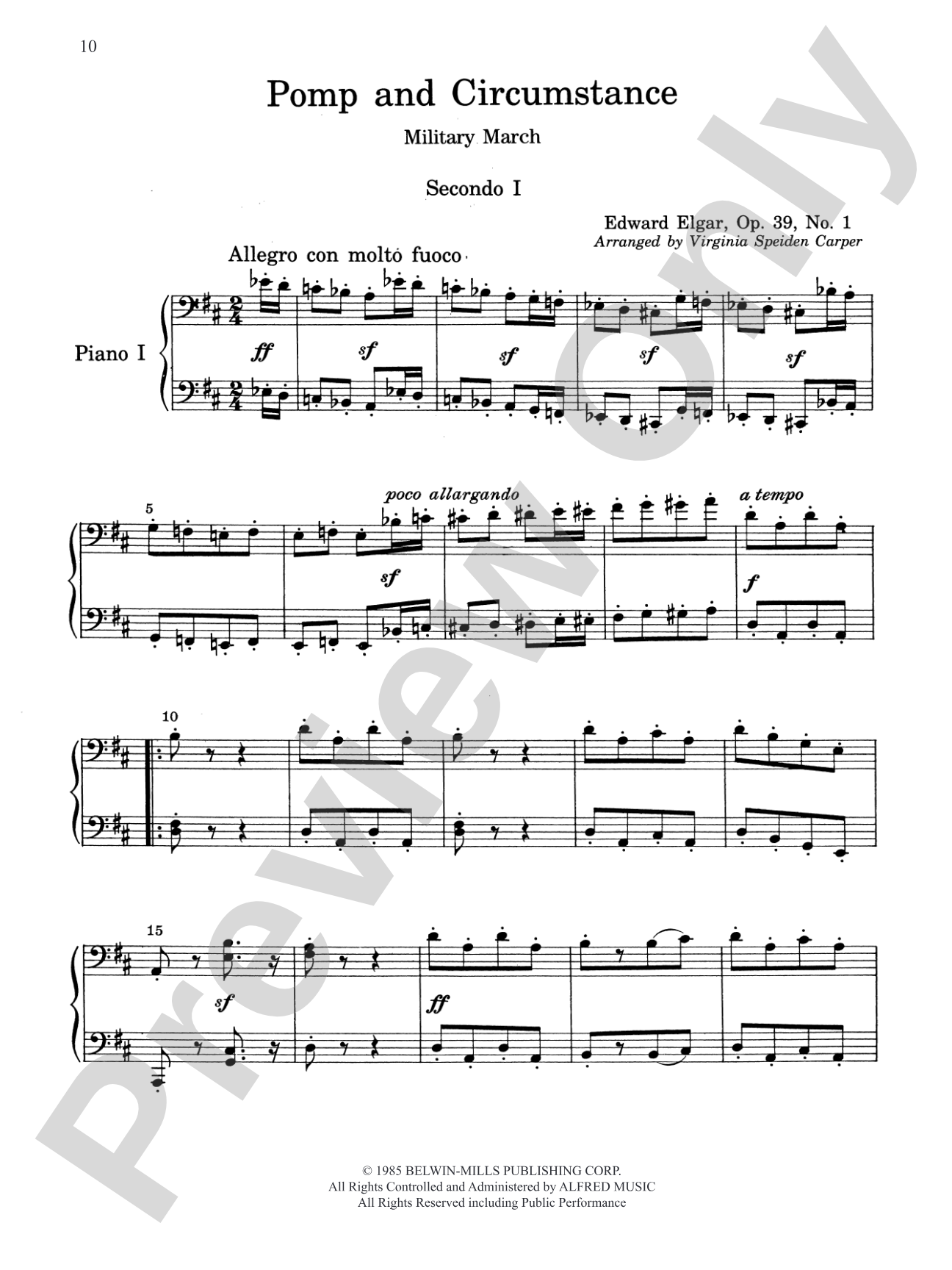
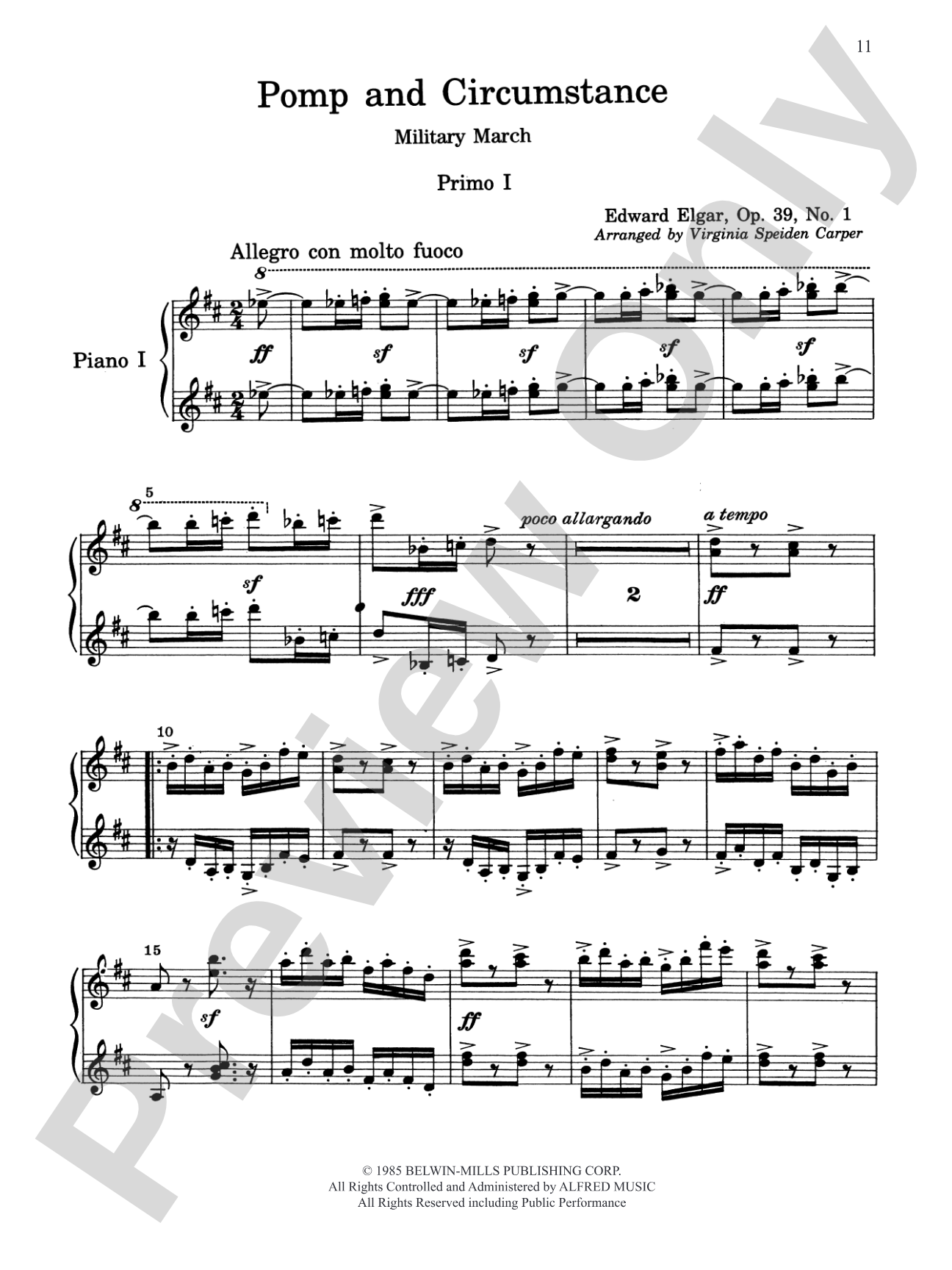
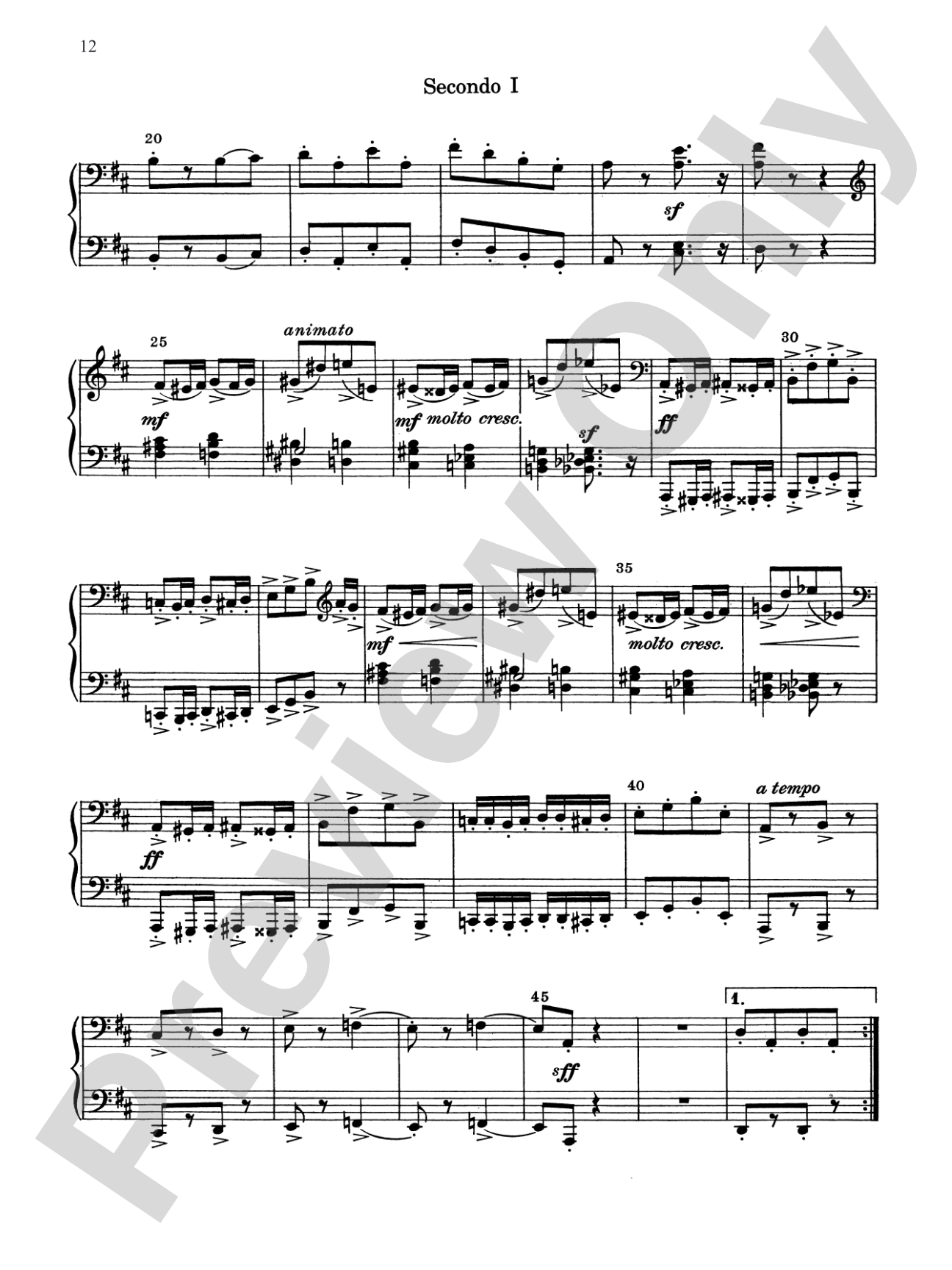
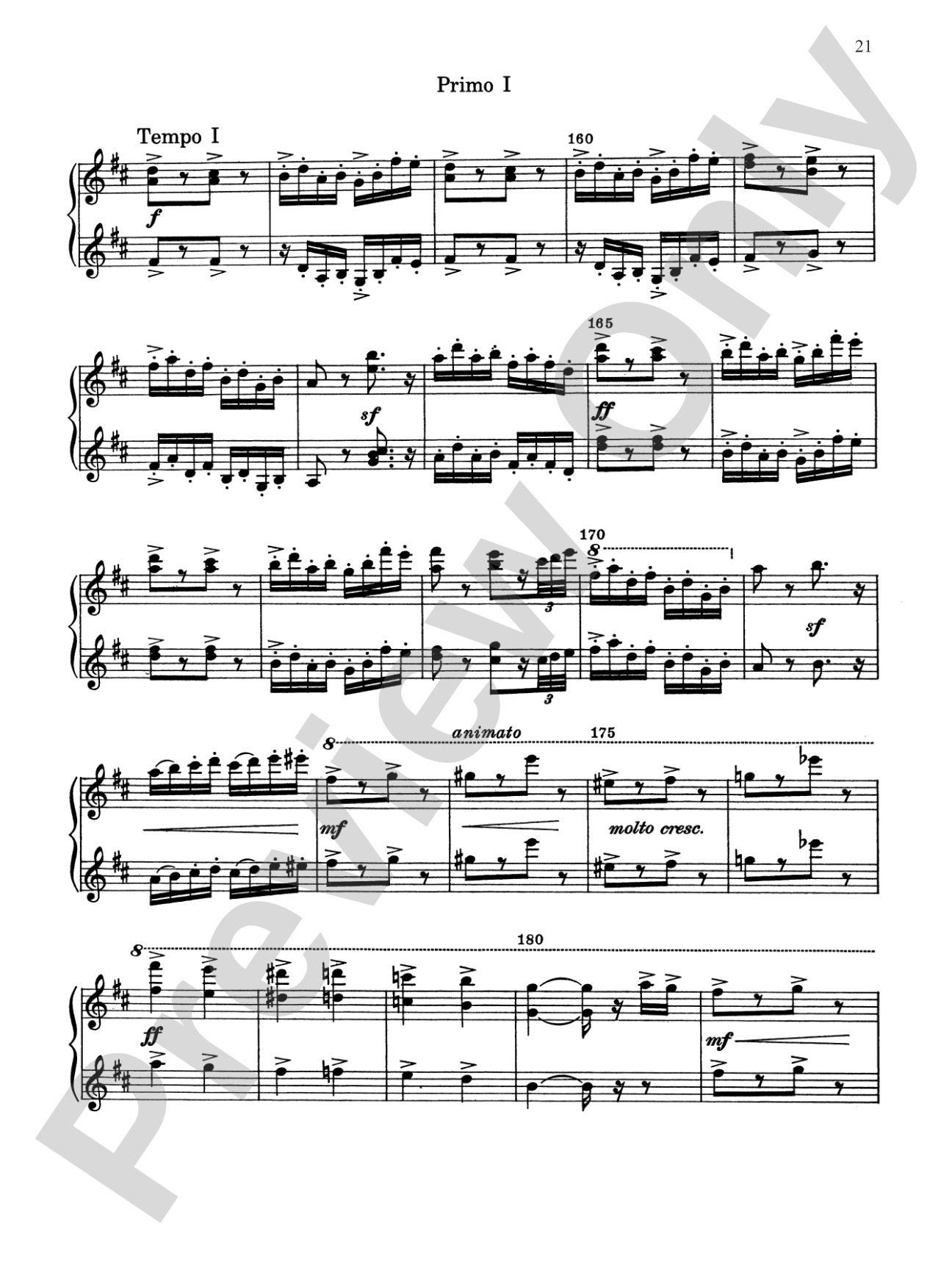
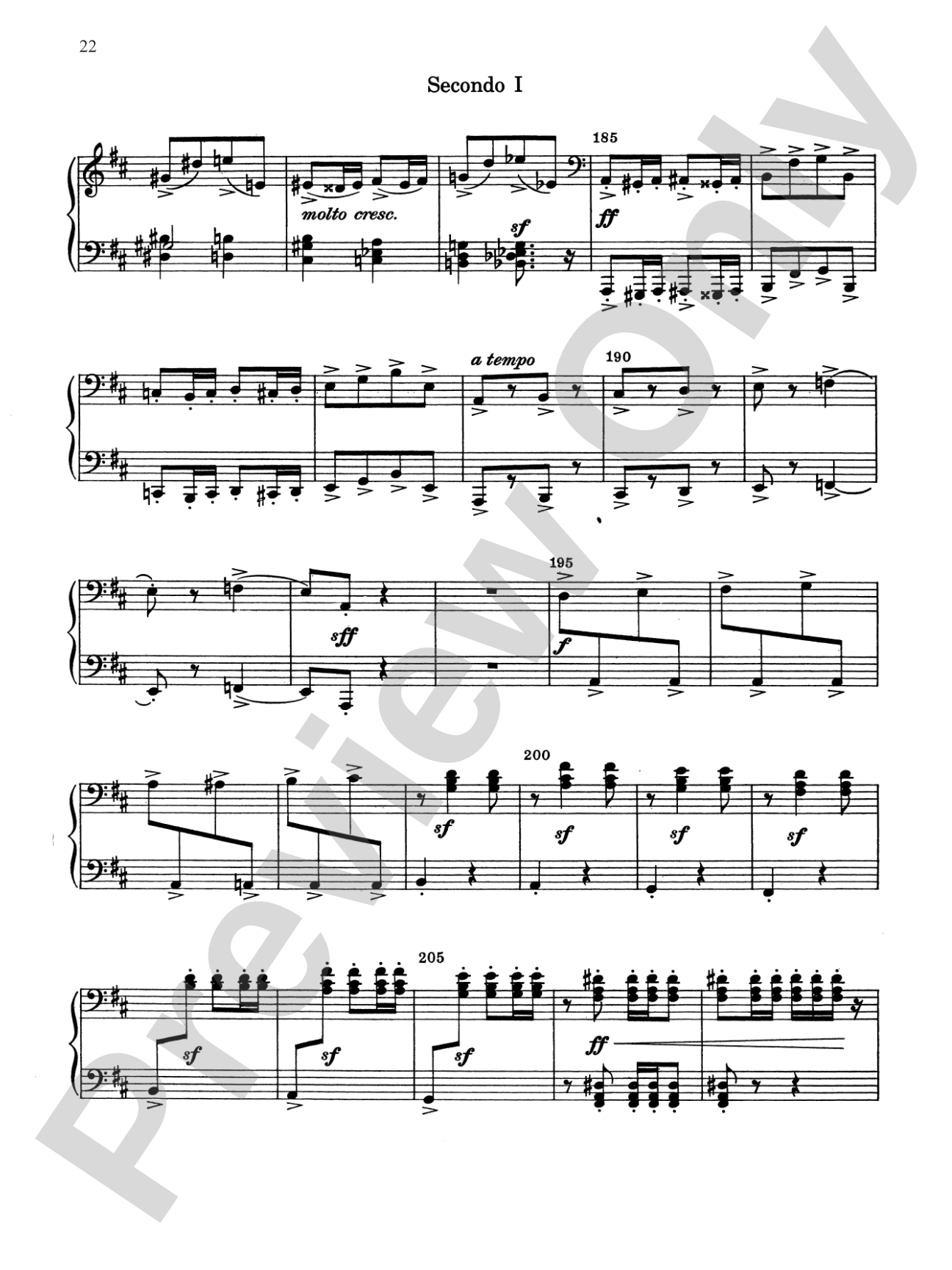
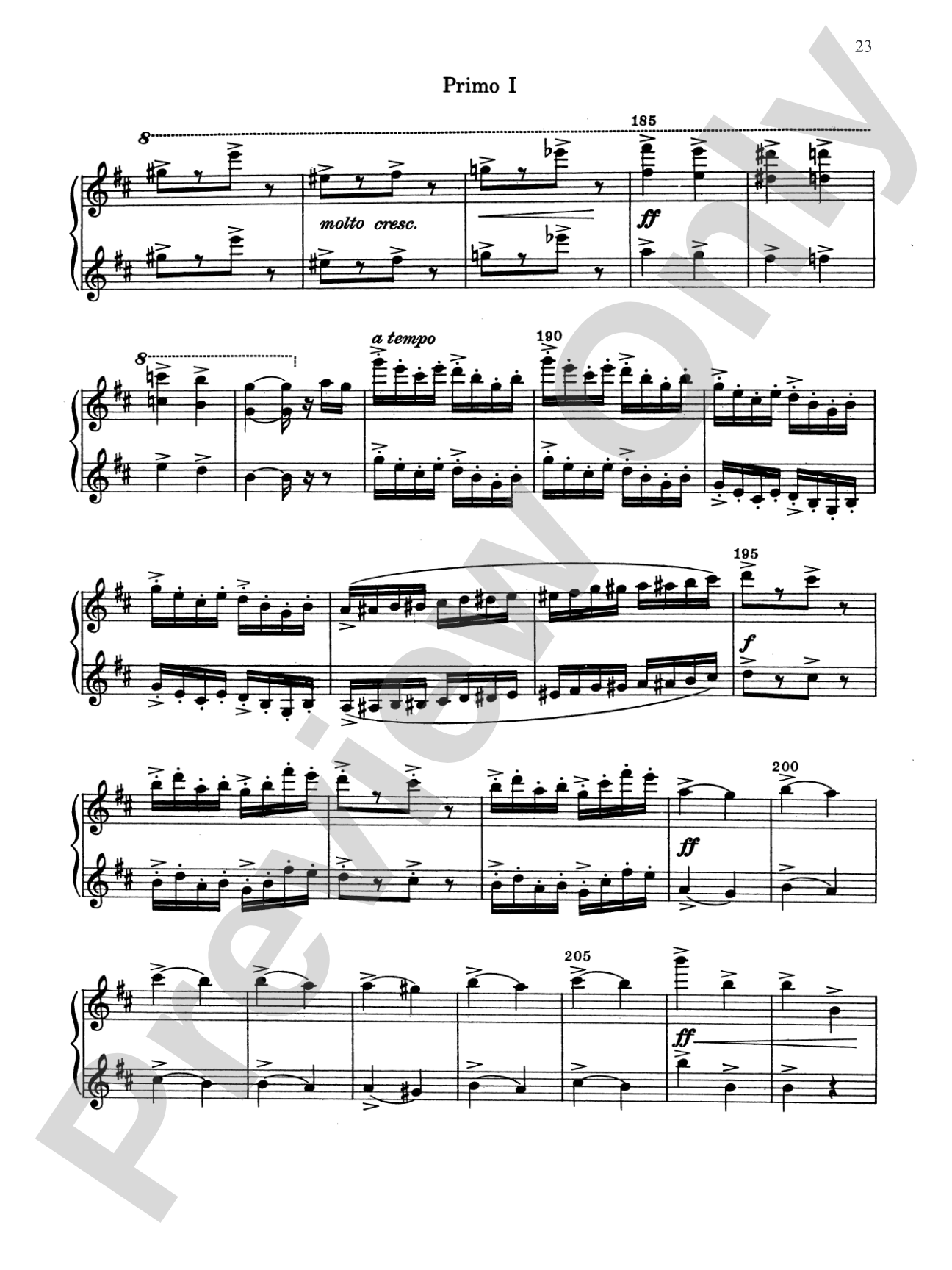
The 7 Classical favorites in this collection have been masterfully arranged for two pianos, eight hands. Titles: Allegro Deciso from Water Music * German Dance (K. 605, No. 3) * Pomp and Circumstance (Military March No. 1 in D) * St. Anthony Chorale from Brahms' Variations on a Theme by Haydn * Triumphal March from Sigurd Jorsalfar * Two Handel Minuets from Music for the Royal Fireworks * Two Trumpet Voluntaries. 2 copies are required for performance. 116 pages. A Federation Festivals 2024-2028 selection.


7 Classical Favorites Arranged for Two Pianos, Eight Hands - Piano Quartet: Piano isn't in MakeMusic Cloud just yet...but it could be. Let us know you'd like to see it, and you'll help shape what comes next. In the meantime, start a free trial and dive into thousands of interactive titles your students can play along with today.
Request This Title
Tell us you want it.
Start Your Free Trial
Explore everything that's ready to play right now.
Sample Audio
No sample audio found.
Sample Video
No sample videos found.
Additional Details
Series:
Alfred's Classic Editions
Publisher:
Alfred Music
Page Count:
116
SKU:
00-PB-0000643
More about this title
Why we love this
Carper has selected repertoire that straddles the line between beloved orchestral warhorse and intimate chamber writing. Each arrangement preserves the brilliance of the original while creating genuine collaborative moments for four pianists, which is harder to pull off than it sounds.
What to expect
Stately, triumphant, and occasionally dance-like. The familiar themes shine through with fresh energy created by the interplay of four voices at two instruments. You move between ceremonial grandeur (the Elgar and Grieg marches), baroque elegance (Handel and the Trumpet Voluntaries), and moments of genuine wit (the German Dance).
Who it's for
Intermediate piano students who have developed solid technique and are ready to experience the discipline and reward of ensemble playing. This collection works equally well for a high school piano class, a community music program seeking accessible quartet repertoire, or a studio teacher looking to motivate advanced students with familiar material in a new context.
How to get the most out of it
- Balance the distribution of melodic material between the two pianos; mark which pianist carries the primary theme in each section to avoid muddiness during early rehearsals.
- Record a run-through with click before your first ensemble rehearsal so individual pianists can internalize the ensemble tempo and phrasing choices.
- Pay attention to how accompaniment figures interact between the two instruments; staggering the attack slightly can clarify texture without sacrificing rhythmic unity.
- Invest time in the transition passages and key changes, where hand-off timing between pianos matters most for forward momentum.
How to use it
Consider this collection for a spring concert that celebrates ensemble work across your studio or program. The pieces stand well as individual selections, so you can program two or three throughout a concert rather than performing all seven at once. It also works as a capstone repertoire choice for intermediate pianists, demonstrating how serious classical training opens doors to collaborative playing.
Skills your students will build
- Balancing melody and accompaniment roles within an ensemble setting
- Reading and coordinating between two different piano parts simultaneously
- Maintaining rhythmic precision while listening to other players
- Interpreting classical repertoire with period-appropriate phrasing and articulation
- Responding to ensemble cues and adjusting tempo or dynamics in real time