
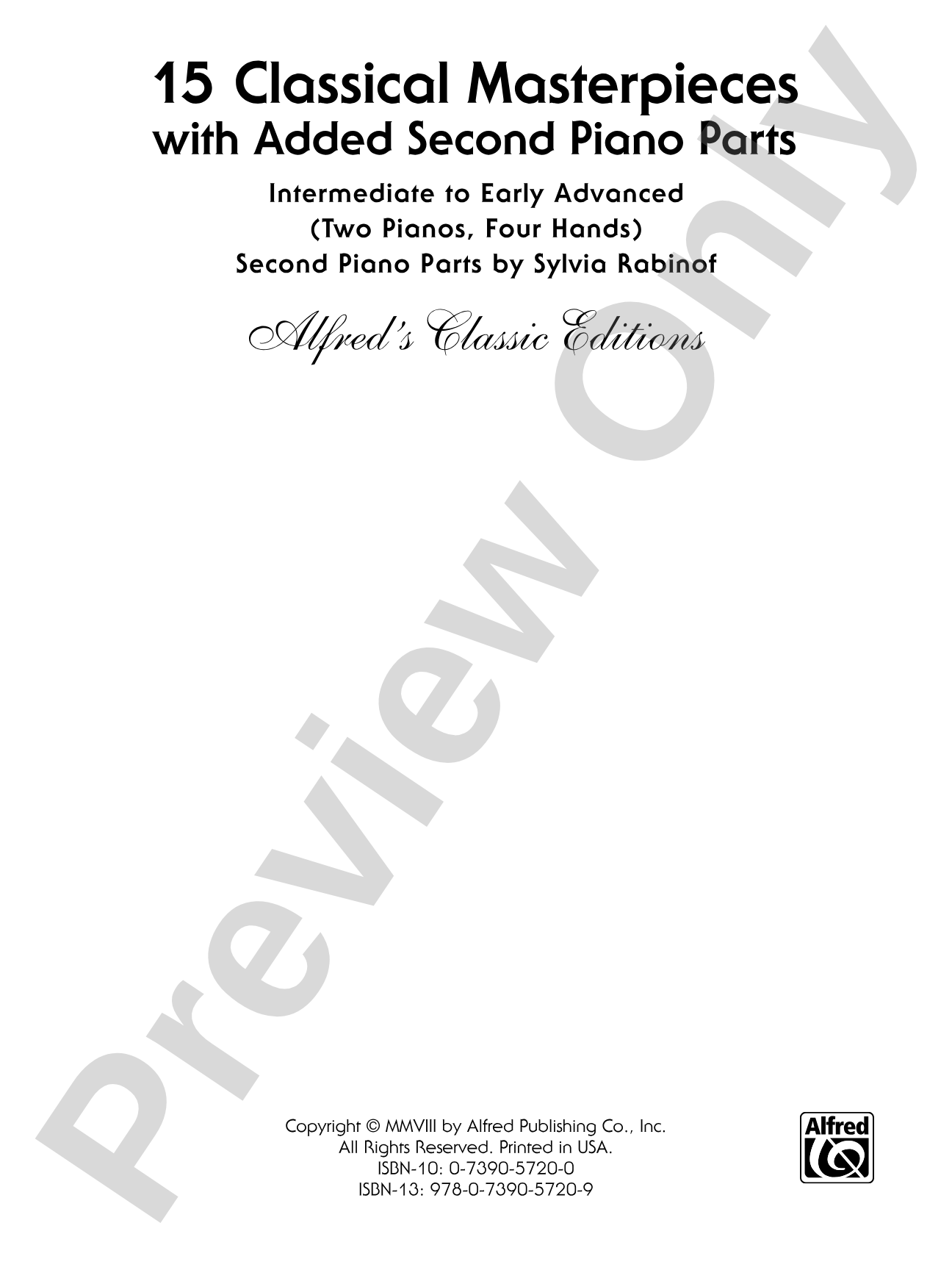

15 Classical Masterpieces with Added Second Piano Parts: Intermediate to Early Advanced - Piano Duo (2 Pianos, 4 Hands): Piano Duets & Four Hands
Intermediate to Early Advanced (Two Pianos, Four Hands) Second Piano Parts
By Sylvia Rabinof
Level: Intermediate / Early Advanced
Item: 00-PB-0000636
$12.95
Pickup currently not available
Related Items
15 Classical Masterpieces with Added Second Piano Parts: Piano Duo (2 Pianos, 4 Hands) Book (2 copies required) |
$12.95
|
View |
Description
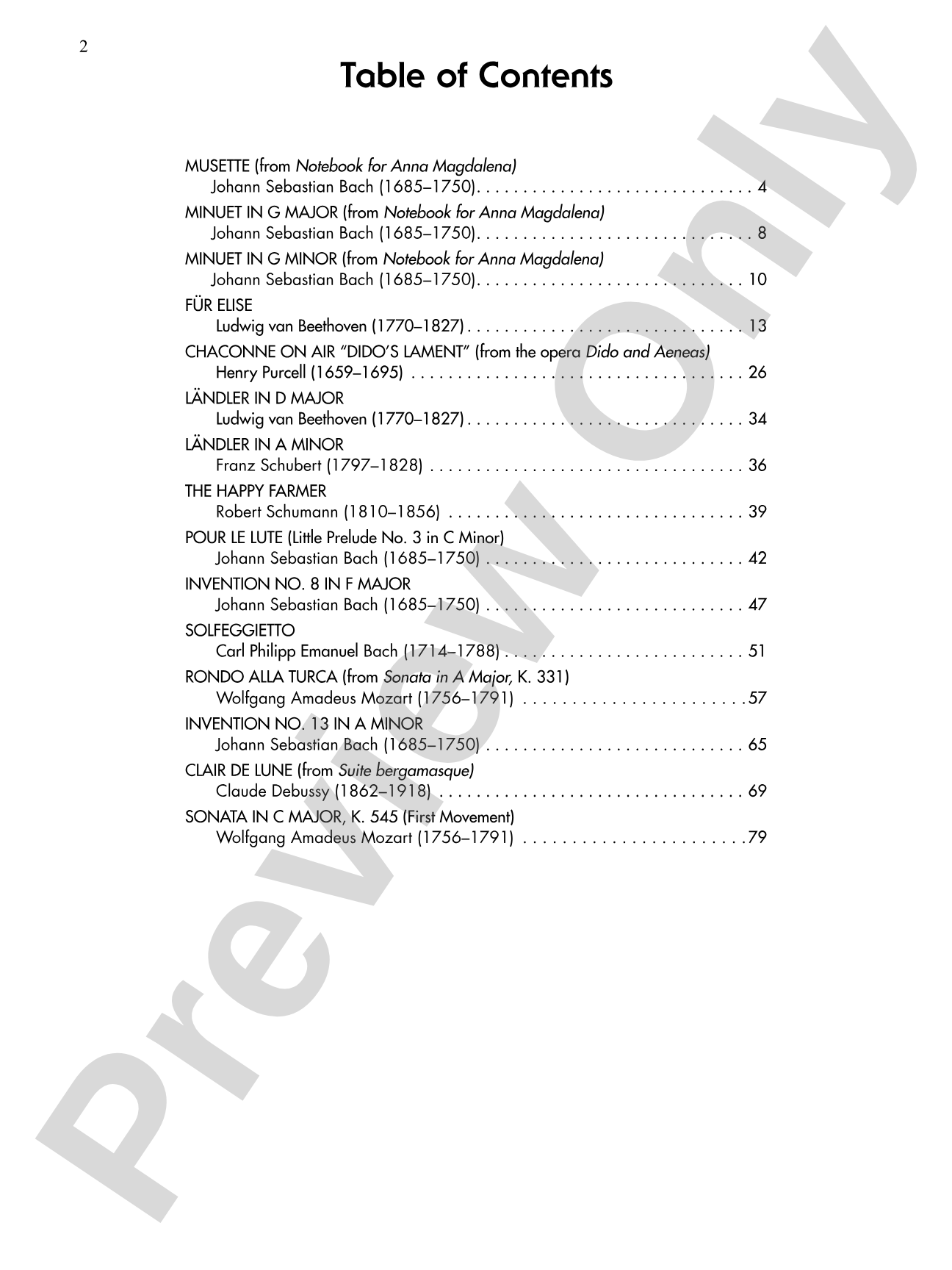
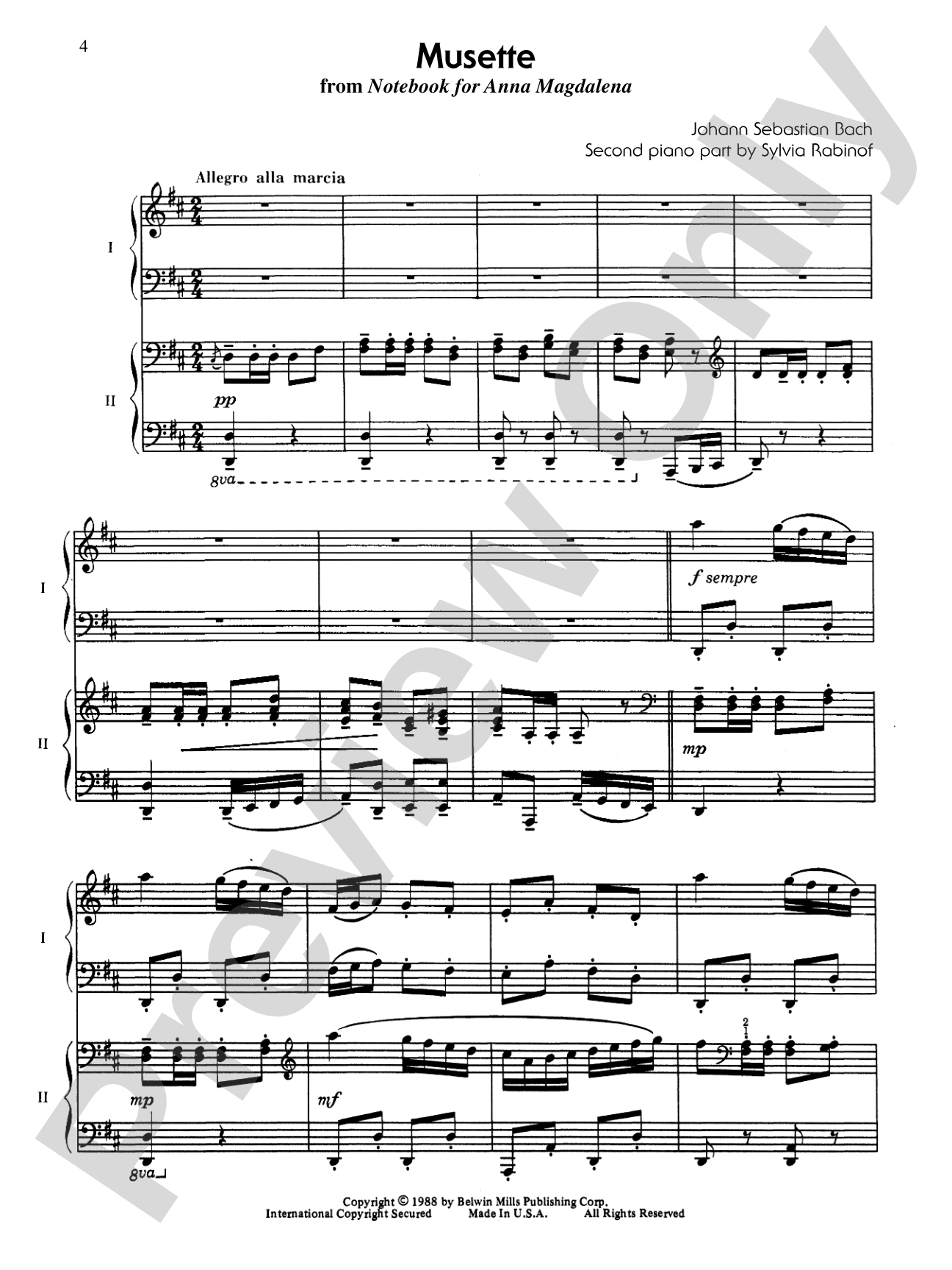
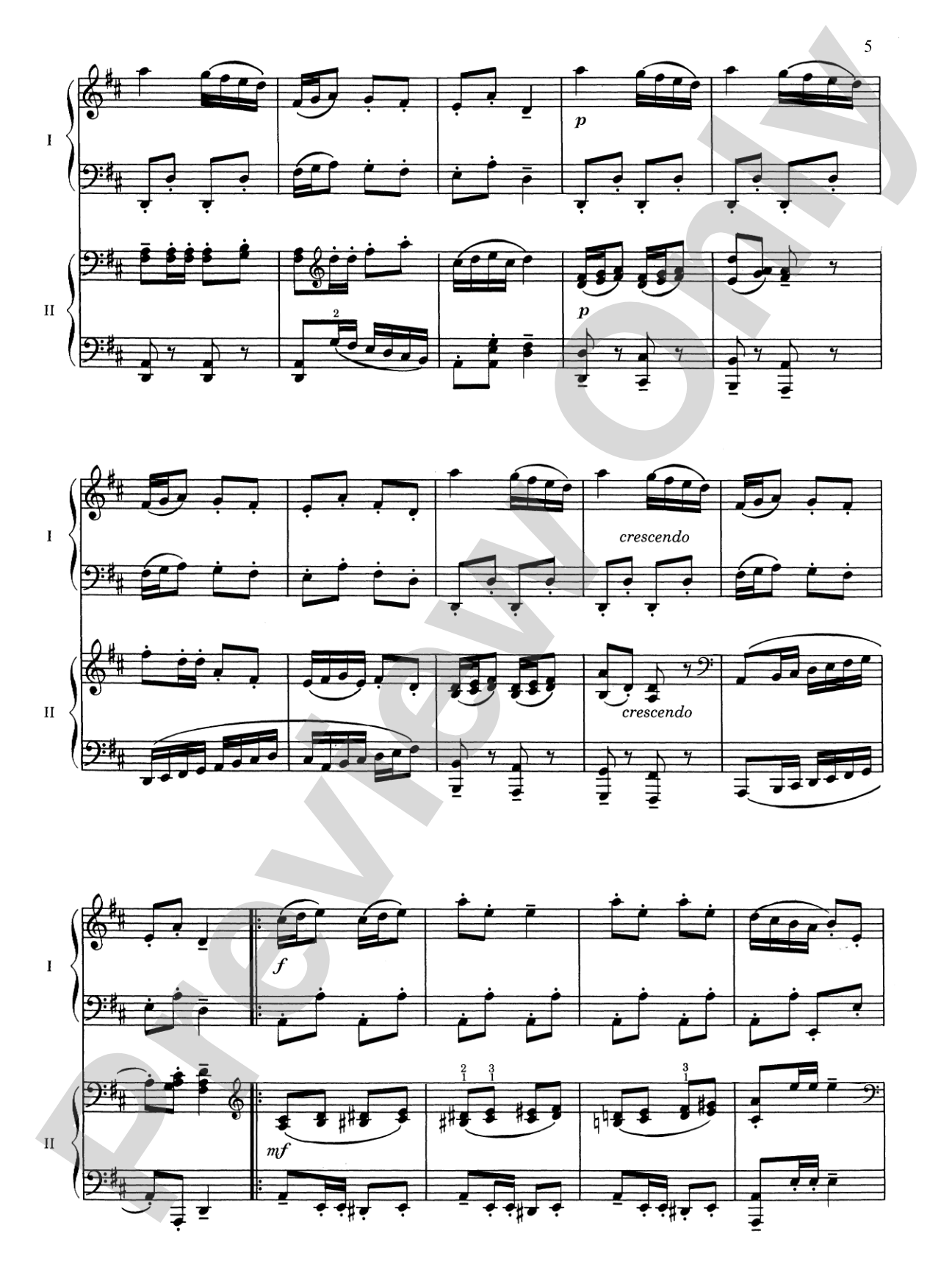
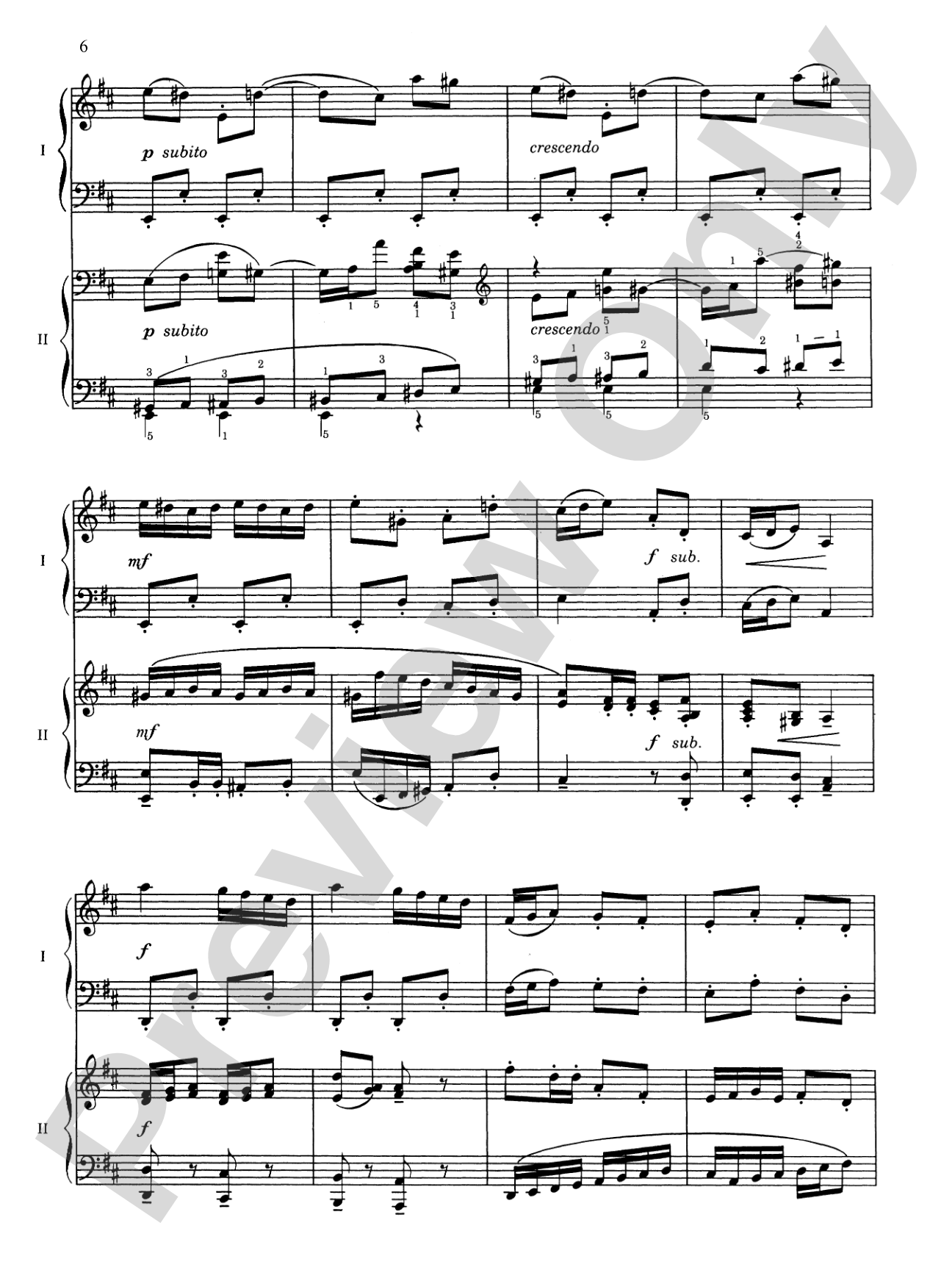
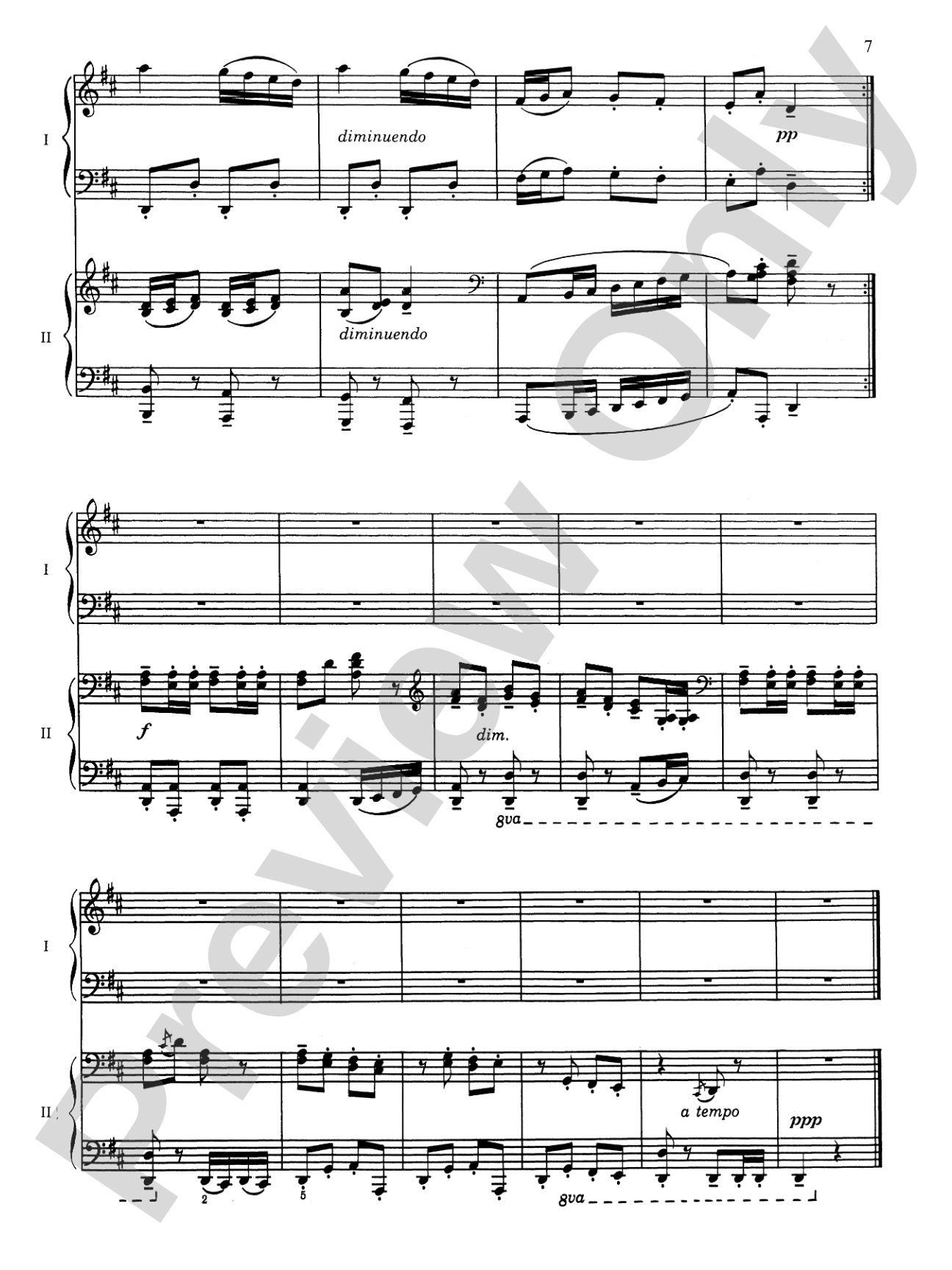
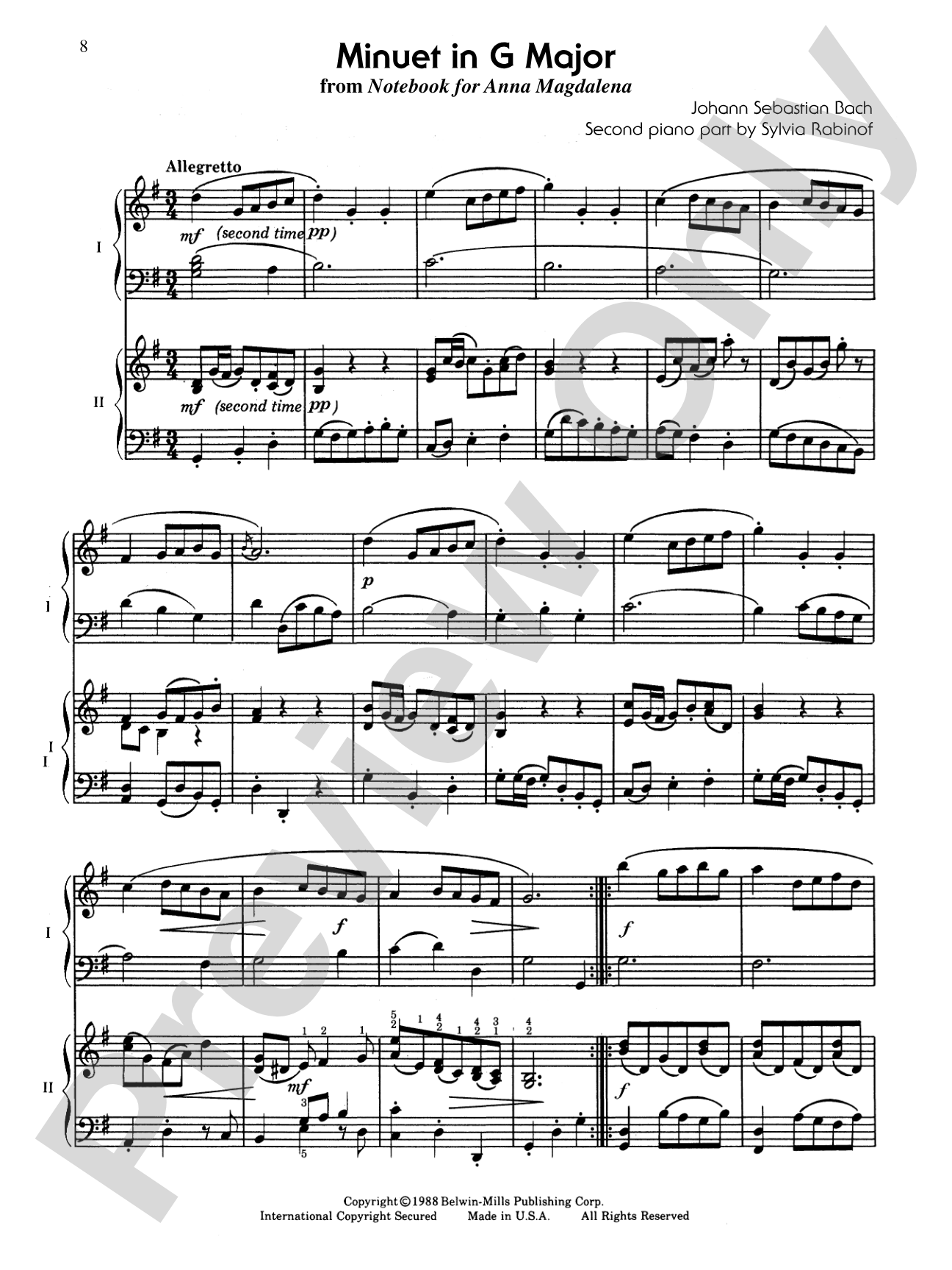
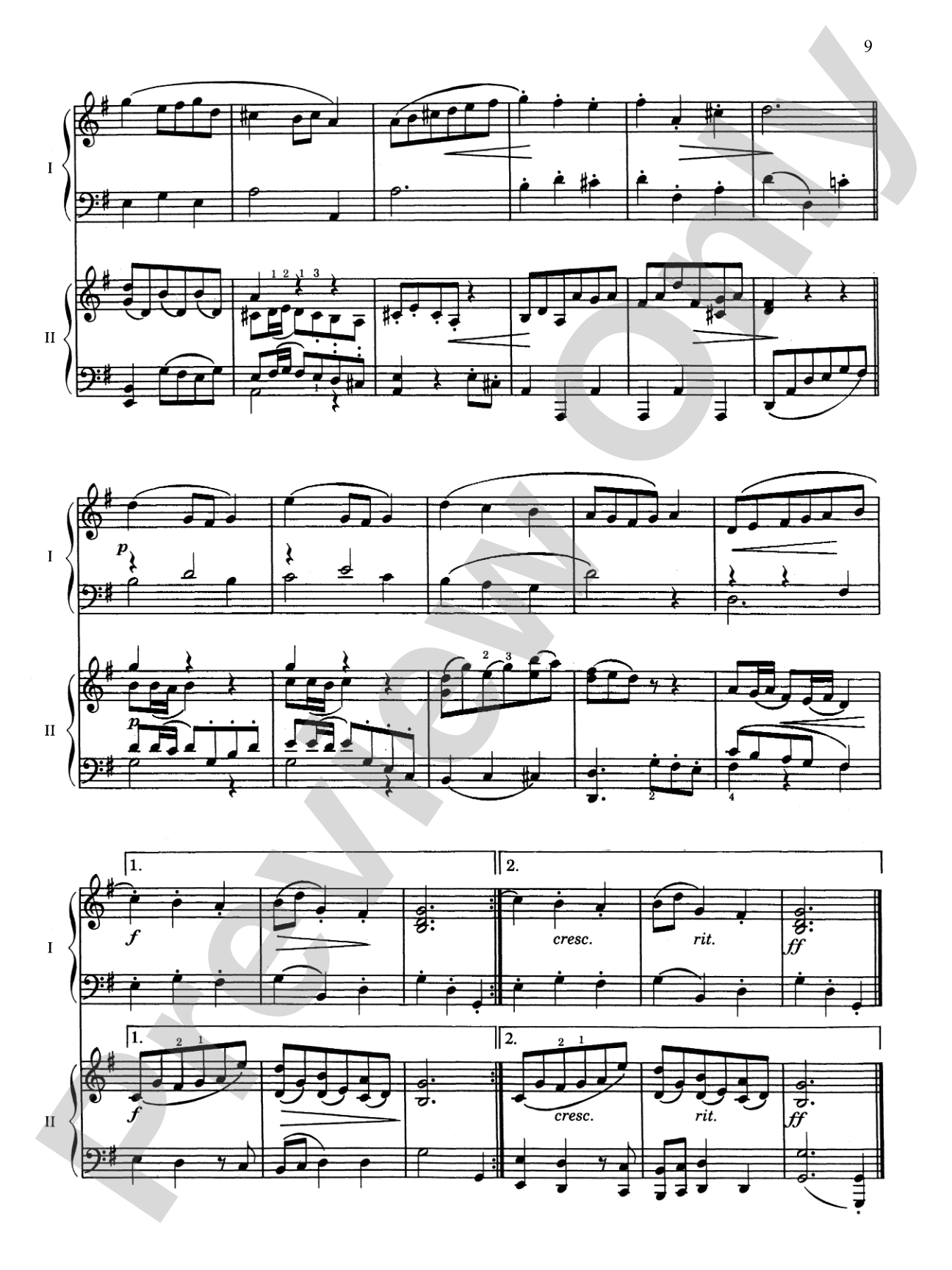
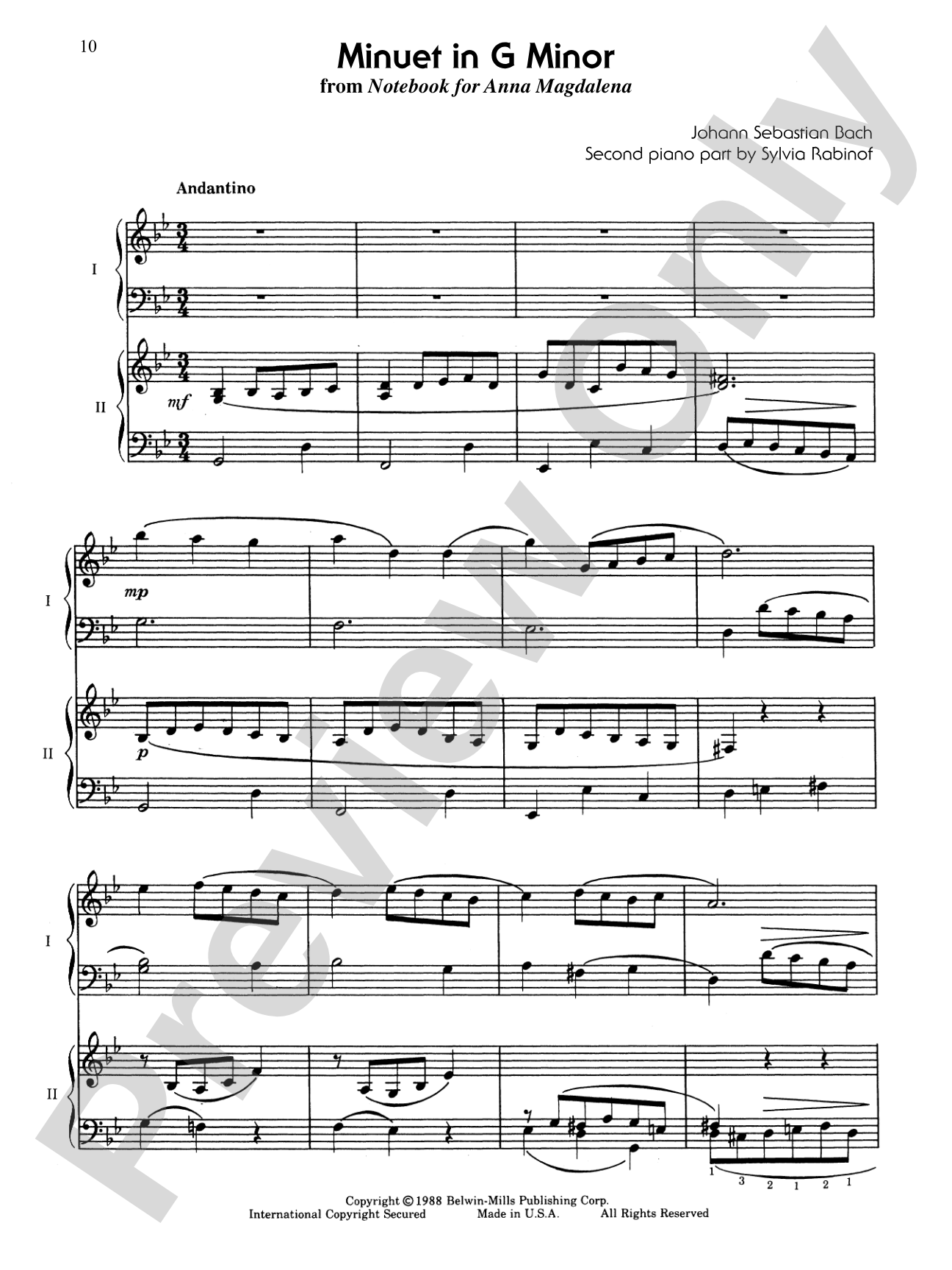
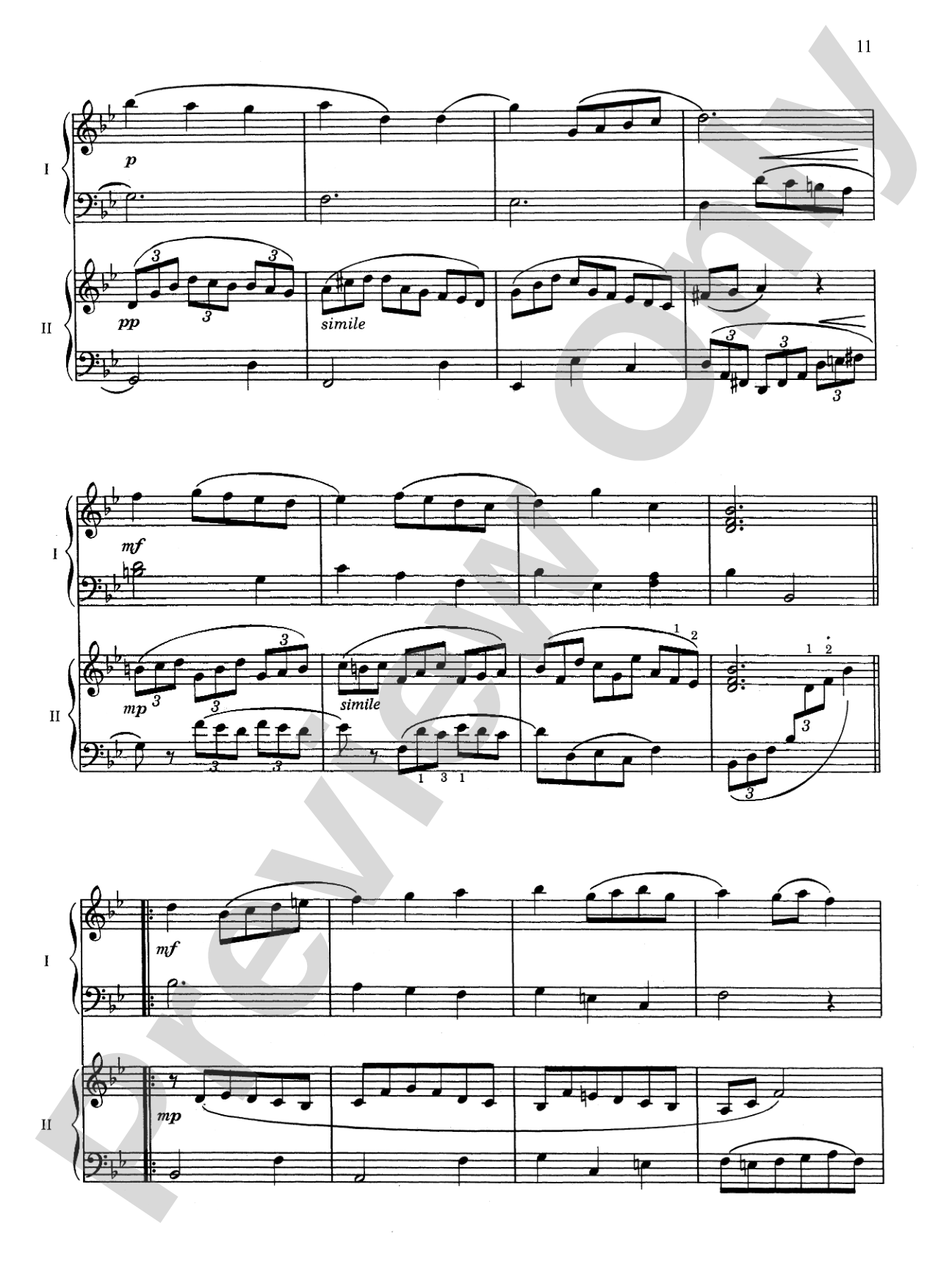
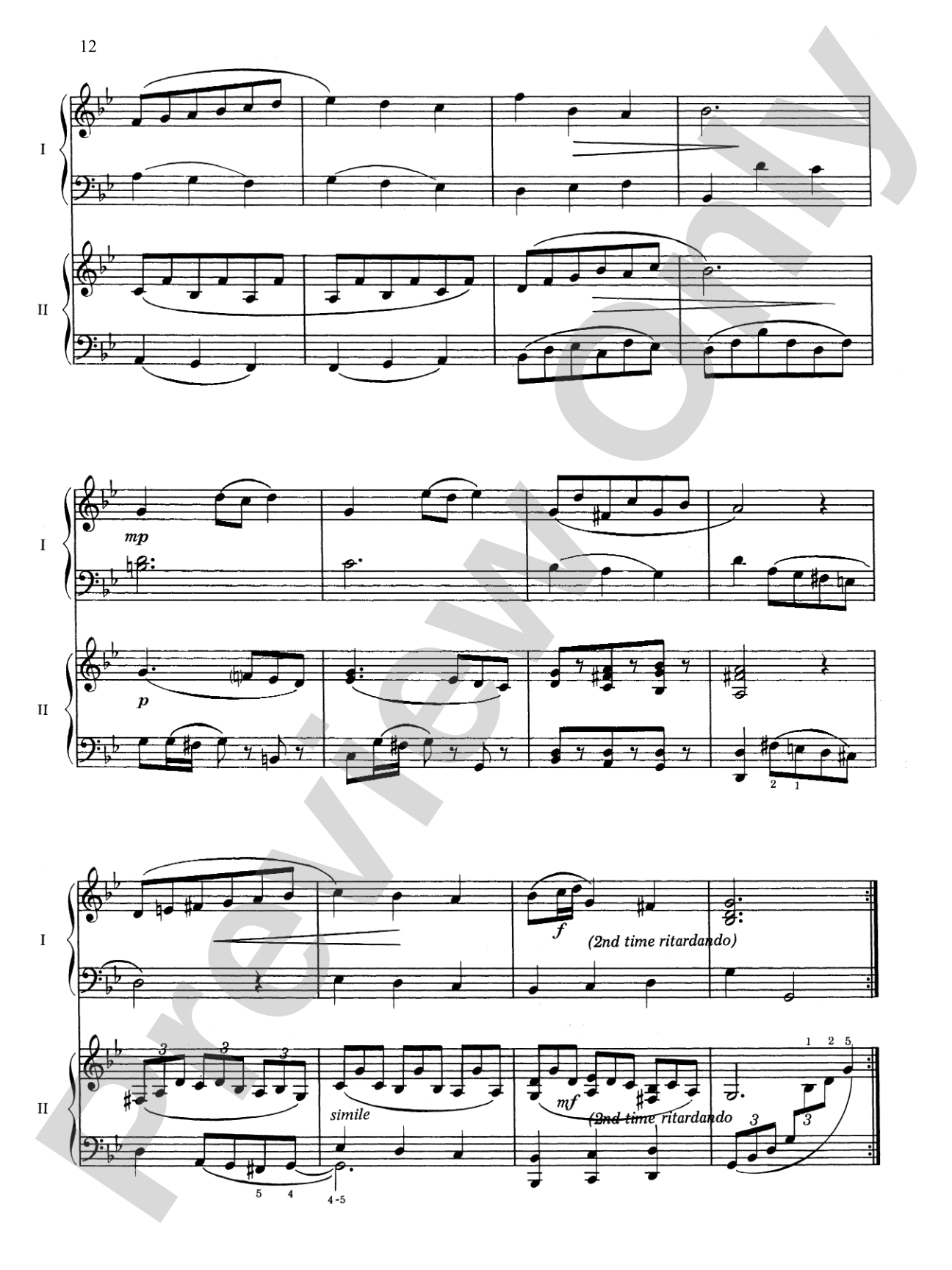
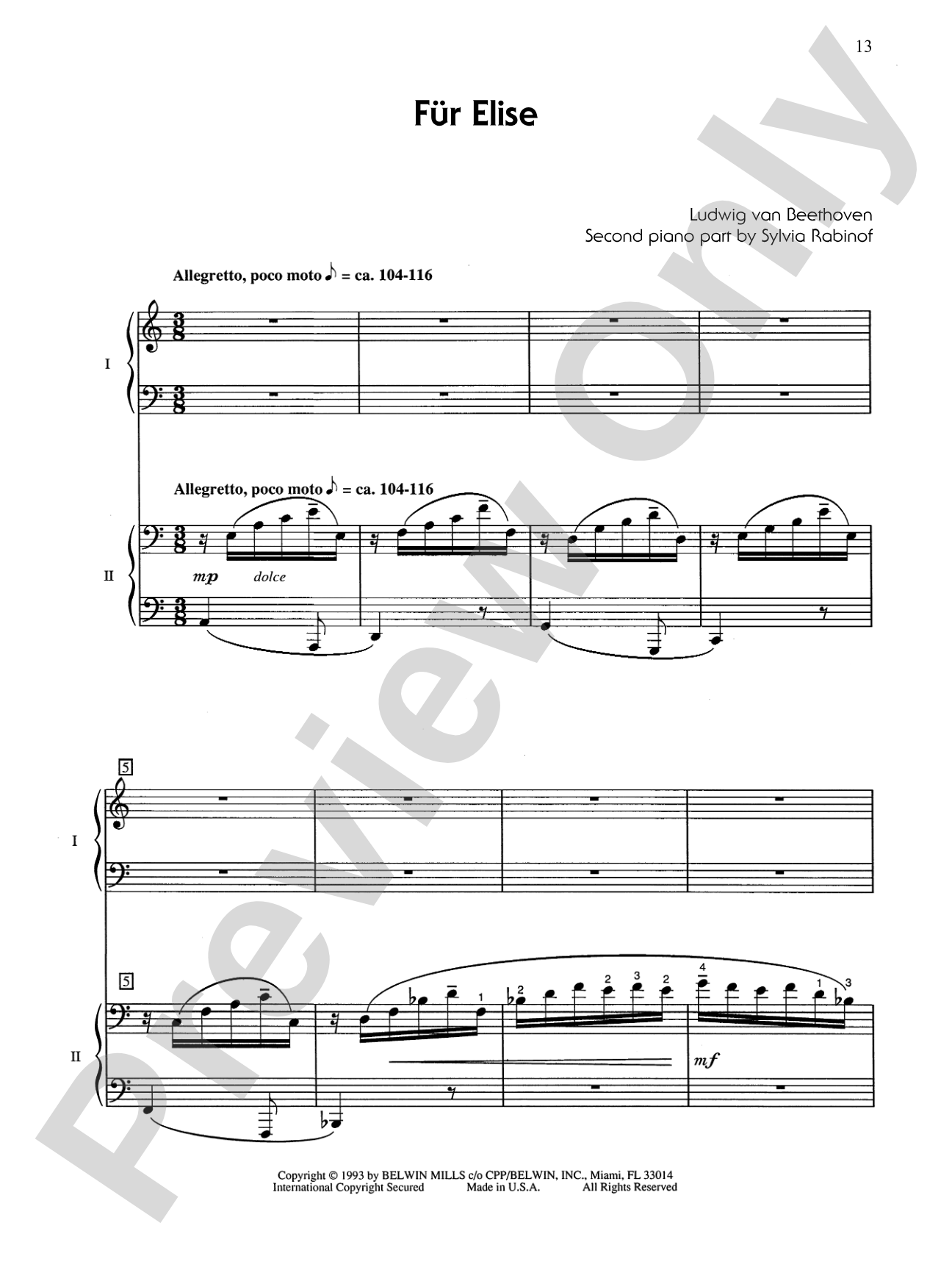
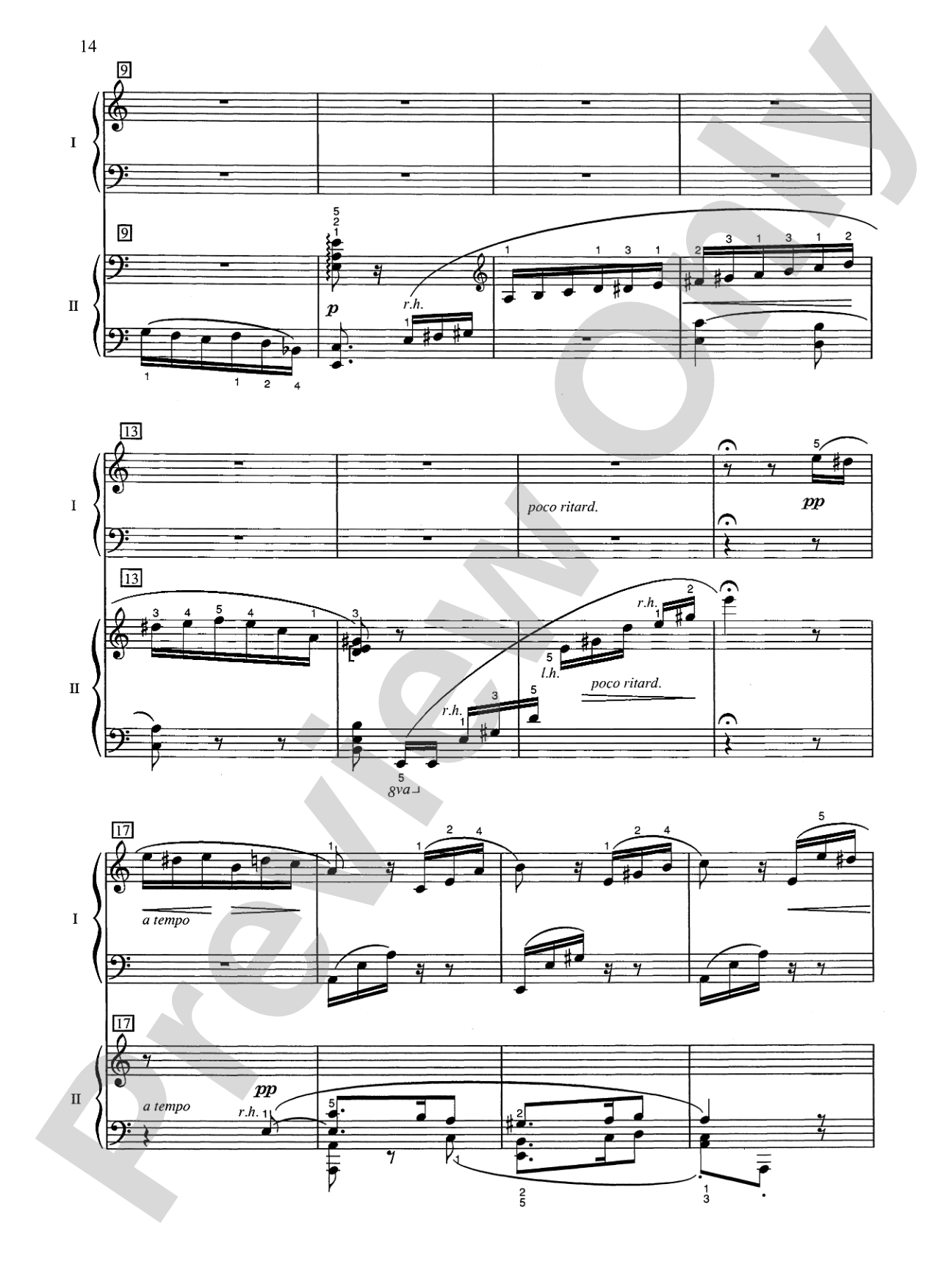
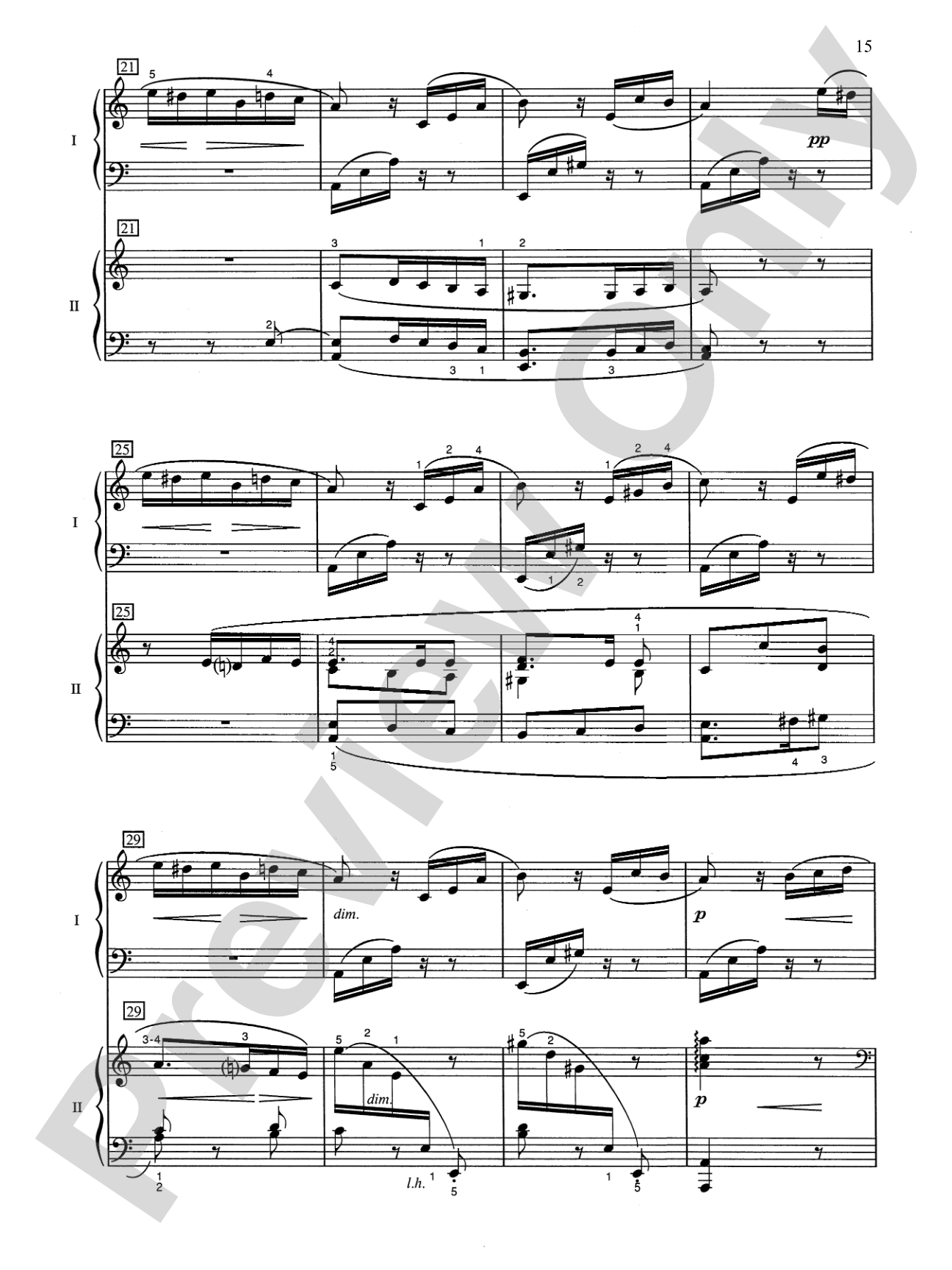
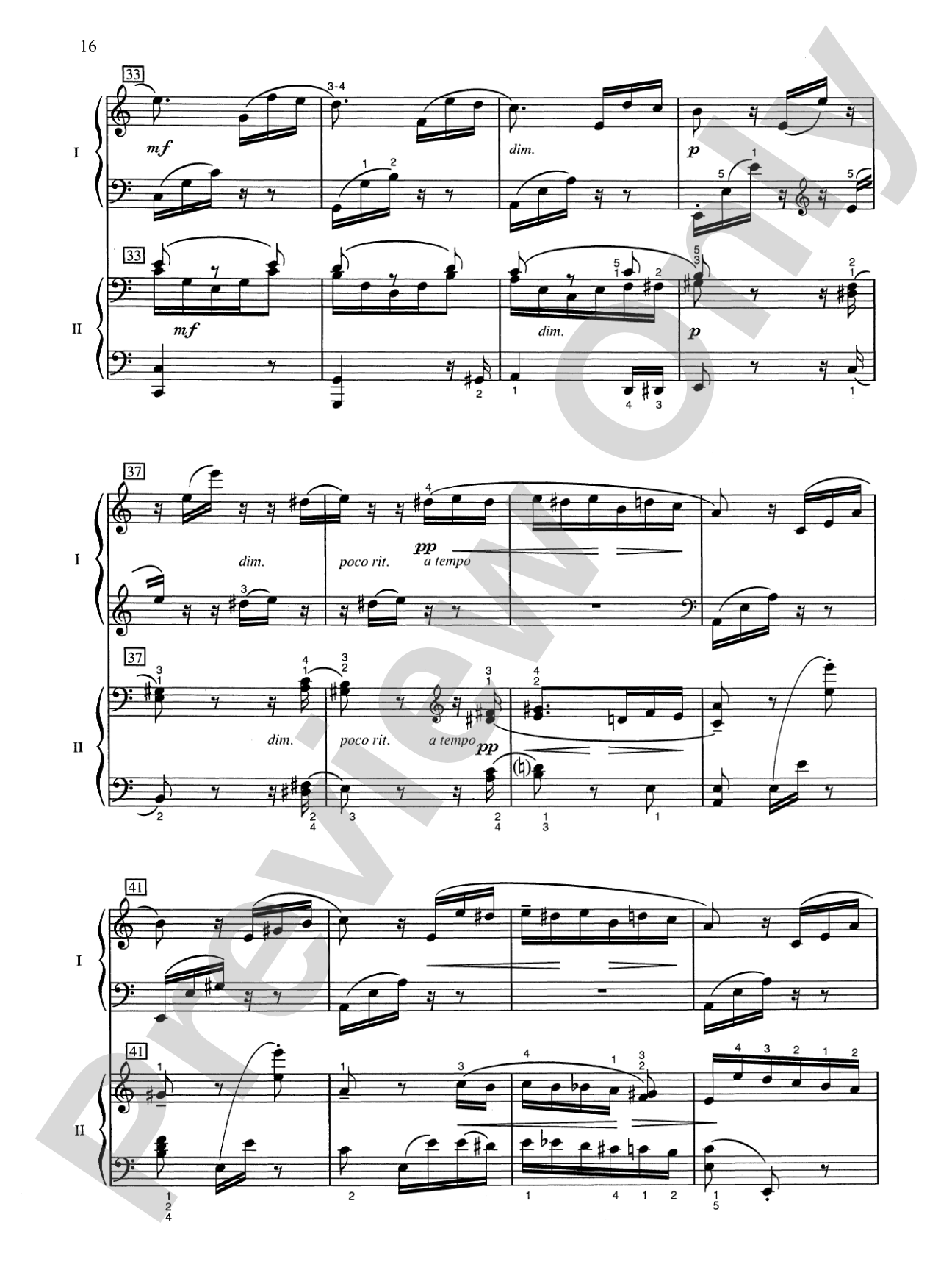
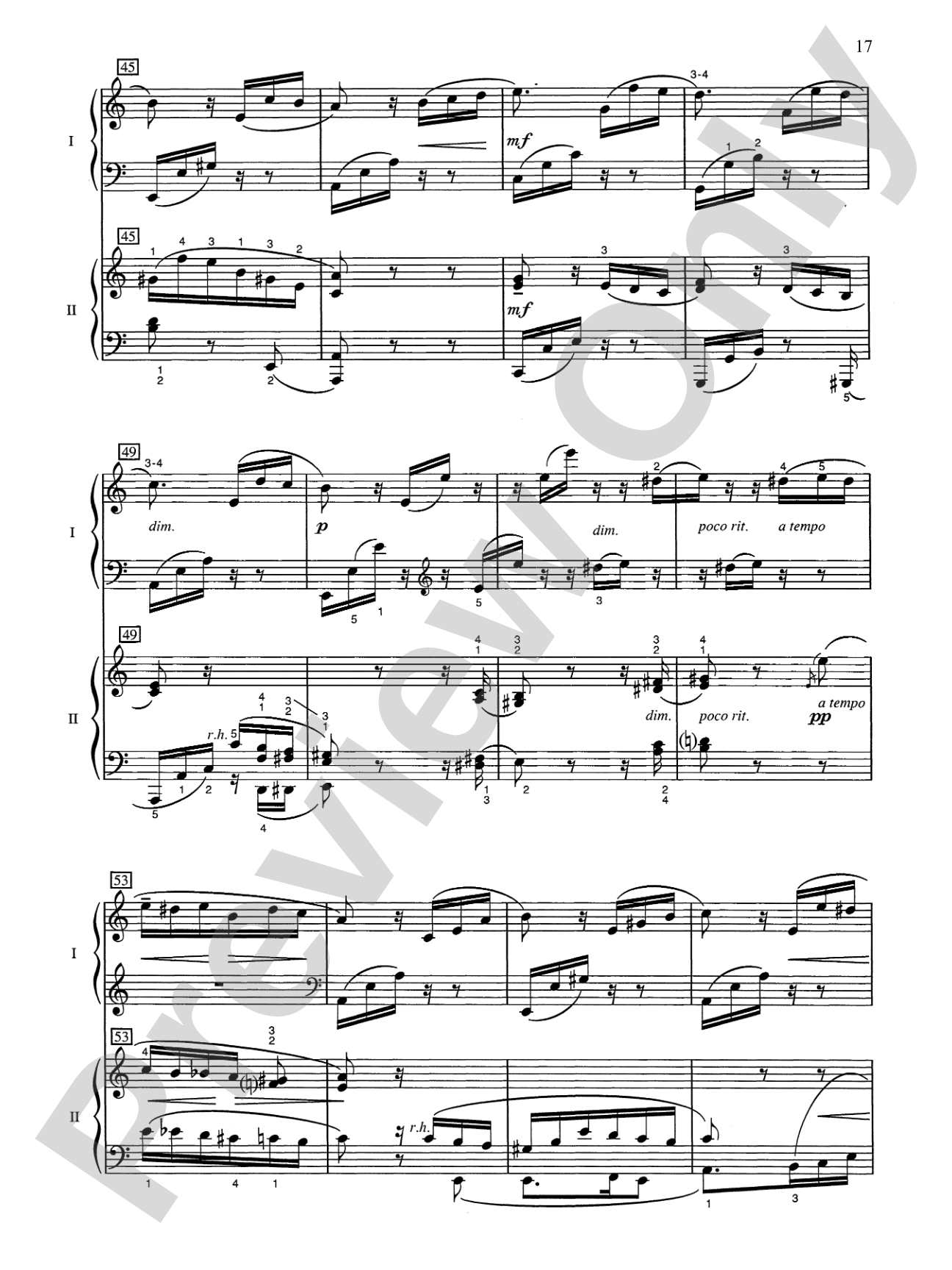
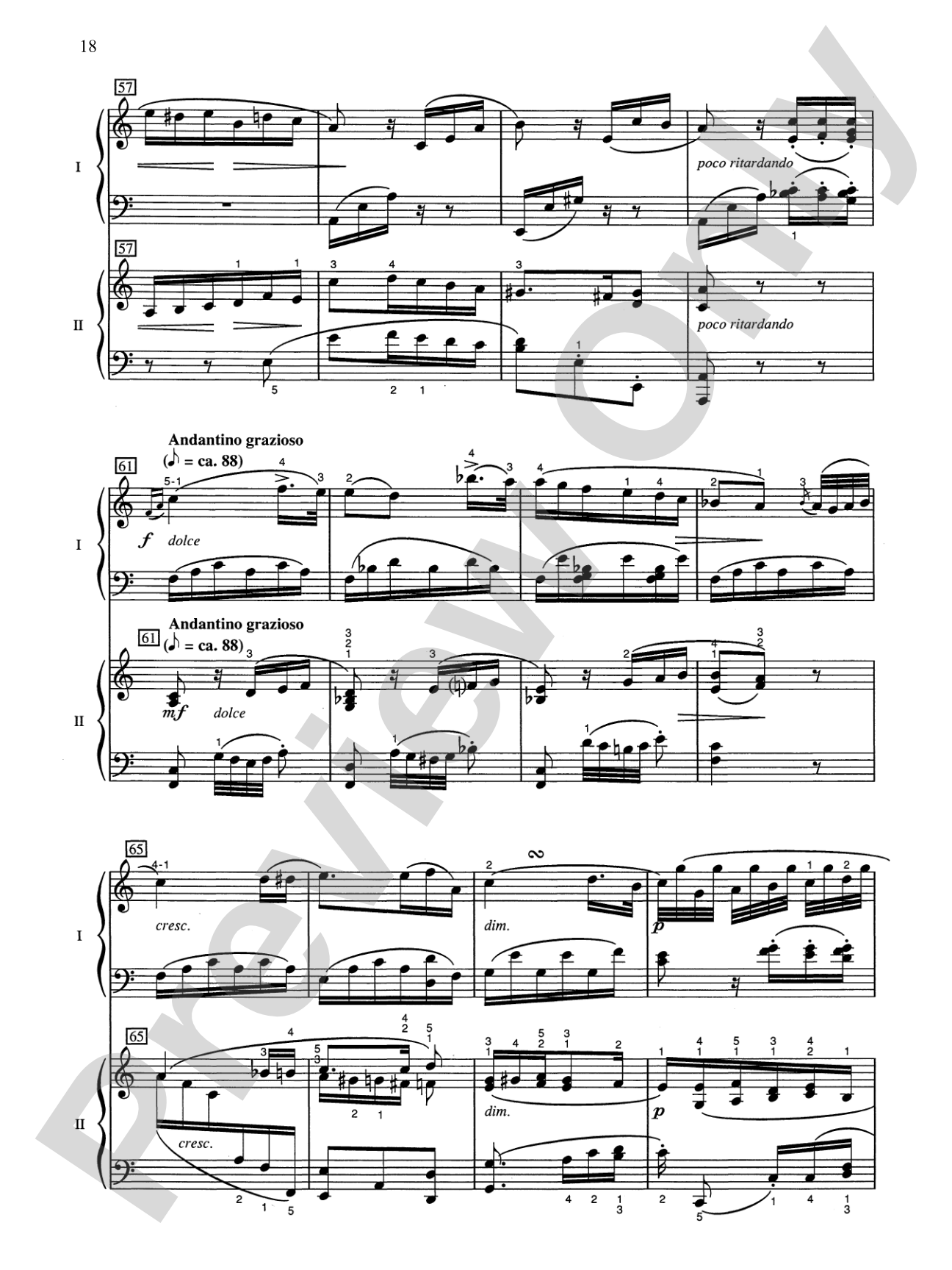
Pianist and composer Sylvia Rabinof has written beautiful accompaniments to 15 masterpieces from the world's most celebrated composers. Intermediate to Early Advanced; for two pianos, four hands. Titles: Musette from Notebook for Anna Magdalena (Bach) * Minuet in G Major from Notebook for Anna Magdalena (Bach) * Minuet in G Minor from Notebook for Anna Magdalena (Bach) * Für Elise (Beethoven) * Chaconne on Air "Dido's Lament" from Dido and Aeneas (Purcell) * Ländler in D Major (Beethoven) * Ländler in A Minor (Schubert) * The Happy Farmer (Schumann) * Pour le Lute (Little Prelude No. 3 in C Minor) (Bach) * Invention No. 8 in F Major (Bach) * Solfeggietto (C. P. E. Bach) * Rondo Alla Turca from Sonata in A Major, K. 331 (Mozart) * Invention No. 13 in A Minor (Bach) Clair de Lune from Suite bergamasque (Debussy) * Sonata in C Major, K. 545 (First Movement) (Mozart). 88 pages. A Federation Festivals 2024-2028 selection.


15 Classical Masterpieces with Added Second Piano Parts: Intermediate to Early Advanced - Piano Duo (2 Pianos, 4 Hands): Piano Duets & Four Hands isn't in MakeMusic Cloud just yet...but it could be. Let us know you'd like to see it, and you'll help shape what comes next. In the meantime, start a free trial and dive into thousands of interactive titles your students can play along with today.
Request This Title
Tell us you want it.
Start Your Free Trial
Explore everything that's ready to play right now.
Sample Audio
No sample audio found.
Sample Video
No sample videos found.
Additional Details
Series:
Alfred's Classic Editions
Publisher:
Alfred Music
Page Count:
88
SKU:
00-PB-0000636
More about this title
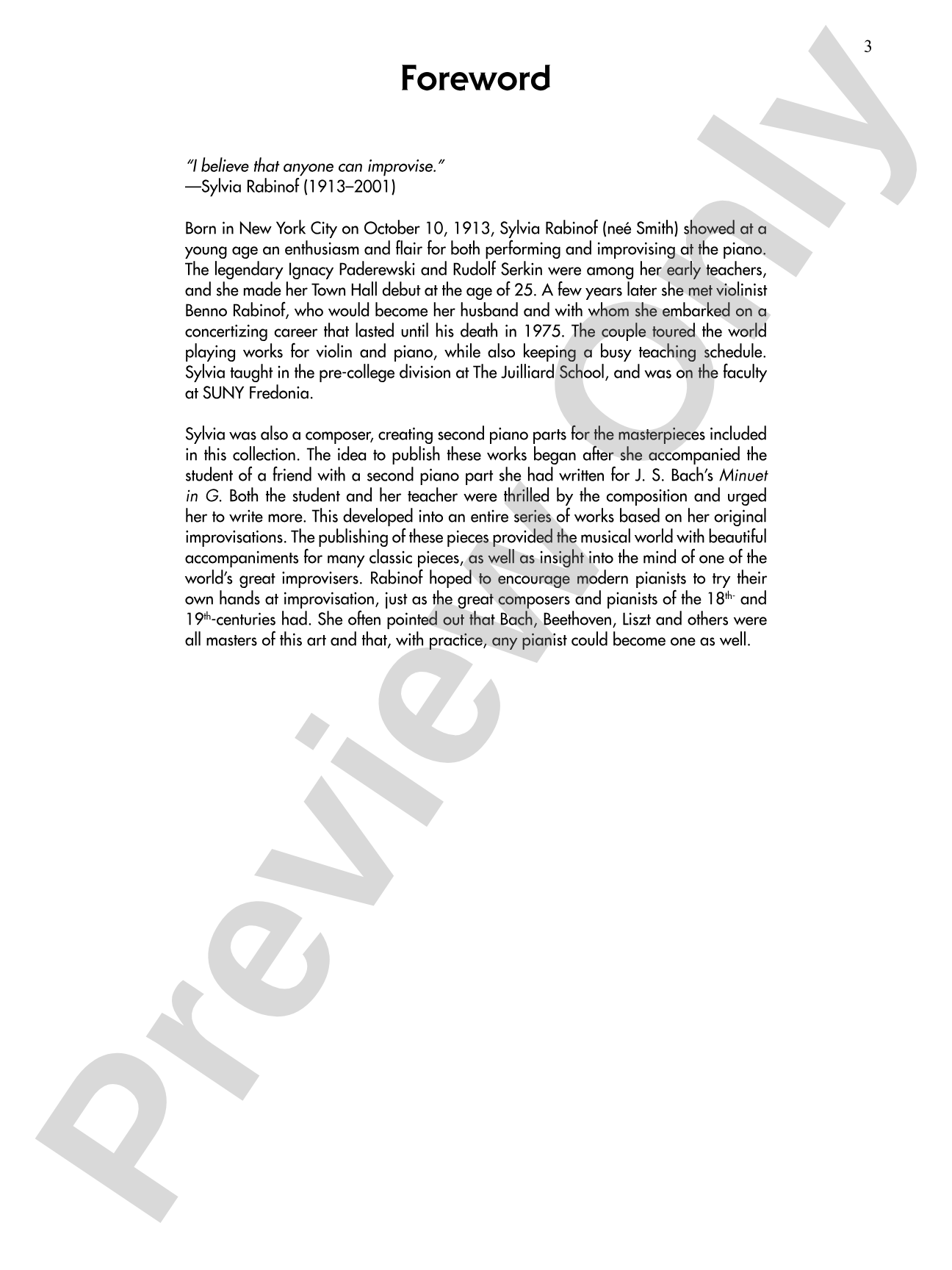
About the Composer: Sylvia Rabinof
Sylvia Rabinof is a pianist and composer whose arrangement work centers on making canonical repertoire accessible to students at intermediate and early advanced levels. Her approach preserves the integrity of original masterworks while crafting second piano parts that enhance rather than overshadow the primary line.
Why we love this
Rabinof's accompaniments transform solo repertoire into genuine duet experiences without requiring students to learn unfamiliar music. The collection spans three centuries and multiple compositional styles, giving pianists exposure to Bach's counterpoint, Mozart's elegance, Beethoven's invention, and Debussy's impressionism all within one volume.
What to expect
These arrangements maintain the character of their originals while adding textural depth. A Bach invention gains rhythmic vitality; Clair de Lune receives subtle harmonic support that deepens its atmosphere; Rondo Alla Turca becomes a more dramatic dialogue.
Who it's for
Intermediate to early advanced pianists looking to expand their duet repertoire with familiar masterworks. This collection works equally well for two students at similar levels or for a teacher-student pairing where the teacher takes either part.
How to get the most out of it
- Balance the primary melody against the second piano part by thinking of them as conversational partners rather than soloist and accompanist; neither should dominate.
- Record yourself playing the accompaniment part, then practice the main line with the playback to build rhythmic confidence before rehearsing together.
- Establish clear gesture and eye contact during longer passages where synchronized phrasing matters most, particularly in the Debussy and Mozart selections.
How to use it
Feature a single selection as a transition between solo and ensemble repertoire in a student recital, or pair pieces from the same composer to demonstrate stylistic range. The variety makes it ideal for showcase concerts where you want to highlight developing duet skills without programming entirely new material.
Skills your students will build
- Balancing melody and accompaniment in ensemble texture
- Coordinating rhythmic precision with a partner across two pianos
- Interpreting the same composer's style across multiple works
- Managing page turns and cues during performance
- Understanding harmonic function through added second parts