
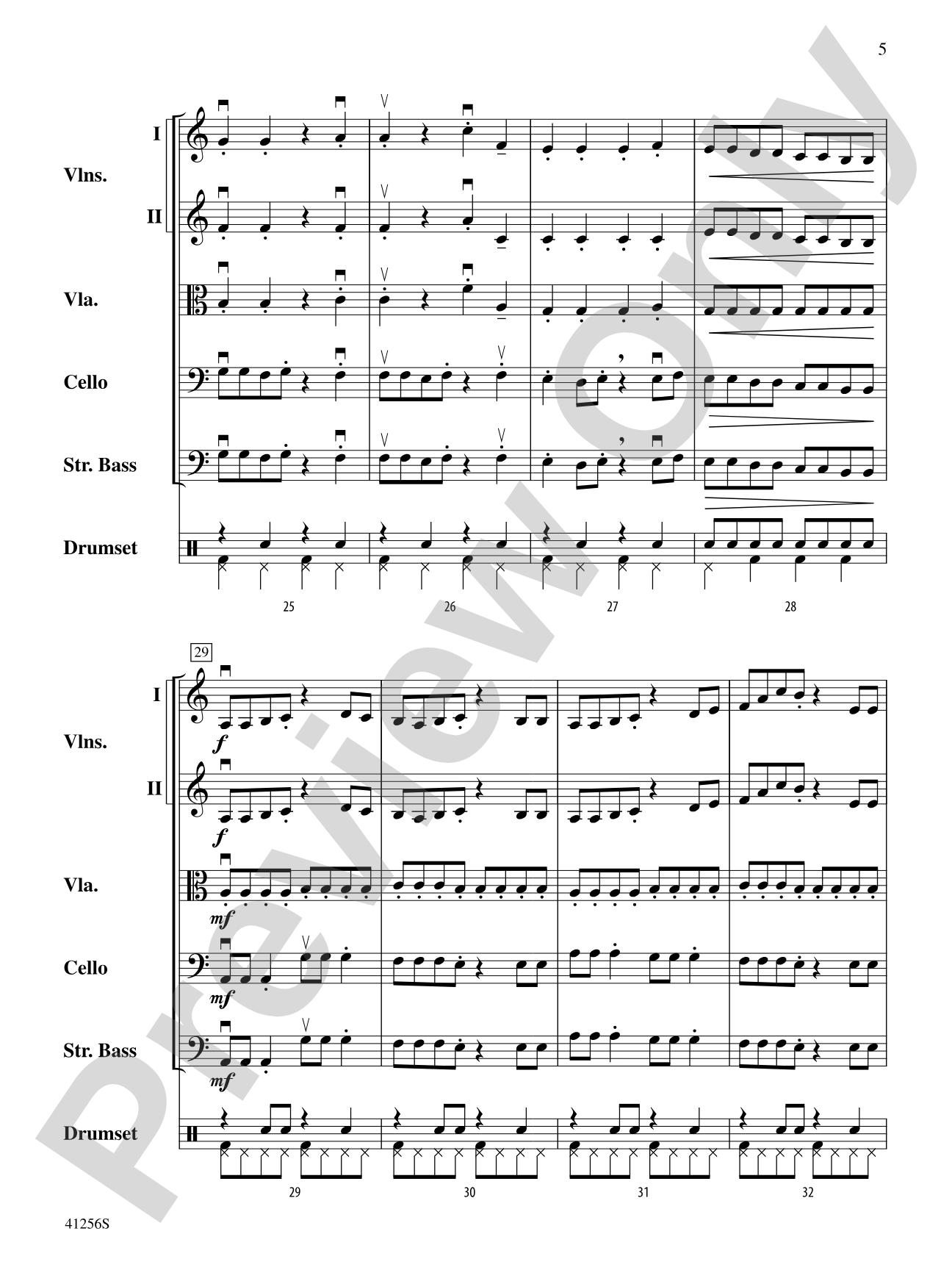
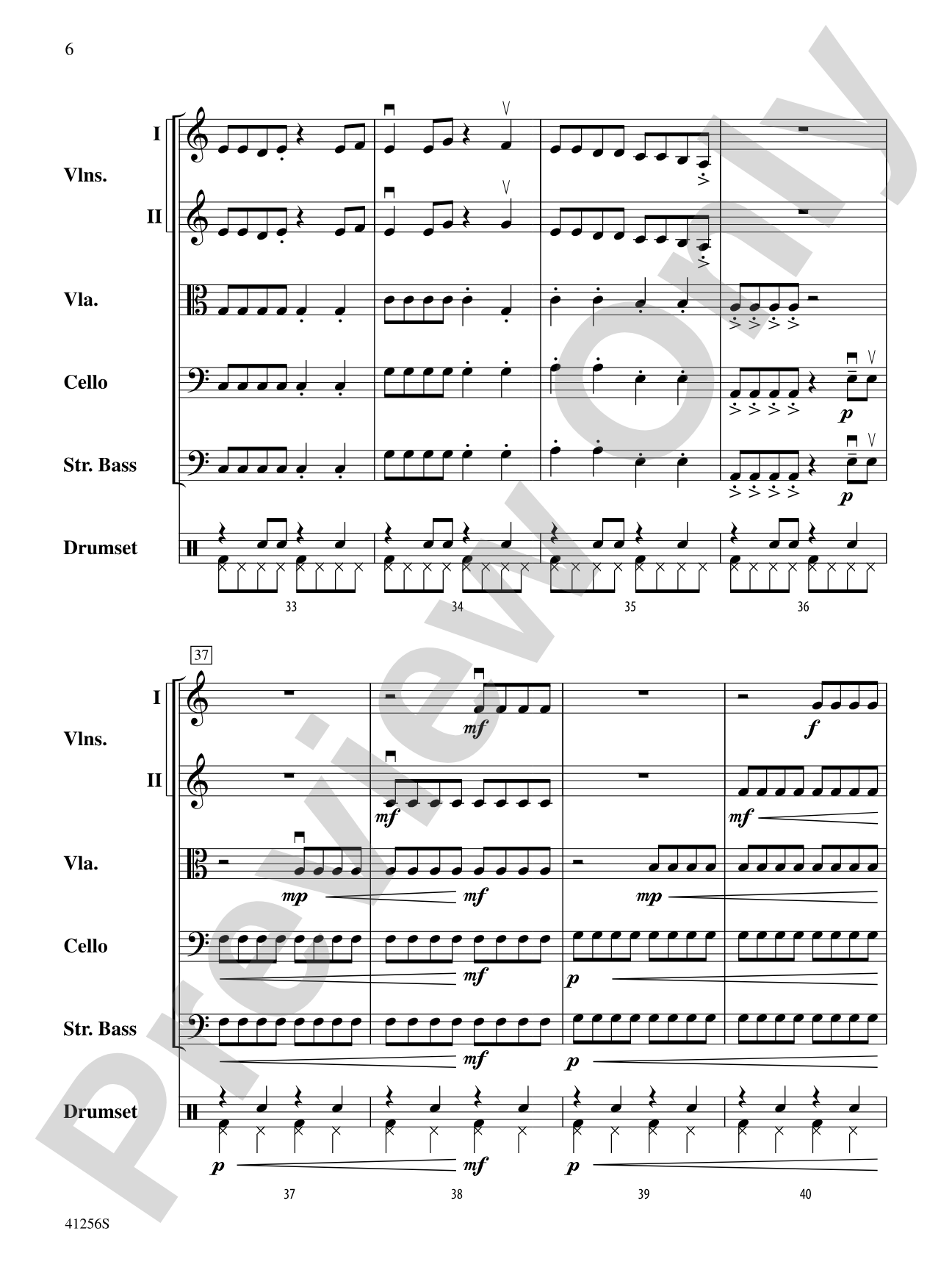
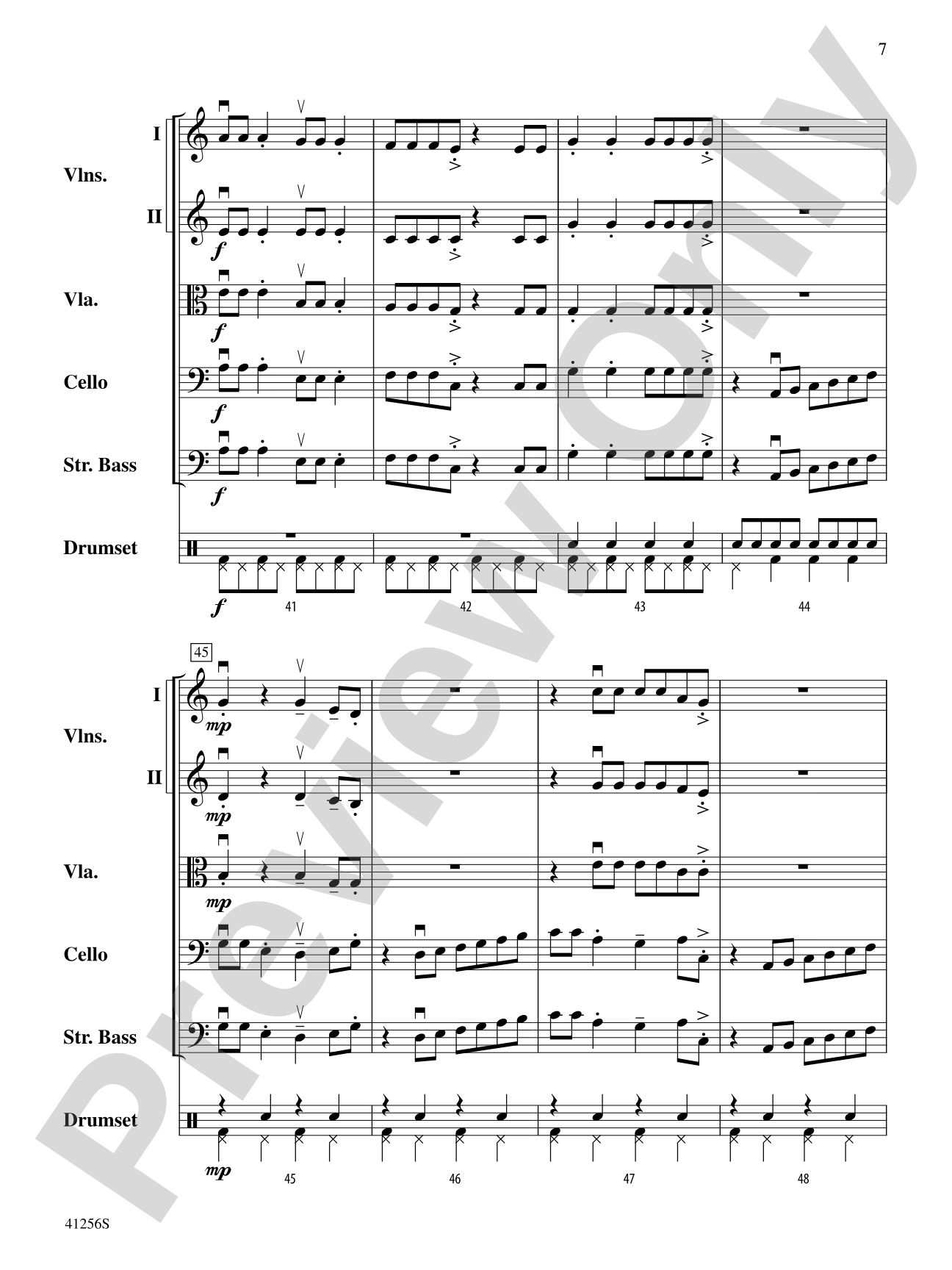
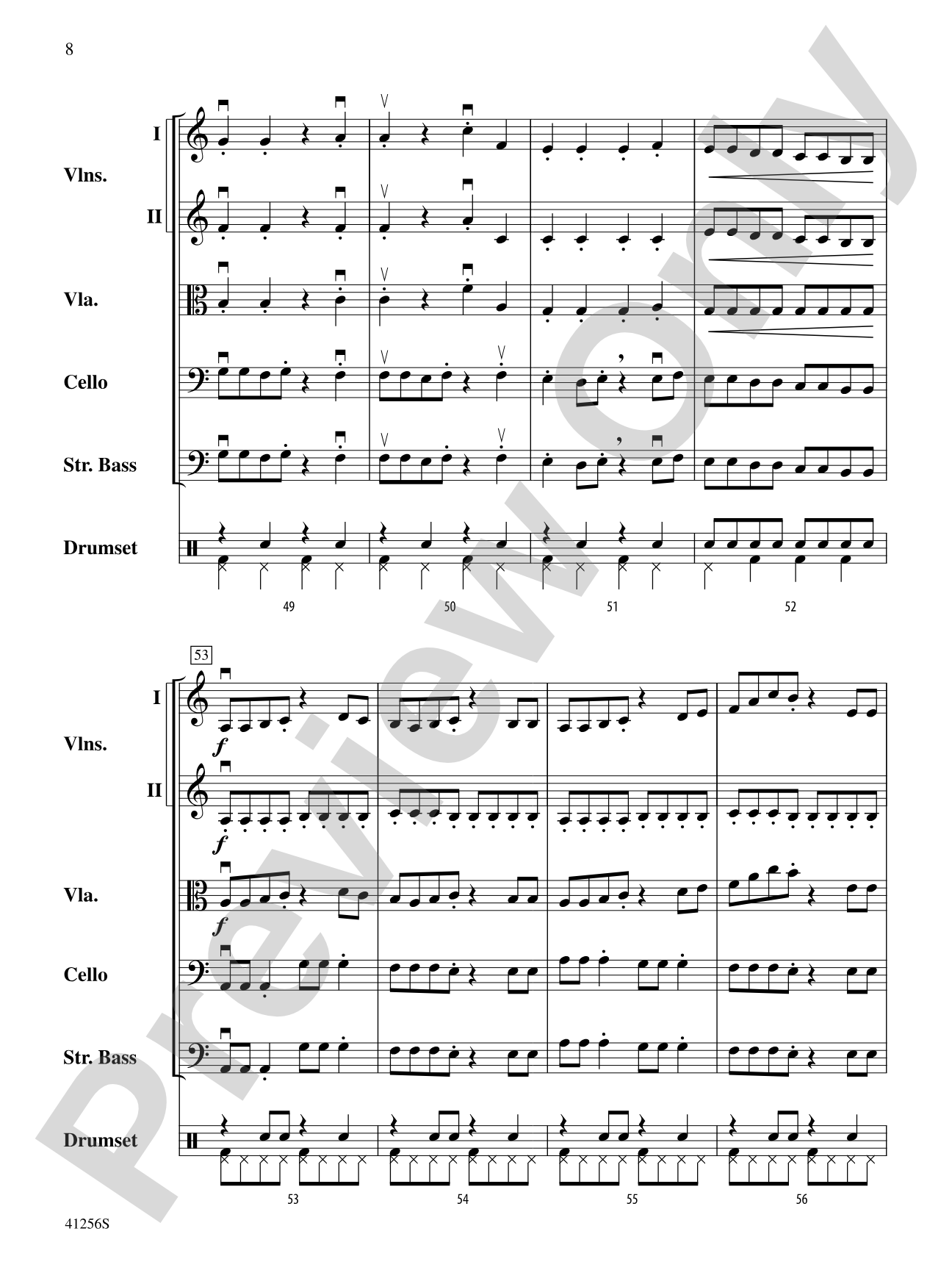
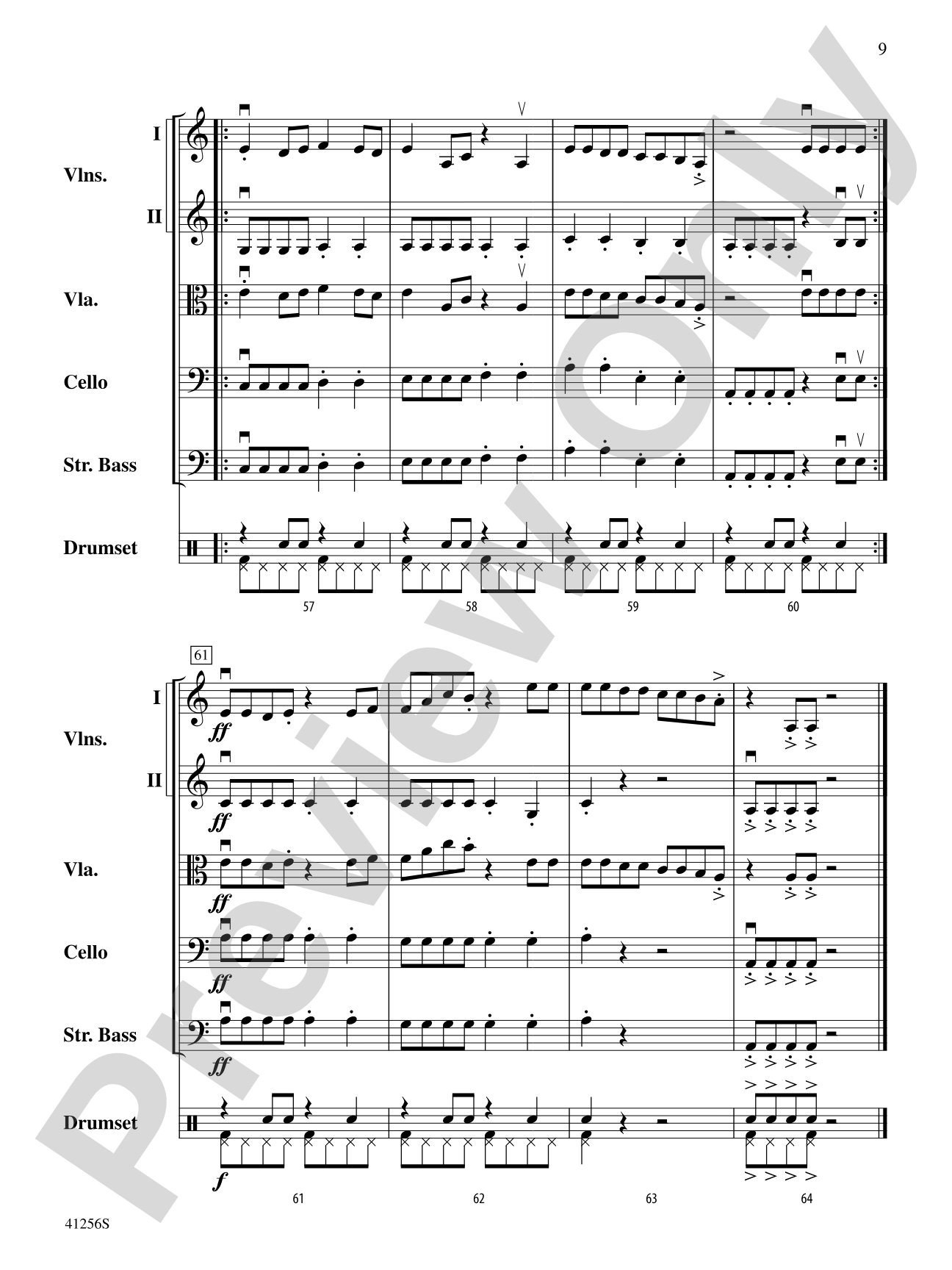

Zuma Breakers: String Orchestra Conductor Score & Parts
By Doug Spata
Grade: 1.5
Item: 00-PK-0006117

$49.00
Pickup currently not available
Buy Extra Parts (Digital PDF Download)
| Product | Price | Quantity |
|---|---|---|
| Zuma Breakers: Score | $7.00 | |
| Zuma Breakers: Drums | $5.99 | |
| Zuma Breakers: 1st Violin | $5.99 | |
| Zuma Breakers: 2nd Violin | $5.99 | |
| Zuma Breakers: Viola | $5.99 | |
| Zuma Breakers: Cello | $5.99 | |
| Zuma Breakers: String Bass | $5.99 |
Parts Added to Cart!
Description
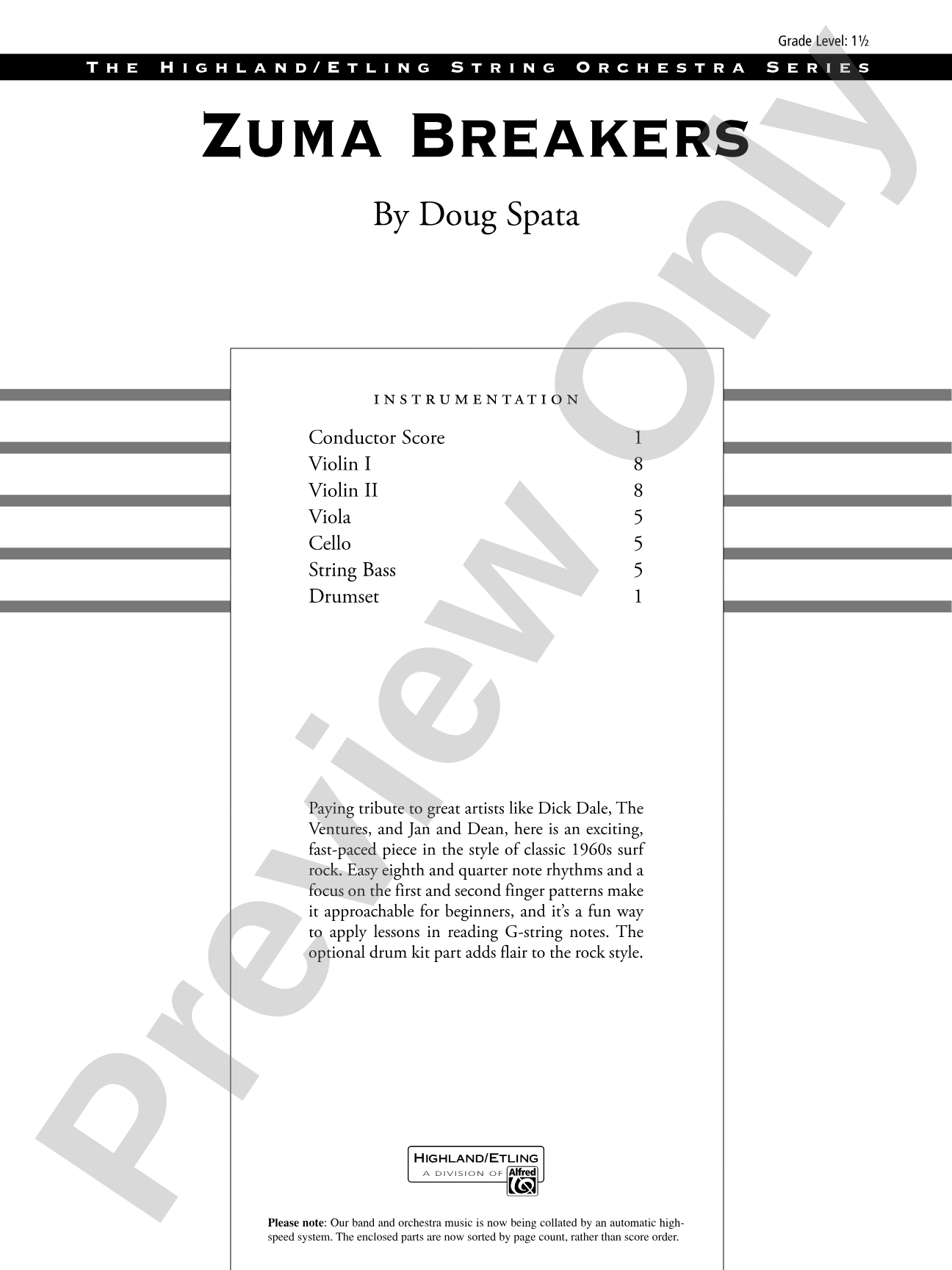
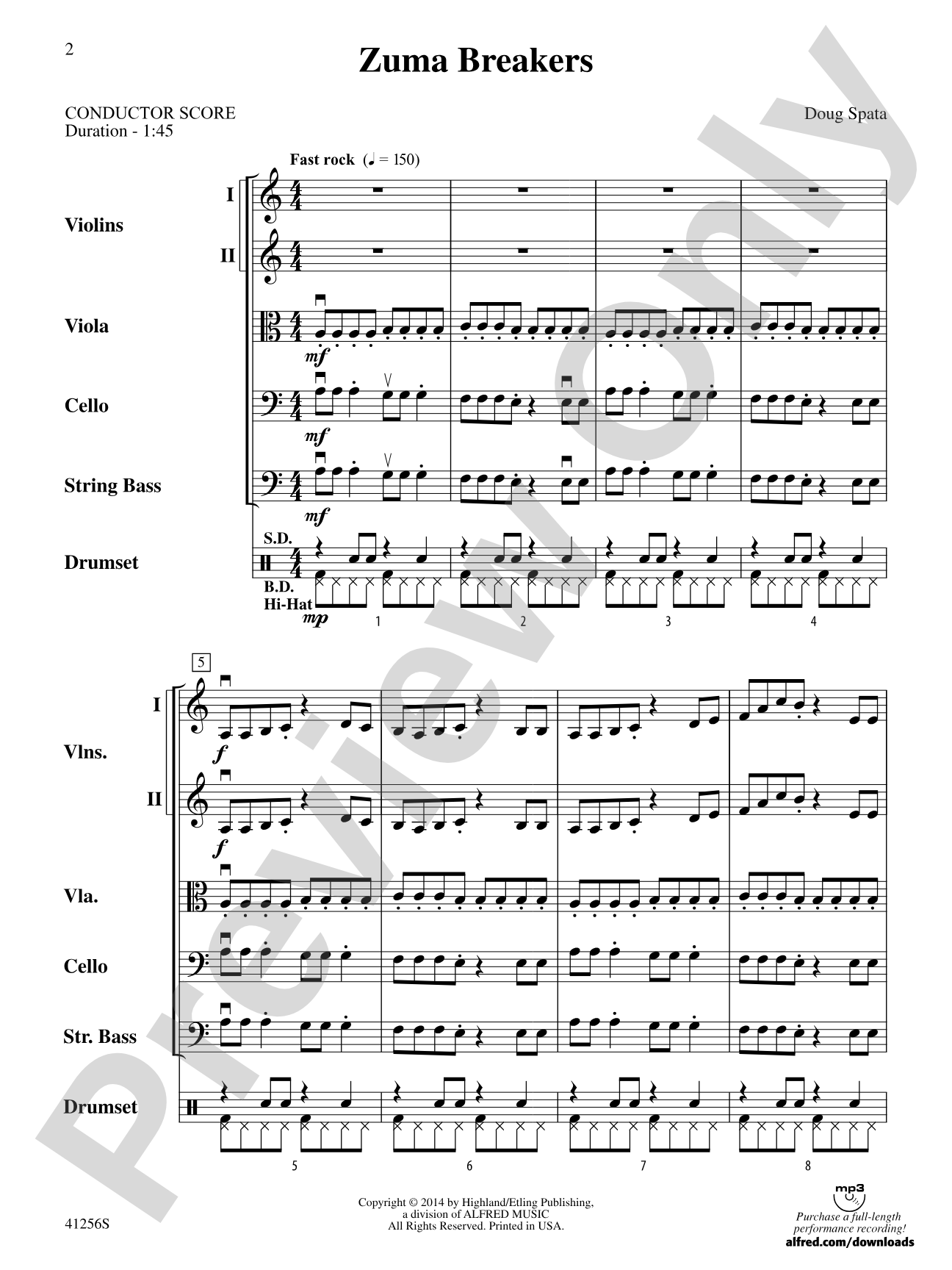
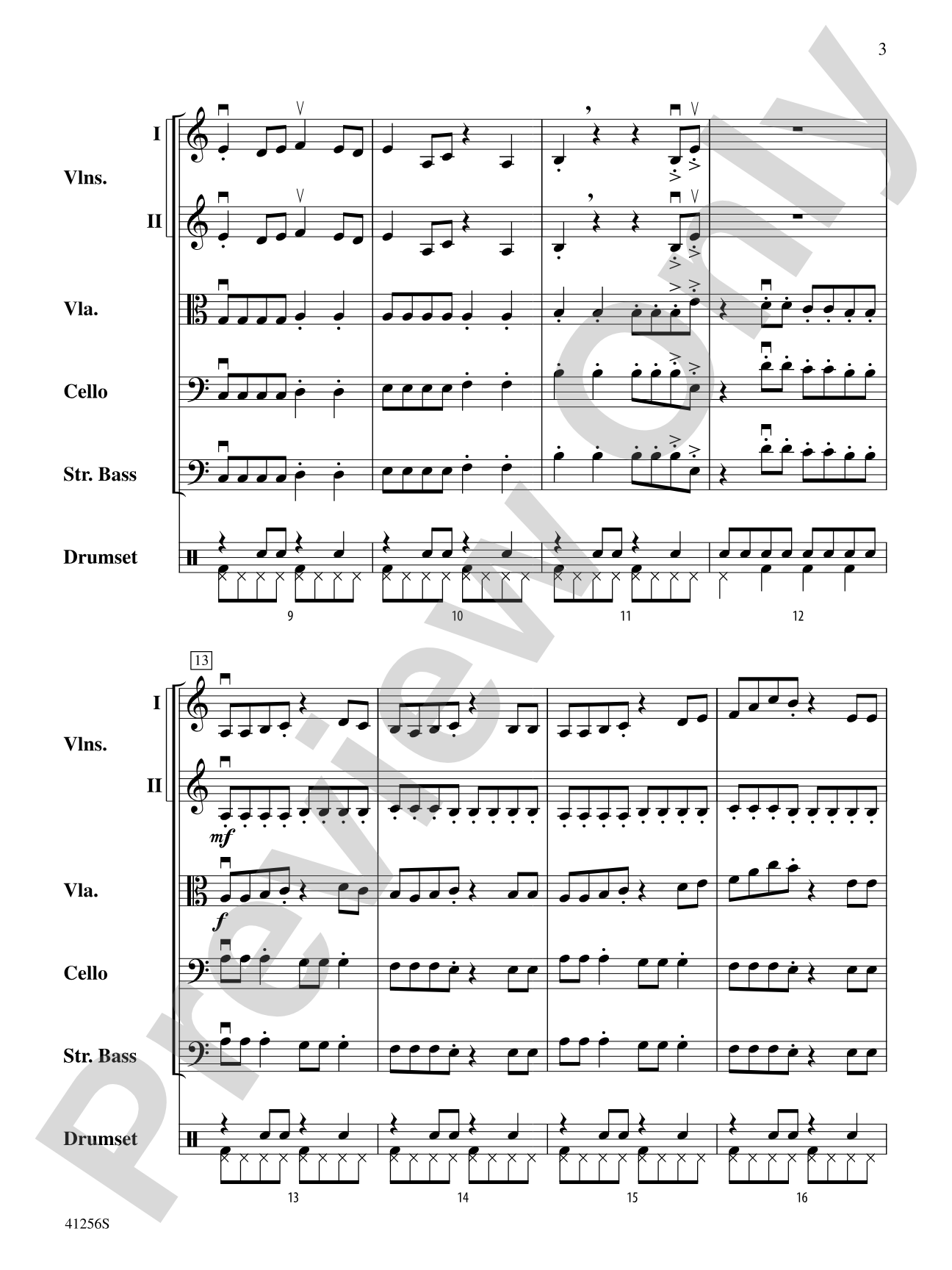
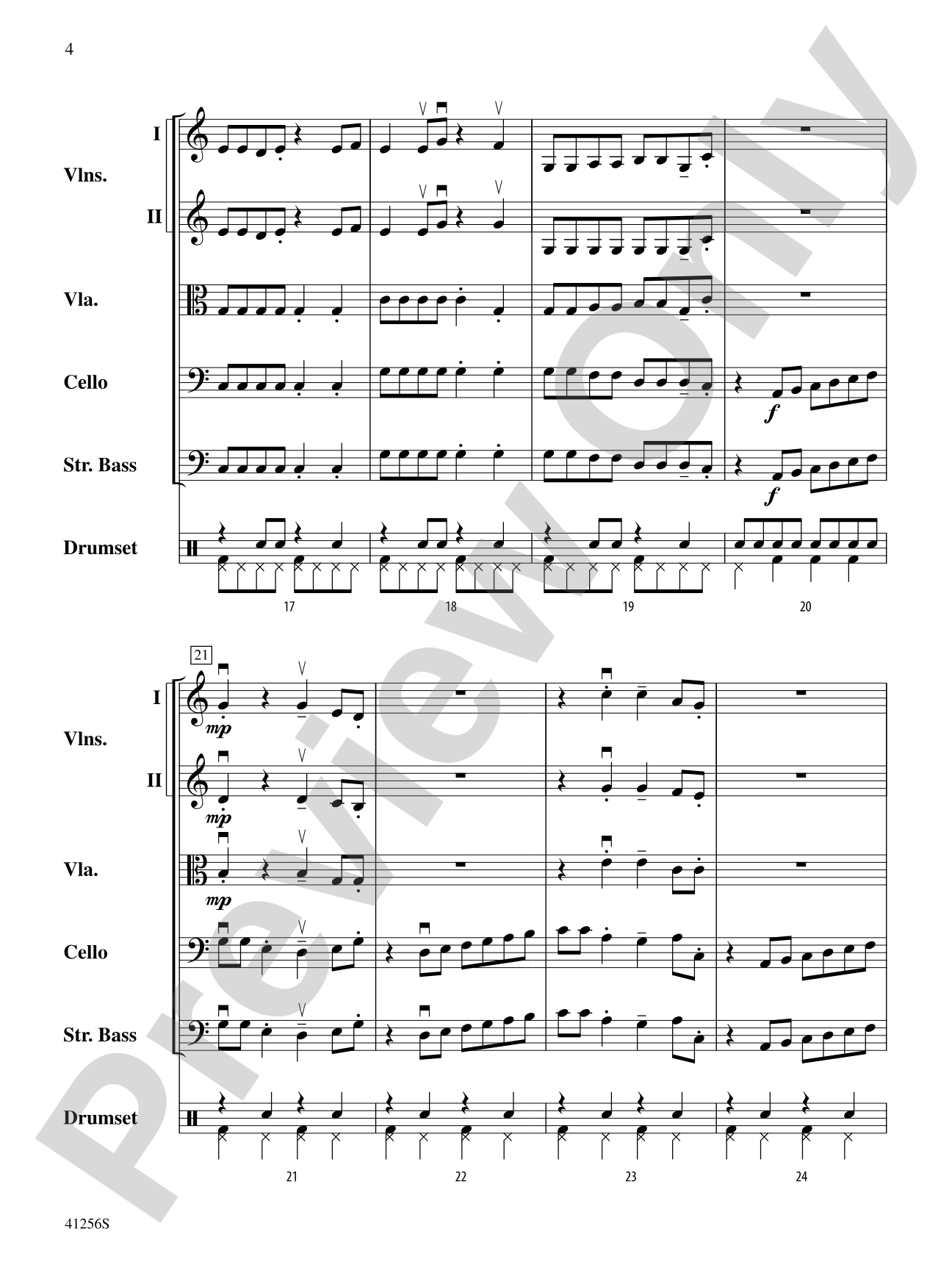
Paying tribute to great artists like Dick Dale, The Ventures, and Jan and Dean, here is an exciting, fast-paced piece in the style of classic 1960s surf rock. Easy eighth and quarter note rhythms and a focus on the first and second finger patterns make it approachable for beginners, and it's a fun way to apply lessons in reading G string notes. The optional drum kit part adds flair to the rock style. (1:45) This title is available in MakeMusic Cloud.


Don't just read it, hear it, play along with it, and watch your students grow with it. In MakeMusic Cloud, Zuma Breakers: String Orchestra Conductor Score & Parts comes alive with professional accompaniment, adjustable tempo, and built-in practice tools that turn solo practice into real progress.
Open in the Player
Jump straight in and assign it today.
Start Your Free Trial
Open this title and explore the full library in minutes.
Sample Audio
1
Audio File
--:--
0:00
0:00
Sample Video
No sample videos found.
Additional Details
Series:
Highland/Etling String Orchestra
Publisher:
Alfred Music
Page Count:
128
SKU:
00-PK-0006117
More about this title
About the Composer: Doug Spata

Doug Spata trained as a clarinetist but found his compositional voice writing for strings, a direction shaped by his work as an orchestra teacher. His catalog spans opera, ballet, symphonies, and chamber works across all ensemble sizes, and his compositions have earned recognition through performances across the United States and internationally.
His output for young musicians has become a staple in orchestras precisely because he understands what students need: music that is both musically satisfying and pedagogically sound. Teachers and students respond to his ability to write idiomatically for developing players without sacrificing energy or style.
Why we love this
Spata captures the infectious momentum of 1960s surf rock while keeping the technical demands within reach of a beginning orchestra. The piece gives students an immediate sense of how familiar musical styles can come alive in the ensemble setting, and the optional drum kit part lets you add contemporary energy without overcomplicating the string writing.
What to expect
Pure kinetic energy wrapped in surf-rock swagger. The piece bounces with a relentless rhythmic drive that pulls players forward, punctuated by melodic hooks designed to stick in the ear. It's the sound of a beach party transplanted to the concert hall, and your students will feel the difference between this and Bach immediately.
Who it's for
Grade 1.5 string orchestras ready for their first stylistic detour beyond classical repertoire. Ensembles should have solid note-reading on the D and G strings and comfortable experience with eighth and quarter note combinations.
How to get the most out of it
- Keep the eighth notes crisp and even throughout; the groove lives in rhythmic precision, not rushing. Lock the bow strokes together before worrying about dynamics.
- Let the D and G strings carry the main melodic weight in the opening. These first and second finger patterns should feel confident, which means spotlighting the lower voices in early rehearsals.
- If you include the drum kit part, have that player tap out the basic pulse during the first runthrough so the strings can hear where the groove sits. The band stays anchored to the drums, not the other way around.
- Don't let the fast tempo seduce you into sloppy articulation. Classical articulation and rock attitude are not mutually exclusive; clean note starts actually make the style read better.
How to use it
Program this early in your spring concert to establish energy and variety after a heavier first half. It pairs well alongside other contemporary or cross-genre pieces, and the short runtime (1:45) makes it an ideal opener or transitional moment that reminds audiences (and your orchestra) why they love playing together.
Skills your students will build
- Reading on the D and G strings using first and second finger positions
- Maintaining steady eighth-note rhythms in a driving tempo
- Executing clean articulation in a rock style
- Listening for groove and pulse across the ensemble
- Coordinating with optional percussion parts