

Zum Gali Gali: 2-Part Choral Octavo
Arr. Dan Schwartz
Item: 00-PO-0003125
$2.05
Minimum order quantity: 20 copies
Pickup currently not available
Description
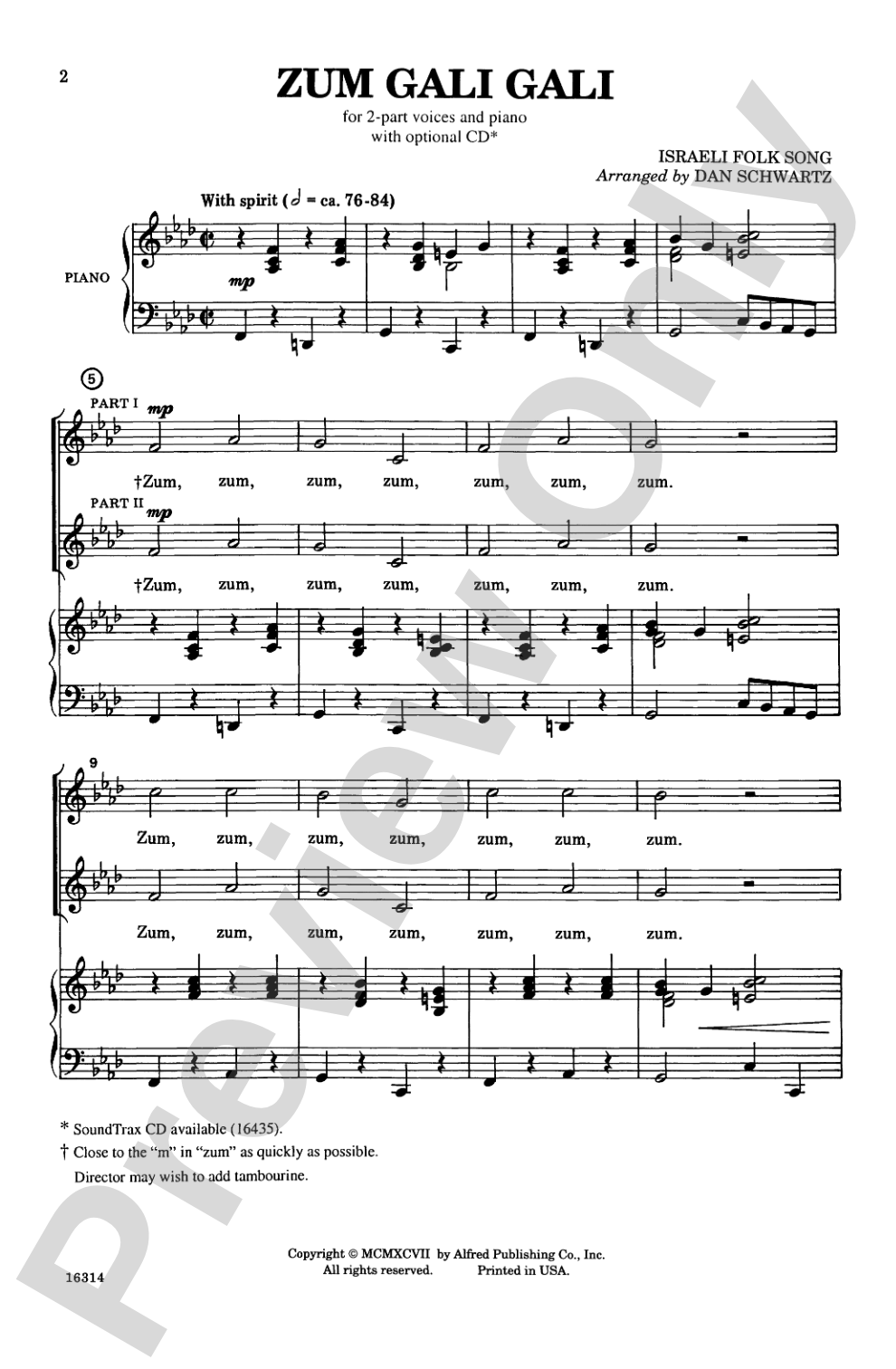
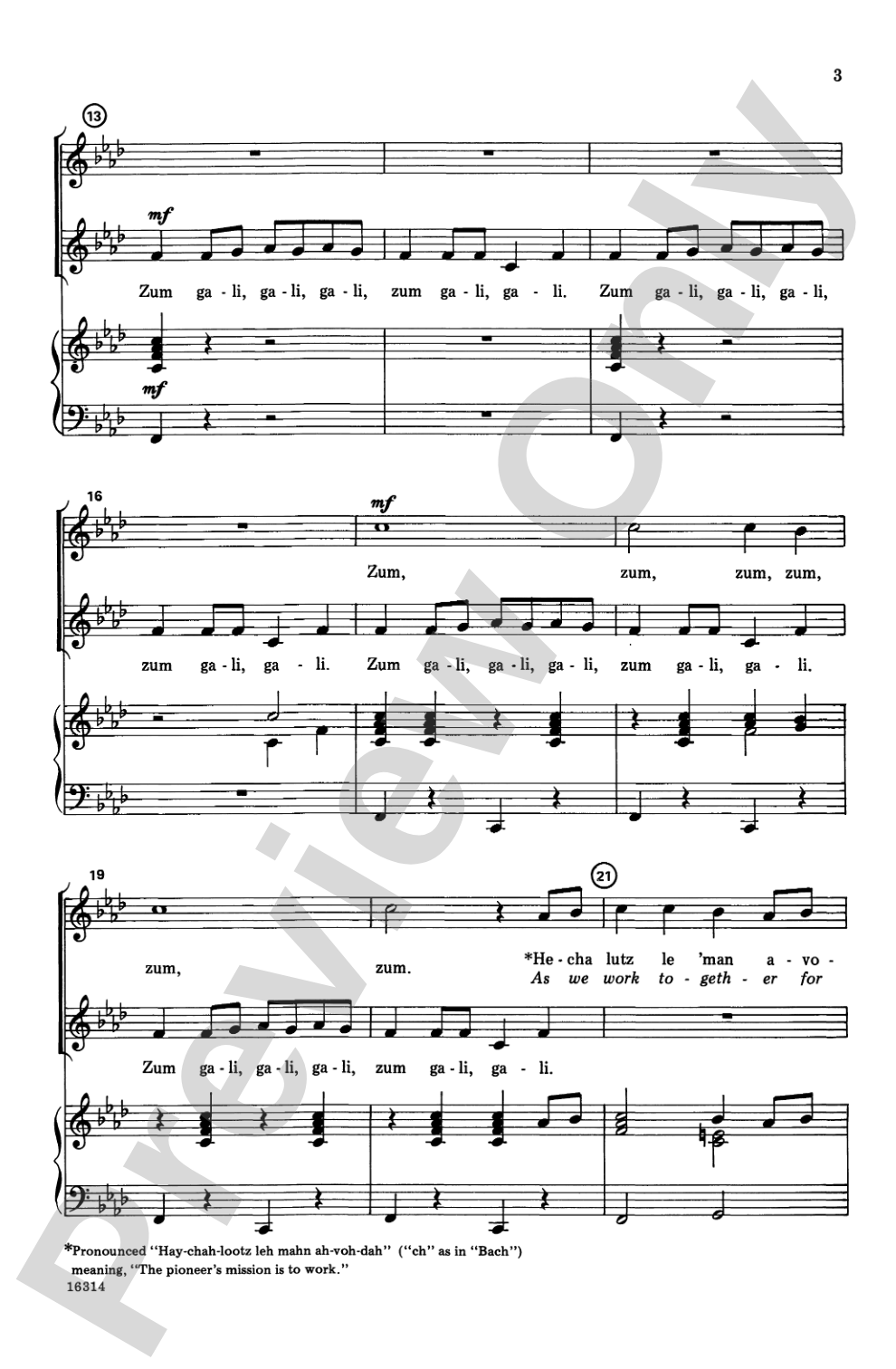
An easy and lively arrangement for 2-part voices of the famous Israeli folk song. Clever scoring gives each part the melody in turn. A great introduction to part singing for a young choir. Very simple piano accompaniment.


Zum Gali Gali: 2-Part Choral Octavo isn't in MakeMusic Cloud just yet...but it could be. Let us know you'd like to see it, and you'll help shape what comes next. In the meantime, start a free trial and dive into thousands of interactive titles your students can play along with today.
Request This Title
Tell us you want it.
Start Your Free Trial
Explore everything that's ready to play right now.
Sample Audio
No sample audio found.
Sample Video
No sample videos found.
Additional Details
Series:
Alfred Choral Designs
Publisher:
Alfred Music
Page Count:
8
SKU:
00-PO-0003125
More about this title
About the Arranger: Dan Schwartz
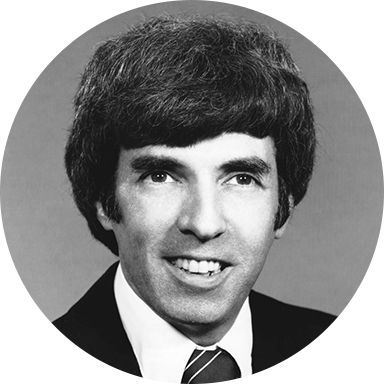
Dan Schwartz has spent over three decades shaping choral music through teaching, directing, and composing. His work spans public school classrooms, college conducting posts, and leadership roles with ensembles including the Jersey City State College Jazz/Show Choir and Manhattan School of Music Jazz Choir. He holds a professional diploma from Teachers College, Columbia University, and has served as clinician, adjudicator, and workshop presenter at institutions including Villanova and Westminster Choir College.
With more than 100 published choral arrangements distributed across Alfred Publishing, Carl Fischer, Hal Leonard, Warner Bros., and other major houses, Schwartz has established himself as a prolific voice in contemporary choral writing. His contributions to the field include columns in the Choral Journal, leadership of the ACDA Jazz/Show Choir Committee (1983-1995), and seven ASCAP Music Awards. He maintains active membership in the American Federation of Musicians, IAJE, MENC, ACDA, and ASCAP, and performs regularly as leader of the Dan Schwartz Trio.
Why we love this
Schwartz's arrangement lets both voice parts experience the melody rather than relegating one to harmony from start to finish. That shared ownership of the tune builds confidence in singers who are just learning to balance their own line with another voice. The lively, straightforward accompaniment supports without overwhelming, letting young singers focus entirely on the joy of singing together.
What to expect
Bright, playful, and deeply rooted in folk tradition. The song bounces along with the energy of a circle dance, and the alternating melody lines create a conversational quality, as if two voices are calling back and forth. There's warmth beneath the lightness, connecting singers to a song that has traveled across generations and cultures.
Who it's for
Young choirs encountering part singing for the first time will find this arrangement genuinely accessible. The familiar melody and the clever trade-off of who sings what make the leap from unison to two-part feel natural rather than daunting.
How to get the most out of it
- Establish the melody securely in the first part before adding the second voice; since each part carries the tune at different moments, singers need complete ownership of their entrance before encountering the full arrangement.
- Keep the tempo steady and bright; this folk song thrives on rhythmic clarity and forward motion, so use the recorded accompaniment as a rhythmic anchor if the choir tends to rush or drag.
- Shape phrases together even though the parts diverge; encourage singers to breathe at logical musical moments rather than whenever their line has a rest, maintaining the song's narrative flow.
How to use it
Pair this with other folk songs or multicultural pieces to build a concert theme celebrating global traditions and musical friendship. Its brevity and accessibility also make it ideal for a spring concert or an assembly program where you want to engage young audiences with something they can learn and enjoy quickly.
Skills your students will build
- Singing a sustained melodic line while another voice carries a different part
- Recognizing the melody across different voice parts
- Maintaining rhythmic independence within a coordinated ensemble
- Balancing blend and clarity when parts diverge
- Singing with confidence in a culturally rooted folk tradition