
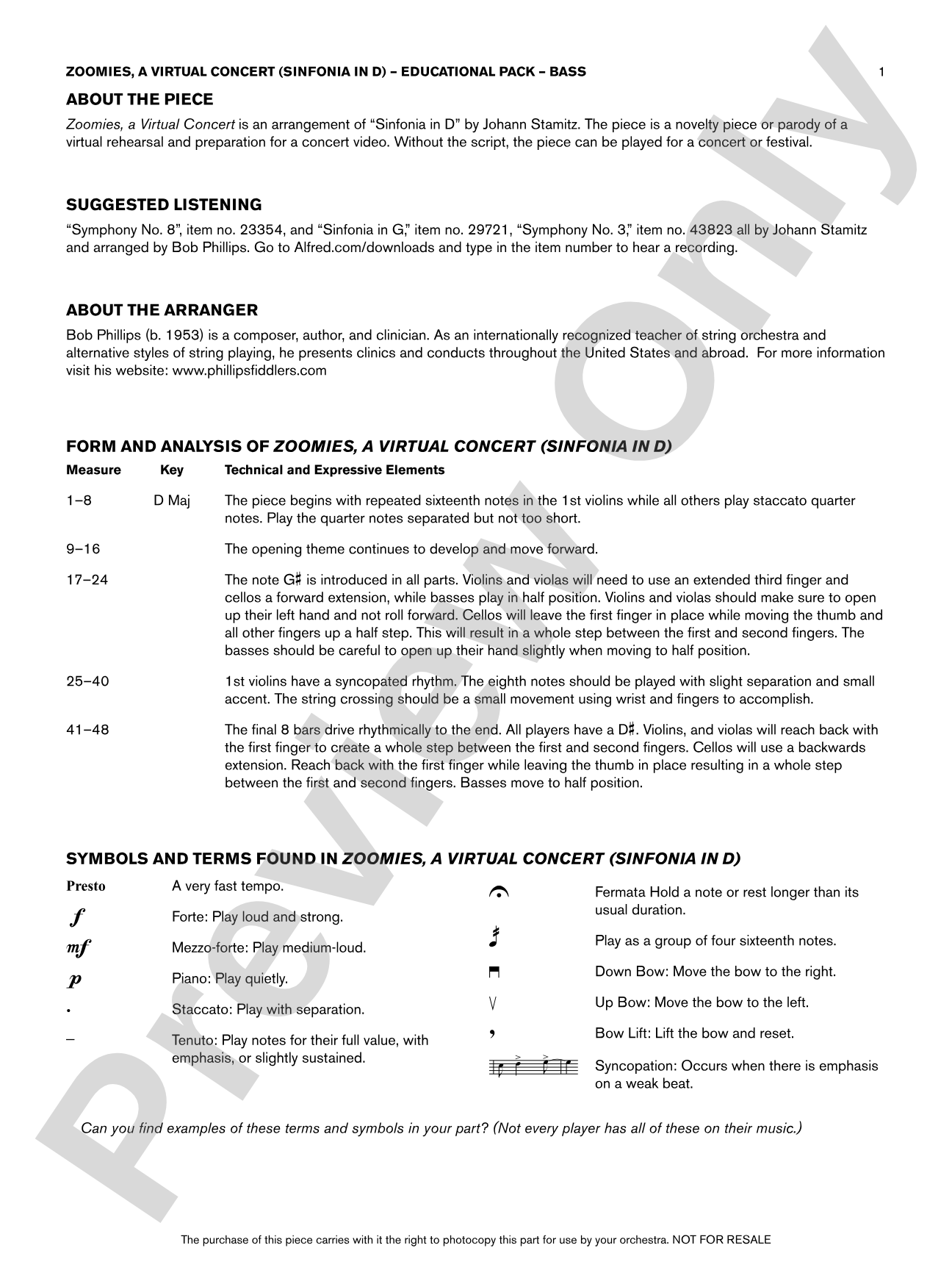

Zoomies, a Virtual Concert: Bass Educational Pack
Featuring Sinfonia in D
By Johann Stamitz / arr. Bob Phillips
Grade: 2
Item: 00-PC-0018650_SB_EDPAK
$3.00
Pickup currently not available
Description
A fun novelty piece that, without the script, becomes a perfect concert or festival selection! Two for one! This parody of a virtual rehearsal/concert can be performed live or virtually and is equally effective in providing humor or a way to frame a community-building discussion of the current learning situation for students. Feel free to adapt the script to your students. The energetic Stamitz arrangement features the first violins yet lies well for all sections and will go together well. It is a great review of chromatic alterations with a few in each part. Zoomies, a Virtual Concert featuring Sinfonia in D by Johann Stamitz and arranged by Bob Phillips is sure to be musically satisfying and fun!
For additional arrangements of Stamitz symphonies by Bob Phillips, visit alfred.com: Symphony in No.8 (00-23354), Sinfonia in G (00-29721), and Symphony No.3 (00-43823).
Correlated to Sound Innovations for String Orchestra, Book 2, Level 2. (2:05)


For additional arrangements of Stamitz symphonies by Bob Phillips, visit alfred.com: Symphony in No.8 (00-23354), Sinfonia in G (00-29721), and Symphony No.3 (00-43823).
Correlated to Sound Innovations for String Orchestra, Book 2, Level 2. (2:05)
Don't just read it, hear it, play along with it, and watch your students grow with it. In MakeMusic Cloud, Zoomies, a Virtual Concert: Bass Educational Pack comes alive with professional accompaniment, adjustable tempo, and built-in practice tools that turn solo practice into real progress.
Open in the Player
Jump straight in and assign it today.
Start Your Free Trial
Open this title and explore the full library in minutes.
Sample Audio
1
Audio File
--:--
0:00
0:00
Sample Video
Additional Details
Series:
Sound Innovations for String Orchestra
Publisher:
Alfred Music
Page Count:
132
SKU:
00-PC-0018650_SB_EDPAK
More about this title
About the Composer: Johann Stamitz
Johann Stamitz (1717-1757) was a Bohemian-German violinist and composer who fundamentally shaped the early Classical symphony. As concertmaster and later Kapellmeister at the Mannheim court, he led one of Europe's most innovative orchestras and became known for his brilliant writing for strings. His symphonies established many conventions that Haydn and Mozart would later refine, including clear thematic development, dramatic dynamic contrasts, and idiomatic string writing that exploits the full range of the ensemble.
Stamitz's influence on string music education remains significant because his works balance accessibility with genuine musical substance. His melodies are memorable and singable, yet his harmonic language introduces students to the chromatic alterations and modulations that define mature Classical style. Teachers value his symphonies as stepping stones between Baroque convention and the symphonic thinking of the Classical masters.
Why we love this
Bob Phillips's arrangement captures Stamitz's energetic spirit while keeping the writing transparent enough for a Grade 2 ensemble to sound polished in performance. The humor of the scripted virtual concert concept gives you genuine flexibility: perform it with the script for a community event that brings levity to contemporary learning challenges, or strip away the theatrical framing and let the arrangement stand as a solid concert selection that students will enjoy playing.
What to expect
Stamitz's melodies sparkle with Classical elegance, buoyed by rhythmic precision and bright orchestral colors. The novelty concept adds a wink without undermining the music itself; whether you play it straight or with script, the piece has genuine charm and forward momentum that keeps both players and audiences engaged.
Who it's for
String orchestra directors at the Grade 2 level who want a piece that works equally well as concert repertoire and as a platform for creative programming or community engagement. Students benefit from playing a genuine Classical-era work that sounds more sophisticated than its technical level suggests, especially when conductors leverage the dual nature of the arrangement.
How to get the most out of it
- Balance the prominent first violin melody with warm, supporting harmonic colors in the lower strings so the piece doesn't sound thin despite its lighter mood.
- Mark the chromatic alterations in each part during sectional rehearsals; several appear briefly and students often miss them in full-orchestra context.
- Keep the energy forward without rushing; the 2:05 duration means tempo control is essential to landing the humor and the musical payoff together.
- If performing with the script, sync the dialogue pacing to match the musical cues clearly so both the spoken and instrumental elements land as one unified piece.
How to use it
Program this as a conversation starter in a family concert or community event, using the script to spark dialogue about ensemble learning and connection during challenging times. Alternatively, use it as a clever concert closer or festival selection when you want to showcase your orchestra's musicality with a piece that surprises audiences with its Classical sophistication wrapped in accessible, engaging performance.
Skills your students will build
- Reading and playing chromatic alterations across all string parts
- Balancing melody and accompaniment in a transparent Classical texture
- Maintaining steady tempo through rhythmically driven material
- Responding to conductor cues and dramatic dynamic shifts