

Zion's Walls: SATB divisi, a cappella Choral Octavo
Arr. Jay Althouse
Item: 00-PO-0006399

$2.20
Minimum order quantity: 20 copies
Pickup currently not available
Related Items
Zion's Walls: SATB divisi, a cappella Choral Octavo |
$2.20
|
View |
Description
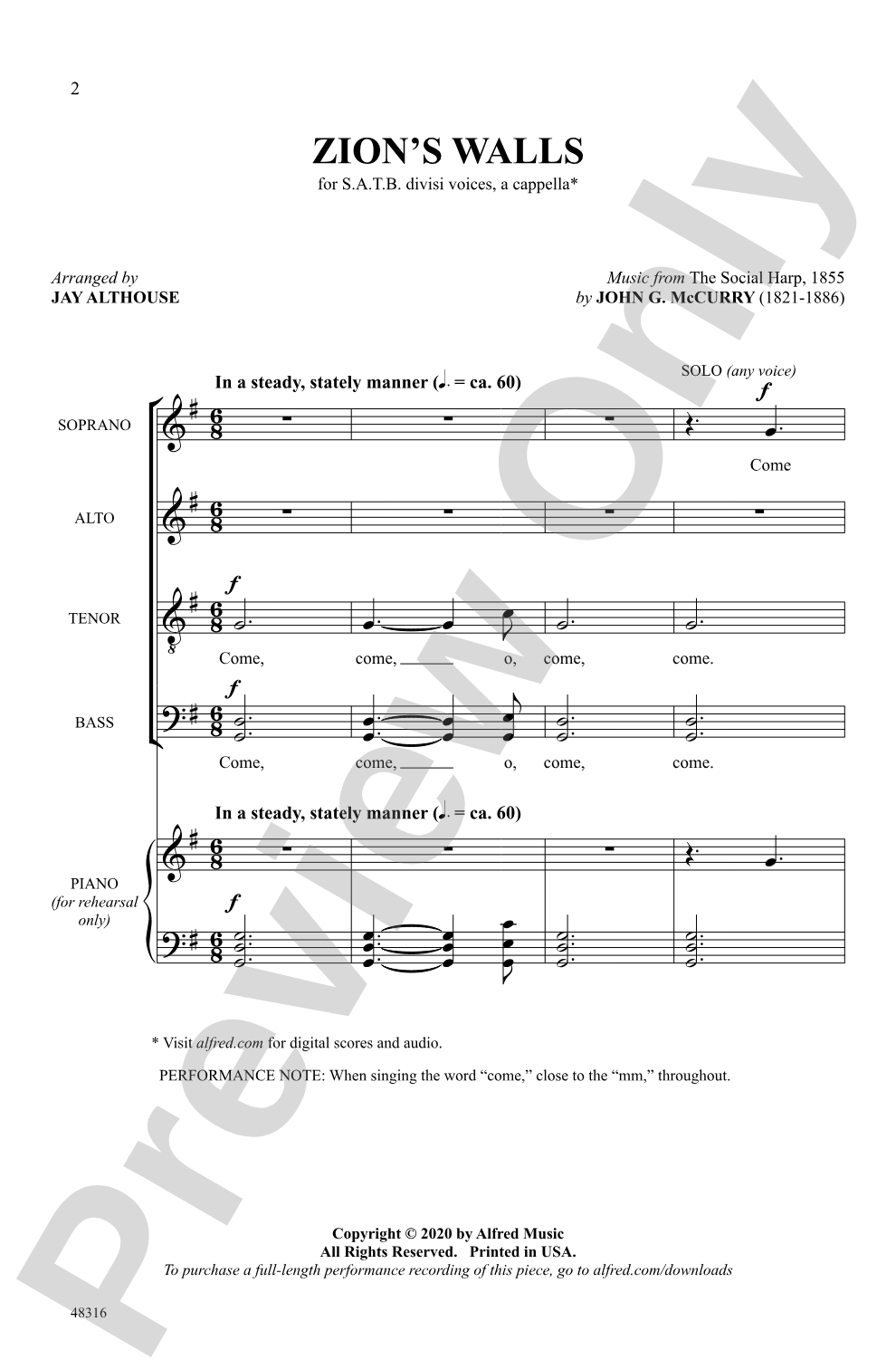
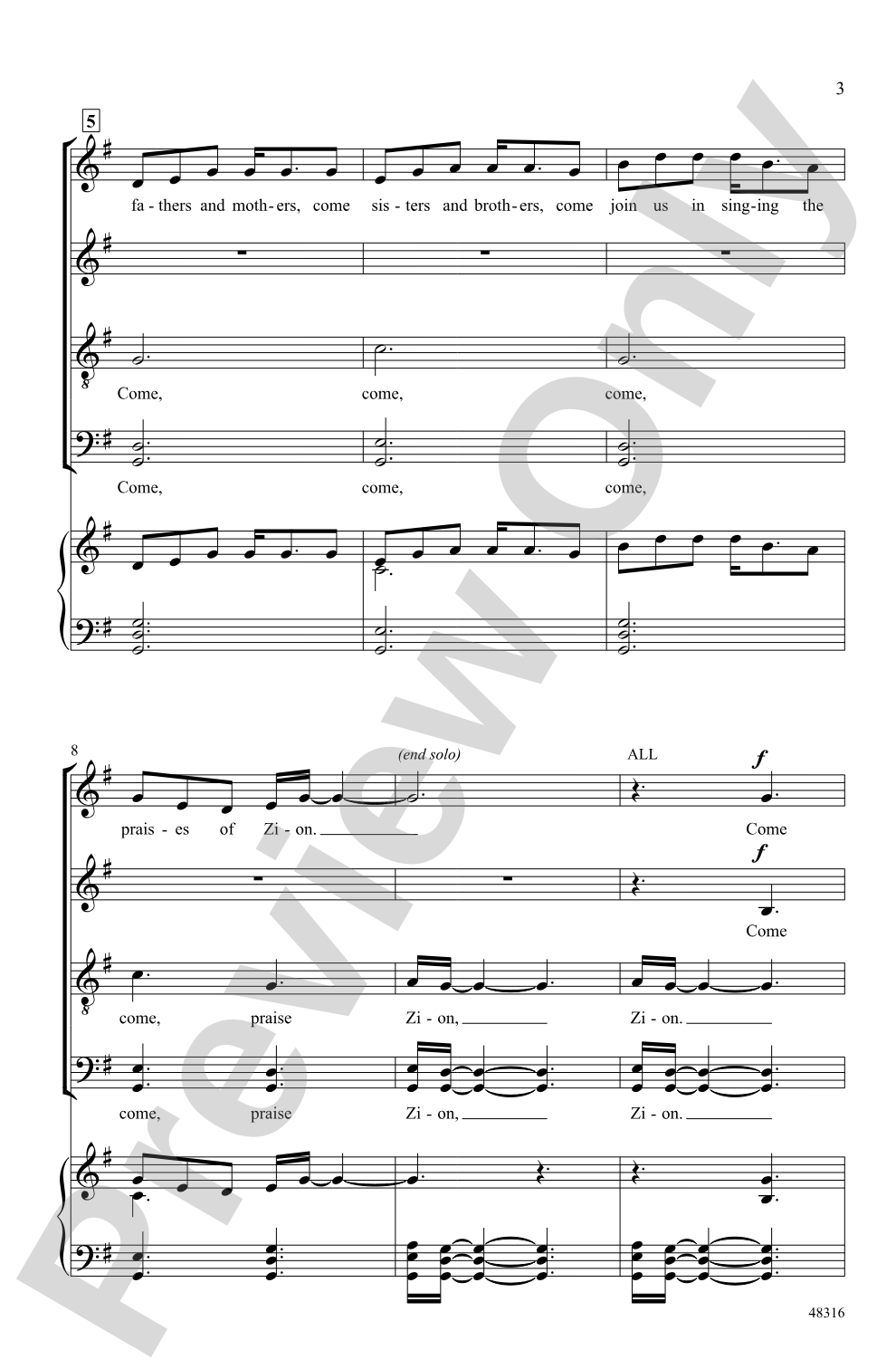
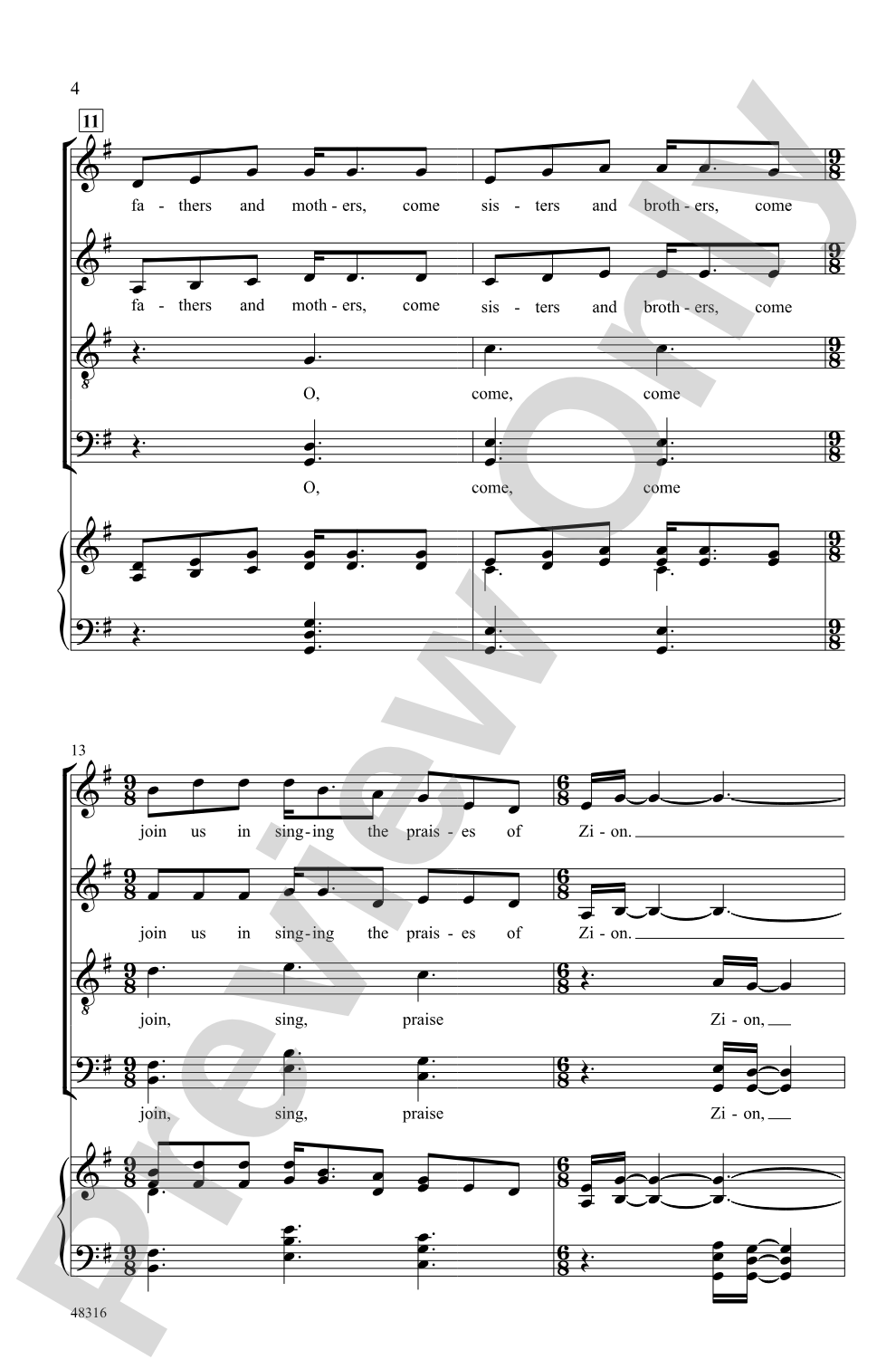
Originally published in The Social Harp in 1855, this revivalist song has become deeply woven into the American folk music tradition. A powerful and insistent rhythmic foundation is laid by the low voices, as the agile melody darts over top. A slower middle section offers some warm homophonic harmony in a setting that is largely polyphonic. The dance returns and builds to a dazzling and multitextured finish. Exquisite!


Don't just read it, hear it, play along with it, and watch your students grow with it. In MakeMusic Cloud, Zion's Walls: SATB divisi, a cappella Choral Octavo comes alive with professional accompaniment, adjustable tempo, and built-in practice tools that turn solo practice into real progress.
Open in the Player
Jump straight in and assign it today.
Start Your Free Trial
Open this title and explore the full library in minutes.
Sample Audio
1
Audio File
--:--
0:00
0:00
Sample Video
Additional Details
Series:
Lawson-Gould
Publisher:
Alfred Music
Page Count:
16
SKU:
00-PO-0006399
More about this title
About the Arranger: Jay Althouse

Jay Althouse studied music education and music at Indiana University of Pennsylvania, where he later received the Distinguished Alumni award. He spent eight years in the educational music publishing industry as a rights and licenses administrator, serving on the Executive Board of the Music Publishers Association of America during his tenure.
As a composer, Althouse has created more than 800 choral works performed throughout English-speaking countries. Beyond composition, he has compiled and arranged vocal solo collections, co-written children's musicals with Sally K. Albrecht, and authored classroom resources on music theory and composer biography. His choral composition "I Hear America Singing," written with Albrecht, was performed by the San Francisco Girls and Boys Choirs at President Barack Obama's 2009 inauguration. Althouse serves on the National Advisory Board of the Folk Art Society of America and has contributed articles to the Folk Art Messenger.
Why we love this
Althouse's arrangement captures what makes this 1855 revivalist tune enduring: the rhythmic drive of the lower voices creates forward momentum while the soprano melody remains fleet and independent, creating natural tension that keeps singers and listeners engaged. The shift to homophonic writing in the middle section arrives like a breath, then the polyphonic texture rebuilds with such clear architectureinthat the final multitextured section feels inevitable and earned, not chaotic.
What to expect
Zion's Walls pulses with the infectious energy of a folk tradition that refused to be contained, combining the deliberate, grounded quality of a hymn's foundation with the restless, skittering motion of a melody that seems almost mischievous in its agility. The middle homophonic section feels like stepping indoors out of summer heat, offering warmth and solidity before the rhythm returns and builds toward something both intricate and joyful.
Who it's for
This octavo works well for concert and festival choirs with solid music-reading skills and the vocal maturity to handle polyphonic texture. It suits ensembles comfortable with divisi writing and prepared to differentiate their sound between the rhythmic, rooted lower voices and the more ornamental upper melody line.
How to get the most out of it
- Keep the low voice rhythmic foundation crisp and unwavering through the opening section; this is the song's spine, and clarity here allows the upper voices to dance freely.
- Shape the homophonic middle section with warm, sustained tone to create genuine contrast with the surrounding polyphonic passages.
- Bring out inner voice movement in the final section by having singers mark their parts during rehearsal, then gradually blend those lines into the ensemble texture so they enhance rather than muddy the overall sound.
- Let the piece breathe at section breaks; resist the urge to rush back in, as silence becomes part of the dance.
How to use it
Program this alongside other American folk or spirituals-based repertoire to create a thematic set, or use it as an energetic centerpiece that demonstrates your choir's ability to balance independent lines and complex textures. Its moderate length makes it an excellent choice for festivals where you need a piece that showcases musicianship without demanding extended rehearsal time.
Skills your students will build
- Sustaining independent melodic lines within polyphonic texture
- Maintaining rhythmic precision and forward motion in lower voice parts
- Transitioning between polyphonic and homophonic writing with tonal clarity
- Ensemble balance and blend across divisi sections
- Reading and performing folk music arranged in classical choral structures