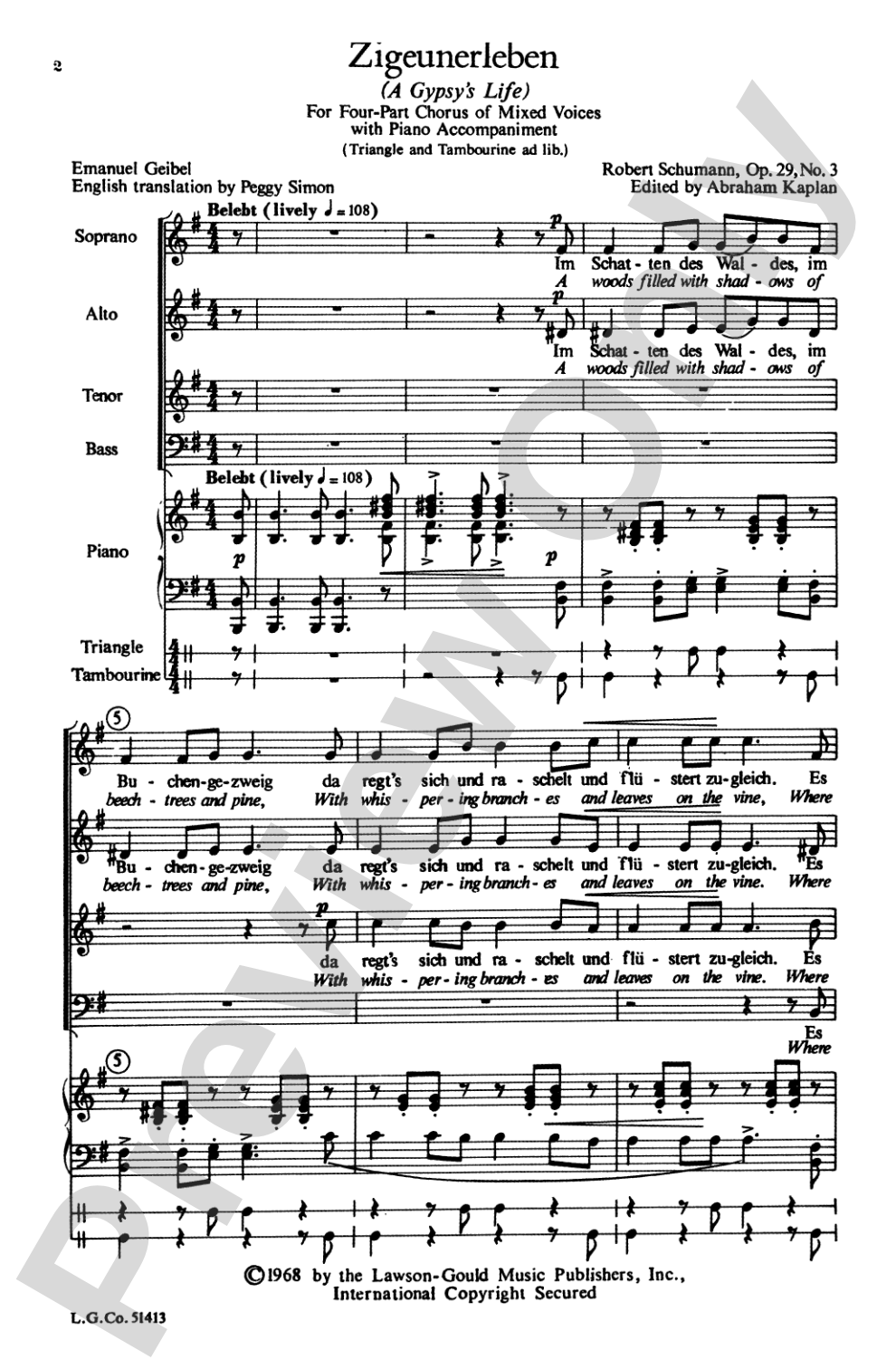
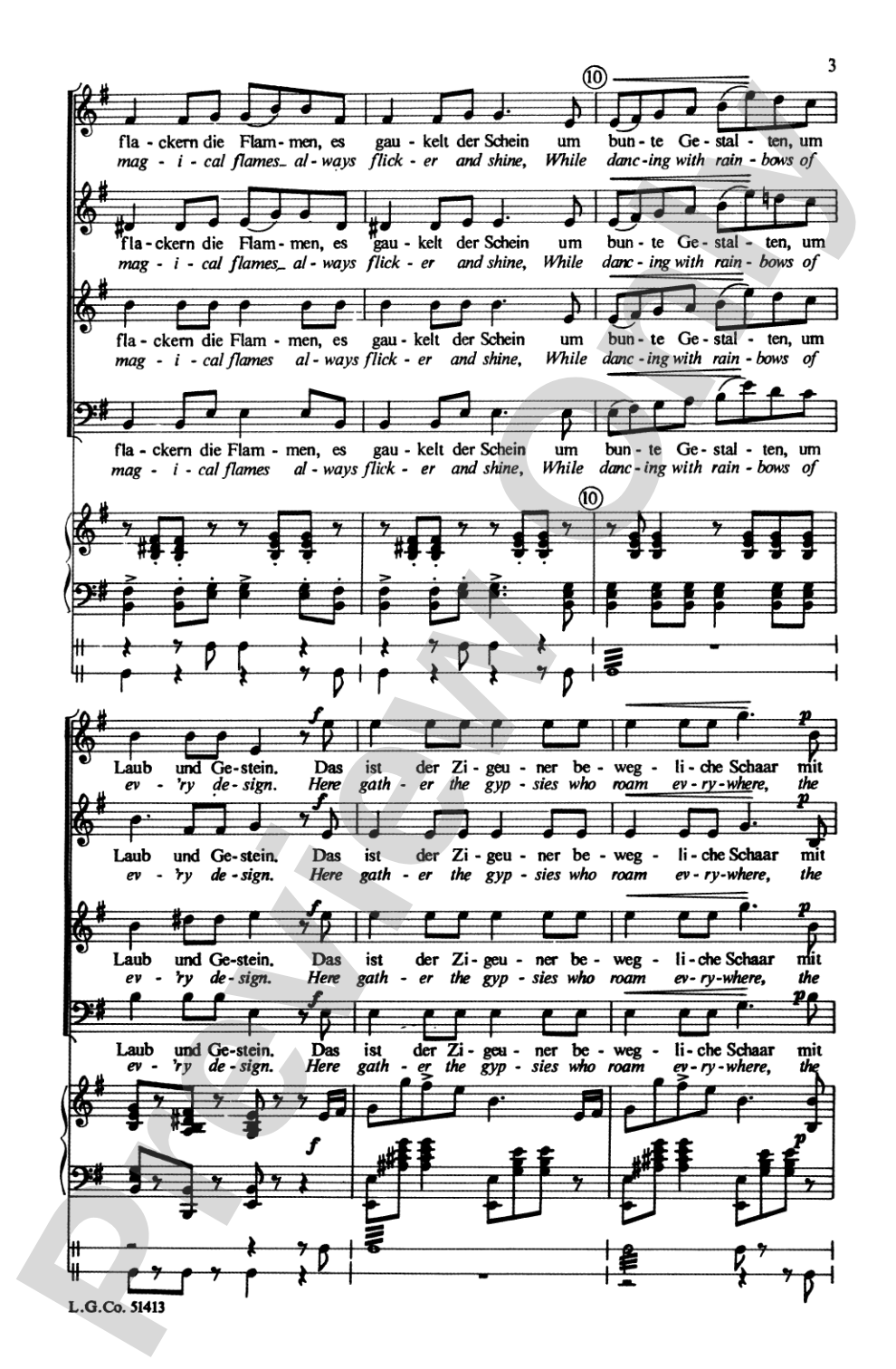
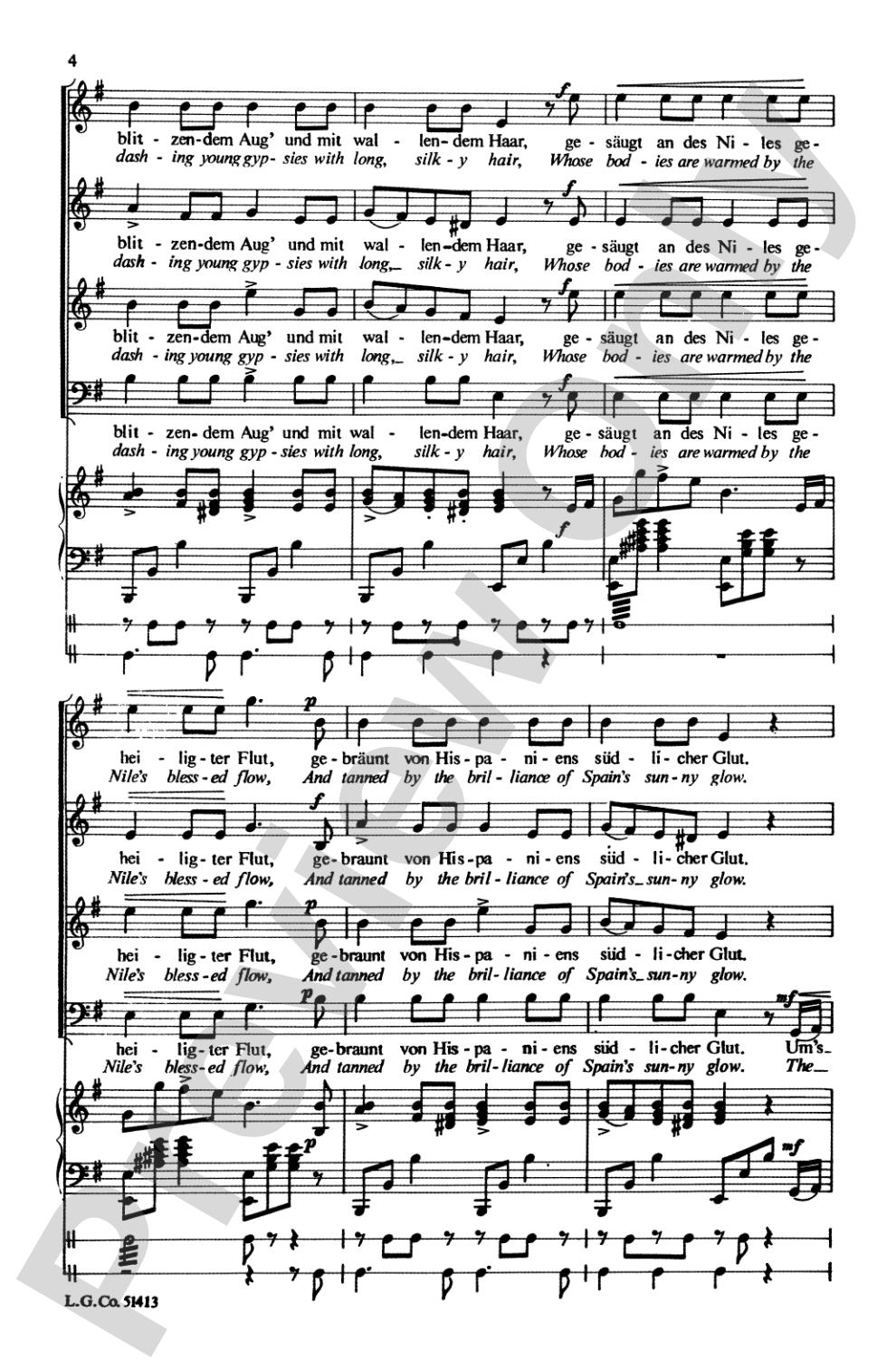
Series:Alfred Archive Edition: Lawson-Gould Music Publishers
Publisher:Alfred Music
Page Count:16
SKU:00-PO-0006781
More about this title
About the Composer: Robert Schumann
Robert Schumann (1810–1856) stands among the Romantic era's most distinctive voices, a composer who moved fluidly between intimate character pieces and larger choral and orchestral works. His gift for melody and harmonic color shaped the sound of nineteenth-century music, and his choral writing balances lyrical beauty with structural sophistication. Schumann's involvement in music criticism and his marriages to pianist Clara Wieck and, later, to music itself reflect a life fully committed to advancing musical art and education.
Why we love this
Schumann brings the full Romantic sensibility to secular choral writing here, with harmonic language that feels both inevitable and surprising. The piece sits comfortably for amateur and advanced choirs alike, rewarding careful attention to blend and independence without demanding virtuosic technique. It's the kind of sophisticated repertoire that changes how singers listen to harmony.
What to expect
Schumann's gypsies wander through shifting harmonic landscapes that feel both nostalgic and restless. The piece has an intimate, almost conversational quality despite its four-voice texture, with moments that open into unexpected harmonic territory.
Who it's for
This octavo works for chamber choirs, select SATB ensembles, and full choirs seeking substantive repertoire beyond familiar pop or light classical fare. Singers with two or three years of ensemble experience will engage meaningfully with the part-writing and harmonic language.
How to get the most out of it
Balance the inner voices (alto and tenor) carefully; Schumann's writing often places important harmonic color there, and clarity matters as much as the outer voices.
Shape the phrasing through vowel color rather than dynamic extremes. Schumann's melodies benefit from subtle tonal shifts that suggest movement without heavy accents.
Attend to the text-music relationship. Even in pieces with English translations, understanding the original German poetry deepens interpretive choices.
Allow the harmonic progressions time to breathe. This music does not rush; take space around cadential moments to let the voice-leading settle.
How to use it
Program this alongside other Romantic art songs or chamber works to create a set that explores nineteenth-century secular choral writing. It also pairs well with instrumental Schumann on the same concert, creating continuity between his piano and choral voices. Consider using it in a recital exploring European cultural themes or national character pieces.
Skills your students will build
Independent voice-leading in four-part harmony
Reading accidentals and chromatic harmony characteristic of Romantic style
Blending and balance across SATB texture
Sustained singing with phrase awareness
Interpretation of text-based expression marks and dynamic nuance
You May Also Like
Scan to Complete Your Purchase
Use your phone's camera to scan the code below
You'll log in on your phone and the order will be added to your account