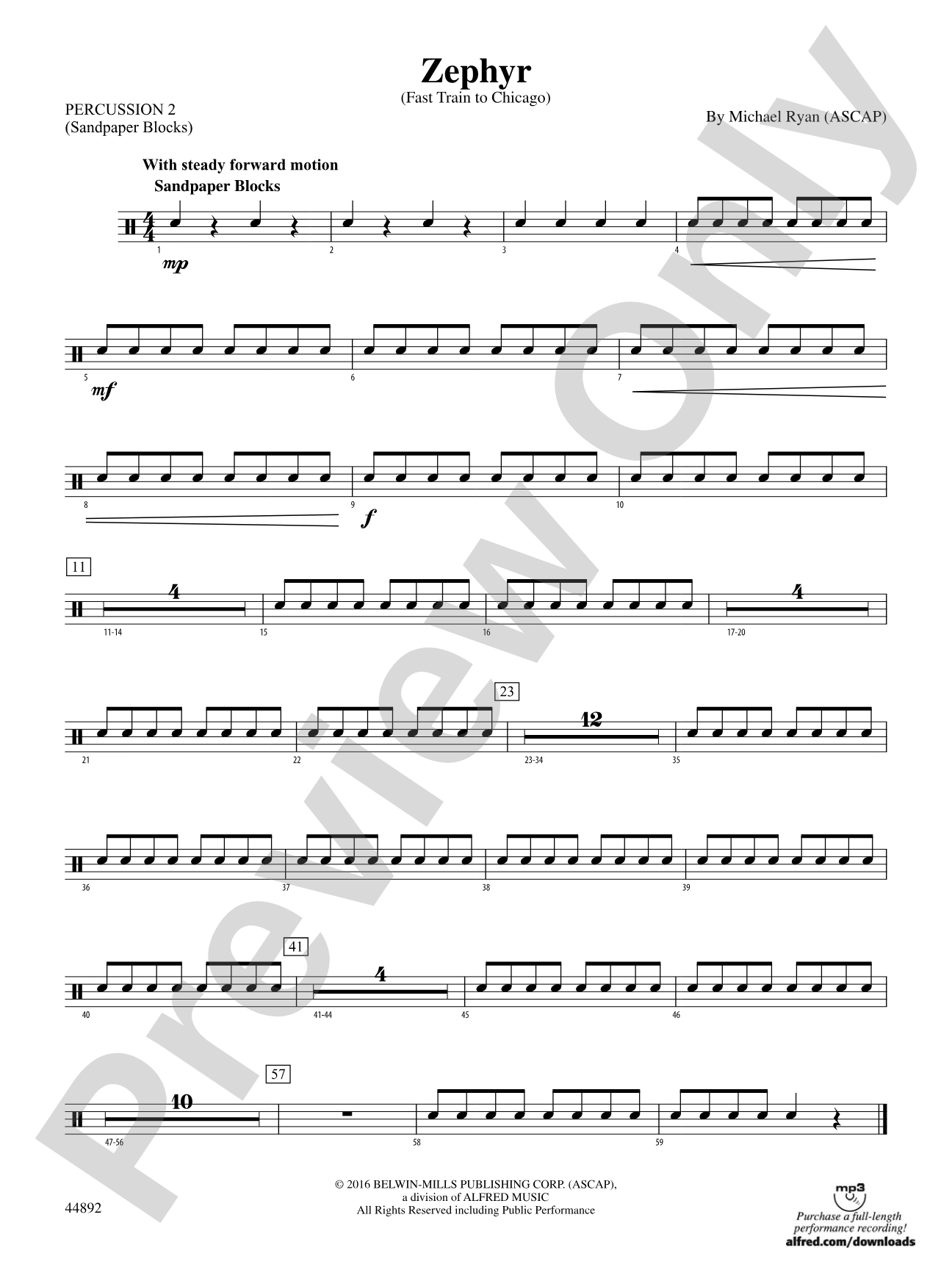
Zephyr: 2nd Percussion Sheet Music Preview

Zephyr: 2nd Percussion

(Fast Train to Chicago)

By Michael Ryan

Grade: 1 (Very Easy)

Item: 00-PC-0017388_PC2

Digital Download
$3.00
Description
Commemorating the historic 1934 non-stop world record set by Burlington Railroad's 1,015 journey from Denver to Chicago, this brilliant original composition is filled with teaching opportunities. The historic train ride can be experienced throughout the work, including the sound of crossing bells and the familiar crossing horn signal. All aboard! (1:45)

Don't just read it, hear it, play along with it, and watch your students grow with it. In MakeMusic Cloud, Zephyr: 2nd Percussion comes alive with professional accompaniment, adjustable tempo, and built-in practice tools that turn solo practice into real progress.

Sample Audio
0:00
0:00
Sample Video
Additional Details
Series: Belwin Beginning Band
Publisher: Alfred Music
Page Count: 134
SKU: 00-PC-0017388_PC2

More about this title

Why we love this

Zephyr transforms a historical moment into an engaging musical narrative without sacrificing teachability. Grade 1 bands can deliver authentic concert experiences with programmatic depth, and the embedded sound effects (crossing bells, horn signals) give students concrete musical goals that build ensemble listening and rhythmic coordination.

What to expect

The music captures the excitement and steady propulsion of a record-breaking train journey. Listeners experience the mechanical energy of rail travel alongside moments of narrative clarity, making the piece both musically coherent and imaginatively vivid.

Who it's for

This score and parts set serves Grade 1 concert bands ready to tackle programmatic material with historical context. Directors seeking accessible repertoire that engages students through storytelling and sound design will find a complete, performance-ready package.

How to get the most out of it

  • Balance the crossing bell and horn signal effects so they punctuate the narrative without overwhelming the melodic material. These sound elements work best when they land with clarity against sustained background voices.
  • Shape the phrasing to suggest forward motion and momentum throughout the 1:45 duration. Slight tempo flexibility during transitions will enhance the sense of the train's journey without losing structural cohesion.
  • Bring out the familiar crossing horn signal distinctly so audiences recognize the programmatic reference. This moment becomes a musical anchor that rewards careful listening.

How to use it

Position this as a concert centerpiece that invites pre-concert or program notes explaining the 1934 Burlington Railroad achievement. Its accessibility and distinctive character make it ideal for spring concerts or festival competition slots where bands need material that demonstrates musicianship while telling a compelling story.

Skills your students will build

  • Reading and responding to programmatic musical cues (crossing bells, horn signals)
  • Ensemble balance when layering rhythmic and melodic elements
  • Sustaining ensemble focus through a continuous narrative arc
  • Execution of Grade 1 technical passages with stylistic intention

You May Also Like