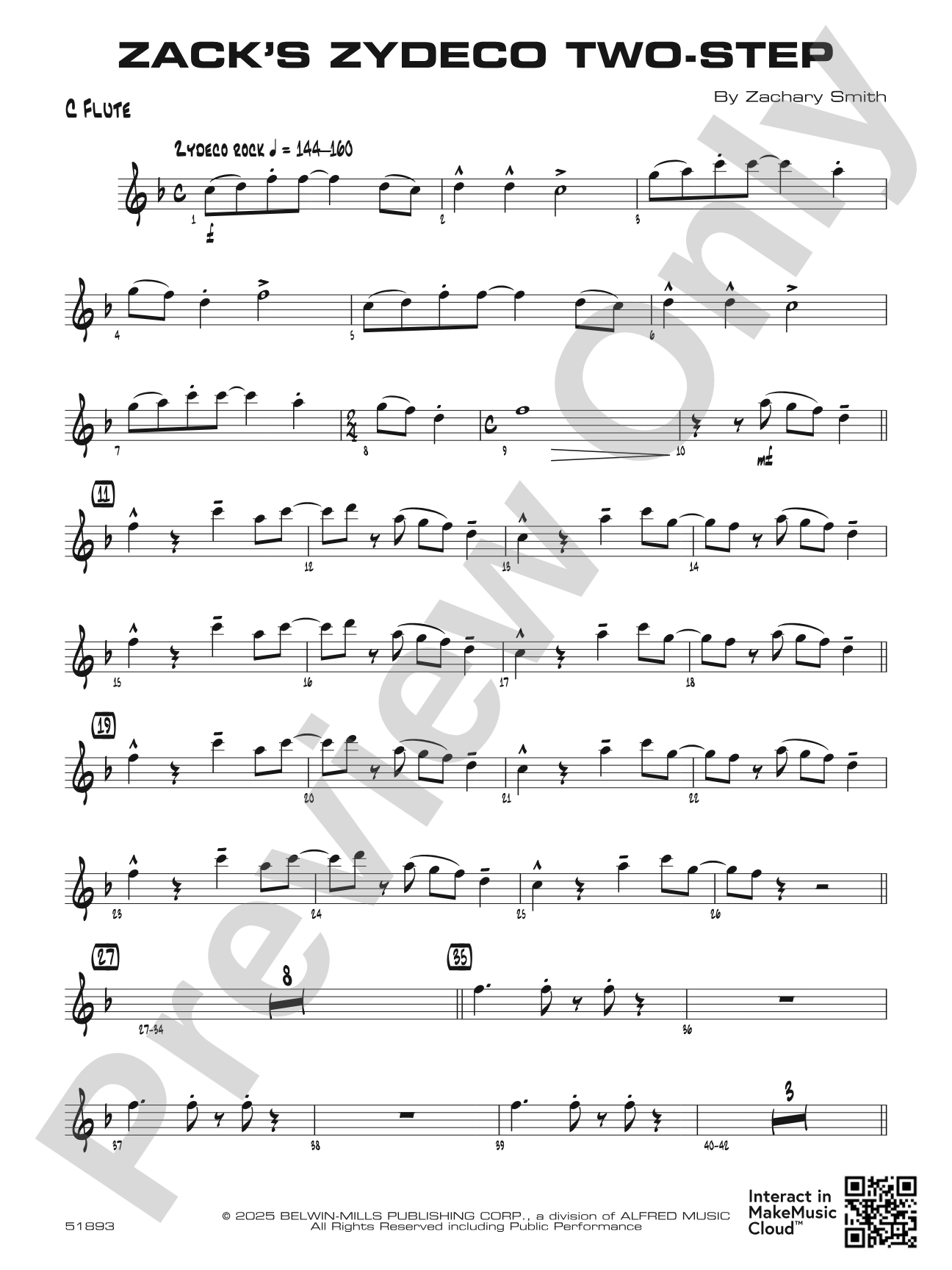
Oh yeah, a fun and happy chart with the Zydeco groove played around 150 BPM. Suggested solos provided for trumpet 1, tenor 1 and piano. And you'll really want to showcase the washboard auxiliary percussion part. This chart is simply a fun and musical joy for the band and for the audience. (3:45)
Discover MakeMusic Cloud: thousands of interactive titles your students can play along with today.
Smith captures something genuinely rare in first-year jazz writing: music that sounds effortless and groovy without sacrificing rhythmic clarity or ensemble cohesion. The zydeco foundation gives the piece unmistakable personality, and the washboard part isn't decorative window dressing but rather a structural anchor that bands genuinely light up playing.
What to expect
Bright, rolling, and infectious. The zydeco rhythm has a natural sway that makes listeners want to move, and the chart maintains that infectious joy without ever feeling chaotic. This is music that sounds like the band is having fun, and that feeling is contagious.
Who it's for
Jazz ensemble directors looking for accessible, musically genuine material that first-year students can play with real confidence. Ensembles working on groove-based playing and improvisation will find the suggested solos approachable without feeling condescending.
How to get the most out of it
Lock the rhythm section into a tight, bouncy pocket at 150 BPM. The zydeco groove lives or dies with how clean the drums and bass lock together.
Bring out the washboard part in rehearsal. Students often expect percussion to fade into the background, so highlight the rhythmic conversations between auxiliary percussion and the drum kit.
Shape the suggested solos around the melody's contours rather than playing them perfectly. A slightly looser, more conversational trumpet or tenor solo often sounds more authentic to the zydeco spirit.
Balance the brass so the trumpet solos sit on top of the ensemble without needing to force volume. The chart's energy comes from groove, not blare.
How to use it
Use this as a concert opener or a program brightener alongside heavier first-half repertoire. It works exceptionally well in casual performance settings (outdoor concerts, pep band appearances, community events) where the approachable groove and fun energy connect immediately with audiences of all ages.
Skills your students will build
Maintaining steady tempo within a syncopated groove
Reading and playing swing rhythms and funk-inflected articulations
Improvising within a chord progression (for trumpet, tenor, and piano soloists)
Rhythmic independence and listening to auxiliary percussion parts
Balancing ensemble blend in a funk/jazz context
You May Also Like
Scan to Complete Your Purchase
Use your phone's camera to scan the code below
You'll log in on your phone and the order will be added to your account