

Your Voices Tune (from Alexander's Feast): SATB Choral Octavo
From Alexander's Feast
By George Frideric Handel / ed. Don Malin
Item: 00-PO-0002697

$2.95
Minimum order quantity: 20 copies
Pickup currently not available
Related Items
Your Voices Tune: SATB Choral Octavo |
$2.95
|
View |
Description
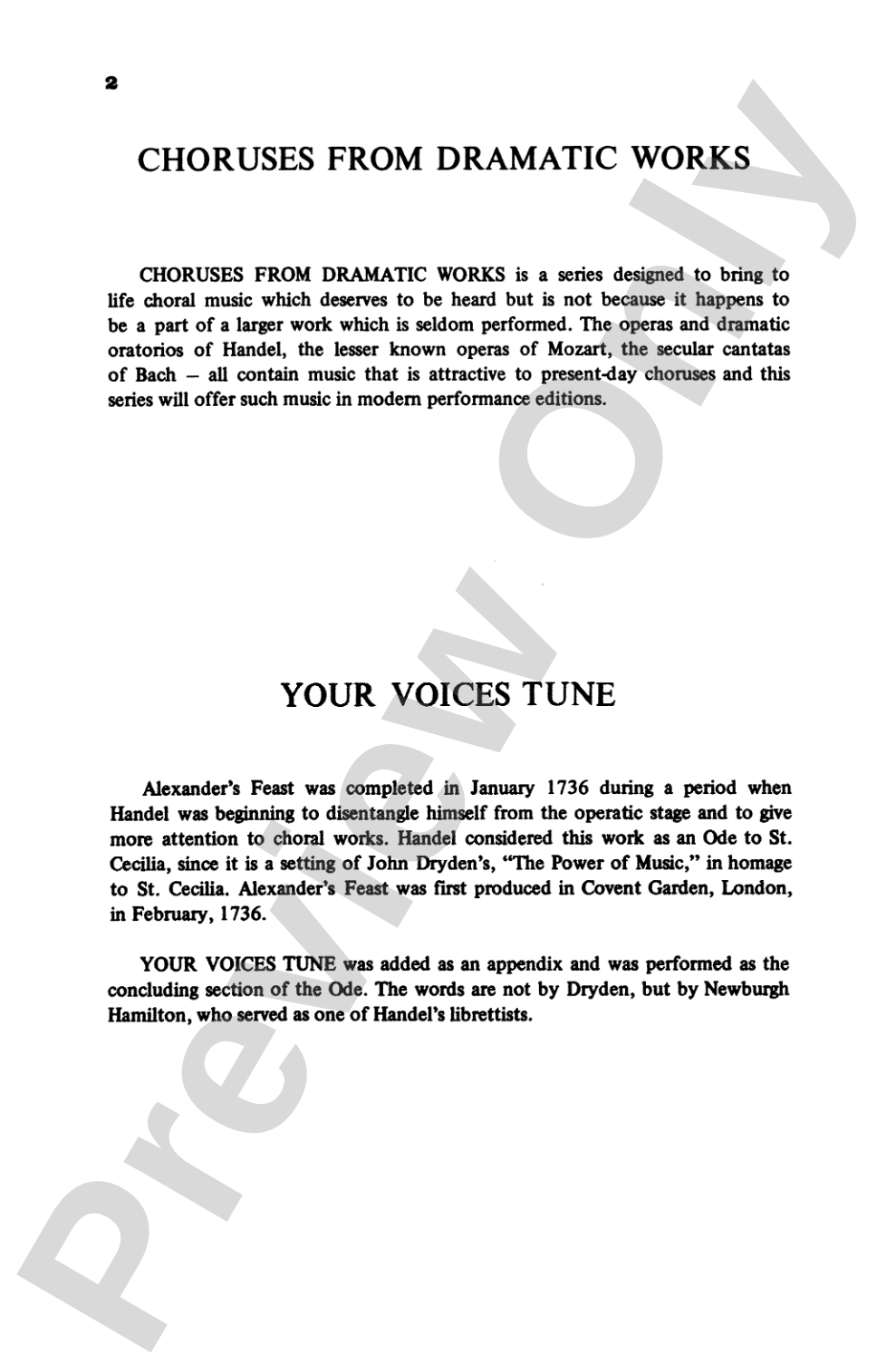
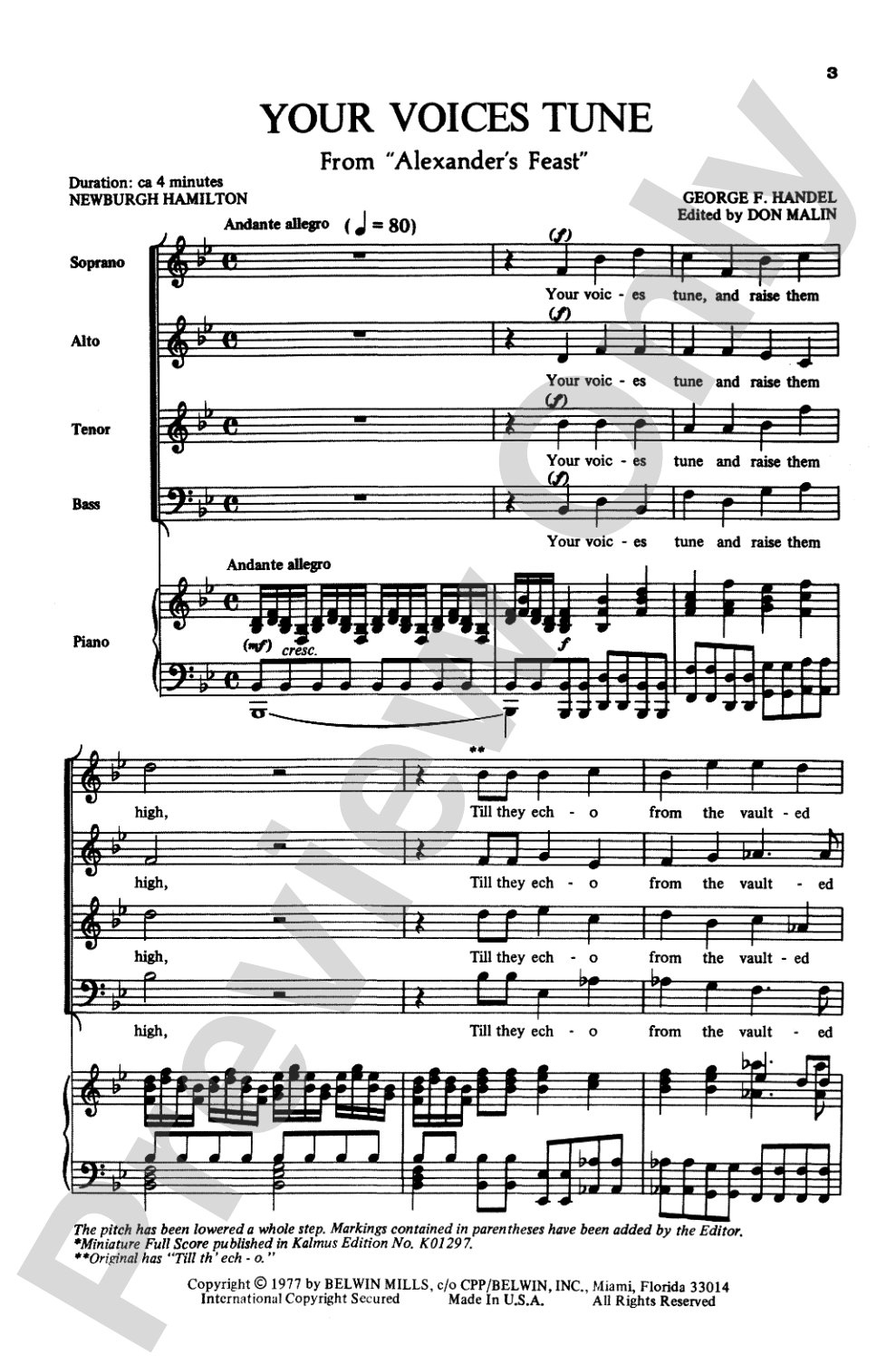
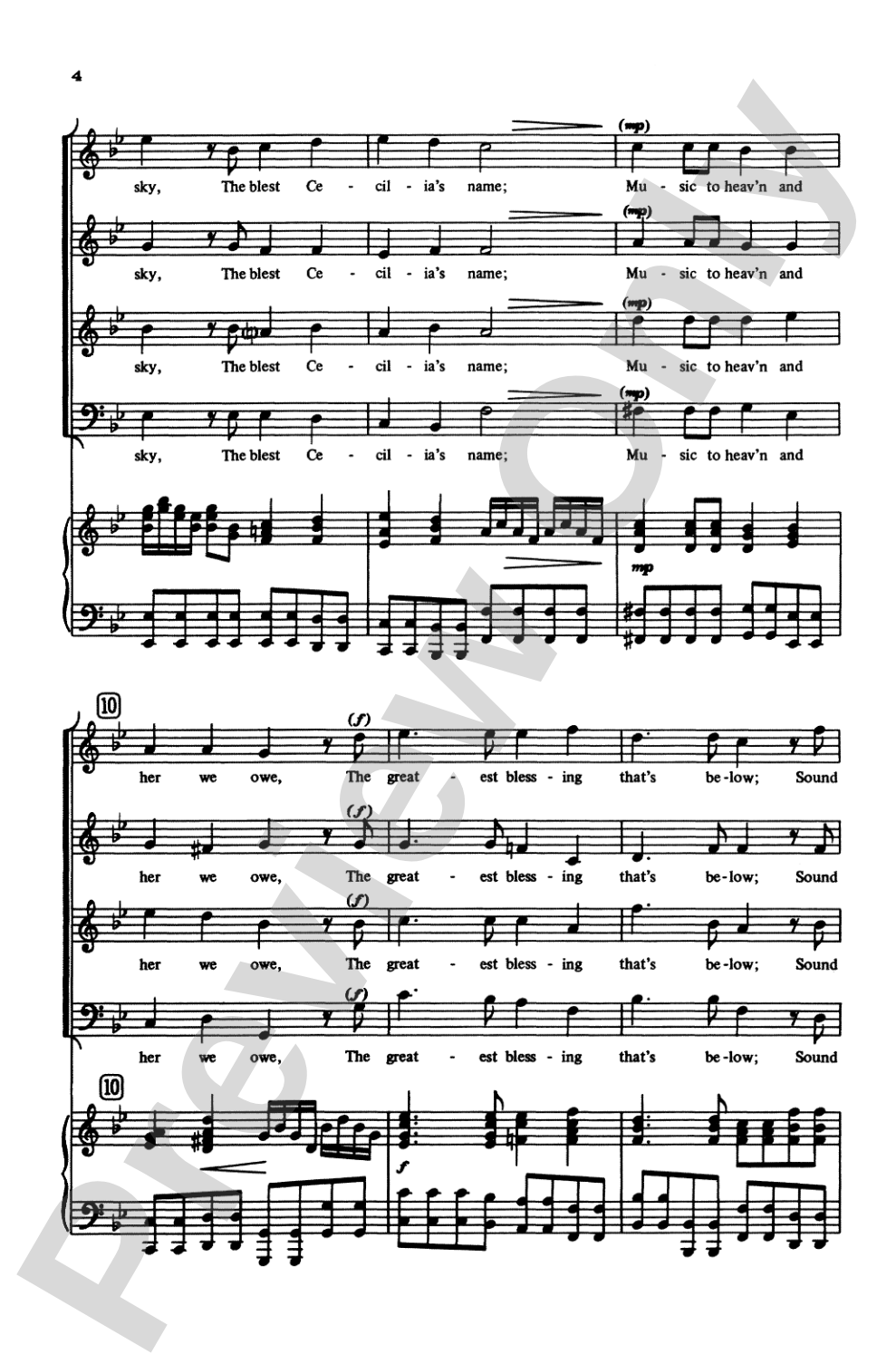
This, the final chorus from Handel's concerto grosso Alexander's Feast, is a joyful ode to "music" from the baroque era. Alfred's definitive, authentic edition has been lowered a whole step from the original score and provides astute editorial additions in parenthesis Appropriate for contest and festival choirs, four minutes in duration.
The great success of the original work, featuring a libretto by Scottish playwright Newburgh Hamilton, encouraged Handel to make the transition from writing Italian operas to English choral works.


The great success of the original work, featuring a libretto by Scottish playwright Newburgh Hamilton, encouraged Handel to make the transition from writing Italian operas to English choral works.
Don't just read it, hear it, play along with it, and watch your students grow with it. In MakeMusic Cloud, Your Voices Tune (from Alexander's Feast): SATB Choral Octavo comes alive with professional accompaniment, adjustable tempo, and built-in practice tools that turn solo practice into real progress.
Open in the Player
Jump straight in and assign it today.
Start Your Free Trial
Open this title and explore the full library in minutes.
Sample Audio
No sample audio found.
Sample Video
No sample videos found.
Additional Details
Series:
Belwin Festival Series
Publisher:
Alfred Music
Page Count:
12
SKU:
00-PO-0002697
More about this title
About the Composer: George Frideric Handel
George Frideric Handel (1685-1759) was a German-born composer who spent most of his creative life in England, fundamentally shaping the musical tastes of London and establishing himself as one of the Baroque era's most prolific masters. His transition from Italian opera to English choral works in the 1730s proved transformative for both his career and the development of choral music in the English-speaking world; his oratorios and large-scale choral works became central to concert life and remain essential to choral repertoire today.
Handel's gift for memorable melody, structural clarity, and dramatic impact made his music immediately accessible to audiences while maintaining sophisticated compositional craft. His influence on choral writing extends far beyond his lifetime; contemporary composers and arrangers continue to return to his works for their elegant counterpoint, singable lines, and capacity to energize performers and listeners alike.
Why we love this
This final chorus radiates pure musical joy in a way that feels earned rather than imposed. The piece showcases Handel's mastery of text setting and harmonic propulsion; the text about music itself becomes a celebration of what your choir is doing in that very moment. For contest and festival settings, it's substantial enough to impress adjudicators while remaining achievable for developing choirs.
What to expect
The opening is radiant and declarative, with all voices arriving on the same rhythmic pulse before the texture breaks into flowing counterpoint. Baroque exuberance animates every phrase; this is music that moves forward with inevitability and light, carrying singers and audiences alike into a celebration of music's own power.
Who it's for
This piece suits SATB choirs preparing for festival and competition seasons, particularly ensembles that have developed basic part independence and can sustain musical energy across a four-minute span. It works equally well for chamber choirs and larger mixed groups seeking a showpiece that combines accessibility with genuine musical substance.
How to get the most out of it
- Emphasize the dance-like rhythmic vitality in the piece; Baroque articulation should feel light and energized, not heavy or sustained.
- Balance the independent lines in the fugal sections by having singers listen across parts rather than locking rigidly onto their own voice.
- Take advantage of the editorial additions in parentheses provided by the Alfred edition; these clarifications guide interpretation and help less experienced singers navigate complex passages.
- The transposition down a whole step from the original key makes the piece more accessible without sacrificing its brilliance; resist the urge to rush the tempo just because it sits lower for your singers.
How to use it
Program this as a festival closer or as a contrasting anchor alongside longer baroque or contemporary works. Its four-minute duration and uplifting character make it an ideal pairing with more introspective repertoire on the same concert, providing audiences with a clear sense of arrival and satisfaction.
Skills your students will build
- Baroque counterpoint and part independence
- Handling parallel articulation across multiple voice lines
- Reading editorial additions and interpretive guidance in performance scores
- Sustaining rhythmic precision in energetic, dance-like textures
- Managing transposed material and understanding harmonic function in altered keys