You've Gotta Have Music Cover Image

You've Gotta Have Music: 2-Part Choral Octavo

$1.60 USD
Sale price  $1.60 USD Regular price 
Skip to product information
You've Gotta Have Music Cover Image

You've Gotta Have Music: 2-Part Choral Octavo

From A Whale of a Tale

Words and music by Mary Donnelly and George L. O. Strid

Level: Moderately Easy

Item: 00-SVM04061

$1.60
Shipped

One moment…

Description
This upbeat theme piece was featured in the Donnelly and Strid musical A Whale of a Tale. It's a fun, light-hearted program piece that will be a hit with your singers.

You've Gotta Have Music: 2-Part Choral Octavo isn't in MakeMusic Cloud just yet...but it could be. Let us know you'd like to see it, and you'll help shape what comes next. In the meantime, start a free trial and dive into thousands of interactive titles your students can play along with today.

Sample Pages

No sample pages found.

Sample Audio
No sample audio found.
Sample Video
Additional Details
Publisher: Alfred Music
UPC: 654979079798
SKU: 00-SVM04061

More about this title

About the Composer: Mary Donnelly
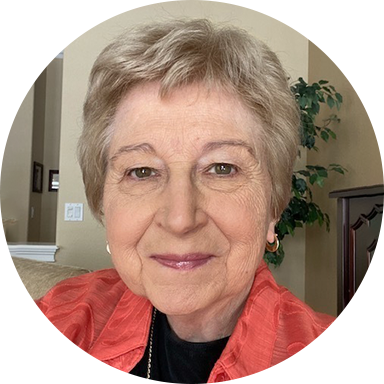
Mary Donnelly

Mary Donnelly grew up in Reno, Nevada, and studied English and French at the University of Nevada before discovering her passion for music education. While still an undergraduate, she founded two children's choruses, an experience that redirected her entire career. She earned a Master's Degree in Education from Lesley College in Cambridge, Massachusetts, where she focused on integrating the arts across the curriculum. For thirty years, she taught general music and choir in the Washoe County School District.

In 1985, Donnelly met George L. O. Strid while team-teaching a sixth grade music class. When their principal challenged them to write a musical for Reading Week, they created The Million Dollar Mystery, launching a prolific collaboration. Over the decades, Donnelly and Strid have composed more than two hundred songs and twenty-five musicals, making them fixtures in elementary and middle school music programming. Donnelly holds memberships in ACDA, NEA, and ASCAP and continues to live in Reno with her husband.

Why we love this

This piece carries the charm and accessibility that defines Donnelly and Strid's work for young singers. The upbeat, light-hearted character makes it an ideal morale booster in rehearsal or a program closer that leaves the audience smiling. At Grade 2, it sits perfectly for developing choirs while remaining genuinely enjoyable to perform, which matters more than you might think when building student confidence and ensemble camaraderie.

What to expect

Bright and playful, with the kind of straightforward charm that appeals to singers who aren't yet convinced that choir is cool. The piece bounces along with infectious energy and a tongue-in-cheek spirit that makes rehearsals feel collaborative rather than drill-focused.

Who it's for

This octavo suits middle school choirs and upper elementary ensembles ready to tackle part-singing without the complexity of larger voicings. It works equally well for general music classes, community youth choirs, or afterschool singing programs where engagement and fun are priorities alongside musicality.

How to get the most out of it

  • Treat the rhythm section with clarity and bounce; the piece thrives on rhythmic precision that feels natural rather than metronomic.
  • Balance the two parts so each voice part can be heard distinctly, especially if you have uneven voice distribution.
  • Let the text delivery be conversational and energetic; underline the humor in the lyrics through articulation and phrasing.
  • If using the recorded accompaniment, rehearse with it early to establish the style and tempo the singers will hear in performance.

How to use it

Program this as a concert opener to set a joyful, accessible tone, or save it for the finale to send audiences home in good spirits. It pairs well alongside other secular vocal music at family concerts or school assemblies where diverse age groups and musical backgrounds are in the audience.

Skills your students will build

  • Part independence in 2-part writing
  • Rhythmic precision and ensemble timing
  • Text clarity and expressive diction
  • Confidence in part-singing across uneven voice ranges

You May Also Like