You Take My Breath Away (arr. Roel Griffioen) Sheet Music Preview

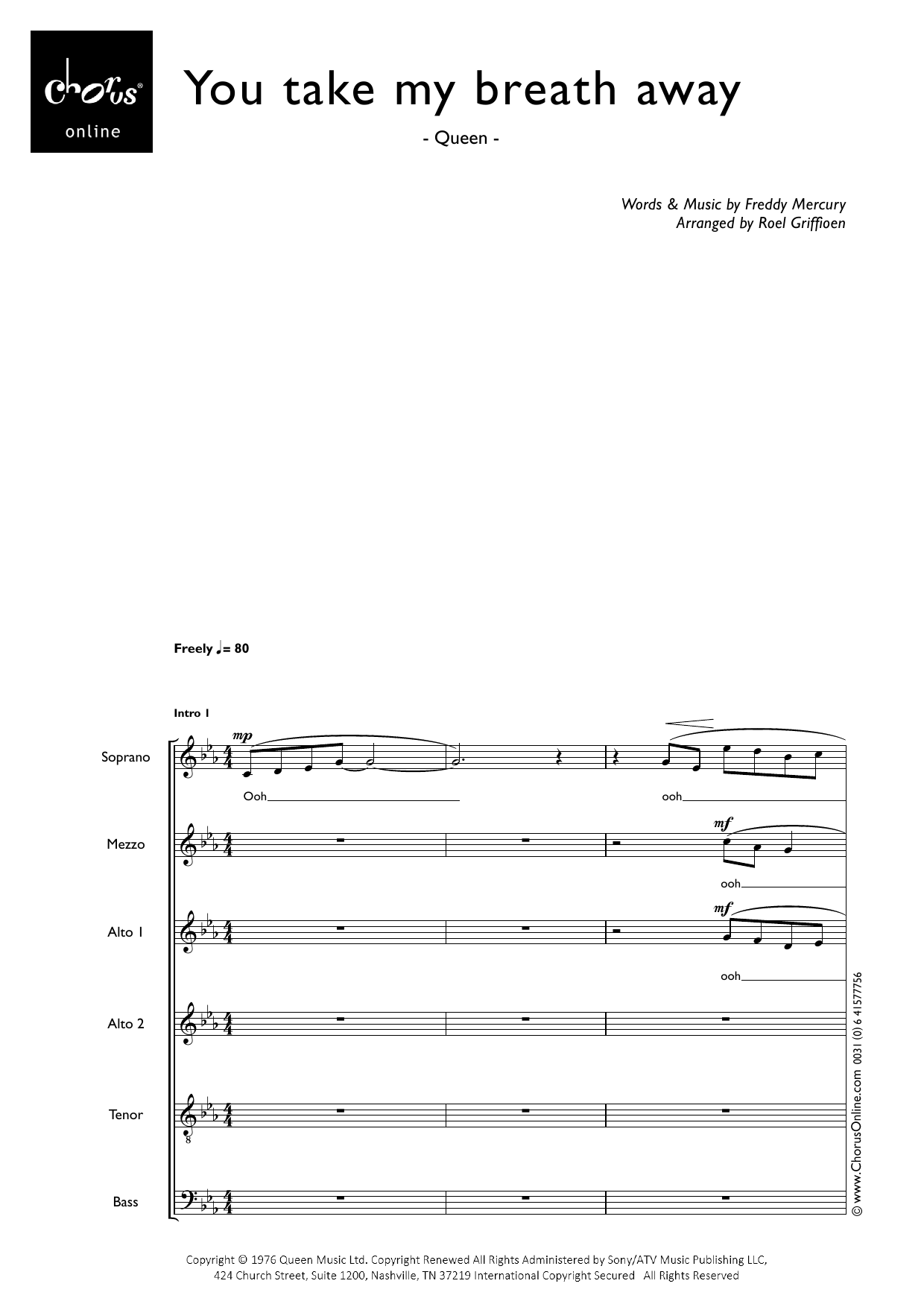
You Take My Breath Away (arr. Roel Griffioen): SMAATB Choral Octavo

As performed by Queen / Arranged by Roel Griffioen

Item: 35-DS00497533

Digital Download
$2.99
Description

You Take My Breath Away (arr. Roel Griffioen): SMAATB Choral Octavo isn't in MakeMusic Cloud just yet...but it could be. Let us know you'd like to see it, and you'll help shape what comes next. In the meantime, start a free trial and dive into thousands of interactive titles your students can play along with today.

Sample Audio
No sample audio found.
Sample Video
Additional Details
Publisher: Hal Leonard
Page Count: 16
SKU: 35-DS00497533

More about this title

About the Artist: Queen

Queen emerged in the 1970s as one of rock music's most innovative and theatrical bands. Fronted by the incomparable Freddie Mercury, the group combined operatic ambition with hard rock energy, creating a catalogue that defied genre boundaries. Their influence on contemporary music education extends far beyond their chart success; their harmonic sophistication, dynamic range, and fearless genre mixing continue to inspire arrangements in choral and instrumental settings.

Freddie Mercury's vocal virtuosity and the band's intricate layering of voices made them natural subjects for choral adaptation. Arrangers find in Queen's material an opportunity to engage students with music that feels current and personally meaningful while introducing them to surprisingly complex harmonic and structural ideas rooted in classical training.

Why we love this

This arrangement captures the emotional restraint and soaring intensity of one of Queen's most beloved ballads. Griffioen's SMAATB setting respects the original's intimate feel while leveraging the textural possibilities of six voices, creating moments of lush harmony that feel earned rather than overdone. Students engage authentically with material they already love, and you get the pedagogical bonus of exploring how pop songs can be reimagined for a cappella choir without losing their emotional core.

What to expect

Intimate and cinematic; like watching a moment of vulnerability magnified through a stage light. The arrangement honors the original's quiet intensity, building from a spare, almost fragile opening into moments of full ensemble warmth. There's a restraint throughout that makes the rare moments of fuller voicing feel genuinely powerful.

Who it's for

Choirs at the intermediate to advanced level who want to program contemporary repertoire without sacrificing musicality. This works especially well for mixed ensembles seeking pieces that showcase vocal control and blend in a non-classical context. It also appeals to students who might feel disconnected from traditional choral literature but are inspired to participate when given music they genuinely care about.

How to get the most out of it

  • Let the soprano melody breathe in the opening sections. Too much vibrato clouds the simplicity that makes this song work; a cleaner, more direct tone honors the original's vulnerability.
  • Balance the accompanying voices so they support rather than compete with the primary line. This isn't a block chord arrangement; think of it as instrumental layering translated to voices.
  • Shape the dynamics as a single arc across the entire piece rather than resetting with each phrase. The emotional payoff depends on a long-line approach to tension and release.
  • Lock the inner voices (altos and tenors) with rhythmic precision during passages where they move. Any sloppiness in the inner parts undermines the arrangement's sophistication.

How to use it

Consider this for a choral concert that intersperses classical and contemporary repertoire, positioning it alongside art songs or Romantic ballads to show the continuum between vocal traditions. It also works as an encore or closing piece that sends the audience out emotionally satisfied. The 16-page score suggests it's substantial enough to anchor a set without overwhelming shorter pieces around it.

Skills your students will build

  • Sustaining long phrases with proper breath management
  • Balancing personal vibrato to support ensemble blend
  • Reading and executing complex rhythmic notation across six parts
  • Shaping dynamic arcs across extended song forms
  • Maintaining independence as an inner voice while supporting the melodic line

You May Also Like