You're Still a Young Man: E-flat Alto Saxophone Sheet Music Preview

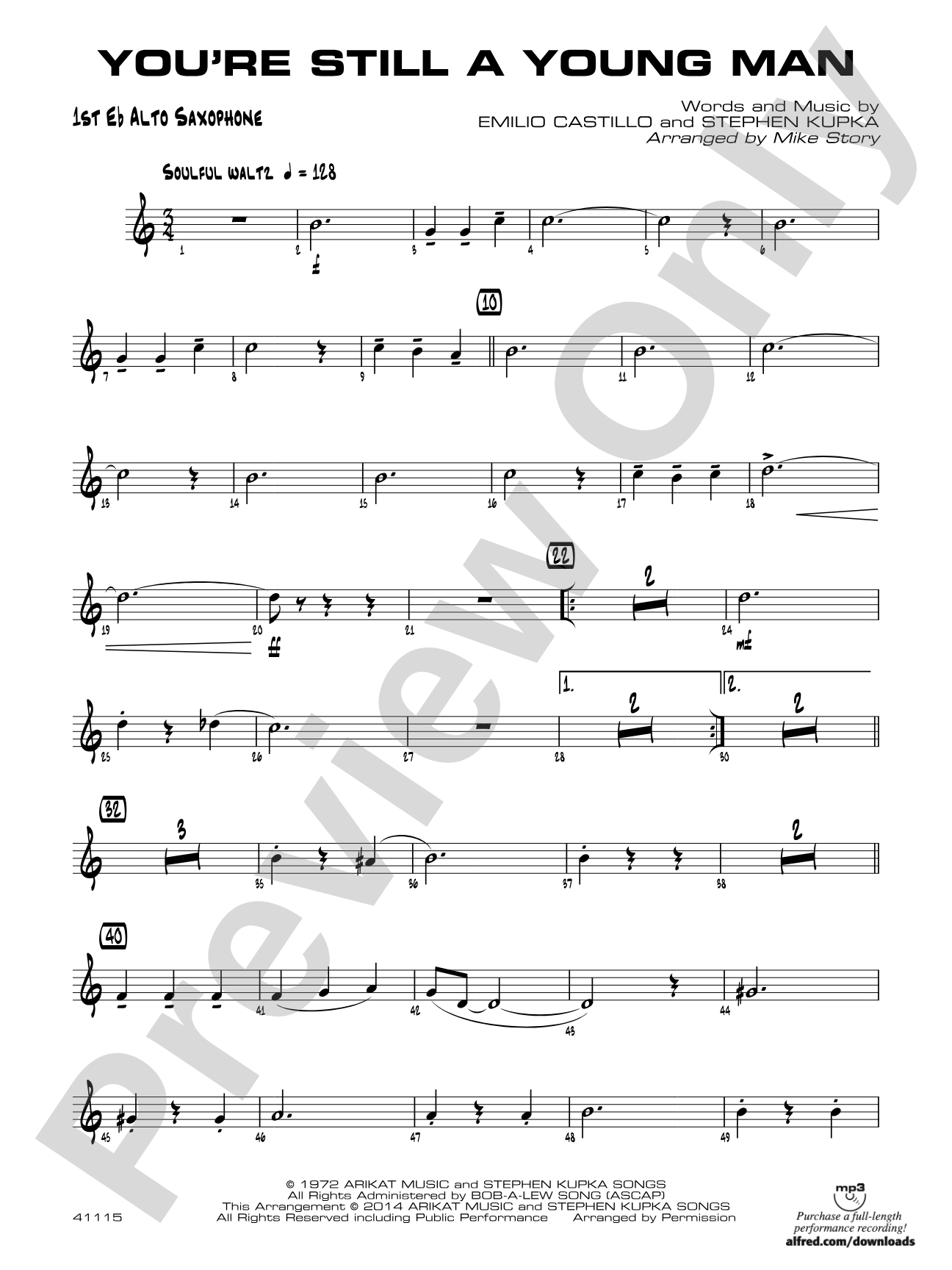
You're Still a Young Man: E-flat Alto Saxophone

Words and music by Emilio Castillo and Stephen Kupka / arr. Mike Story

Grade: 1 (Easy)

Item: 00-PC-0016255_AX1

Digital Download
$3.00
Description
A soulful yet accessible treatment of the Tower of Power hit song. This waltz is played at 128 BPM, and trumpet 1 range is to written E top space. Includes a written-out tenor 1 melody solo. A superb chart in every respect. (2:42)

Don't just read it, hear it, play along with it, and watch your students grow with it. In MakeMusic Cloud, You're Still a Young Man: E-flat Alto Saxophone comes alive with professional accompaniment, adjustable tempo, and built-in practice tools that turn solo practice into real progress.

Sample Audio
0:00
0:00
Sample Video
Additional Details
Series: First Year Charts for Jazz Ensemble
Publisher: Alfred Music
Page Count: 86
SKU: 00-PC-0016255_AX1

More about this title

About the Composer: Emilio Castillo

Emilio Castillo co-founded Tower of Power in 1968 and has served as the band's primary composer and saxophonist throughout its five-decade career. His ability to blend funk, soul, and jazz into immediately memorable ensemble writing has made Tower of Power one of the most sampled and covered bands in music history.

Castillo's compositional voice emphasizes tight horn arrangements, syncopated rhythms, and melodies that sit comfortably in the pocket. His work translates exceptionally well to educational settings because it demands precision without requiring virtuosity, and it rewards ensemble cohesion with genuine musical payoff.

Why we love this

Mike Story's Grade 1 arrangement preserves everything that makes "You're Still a Young Man" groovy: the walking bass line, the locked-in horn unisons, and that irresistible funk feel. Your students will hear themselves making real ensemble music from the first rehearsal, and audiences will recognize the tune immediately. It's the kind of chart that builds confidence while teaching authentic jazz phrasing and ensemble blend.

What to expect

Funky, confident, and instantly groovy. The piece has the ease of a conversation between friends—unhurried, syncopated, with moments of solo reflection set against a rock-solid ensemble foundation. It feels good to play and feels good to hear.

Who it's for

First-year jazz ensemble directors and students encountering big band charts for the first time. The Grade 1 level means your ensemble doesn't need advanced reading skills or extended ranges to sound professional, and the Tower of Power repertoire attracts players who might otherwise feel disconnected from jazz.

How to get the most out of it

  • Establish the 128 BPM groove during the first four measures with your rhythm section (bass, drums, piano). Lock that feel early so the horns can layer in securely.
  • Balance the tenor 1 solo feature so it sits clearly above the ensemble but never overrides the funk backbone. This is a conversational melody, not a showcase moment.
  • Listen closely to the trumpet 1 line climbing to the written E top space. Breathe management matters here; make sure your lead trumpet player plots their air supply in advance.
  • Keep the waltz feel ( 3/4 time) from feeling precious. This is a hip groove played in three, not a ballroom dance.

How to use it

Schedule this early in the fall concert season when your ensemble is still building confidence but needs a win. It works beautifully in a jazz-focused program alongside swing standards, or as an opener that gets audiences engaged immediately. The accessible energy makes it ideal for pep rallies or casual performances where you want to showcase real musicianship without asking your students to play above their current level.

Skills your students will build

  • Funk and soul groove fundamentals (straight-eighth feel against swing-based phrasing)
  • Ensemble balance in three-part and four-part horn voicings
  • Solo feature navigation (supporting a featured voice while maintaining section cohesion)
  • Walking bass line execution and rhythm section lockdown
  • Range management in the upper register (trumpet 1 to E space)

You May Also Like