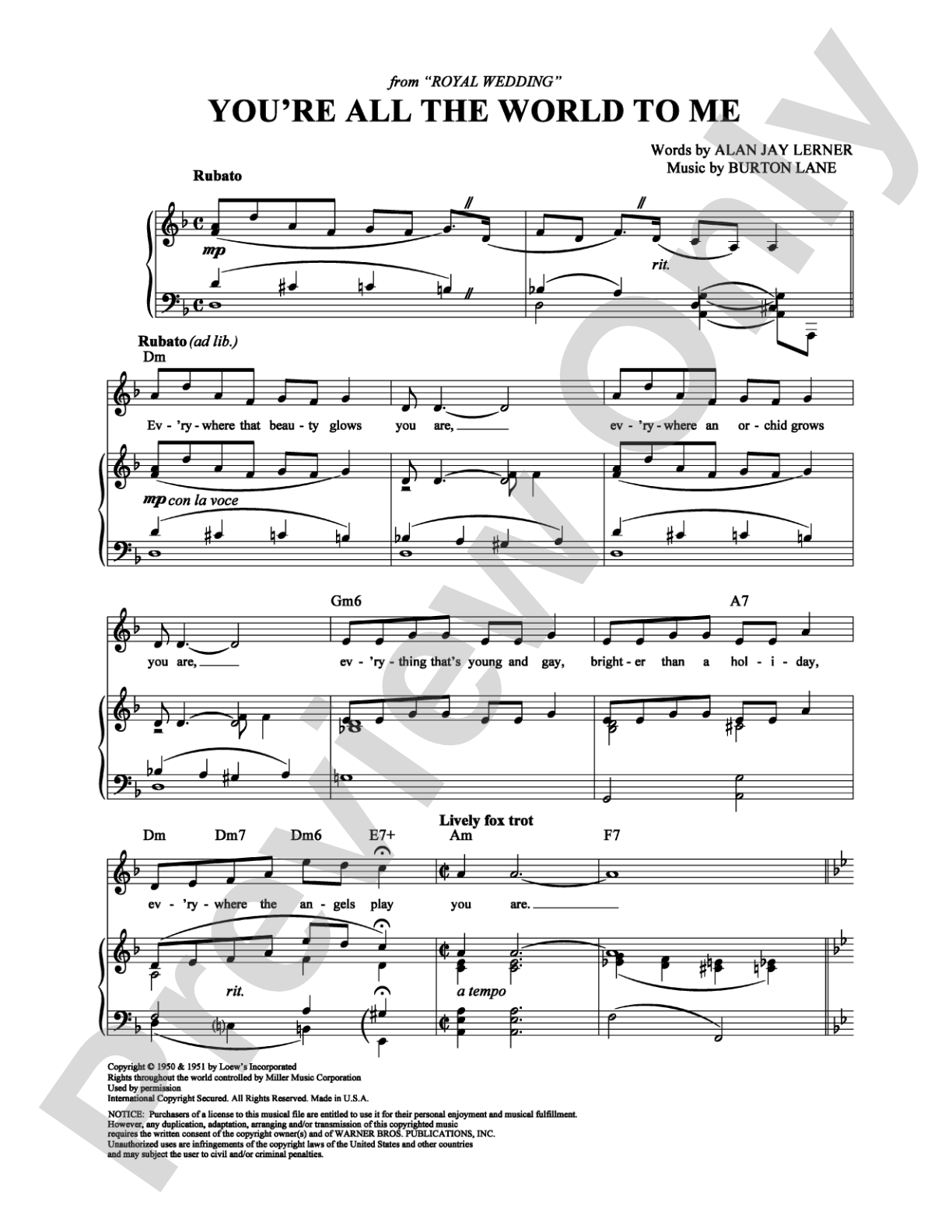
You're All the World To Me: Piano/Vocal/Chords Digital Sheet Music

You're All the World To Me: Piano/Vocal/Chords Digital Sheet Music

Burton Lane

Item: 00-PS-0001043

Digital Download
$3.99
Description

You're All the World To Me: Piano/Vocal/Chords Digital Sheet Music isn't in MakeMusic Cloud just yet...but it could be. Let us know you'd like to see it, and you'll help shape what comes next. In the meantime, start a free trial and dive into thousands of interactive titles your students can play along with today.

Sample Audio
No sample audio found.
Sample Video
Additional Details
SKU: 00-PS-0001043

More about this title

Why we love this

This arrangement gives singers and pianists a chance to collaborate on a song with genuine emotional weight. The chord notation means pianists at various levels can participate, from those reading lead sheets to those improvising accompaniment. It's the kind of standard that works equally well in a studio session, a recital, or a casual performance setting.

What to expect

A song built on genuine affection and devotion. The melodic line likely sits comfortably in the voice's natural range, allowing the performer to focus on interpretation rather than technique alone. This is music meant to be felt, not just delivered.

Who it's for

Vocalists preparing a recital or cabaret set will find this a straightforward, professional format. Pianists who read chord charts alongside notation can accompany singers with flexibility and sensitivity. Both will appreciate having the melody and chords in one document.

How to get the most out of it

  • Pay attention to how the vocal melody and piano line interact. The pianist should listen for the singer's phrasing and shape the accompaniment to support it, not compete with it.
  • Use the chord symbols as a foundation but don't feel locked into them. This format invites conversation between performer and accompanist about balance and texture.
  • Establish the tempo and harmonic feel early in rehearsal. Since both parts are notated, clarity about whether you're playing rootless voicings, fuller chords, or something in between will make collaboration smoother.

How to use it

Include this in a jazz or American songbook recital, where it sits naturally among standards and classic popular songs. It also works as an encore or standalone feature in a more eclectic concert that values sincerity and connection with the audience.

Skills your students will build

  • Collaboration between vocalist and accompanist
  • Reading chord symbols in a piano/vocal context
  • Shaping a melody with emotional intent
  • Voice leading and harmonic awareness
  • Balancing melody and accompaniment texture

You May Also Like