
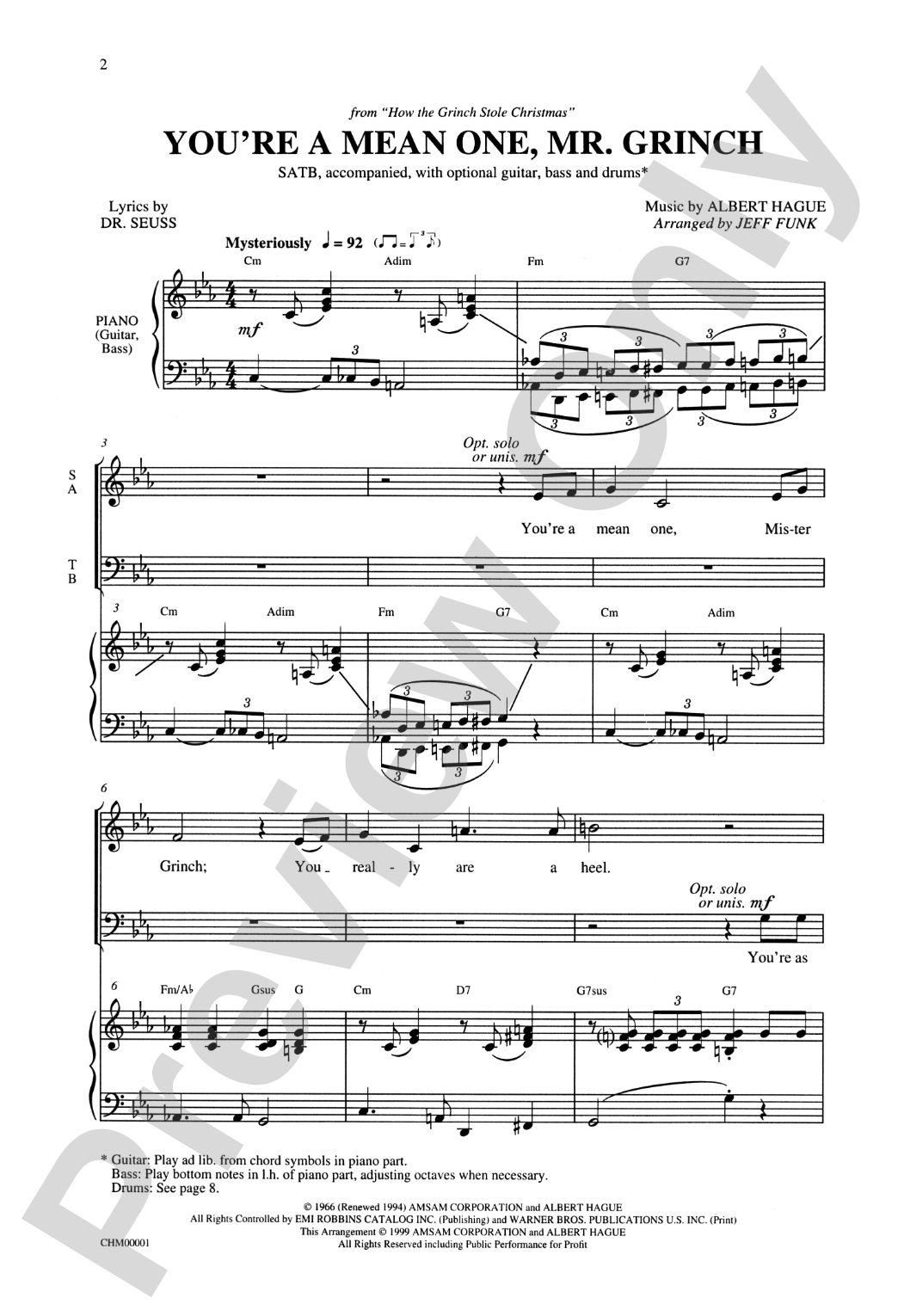
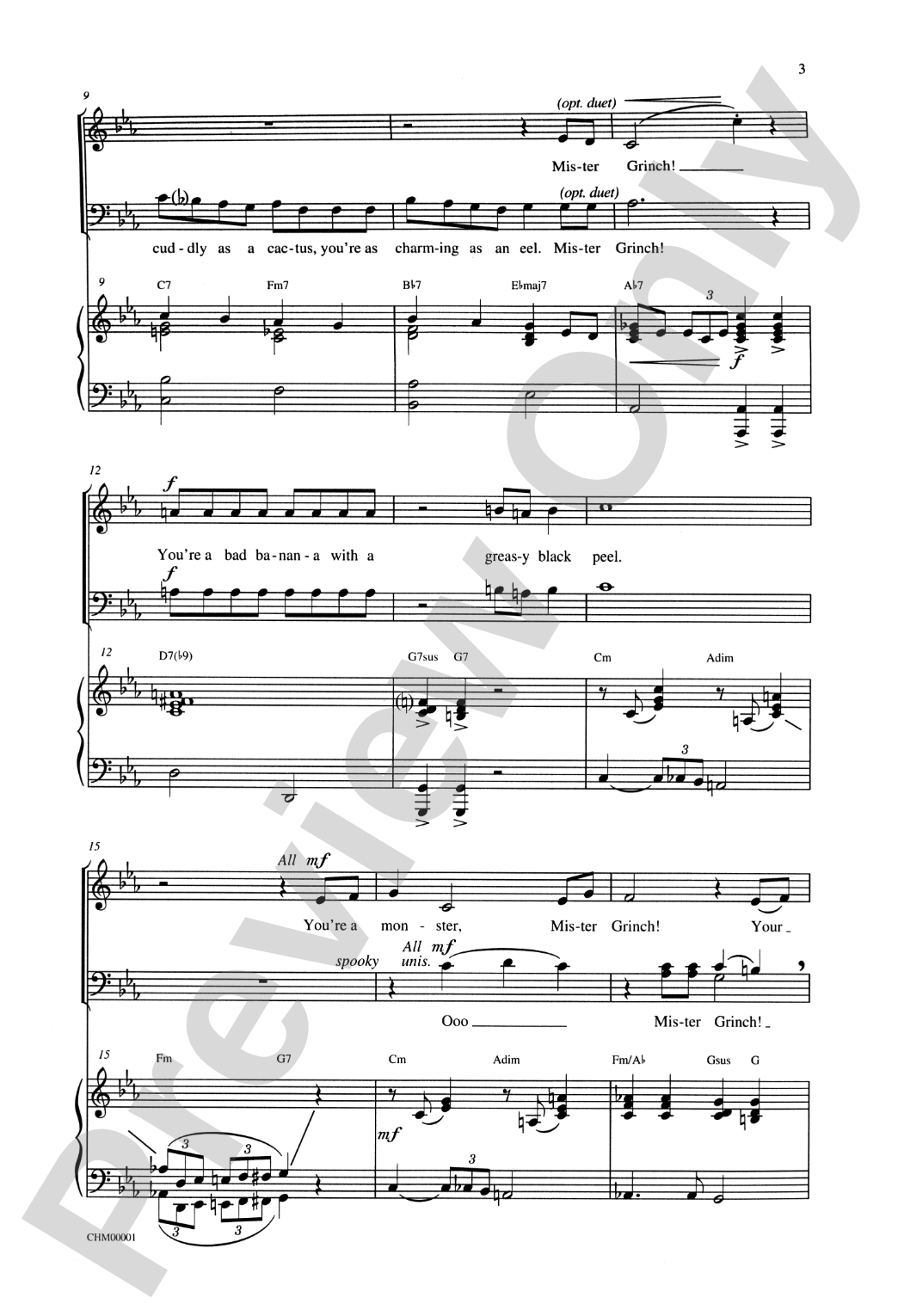

You're a Mean One, Mr. Grinch (from "How the Grinch Stole Christmas"): SATB Choral Octavo
From How the Grinch Stole Christmas
Lyrics by Dr. Seuss, music by Albert Hague / arr. Jeff Funk
Item: 00-PO-0002530

$2.10
Minimum order quantity: 20 copies
One moment…
Related Items
You're a Mean One, Mr. Grinch (from "How the Grinch Stole Christmas"): TBB Choral Octavo |
$2.10
|
View | |
You're a Mean One, Mr. Grinch (from "How the Grinch Stole Christmas"): 3-Part Mixed Choral Octavo |
$2.10
|
View | |
You're a Mean One, Mr. Grinch (from "How the Grinch Stole Christmas"): Unison / Opt. 2-Part Choral Octavo |
$2.10
|
View | |
You're a Mean One, Mr. Grinch: SATB Choral Octavo |
$2.10
|
View | |
You're a Mean One, Mr. Grinch: TBB Choral Octavo |
$2.10
|
View | |
You're a Mean One, Mr. Grinch: 3-Part Mixed Choral Octavo |
$2.10
|
View | |
You're a Mean One, Mr. Grinch: Choral Octavo SoundTrax CD |
$27.99
|
View | |
You're a Mean One, Mr. Grinch: Unison / Opt. 2-Part Choral Octavo |
$2.10
|
View | |
You're a Mean One, Mr. Grinch: Choral Octavo SoundTrax CD |
$27.99
|
View |
Description
When Dr. Seuss' classic book "How the Grinch Stole Christmas" became a TV holiday special, the music helped make it a big hit! This title song is hilarious and kids of all ages will love it! Jeff has done a great job at making the lyrics and rhythm very easy to sing. A fabulous novelty addition to any holiday concert.


Don't just read it, hear it, play along with it, and watch your students grow with it. In MakeMusic Cloud, You're a Mean One, Mr. Grinch (from "How the Grinch Stole Christmas"): SATB Choral Octavo comes alive with professional accompaniment, adjustable tempo, and built-in practice tools that turn solo practice into real progress.
Open in the Player
Jump straight in and assign it today.
Start Your Free Trial
Open this title and explore the full library in minutes.
Sample Audio
1
Audio File
--:--
0:00
0:00
Sample Video
No sample videos found.
Additional Details
Series:
Alfred Pop Choral Series
Publisher:
Alfred Music
Page Count:
8
SKU:
00-PO-0002530
More about this title
About the Composer: Albert Hague
Albert Hague (1920-2001) composed for stage, film, and television throughout a prolific career that spanned decades. His work on the 1966 TV adaptation of "How the Grinch Stole Christmas" became one of his most enduring contributions to American popular culture, with "You're a Mean One, Mr. Grinch" achieving instant classic status. Hague's gift for melody and his ability to serve a narrative made him a sought-after composer for musical theater and broadcast productions.
Beyond the Grinch special, Hague composed the score for the Broadway musical "Redhead" and contributed songs to numerous television specials and films. His understanding of how music could enhance storytelling, combined with his skill at crafting singable, memorable melodies, made his work accessible to both professional performers and amateur musicians alike.
Why we love this
This arrangement captures the irreverent humor of the original song while keeping the vocal parts genuinely singable for mixed choirs of varying experience levels. The novelty factor is real, but the writing is honest; Jeff Funk respects both the material and your singers. It's the kind of piece that brings audiences to life mid-concert and gives your choir a chance to have fun without sacrificing musicality.
What to expect
Mischievous and infectious. The melody has a sly, sing-song quality that makes the insult-laced lyrics feel playful rather than mean-spirited. You'll hear your audience grinning before the first verse ends.
Who it's for
Any SATB choir looking for a crowd-pleasing novelty number that works for holiday concerts, community events, or mixed programs where the goal is connection and fun. Directors of intermediate and advanced choirs will find this accessible enough to learn quickly while still offering genuine entertainment value.
How to get the most out of it
- Lean into the rhythmic language to nail the comedic timing. The lyrics drive the rhythm, so clarity and precision with articulation will land the humor harder than any overacting.
- Balance the voices so the melody stays prominent; this is a character piece where the tune matters more than harmonic density. Soprano and tenor lines should cut through cleanly.
- Take advantage of the recorded accompaniment to lock in the groove and tempo. The track will help your ensemble maintain energy and snap without you having to conduct every subdivision.
How to use it
Perfect as a palate cleanser between heavier seasonal pieces, or as an opener to signal that your concert will include humor alongside reverence. This works especially well when paired with traditional carols, since the contrast heightens both the novelty and the sincerity of the rest of your program.
Skills your students will build
- Clear articulation in rhythmically driven text setting
- Maintaining comedic timing and character while singing in parts
- Balancing part independence with unified ensemble sound
- Reading straightforward SATB voicing with accessibility in mind