
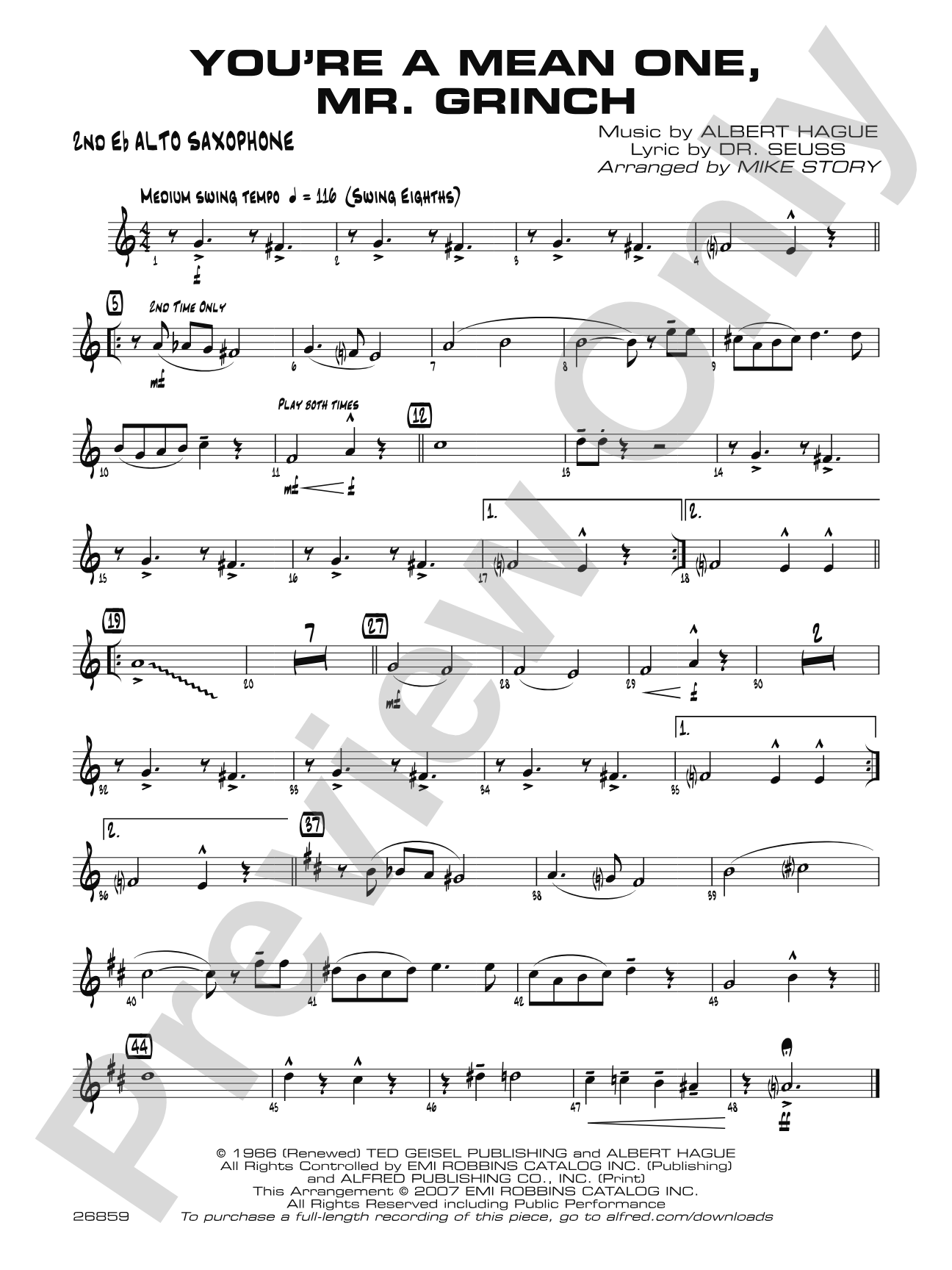

You're a Mean One, Mr. Grinch: 2nd E-flat Alto Saxophone
Music by Albert Hague, lyric by Dr. Seuss / arr. Mike Story
Grade: 1 (Easy)
Item: 00-PC-0017115_AX2
$5.99
Pickup currently not available
Description
The ideal holiday chart for the young band. Easy to rehearse, catchy and familiar melody, easy solos, modest ranges, what's not to like. Mike Story is one of the best writers for young band. Play this chart and you'll know why! (2:44) This title is available in MakeMusic Cloud.


Don't just read it, hear it, play along with it, and watch your students grow with it. In MakeMusic Cloud, You're a Mean One, Mr. Grinch: 2nd E-flat Alto Saxophone comes alive with professional accompaniment, adjustable tempo, and built-in practice tools that turn solo practice into real progress.
Open in the Player
Jump straight in and assign it today.
Start Your Free Trial
Open this title and explore the full library in minutes.
Sample Audio
1
Audio File
--:--
0:00
0:00
Sample Video
Additional Details
Series:
First Year Charts for Jazz Ensemble
Publisher:
Alfred Music
Page Count:
42
SKU:
00-PC-0017115_AX2
More about this title
About the Composer: Albert Hague
Albert Hague (1920-2001) composed the unforgettable score for "How the Grinch Stole Christmas!" the 1966 animated television special that has become a holiday cornerstone. His gift for melody and orchestration made that score instantly memorable, and "You're a Mean One, Mr. Grinch" stands as one of the most recognizable holiday songs in American popular culture.
Hague's work in musical theater and film composition demonstrates a keen understanding of what makes music engaging across audiences of all ages. His ability to craft singable, character-driven melodies while maintaining musical sophistication has made his songs enduring standards in both professional and educational settings.
Why we love this
Mike Story's arrangement captures everything that makes this melody work: it's instantly recognizable, rhythmically playful, and never overshadows the ensemble's ability to execute it cleanly. The chart hits that rare sweet spot where young musicians feel like they're playing something substantial and fun without drowning in technical demands. Your students will want to play this one again and again, and your audiences will smile the moment they hear the opening.
What to expect
Mischievous and swinging, with just enough harmonic color to keep adult ears engaged while staying accessible to young players. The rhythm section gets to establish a real groove, and the melody bounces along with the kind of good-natured character that made the original special beloved across generations.
Who it's for
Young jazz ensembles and first-year jazz students who need a holiday chart that builds confidence without sacrificing musicality. Conductors looking for material that works in December concerts while reinforcing essential ensemble skills will find this arrangement both practical and genuinely enjoyable to teach.
How to get the most out of it
- Lean into the swing feel and rhythmic swagger of the chart. Even at Grade 1, the groove matters; take time early in rehearsal to lock the ensemble's sense of pocket before worrying about perfect intonation.
- Give the easy solos breathing room. If your young soloists are nervous, work them in small sections and emphasize that the melody is already doing the heavy lifting for them.
- Balance the familiar hook against ensemble energy. The melody is catchy enough that audiences will enjoy hearing it prominently, but make sure the supporting parts (rhythm section, background voices) sit in the pocket and support the line rather than competing.
- Use this chart as a sectional rehearsal tool as well. The modest ranges and clear voicing make it excellent for reinforcing fundamentals: blend, balance, and listening within the jazz ensemble texture.
How to use it
Include this in your December concert to bridge the gap between serious holiday literature and pure entertainment. It works equally well as a second-half opener to shift the mood or as a finale that sends audiences out smiling, and the reasonable rehearsal time required makes it easy to fit into a busy holiday season without sacrificing other repertoire.
Skills your students will build
- swing rhythms and jazz articulation
- ensemble listening and balance in a jazz texture
- solo playing with modest ranges and clear phrasing
- reading jazz chord changes and understanding functional harmony
- rhythm section coordination and groove pocket