

You're a Mean One, Mr. Grinch: SATB a cappella Choral Octavo
From Dr. Seuss' How the Grinch Stole Christmas
Music by Albert Hague, lyrics by Dr. Seuss / arr. Jamey Ray
Item: 00-PO-0005899
$2.10
Minimum order quantity: 20 copies
One moment…
Related Items
You're a Mean One, Mr. Grinch: SATB a cappella Choral Octavo |
$2.10
|
View |
Description
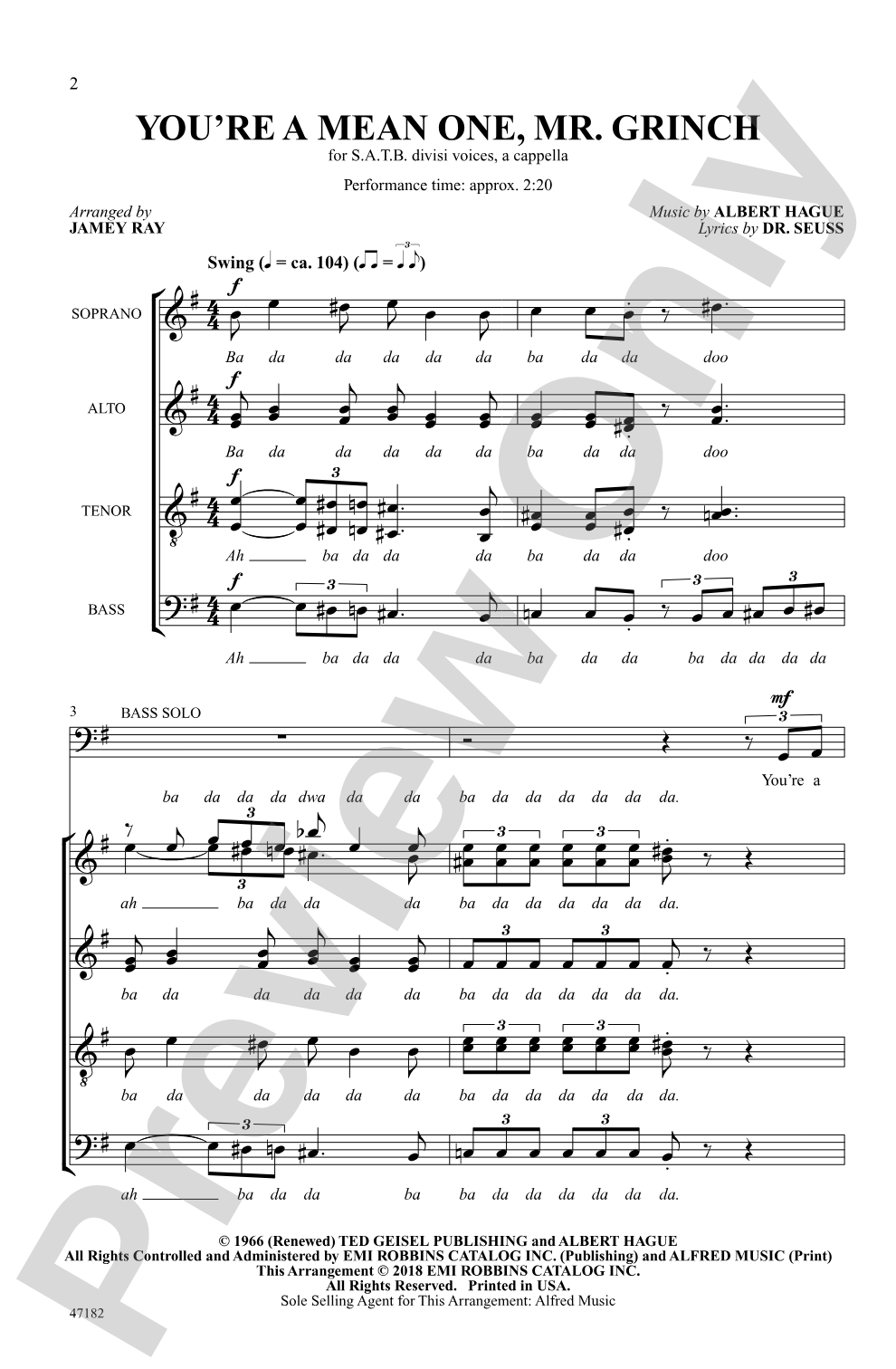
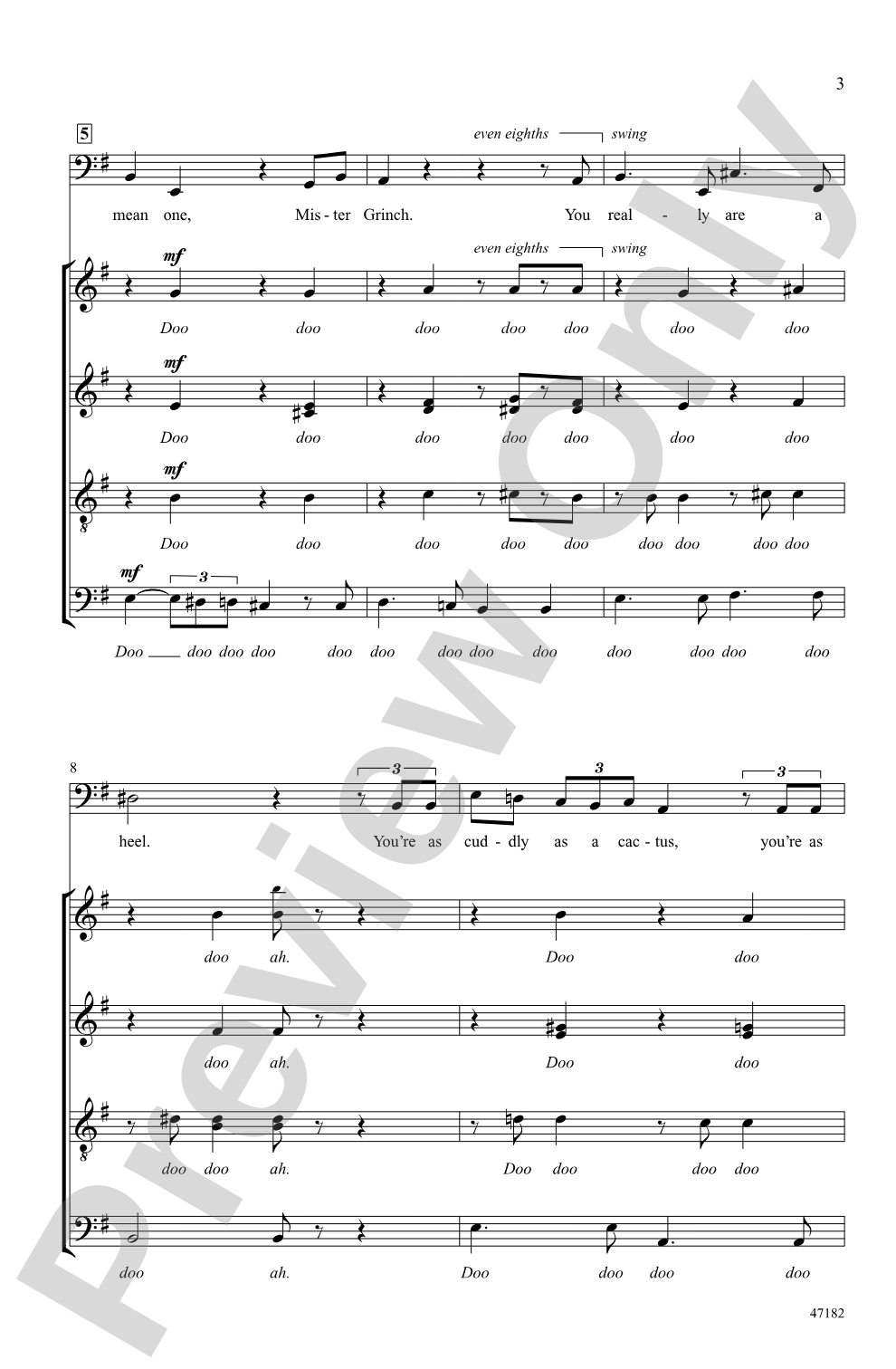
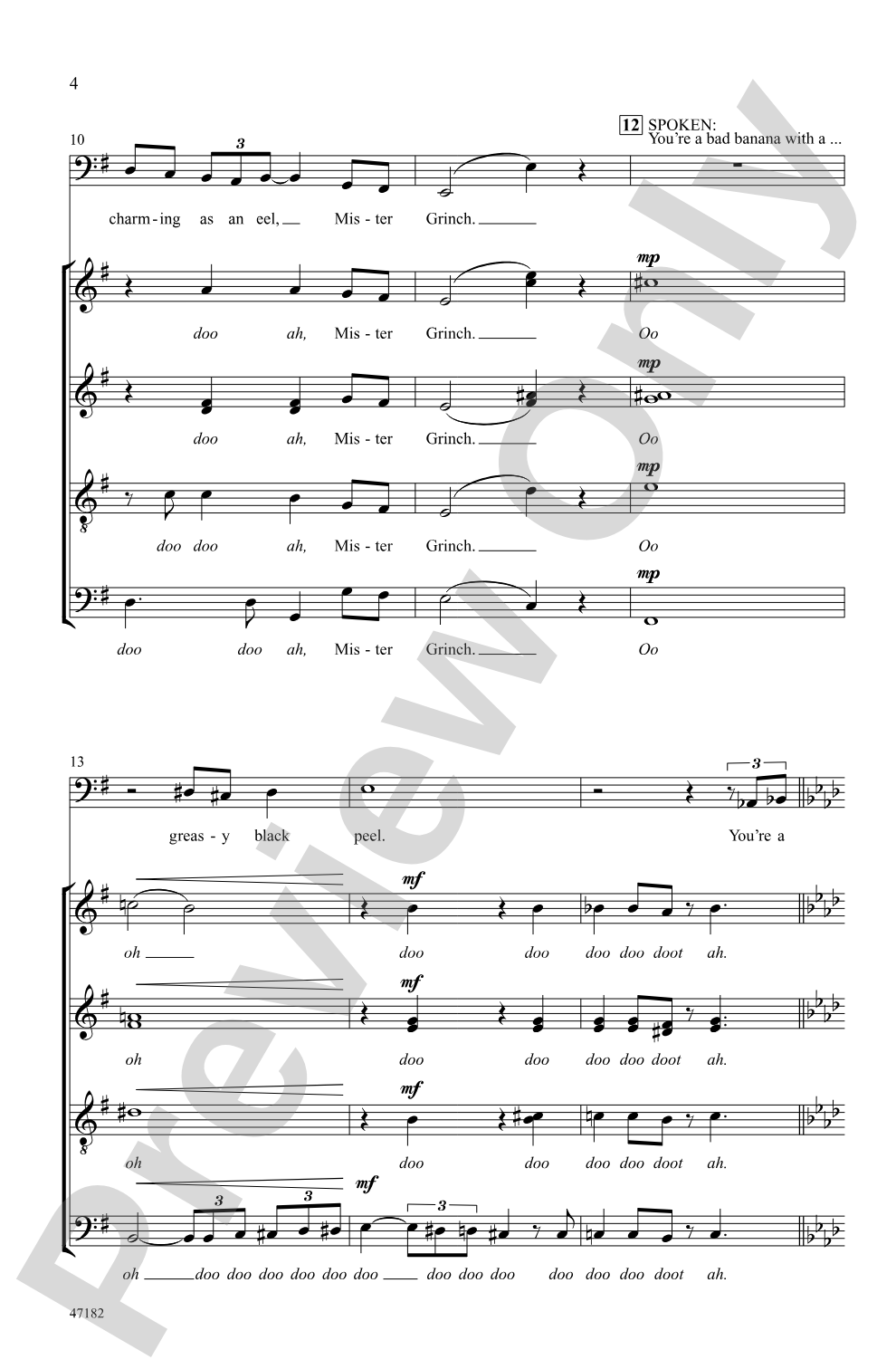
Check out this electrifying arrangement (about everyone's favorite holiday villain) as performed by a cappella group and YouTube sensation Voctave. A bass soloist (or a few guys) takes center stage, singing over a smooth choral background of jazzy chords and riffs. Clever rhythmic touches and fun articulations add plenty of vocal interest in all voice parts. Terrific!


You're a Mean One, Mr. Grinch: SATB a cappella Choral Octavo isn't in MakeMusic Cloud just yet...but it could be. Let us know you'd like to see it, and you'll help shape what comes next. In the meantime, start a free trial and dive into thousands of interactive titles your students can play along with today.
Request This Title
Tell us you want it.
Start Your Free Trial
Explore everything that's ready to play right now.
Sample Audio
1
Audio File
--:--
0:00
0:00
Sample Video
Additional Details
Series:
Alfred Pop Choral Series
Publisher:
Alfred Music
Page Count:
12
SKU:
00-PO-0005899
More about this title
About the Composer: Albert Hague
Albert Hague composed the iconic score for "How the Grinch Stole Christmas!" (1966), the beloved television special that has become a holiday staple for generations. His gift for melody and theatrical timing made him one of the most significant composers in American musical theater, with additional credits including "Pipe Dream" and "Redhead" on Broadway. Hague's work demonstrates how a strong melodic line can transcend its original context and remain culturally relevant across decades.
Why we love this
Jamey Ray's arrangement transforms a novelty classic into genuine a cappella fodder with real musicality. The decision to feature a bass soloist over layered jazz harmonies gives your singers a performance vehicle that feels contemporary and sophisticated, not cartoonish. Groups that tackle this will discover it's both crowd-pleasing and genuinely fun to rehearse.
What to expect
Sly, rhythmically playful, and undeniably fun. The arrangement maintains the mischievous character of the original while adding layers of vocal sophistication with its jazz harmonies and overlapping riffs. There's a wink-and-nudge quality throughout: it's aware of its own charm and invites singers to lean into the humor without becoming camp.
Who it's for
This arrangement works for intermediate to advanced a cappella ensembles and show choirs looking for a secular holiday piece with contemporary flair. It's equally at home in a holiday concert, a spring a cappella festival, or a community performance where the novelty appeal and recognizable melody will land with any audience.
How to get the most out of it
- Lock the rhythm section (bass line and percussion voices) early in rehearsal. The jazzy chord movement depends on rock-solid rhythmic foundation from those voice parts.
- Shape the bass solo as a character moment rather than just a showcase. Encourage the soloist to find personality and attitude in the delivery, matching the mischievous spirit of the character.
- Pay attention to the articulation markings throughout the piece. The clever rhythmic touches mentioned in the score come alive only when singers commit to the staccato, legato, and rhythmic placement choices the arranger has written.
- Balance the background choral riffs and harmonies so they support rather than overshadow the bass soloist. These voices should breathe as an ensemble, not compete for attention.
How to use it
Program this as the showstopper moment in a holiday concert, especially if you want to shift from reverent to celebratory. It also pairs well in a winter or spring concert where you're mixing seasonal and year-round material, giving audiences a familiar reference point alongside more challenging repertoire.
Skills your students will build
- Singing jazz harmonies and altered chords in an a cappella setting
- Rhythmic precision in syncopated, non-traditional vocal arrangements
- Articulation and rhythmic placement for maximum musical character
- Balancing solo and ensemble roles within a single piece
- Performing novelty material with sincerity and musicality