
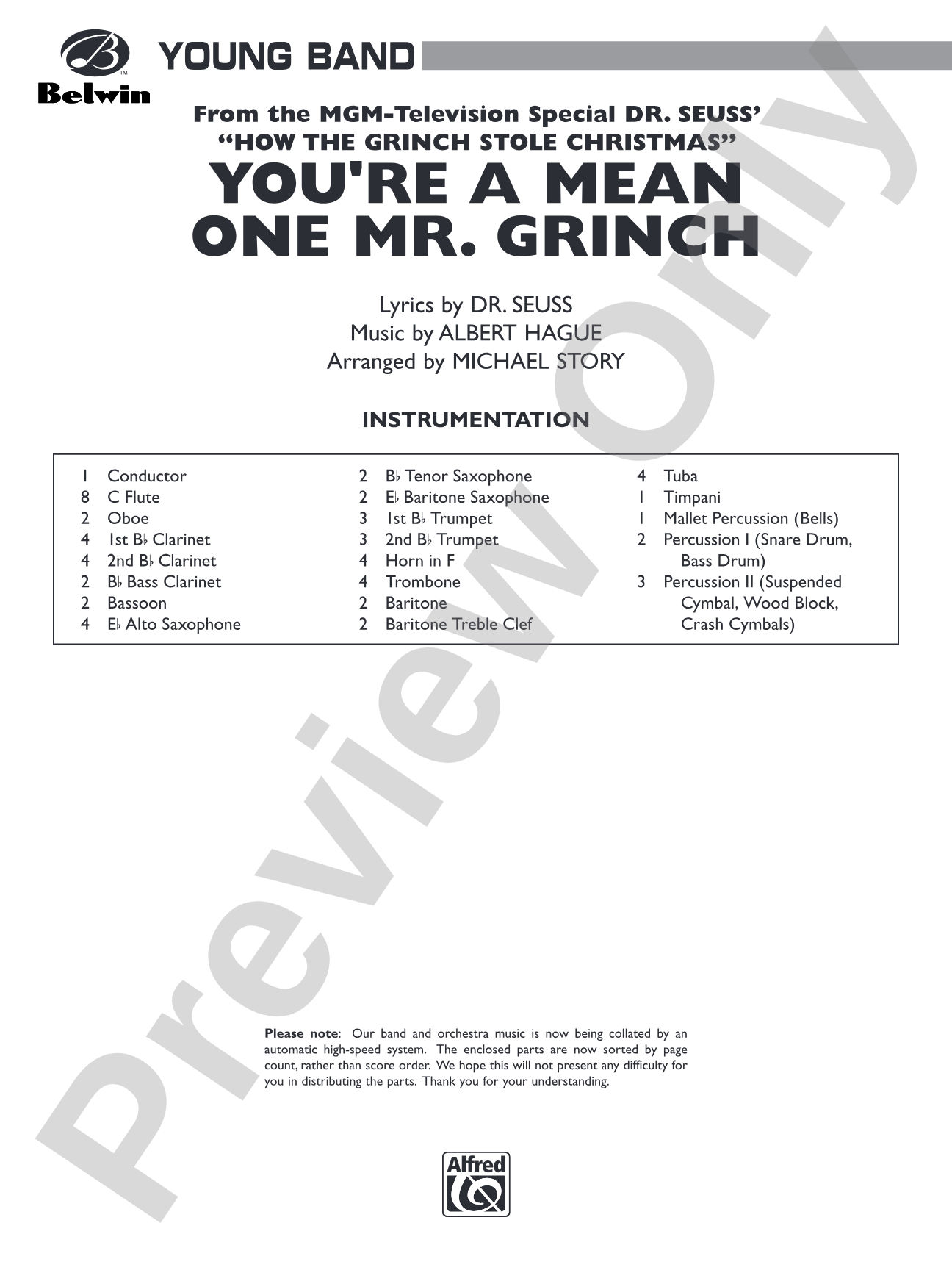
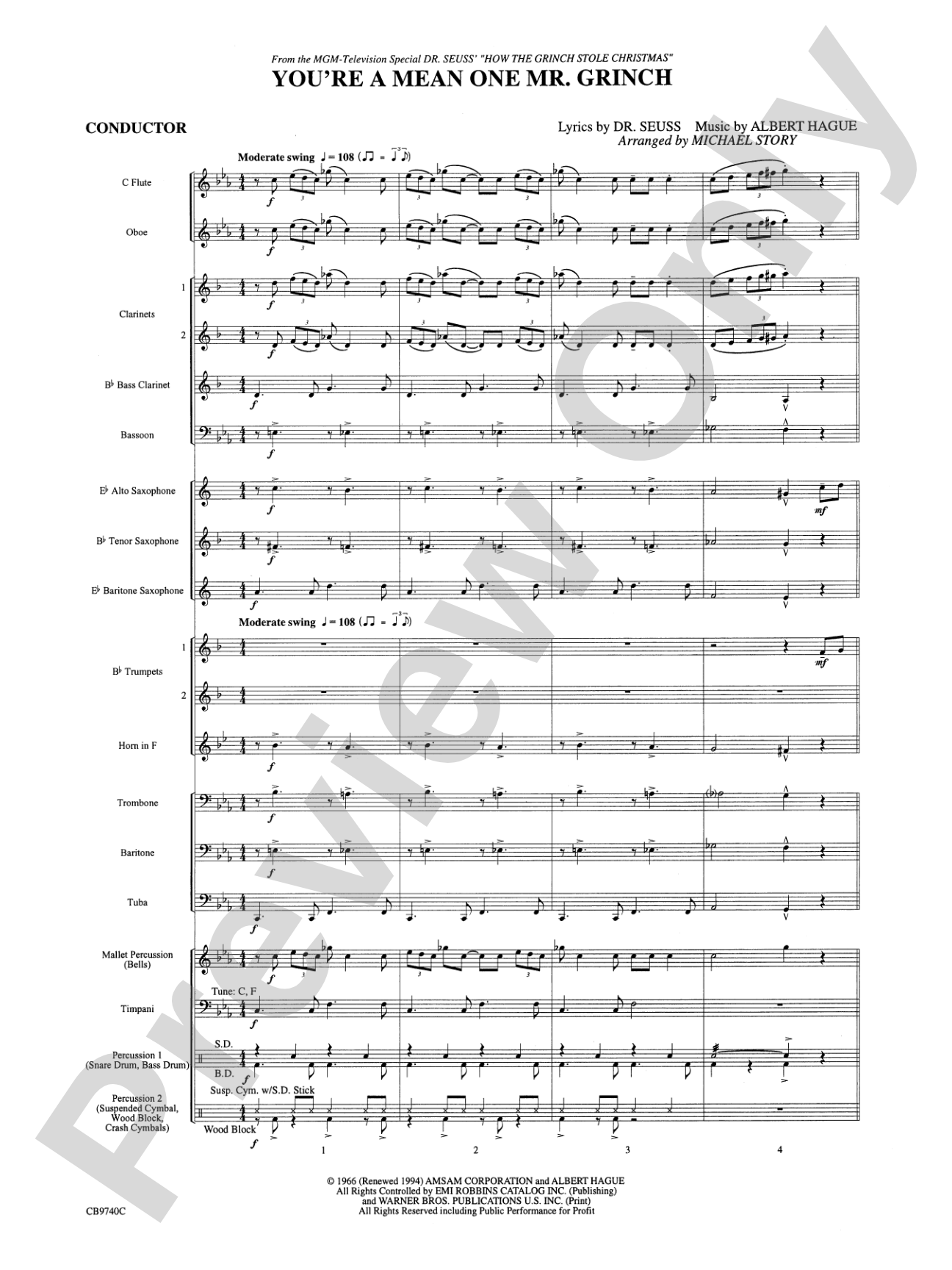
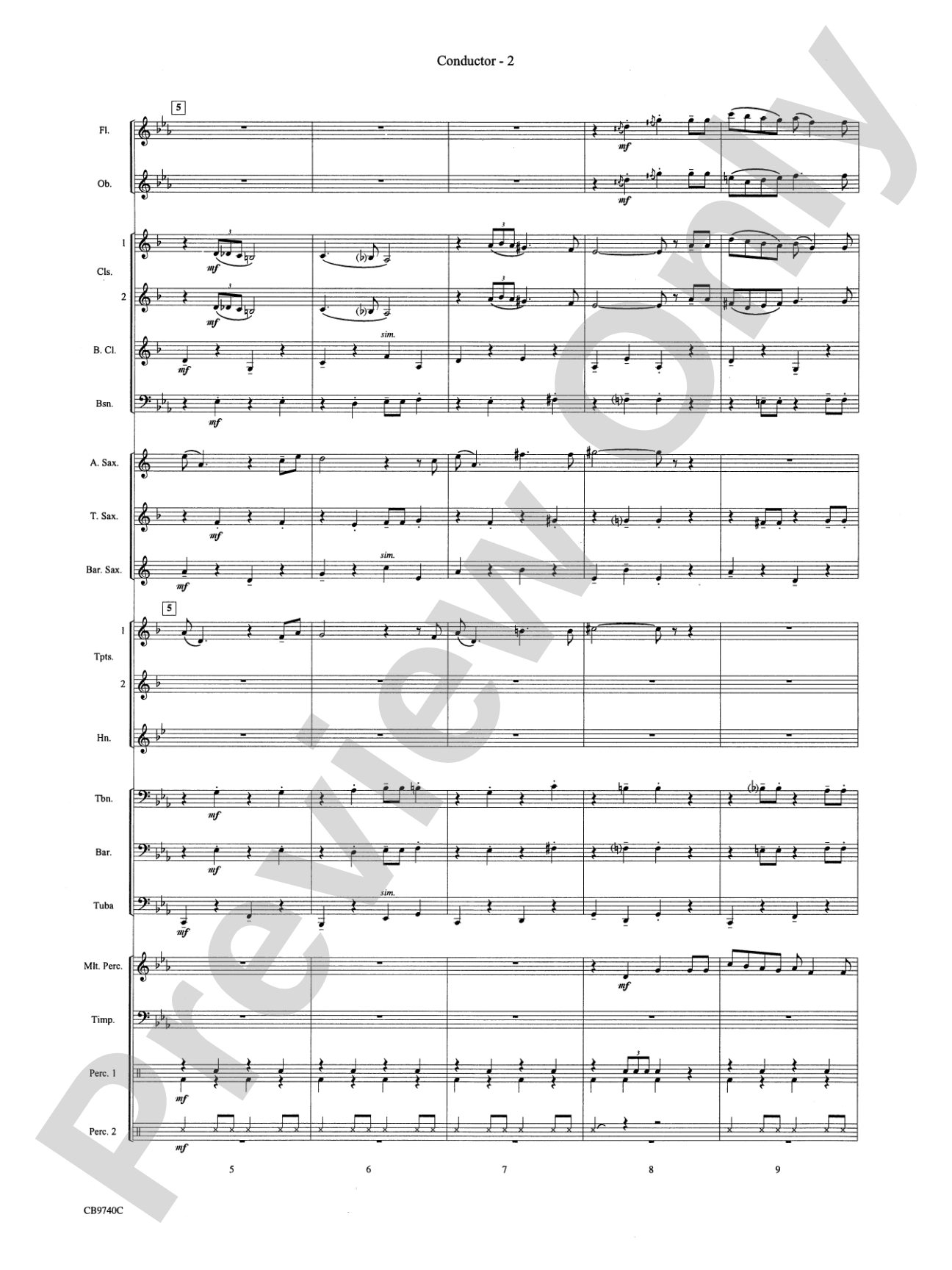
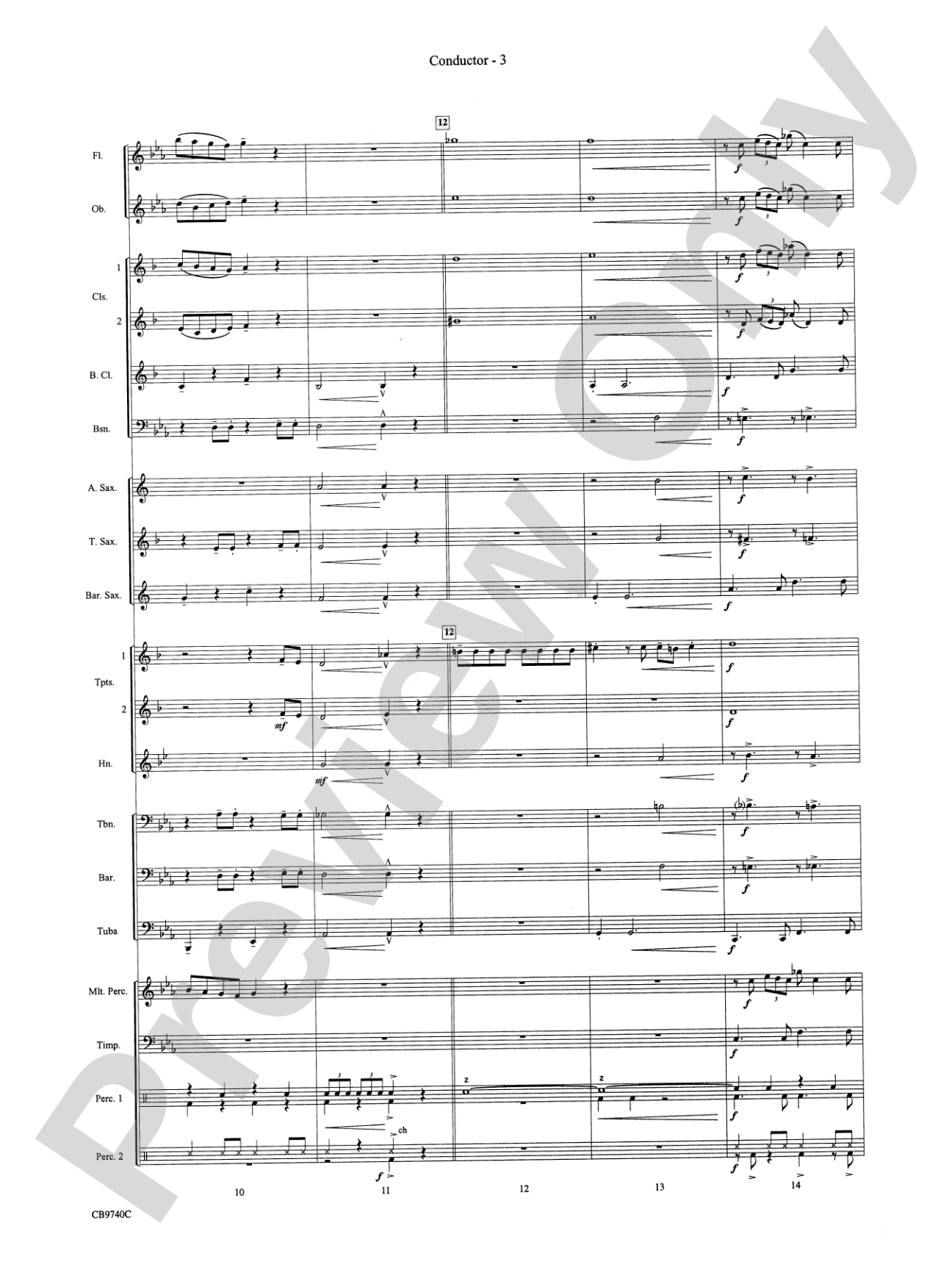
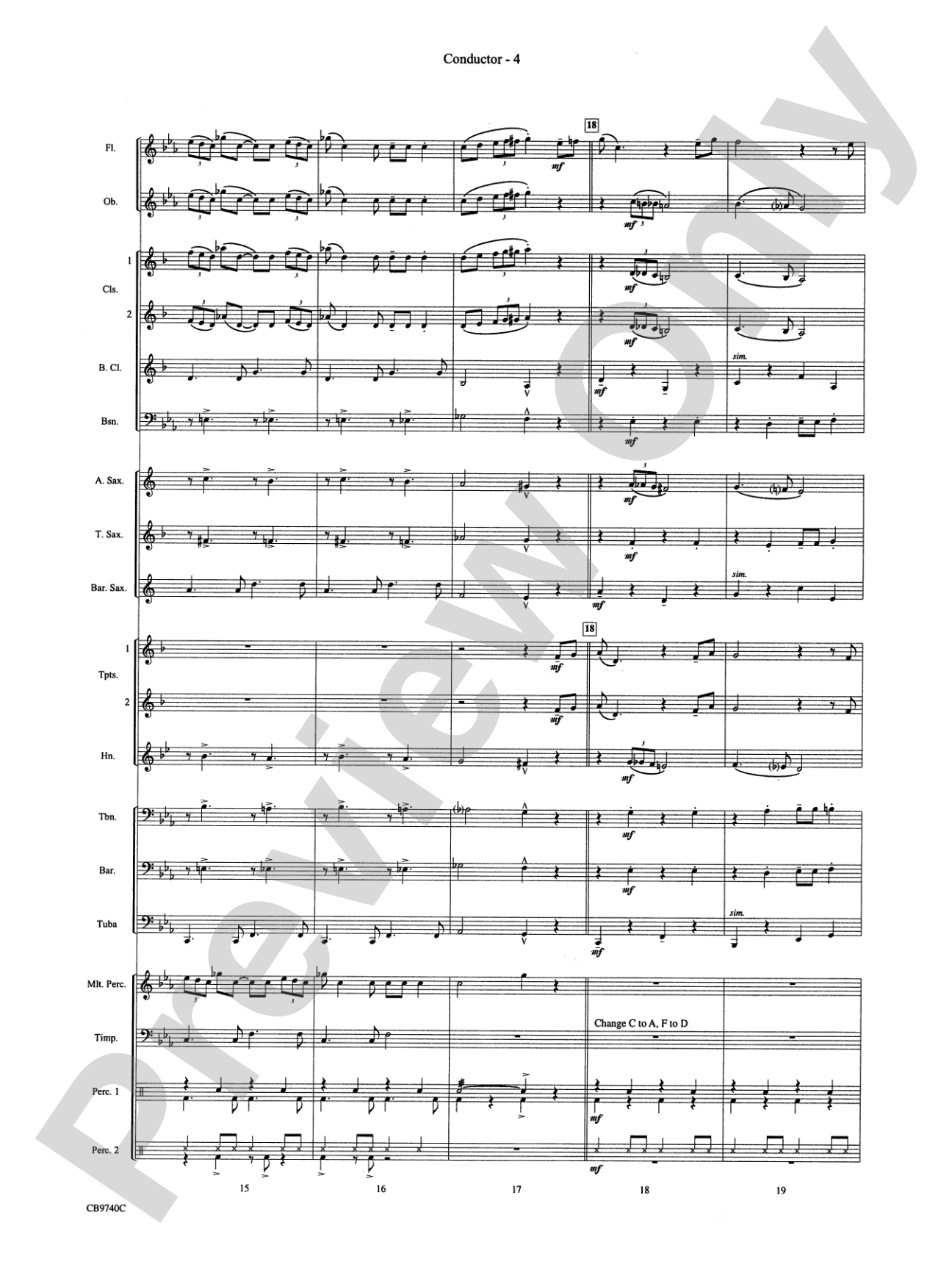
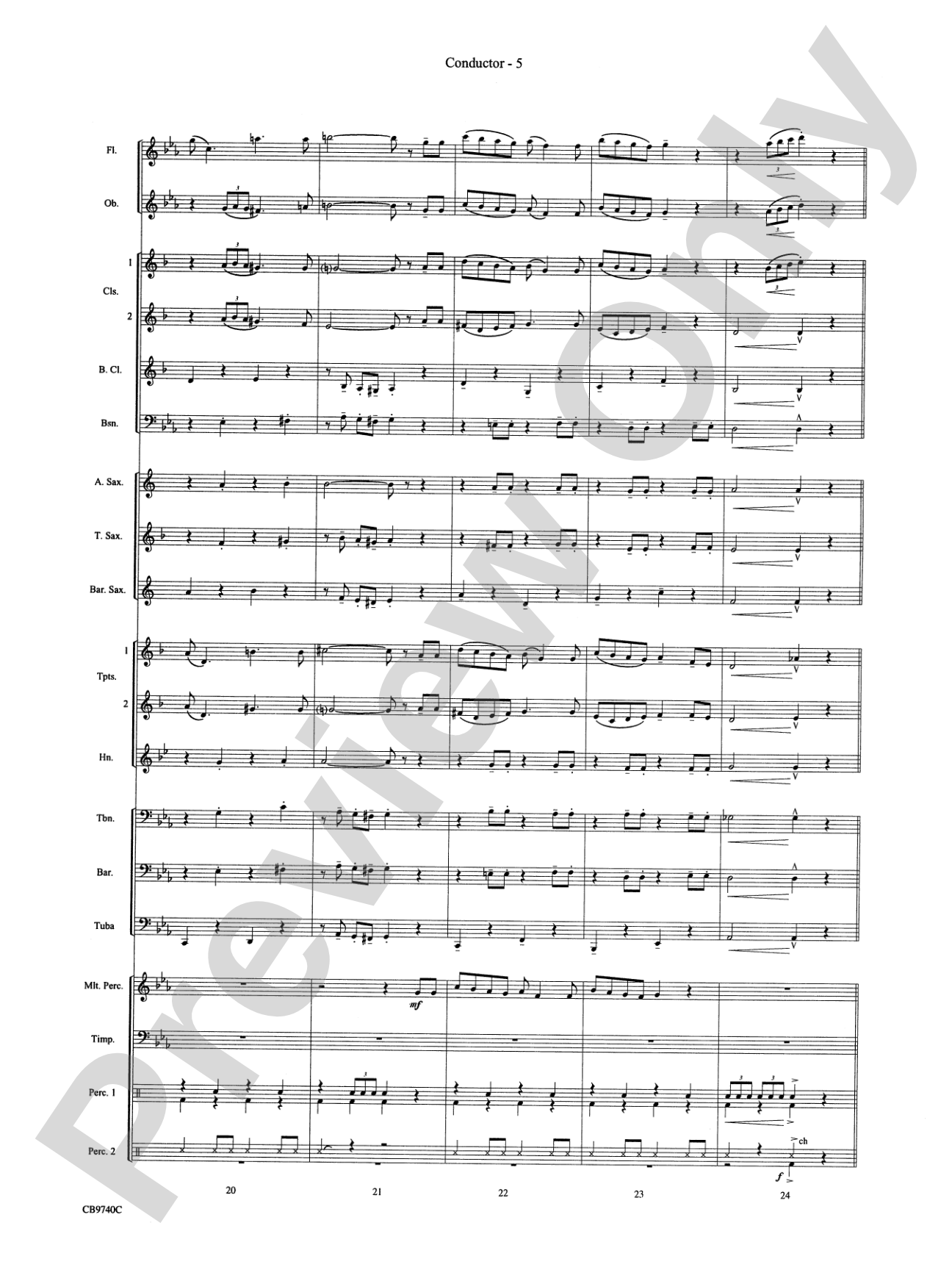
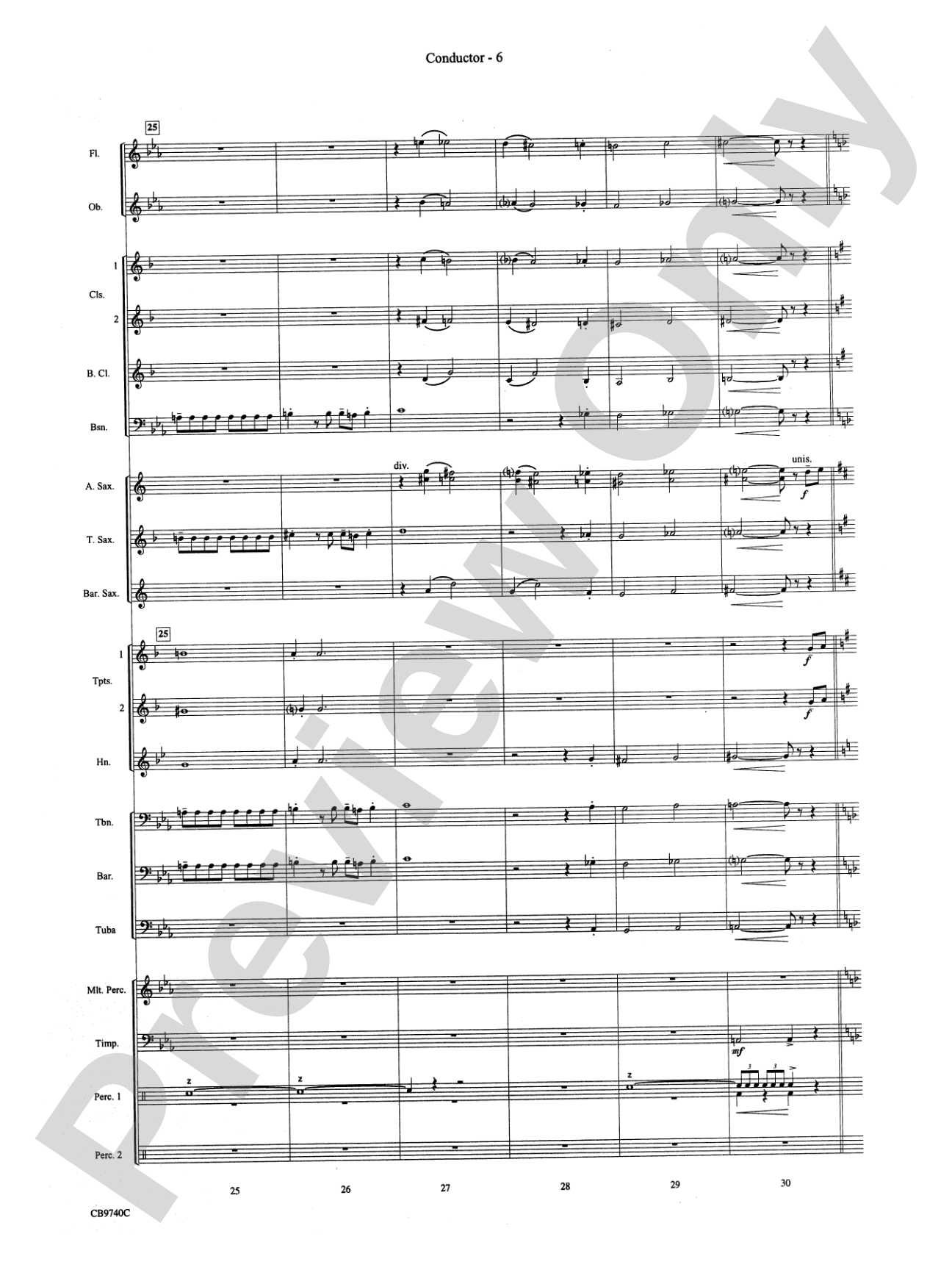
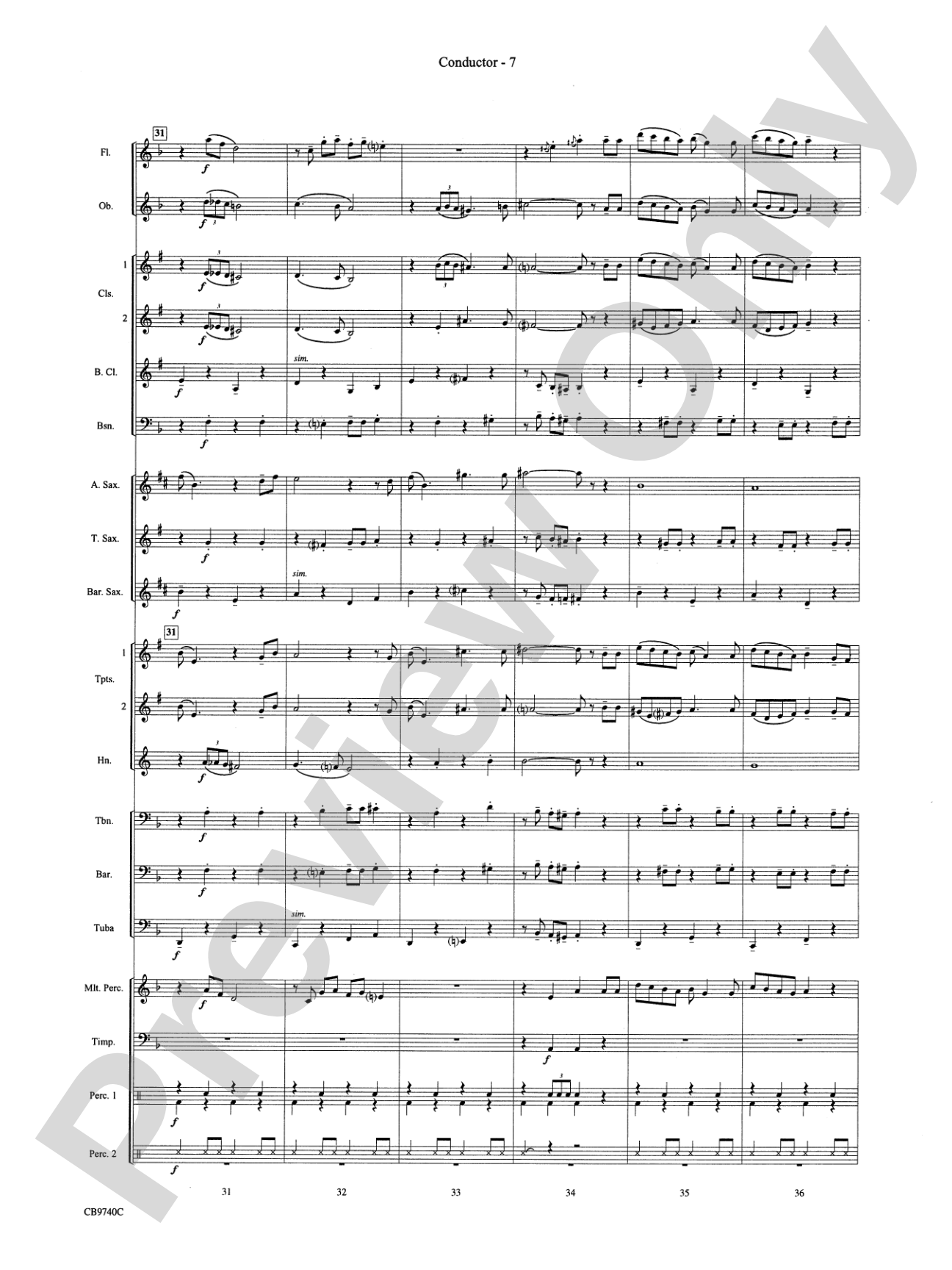
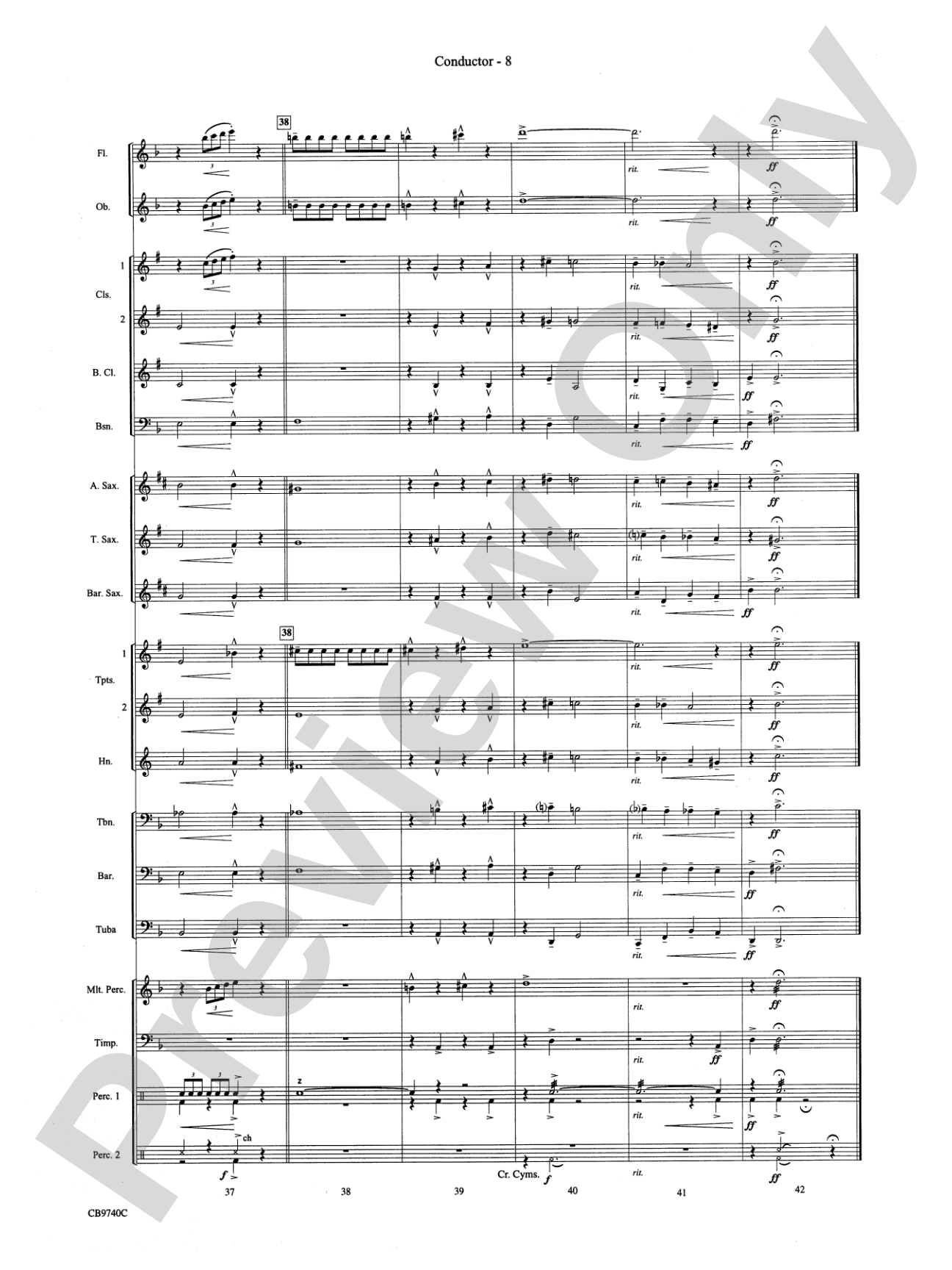




You're a Mean One, Mr. Grinch: Concert Band Conductor Score & Parts
From the MGM-Television Special Dr. Seuss' How the Grinch Stole Christmas
Music by Albert Hague, lyrics by Dr. Seuss / arr. Mike Story
Grade: 2 (Easy)
Item: 00-PK-0002329

$75.00
One moment…
Related Items
You're a Mean One, Mr. Grinch: String Orchestra Conductor Score & Parts |
$51.00
|
View | |
You're a Mean One, Mr. Grinch: Jazz Ensemble Conductor Score & Parts |
$44.00
|
View | |
You're a Mean One, Mr. Grinch: Jazz Ensemble Conductor Score & Parts |
$44.00
|
View | |
You're a Mean One, Mr. Grinch: Jazz Ensemble Conductor Score |
$9.00
|
View | |
You're a Mean One, Mr. Grinch: String Orchestra Conductor Score & Parts |
$51.00
|
View | |
You're a Mean One, Mr. Grinch: String Orchestra Conductor Score |
$9.00
|
View | |
You're a Mean One, Mr. Grinch: Concert Band Conductor Score & Parts |
$75.00
|
View | |
You're a Mean One, Mr. Grinch: Concert Band Conductor Score |
$7.00
|
View |
Description
A mean old Grinch who steals Christmas? Who ever heard of such a thing? From the delightful television program that lights up our television screen (and our holidays) every year comes this nasty villian's theme song. It's a quick-rehearsing and easy-to-play piece that will be immediately recognized by your holiday concert audience. (duration 1:43)


Don't just read it, hear it, play along with it, and watch your students grow with it. In MakeMusic Cloud, You're a Mean One, Mr. Grinch: Concert Band Conductor Score & Parts comes alive with professional accompaniment, adjustable tempo, and built-in practice tools that turn solo practice into real progress.
Open in the Player
Jump straight in and assign it today.
Start Your Free Trial
Open this title and explore the full library in minutes.
Sample Audio
No sample audio found.
Sample Video
No sample videos found.
Additional Details
Series:
Pop Young Band
Publisher:
Alfred Music
Page Count:
130
SKU:
00-PK-0002329
More about this title
About the Composer: Albert Hague
Albert Hague (1920-2001) composed music for stage and screen, creating some of the most memorable melodies in American television history. His work on "How the Grinch Stole Christmas!" (1966) became a cultural touchstone, with "You're a Mean One, Mr. Grinch" ranking among the most instantly recognizable character themes ever written for animation.
Hague's gift for melodic simplicity paired with character specificity made him invaluable to television production. His compositions capture personality through music with remarkable economy, a skill that serves young musicians well—they learn to convey dramatic intent without technical complexity.
Why we love this
This arrangement captures everything that makes the original theme work: immediate recognition, infectious rhythmic drive, and genuine humor in the orchestration. Your students will feel the audience respond the moment the first notes sound, which builds real confidence in young musicians. Mike Story's Grade 2 adaptation respects the melody while keeping parts accessible and engaging for developing ensemble players.
What to expect
Slyly theatrical. The opening syncopations feel like someone tiptoeing through mischief, while the melody's slightly blue-tinged contour suggests smug amusement. There's a wink in the orchestration—it's impossible not to smile when the harmony lands exactly where you expect the Grinch's wickedness to land.
Who it's for
Holiday concert bands seeking a piece that engages audiences immediately and teaches young musicians to shape character through music. Directors working with Grade 1-2 ensembles will appreciate the accessible writing and substantial page count that gives every section meaningful material to play.
How to get the most out of it
- Keep the tempo bouncy and slightly menacing. The syncopated rhythm defines the Grinch's character, so resist the urge to drag. This piece should feel mischievous, not sluggish.
- Balance the bass line prominently enough so audiences hear the blues-inflected groove. It's what makes this theme sound sly rather than simply cute.
- Let brass attacks speak clearly on the syncopated figures. These moments are comedic; a sloppy entrance undermines the humor.
- Feature any student section that carries the melody—whether saxophones, clarinets, or trumpets—with confidence. They're telling the story, not accompanying it.
How to use it
Program this as a standalone holiday novelty that gives audiences a moment of levity and recognition, or pair it with other December selections to create a mix of reverent and celebratory repertoire. It's also an excellent opener for a concert where you want to capture attention and settle any restless pre-performance energy in your audience.
Skills your students will build
- Playing syncopated rhythms accurately and with stylistic precision
- Balancing ensemble parts so supporting voices don't overshadow the melodic line
- Responding to tempo flexibility and comedic phrasing
- Executing articulation changes that convey character and personality