
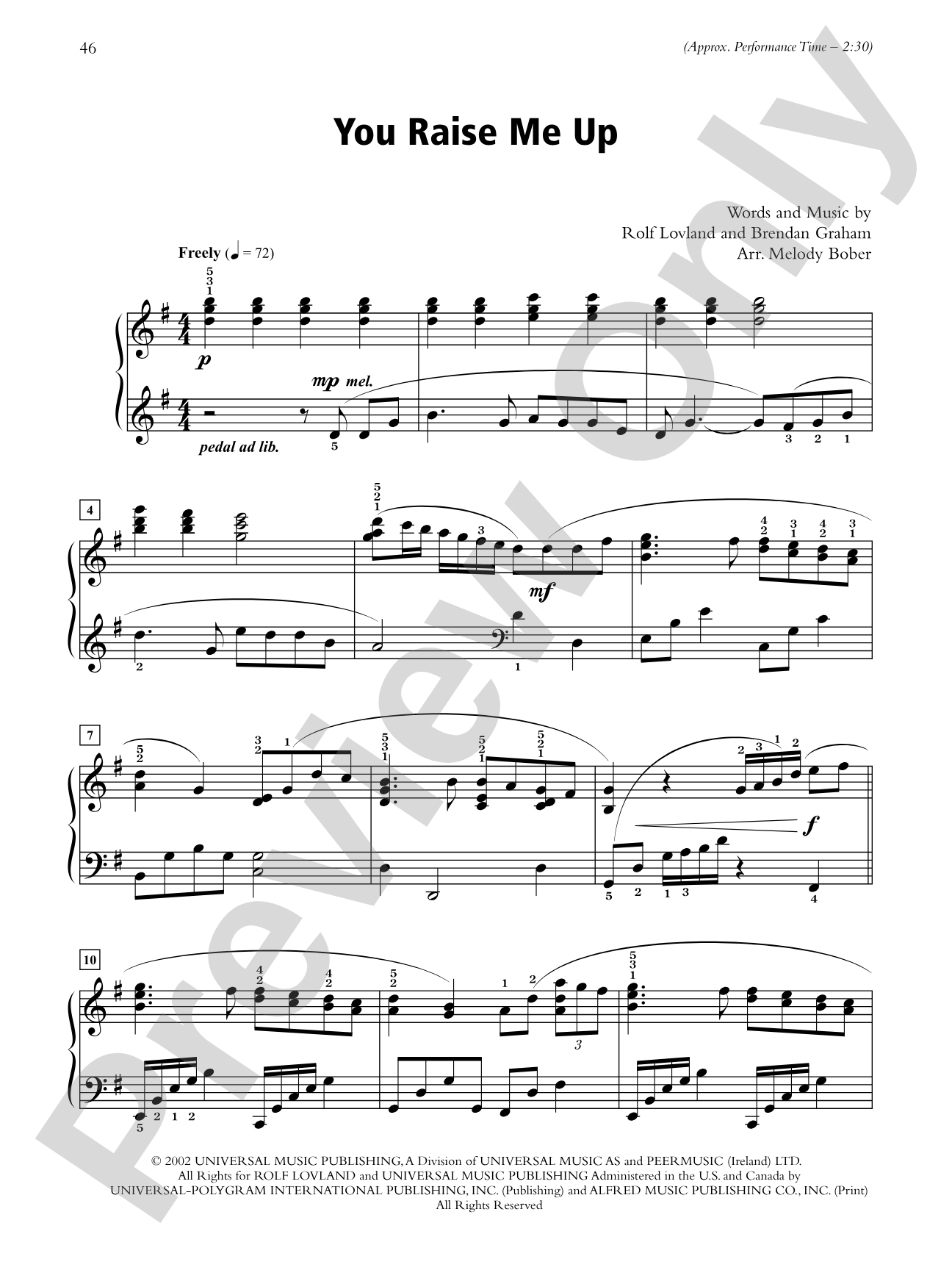

You Raise Me Up - Piano Solo: Piano Solo
10 Arrangements of Worship Favorites
Arranged by Melody Bober
Level: Early Advanced
Item: 00-PS-0017470
$4.99
Pickup currently not available
Description
Contemporary Christian Hits contains ten arrangements of inspirational worship favorites by top Christian artists. These arrangements can be used effectively during religious services or in a concert setting. Helpful fingering and approximate performance times are included with each arrangement. Titles: Beautiful (Bethany Dillon) * Blessings (Laura Story) * City On Our Knees (TobyMac) * East to West (Casting Crowns) * Glorious Day (Casting Crowns) * Held (Natalie Grant) * I Can Only Imagine (MercyMe) * I Lift My Hands (Chris Tomlin) * When I Say I Do (Matthew West) * You Raise Me Up (Selah). A Federation Festivals 2024-2028 selection.


Discover MakeMusic Cloud: thousands of interactive titles your students can play along with today.
Sample Audio
No sample audio found.
Sample Video
No sample videos found.
Additional Details
Series:
Sacred Performer Collections
Publisher:
Alfred Music
Page Count:
48
SKU:
00-PS-0017470
More about this title
About the Composer: Rolf Lovland
Rolf Lovland is a Norwegian composer and pianist best known for co-writing "You Raise Me Up" with lyricist Brendan Graham. The song has become one of the most performed contemporary Christian compositions worldwide, recorded by artists across multiple genres and languages. Lovland's gift for creating melodically memorable, emotionally direct music has made his work a staple in worship settings and concert halls alike.
Why we love this
Melody Bober's arrangements strip these songs down to their emotional core without sacrificing the character that made them resonate with congregations. The writing sits comfortably for early advanced pianists, which means your students can actually perform these pieces in a service or recital without months of preparation. These are songs people know and love, so there's built-in momentum when you walk on stage.
What to expect
Warm and grounded. These pieces carry the sincerity of contemporary Christian music without sentimentality, offering the kind of straightforward emotional honesty that connects with listeners across contexts. The piano writing supports rather than overshadows the melodies, creating space for reflection and quiet strength.
Who it's for
Pianists at the early advanced level who want accessible repertoire with immediate relevance to their church, school, or concert community. These arrangements work equally well for a student building performance confidence and for an accompanist seeking worship service music that doesn't require extensive rehearsal time.
How to get the most out of it
- Let the melody sing through your voicing choices. These pieces rely on singability, so resist the urge to add unnecessary harmonic complexity in the left hand.
- Lean into the sustain pedal thoughtfully, especially during hymn-like passages, but lift it before chord changes to maintain clarity in the accompaniment.
- Tempo flexibility serves these arrangements well. Allow yourself to breathe at phrase endings and resist rushing through emotional climaxes.
- Pay attention to dynamic gradations across the full page. The written dynamics guide the arc of each piece; following them closely prevents these familiar melodies from feeling flat.
How to use it
Integrate these throughout a concert focused on contemporary sacred repertoire, or weave individual pieces into a worship service during times of meditation and prayer. The collection's breadth means you can build a solo program around different moods and themes, or select just one or two pieces to support a choral or instrumental ensemble in a larger program.
Skills your students will build
- Voicing hymn-like progressions with clarity and warmth
- Balancing sustained pedal technique in reverent contexts
- Shaping long phrases with control and emotional intention
- Reading and interpreting dynamic markings as structural guides
- Performing fingered accompaniment patterns without rhythmic rigidity