
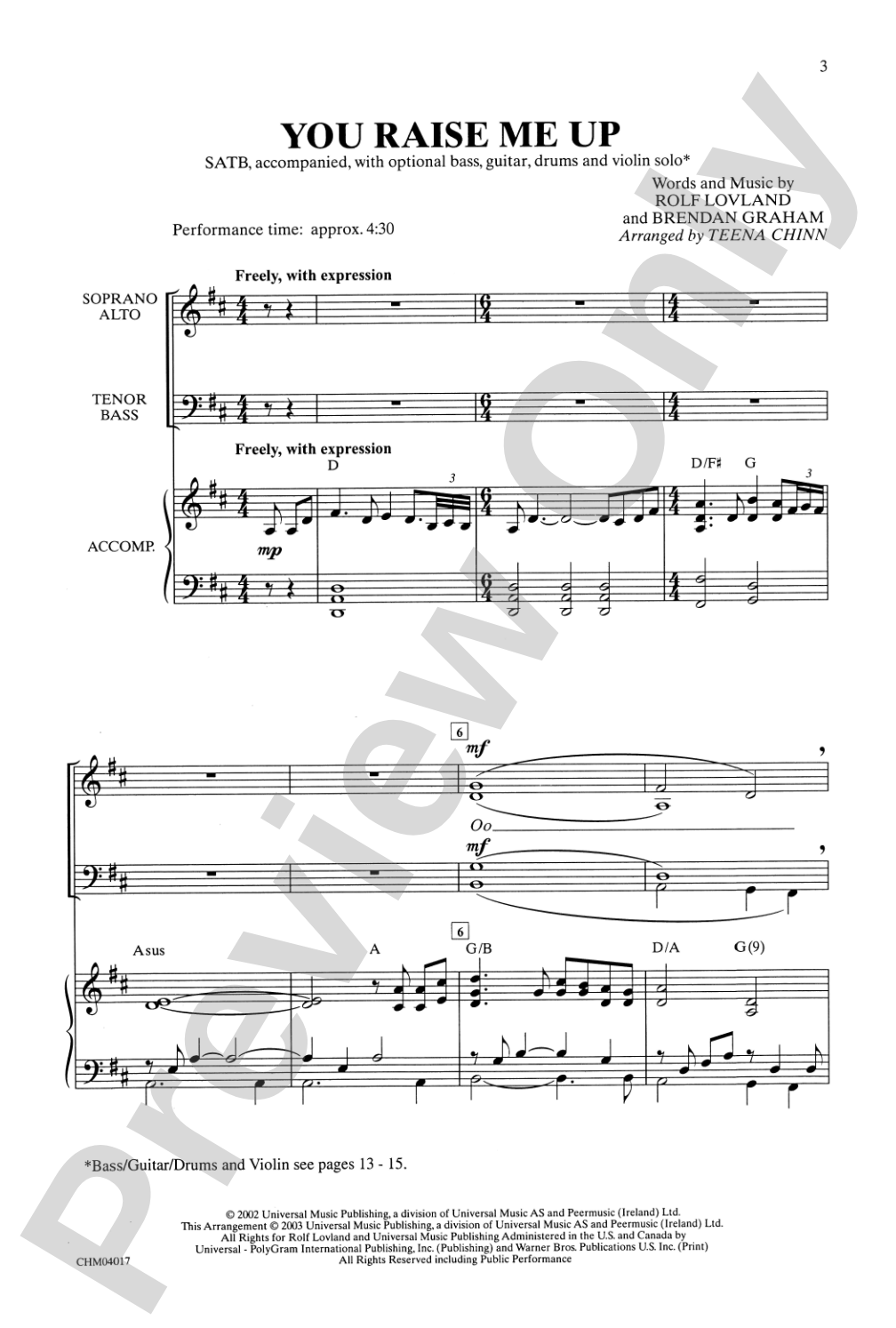
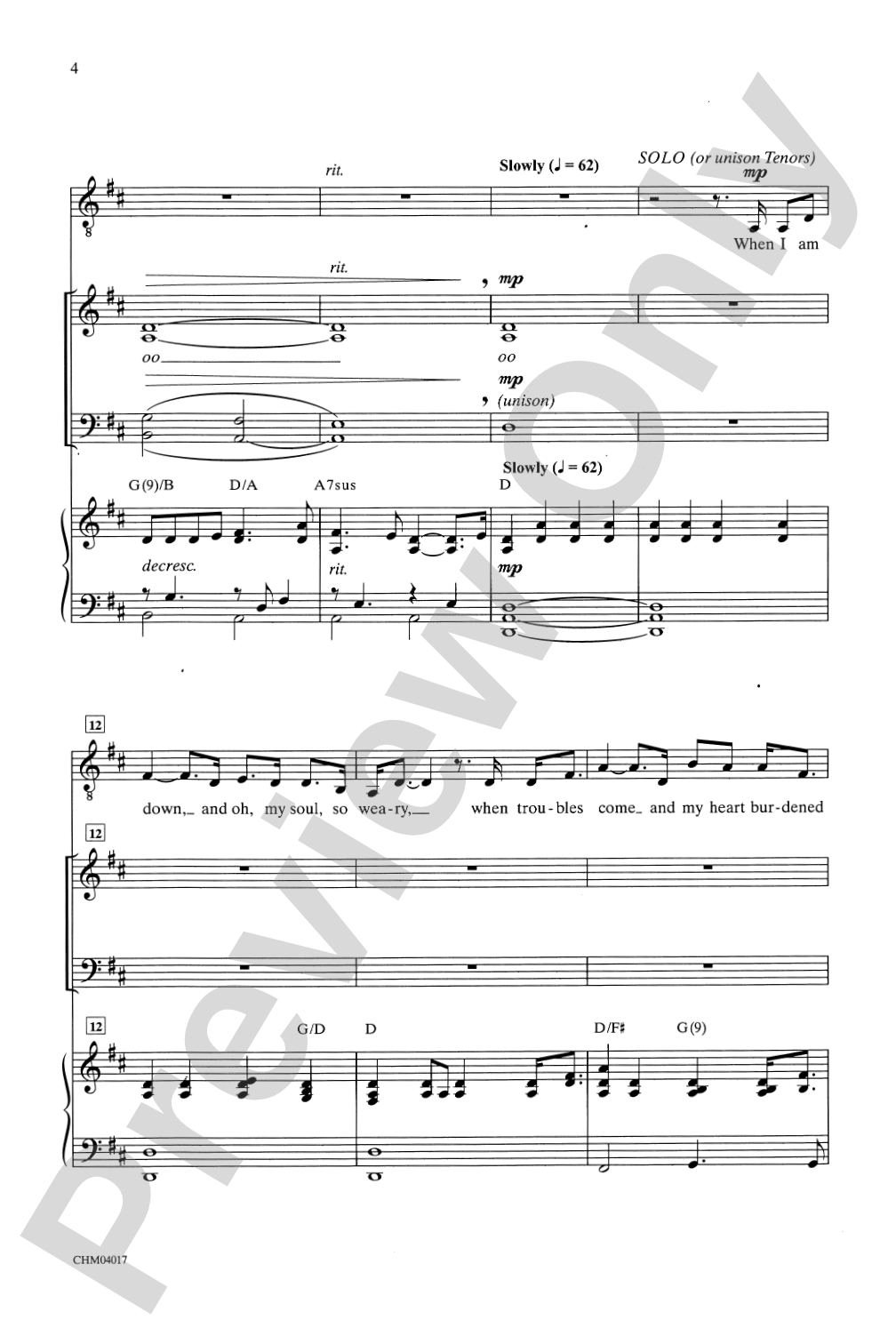
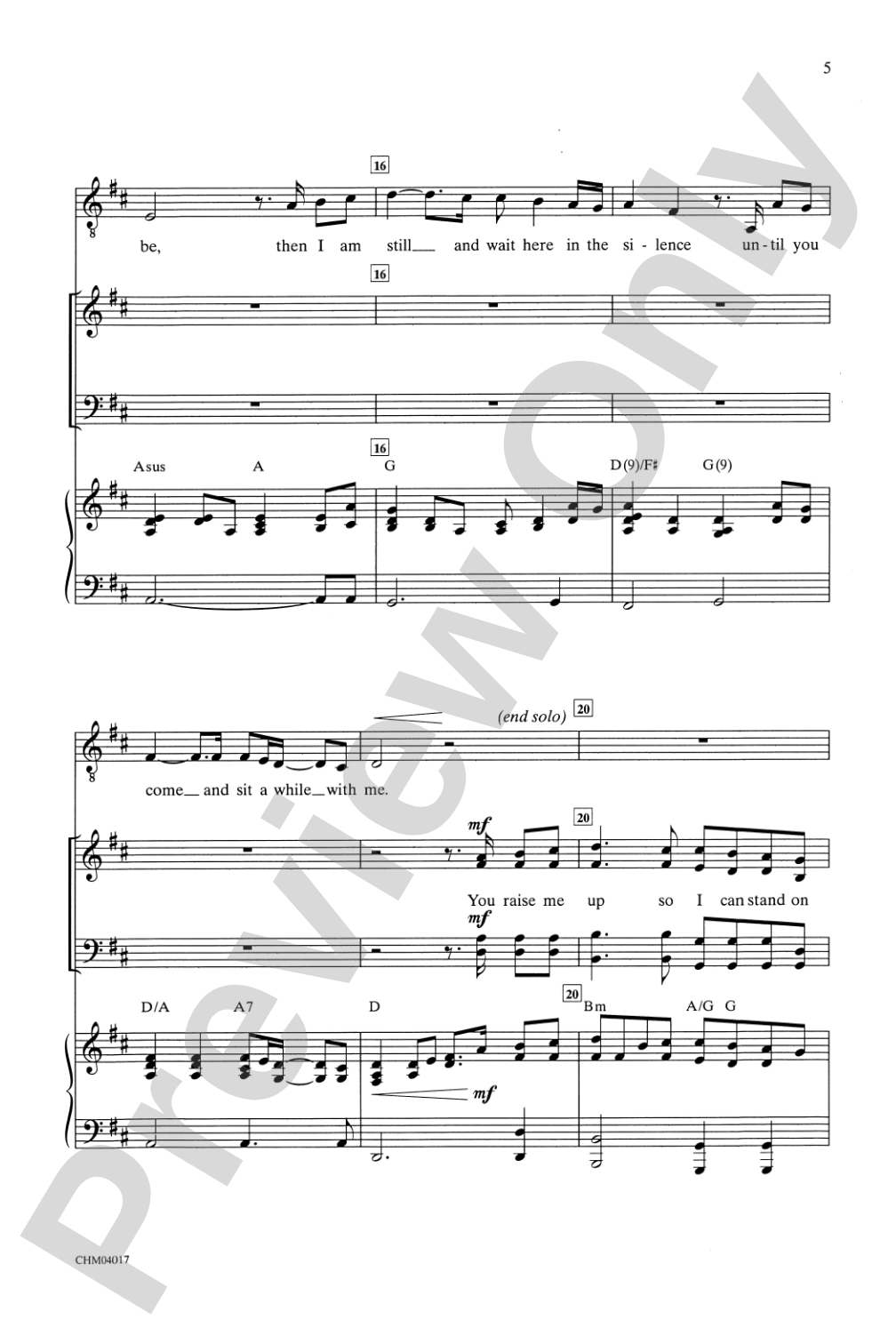

You Raise Me Up (as recorded by Josh Groban): SATB Choral Octavo
As Recorded by Josh Groban
Words and music by Rolf Løvland and Brendan Graham [Josh Groban] / arr. Teena Chinn
Level: Moderate
Item: 00-PO-0007729
$2.25
Minimum order quantity: 20 copies
Pickup currently not available
Related Items
You Raise Me Up (as recorded by Josh Groban): 3-Part Mixed Choral Octavo |
$2.25
|
View | |
You Raise Me Up (as recorded by Josh Groban): SSA Choral Octavo |
$2.95
|
View | |
You Raise Me Up (as recorded by Josh Groban): TBB Choral Octavo |
$2.95
|
View | |
You Raise Me Up (as recorded by Josh Groban): SATB Choral Octavo |
$2.25
|
View | |
You Raise Me Up (as recorded by Josh Groban): 3-Part Mixed Choral Octavo |
$2.25
|
View | |
You Raise Me Up (as recorded by Josh Groban): SSA Choral Octavo |
$2.95
|
View | |
You Raise Me Up (as recorded by Josh Groban): TBB Choral Octavo |
$2.95
|
View | |
You Raise Me Up (as recorded by Josh Groban): Choral Octavo SoundTrax CD |
$27.99
|
View |
Description
Josh Groban, the young singing phenom, has taken the pop music world by storm with his second album Closer. "You Raise Me Up," the first single from the album, has become a worldwide hit and was featured in a live performance with Josh during the 2004 Super Bowl.


You Raise Me Up (as recorded by Josh Groban): SATB Choral Octavo isn't in MakeMusic Cloud just yet...but it could be. Let us know you'd like to see it, and you'll help shape what comes next. In the meantime, start a free trial and dive into thousands of interactive titles your students can play along with today.
Request This Title
Tell us you want it.
Start Your Free Trial
Explore everything that's ready to play right now.
Sample Audio
1
Audio File
--:--
0:00
0:00
Sample Video
No sample videos found.
Additional Details
Series:
Alfred Pop Choral Series
Publisher:
Alfred Music
Page Count:
16
SKU:
00-PO-0007729
Instrumentation:
Opt. Bass, Guitar, Drums and Violin Solo
More about this title
About the Composer: Rolf Lovland
Rolf Lovland is a Norwegian composer and pianist known for his emotionally direct, accessible songs that cross classical and popular idioms. His collaborations with lyricist Brendan Graham have produced some of the most widely performed contemporary choral music in schools and concert halls worldwide, reaching audiences far beyond traditional classical circles.
Why we love this
This arrangement captures the emotional lift that made Josh Groban's recording a global phenomenon, and it does so at a grade level that lets most choirs access that power without extensive rehearsal time. The optional instrumentation (guitar, drums, violin solo, and bass) means you can perform it as elegantly stripped-down as you want or add contemporary color; either way, it lands.
What to expect
Uplifting and hopeful, but never saccharine. The arrangement respects the dignity of Lovland's melody while capturing the intimate, contemporary vocal quality that defined Groban's original recording. It builds gradually from a quiet, vulnerable opening into something that feels genuinely triumphant by the final chorus.
Who it's for
Choirs at the intermediate level who want to program contemporary sacred music with genuine emotional resonance and broad appeal. This works equally well for school choirs, community ensembles, and church choirs seeking repertoire that engages singers and audiences alike.
How to get the most out of it
- Balance the verse melody across voice parts; resist the urge to let sopranos dominate, since the arrangement often distributes the main line. This creates warmth and unity rather than a thin, soprano-centric sound.
- If you use the recorded accompaniment, rehearse with it early and often. Your singers will internalize the harmonic language and emotional pacing far faster than with a piano alone.
- Lock the chorus dynamics with your section leaders before rehearsal; this piece builds through repetition, and clarity about when the choir swells and where it pulls back will save rehearsal time.
- Pay attention to the optional violin solo line. Even if you don't have a soloist, understanding where that voice sits helps you shape the inner harmony and prevents the arrangement from sounding muddy in the middle register.
How to use it
Program this as a centerpiece for a spring concert focused on themes of hope, perseverance, or celebration. It works beautifully as a finale following lighter, shorter pieces, or as a solo statement that closes a first half. The graduation and peace/brotherhood themes make it especially fitting for end-of-year performances or community-focused programming.
Skills your students will build
- Singing sustained, legato lines over contemporary harmonic progressions
- Balancing four-part harmony when the main melody moves between voice parts
- Responding to accompaniment that includes non-traditional instruments (guitar, drums)
- Phrasing and dynamic control across an extended, repetitive form