
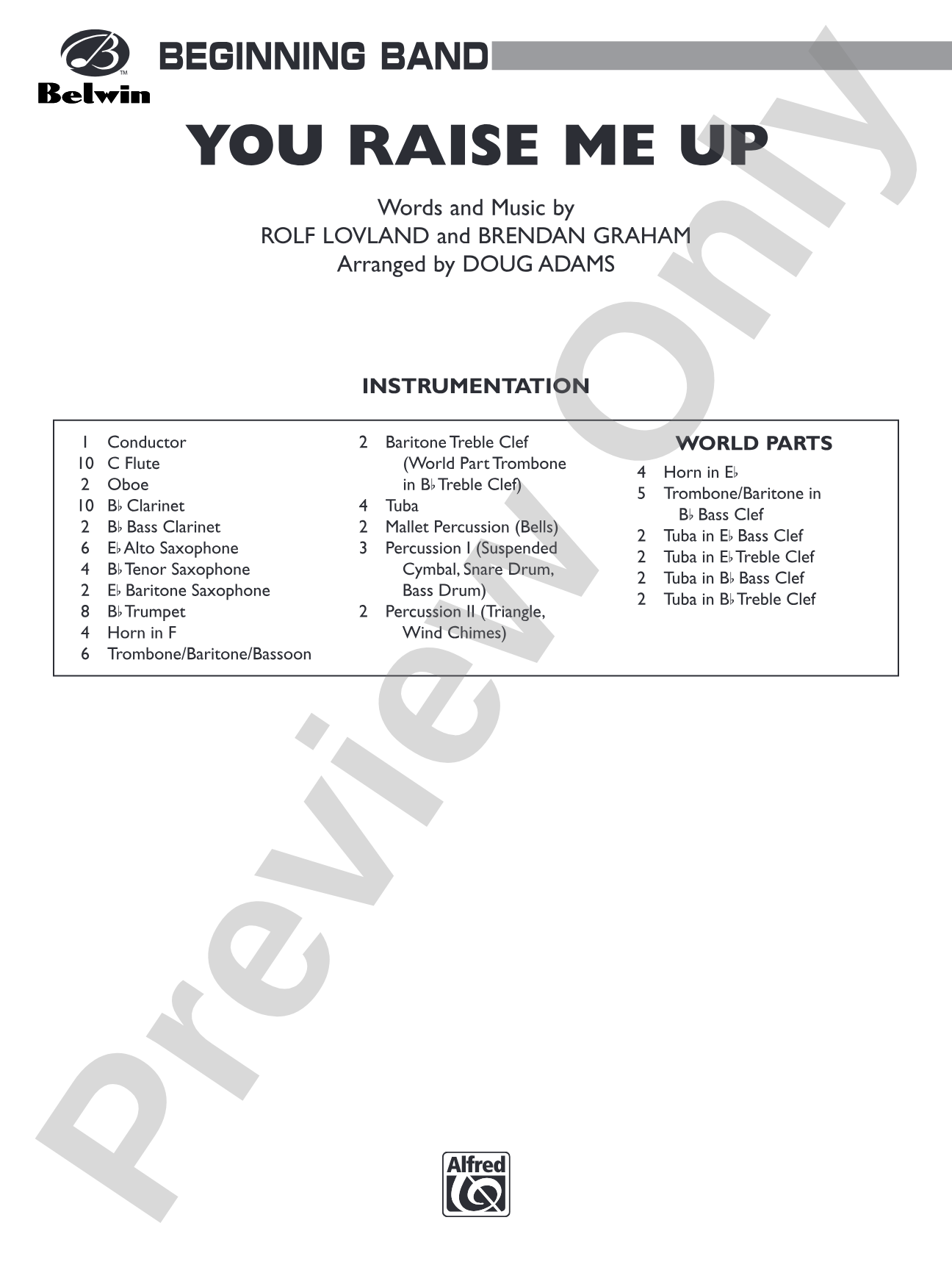
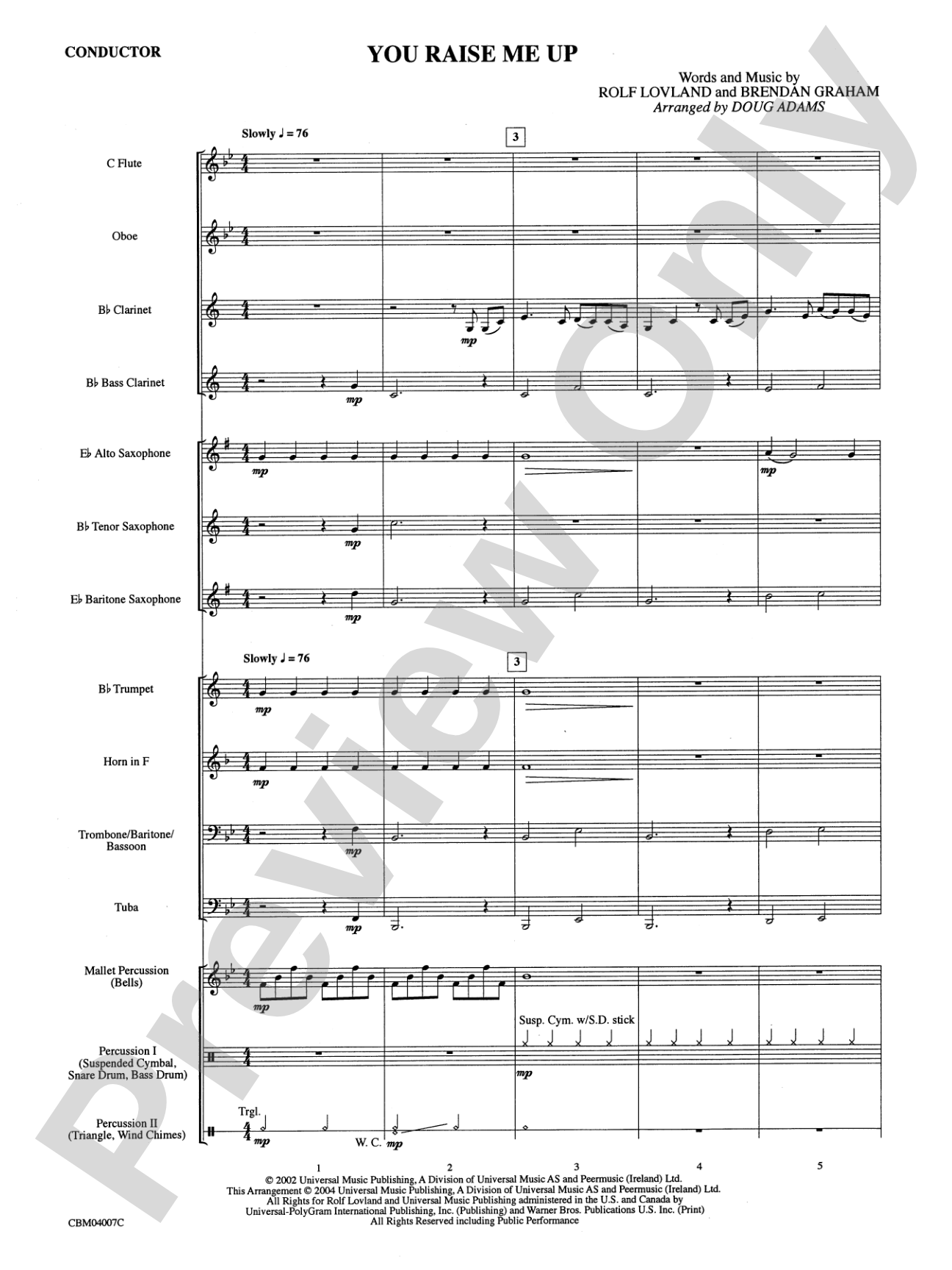
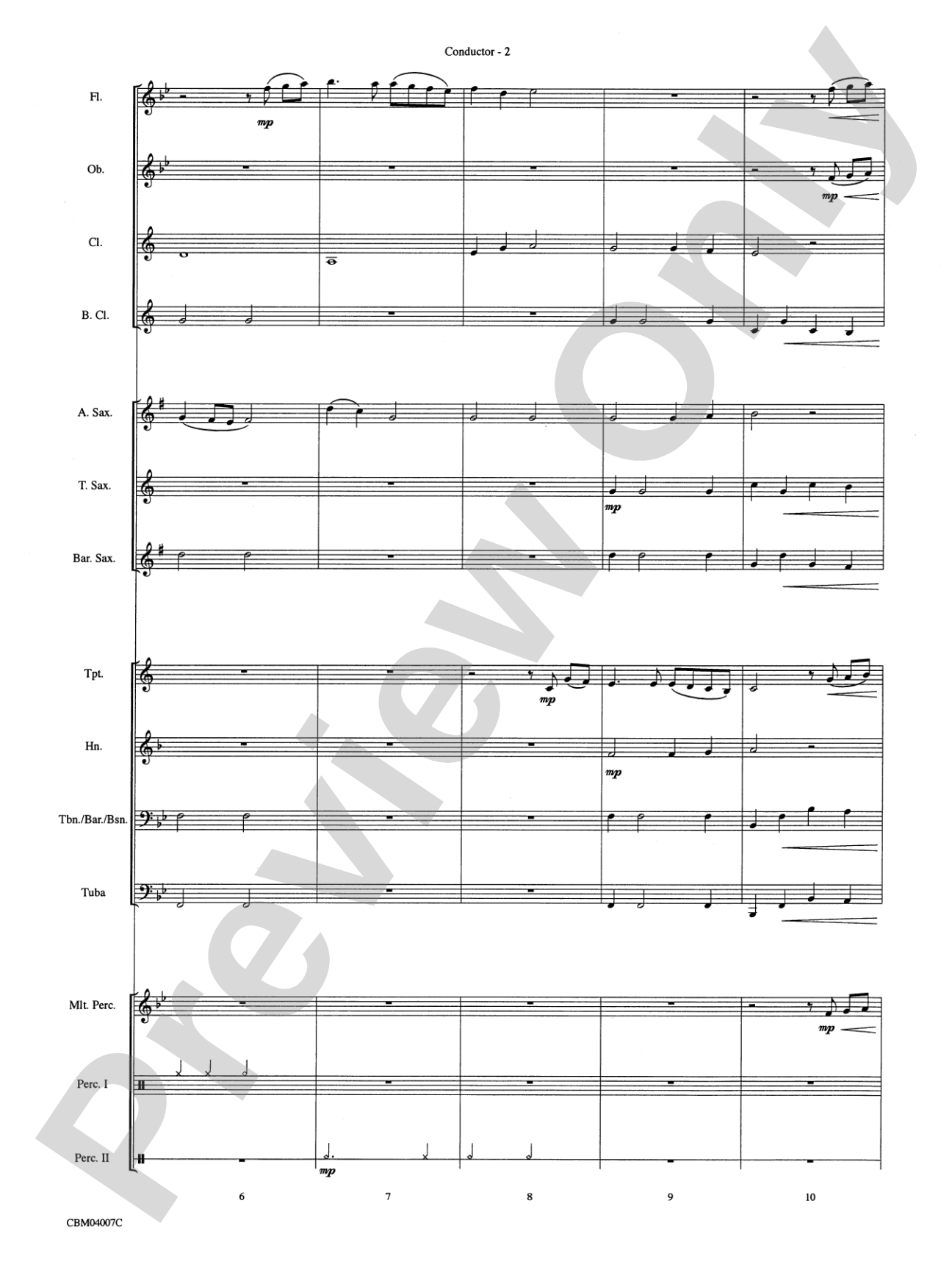
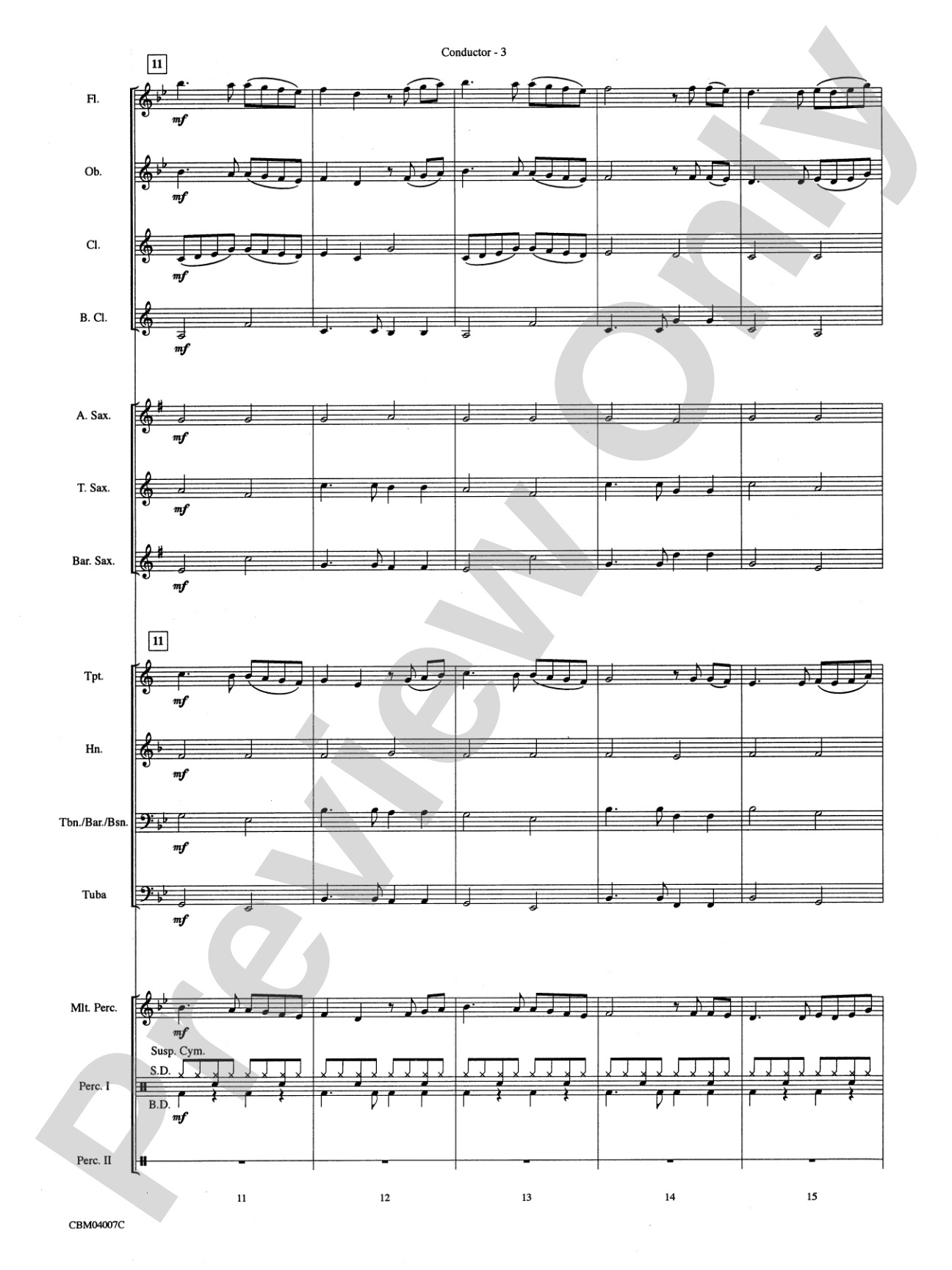
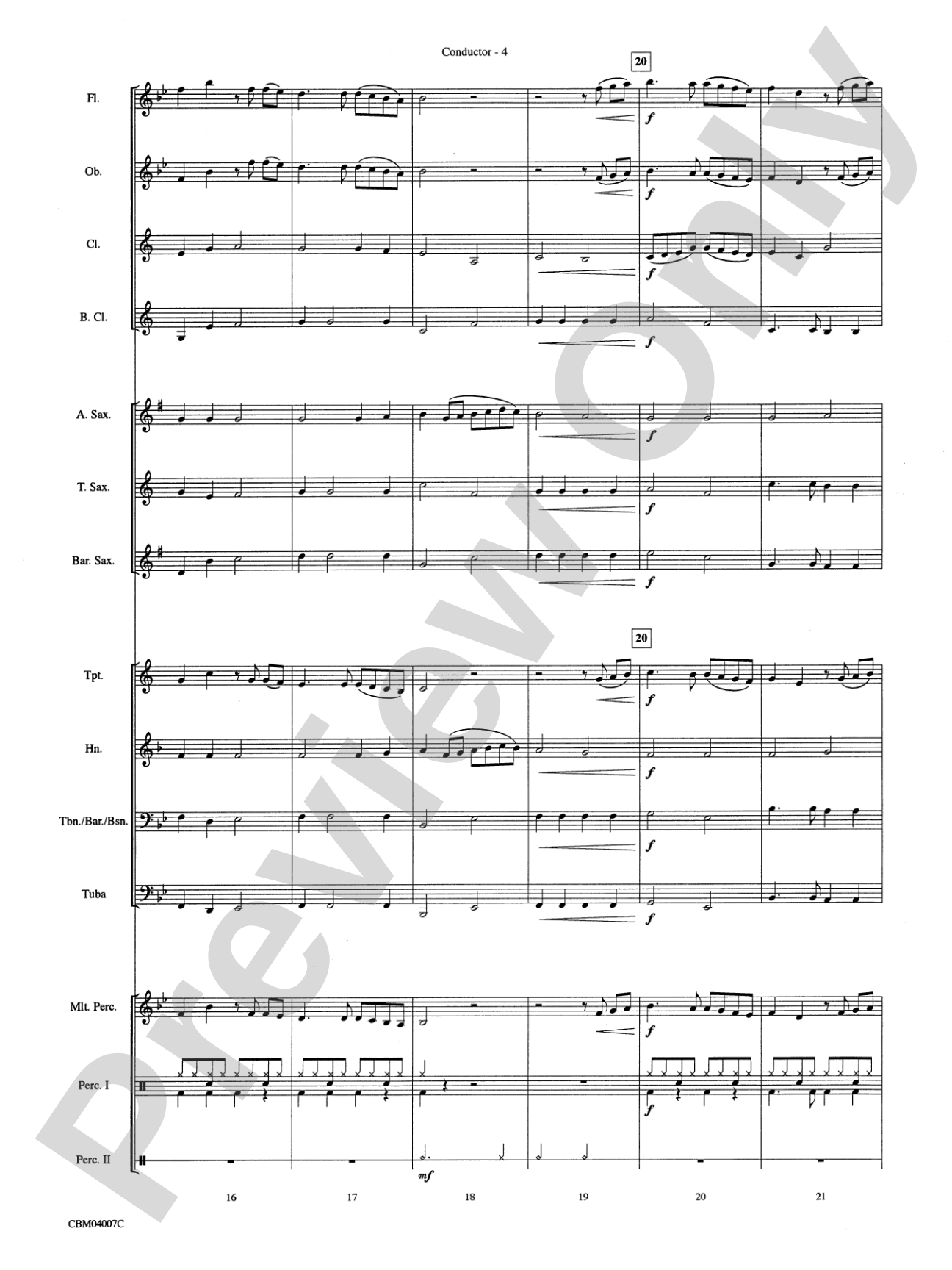
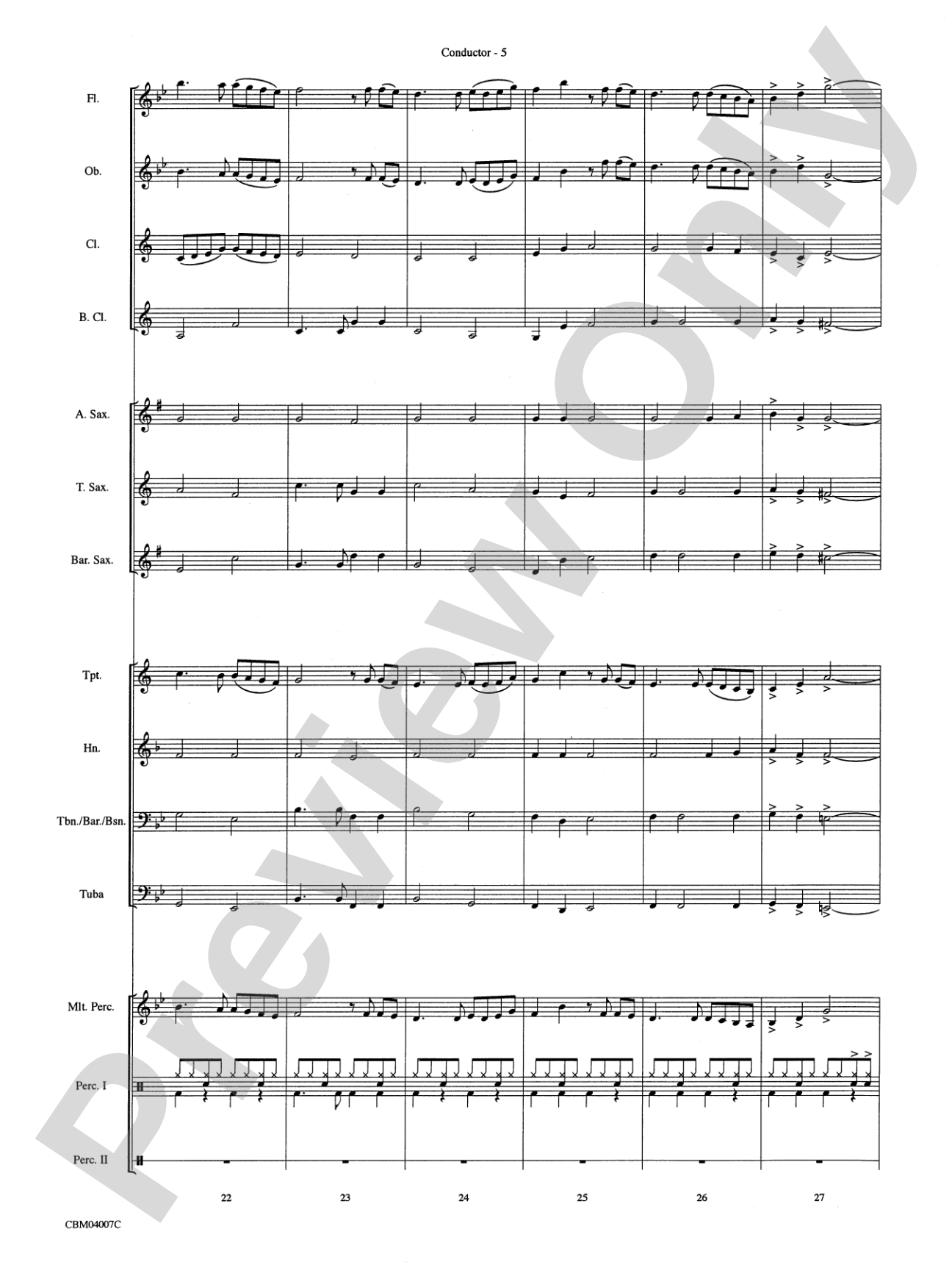
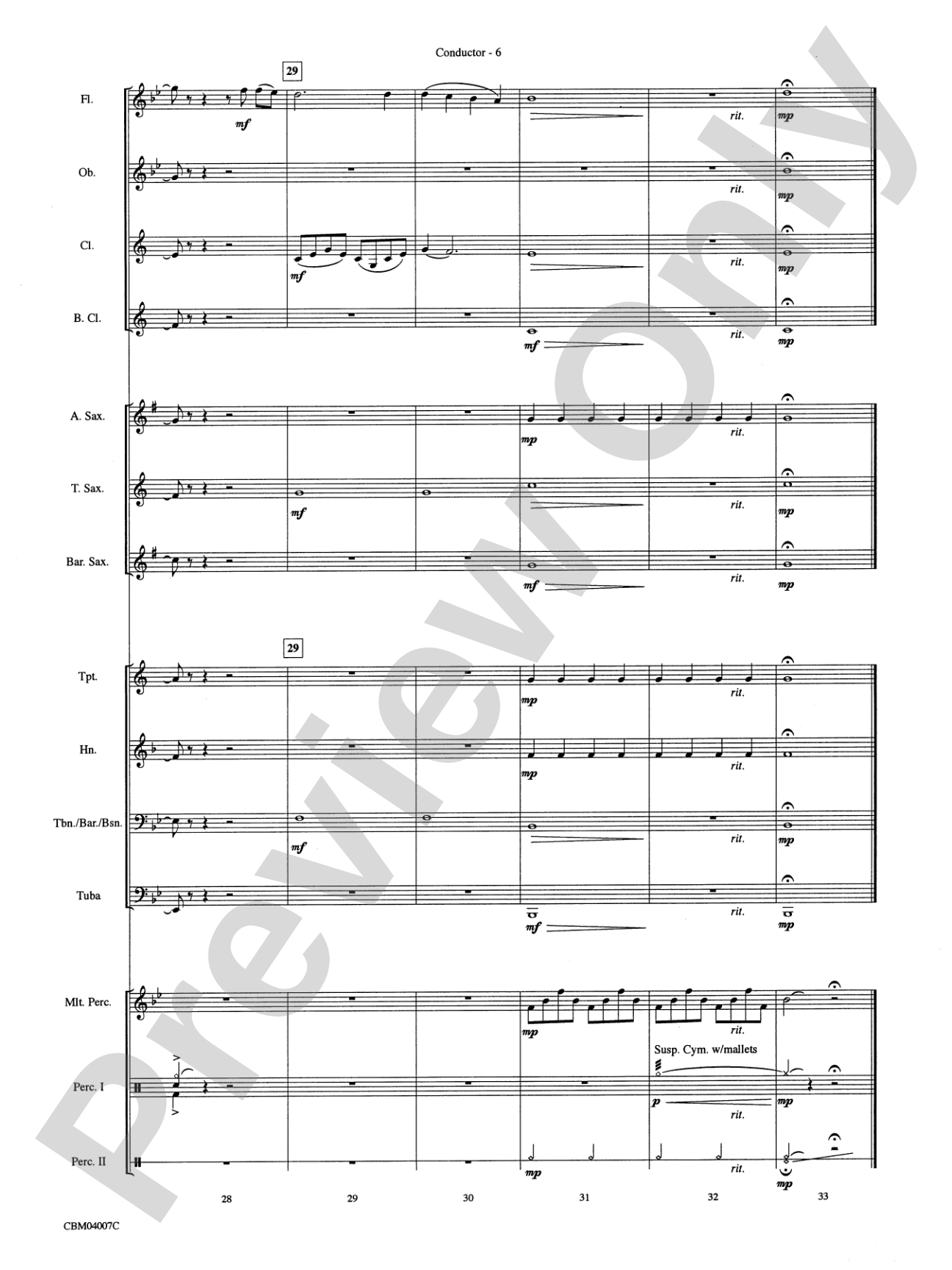


You Raise Me Up: Concert Band Conductor Score & Parts
Words and music by Rolf Løvland and Brendan Graham / arr. Doug Adams
Grade: 1 (Very Easy)
Item: 00-PK-0002363

$56.00
Pickup currently not available
Buy Extra Parts (Digital PDF Download)
| Product | Price | Quantity |
|---|---|---|
| You Raise Me Up: Score | $7.00 | |
| You Raise Me Up: Flute | $5.99 | |
| You Raise Me Up: Oboe | $5.99 | |
| You Raise Me Up: 1st B-flat Clarinet | $5.99 | |
| You Raise Me Up: B-flat Bass Clarinet | $5.99 | |
| You Raise Me Up: E-flat Alto Saxophone | $5.99 | |
| You Raise Me Up: B-flat Tenor Saxophone | $5.99 | |
| You Raise Me Up: E-flat Baritone Saxophone | $5.99 | |
| You Raise Me Up: 1st B-flat Trumpet | $5.99 | |
| You Raise Me Up: 1st F Horn | $5.99 | |
| You Raise Me Up: 1st Trombone | $5.99 | |
| You Raise Me Up: Baritone T.C. | $5.99 | |
| You Raise Me Up: Tuba | $5.99 | |
| You Raise Me Up: Mallets | $5.99 | |
| You Raise Me Up: 1st Percussion | $5.99 | |
| You Raise Me Up: 2nd Percussion | $5.99 | |
| You Raise Me Up: E-flat Horn | $5.99 | |
| You Raise Me Up: Baritone B.C. | $5.99 | |
| You Raise Me Up: WP E-flat Tuba B.C. | $5.99 | |
| You Raise Me Up: WP E-flat Tuba T.C. | $5.99 | |
| You Raise Me Up: WP B-flat Tuba B.C. | $5.99 | |
| You Raise Me Up: WP B-flat Tuba T.C. | $5.99 |
Parts Added to Cart!
Description
Josh Groban's lovely ballad has now been prepared for your beginners' first program. All the emotion remains -- only the more difficult rhythms have been simplified for ease of preparation. Don't miss this hot tune on your first concert of the year. (2:00)


Don't just read it, hear it, play along with it, and watch your students grow with it. In MakeMusic Cloud, You Raise Me Up: Concert Band Conductor Score & Parts comes alive with professional accompaniment, adjustable tempo, and built-in practice tools that turn solo practice into real progress.
Open in the Player
Jump straight in and assign it today.
Start Your Free Trial
Open this title and explore the full library in minutes.
Sample Audio
No sample audio found.
Sample Video
No sample videos found.
Additional Details
Series:
Pop Beginning Band
Publisher:
Alfred Music
Page Count:
168
SKU:
00-PK-0002363
More about this title
About the Composer: Rolf Lovland
Rolf Lovland is a Norwegian composer whose gift for melody has made him one of the most performed contemporary songwriters in classical crossover and popular music. Working alongside lyricist Brendan Graham, Lovland created some of the most enduring songs of the early 2000s, compositions that bridge classical sensibility with broad emotional accessibility.
For music educators, Lovland's work offers a rare quality: songs that retain their power and sophistication even when simplified for younger ensembles. His melodies are built on strong harmonic foundations that allow for effective arrangements at any level, making his pieces invaluable for programs seeking repertoire with genuine artistic merit.
Why we love this
Doug Adams has preserved every bit of the song's emotional core while making it genuinely playable for beginners. The simplified rhythms don't feel dumbed down; instead, they let young musicians focus on phrasing and tone production rather than fighting the page. This is the rare pop arrangement that respects both the composer's original intent and the developmental stage of your students.
What to expect
Warm and affirming. The melody sits naturally in the middle-to-upper register where young brass and woodwind players find their best tone. There's a gentle lift to the harmonic progression that makes performing it feel uplifting rather than heavy, even for musicians still building confidence.
Who it's for
Beginning concert bands preparing their first public performance. This arrangement works equally well for middle school ensembles in their first month or for school bands working at a fundamental level. The piece gives your students a genuine audience connection while keeping rehearsal demands manageable.
How to get the most out of it
- Shape the melody with long-line breathing. Even though rhythms are straightforward, your ensemble will sound mature if you encourage players to sustain through phrases rather than treating each measure as isolated.
- Balance the harmonic support around featured melodic voices. Young players often overblow accompanying parts; this arrangement needs the inner voices to sit back so the soaring line cuts through.
- Let the recorded accompaniment anchor the tempo, especially in the slower passages. Grade 1 ensembles typically rush ballads, and having that external reference prevents the drag that comes from collective uncertainty.
- Reserve full volume for only the climactic section. The impact of this piece comes from dynamic contrast, not from playing loud throughout.
How to use it
Open your first concert with this. The two-minute duration works perfectly as a confidence-building opener that establishes an emotional tone before moving into lighter fare. Alternatively, place it as your closing piece if you want the concert to end on something heartfelt and memorable.
Skills your students will build
- Sustained melodic phrasing across multiple measures
- Dynamic control and contrast (p to mf ranges)
- Balancing melody and harmony within a five-part texture
- Intonation control in sustained passages
- Following a conductor through rubato and ballad-style expressive timing