You Oughta Know (from the Netflix series Bridgerton) (for Voice and String Ensemble) Sheet Music Preview

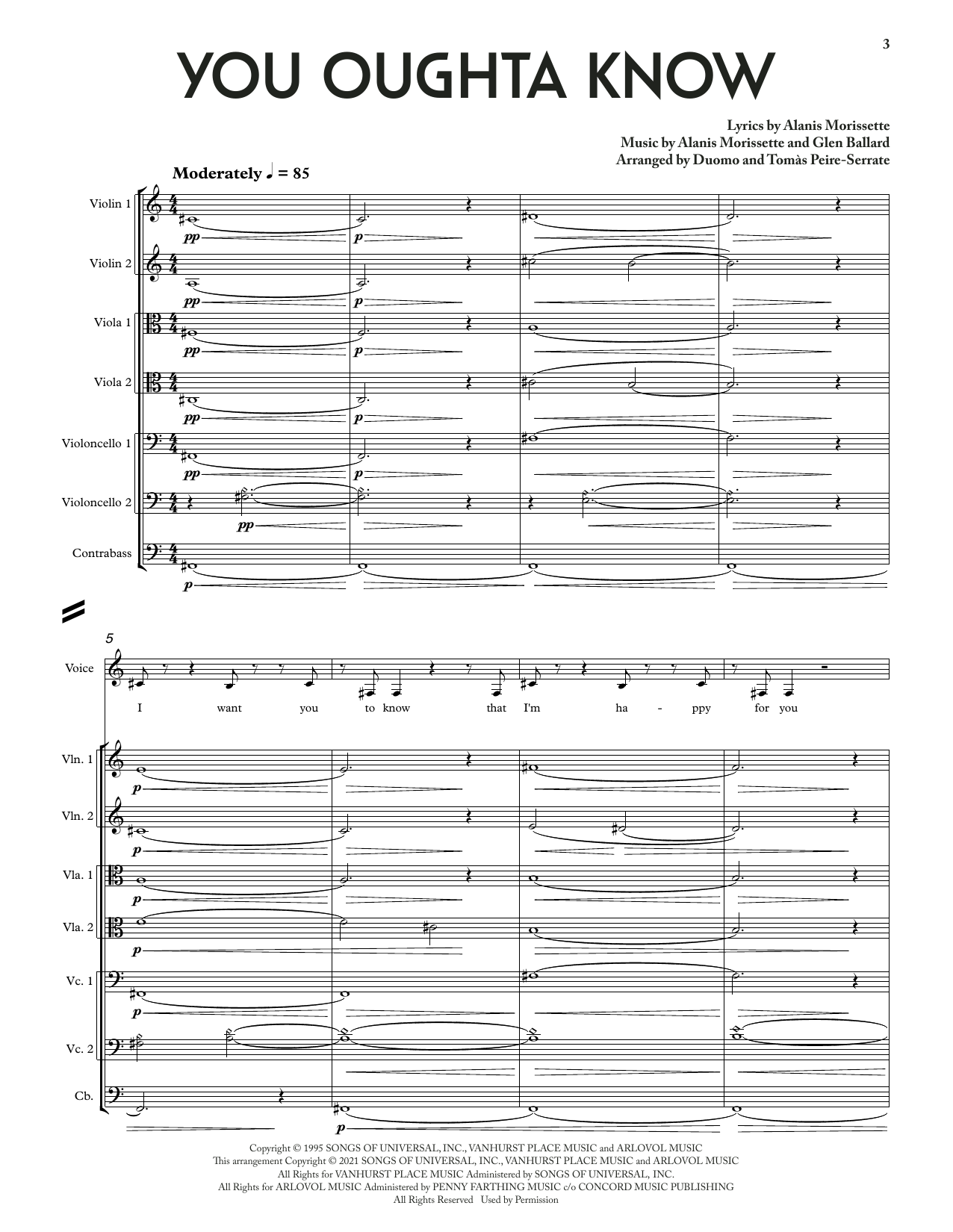
You Oughta Know (from the Netflix series Bridgerton) (for Voice and String Ensemble)

As performed by Alanis Morissette / Arranged by Duomo

Item: 35-PK00840911

Digital Download
$14.99
Description
If you have tuned into the hit period drama on Netflix, "Bridgerton", chances are you've also taken notice of the distinctive stringchamber music covers of today's top contemporary hits in decidedly classical arrangements. Hal Leonard is pleased to now present score and parts for this buzz-worthy music performed by Duomo.

You Oughta Know (from the Netflix series Bridgerton) (for Voice and String Ensemble) isn't in MakeMusic Cloud just yet...but it could be. Let us know you'd like to see it, and you'll help shape what comes next. In the meantime, start a free trial and dive into thousands of interactive titles your students can play along with today.

Sample Audio
No sample audio found.
Sample Video
Additional Details
Publisher: Hal Leonard
SKU: 35-PK00840911

More about this title

About the Artist: Alanis Morissette

Alanis Morissette emerged in the 1990s as a defining voice of alternative rock, known for her unflinching emotional honesty and complex rhythmic sensibilities. Her breakthrough album "Jagged Little Pill" established her as a songwriter willing to explore anger, vulnerability, and introspection with equal intensity, influencing a generation of artists across multiple genres.

In the classroom and rehearsal room, Morissette's catalog offers rich material for studying how contemporary songwriting translates to classical arrangements. Her melodic strength and harmonic sophistication make her work particularly rewarding when adapted for acoustic ensembles, where every lyrical and instrumental line gains clarity and intimacy.

Why we love this

Bridgerton's string adaptations have proven that 1990s alternative rock contains genuine melodic and harmonic depth worth preserving in acoustic settings. This arrangement gives your ensemble a chance to engage with contemporary material that audiences already know while developing their understanding of how timeless songwriting survives radical instrumentation changes. The result feels both respectful to the original and entirely fresh.

What to expect

The piece carries the raw emotional directness of the original while wrapped in the elegance of period instrumentation. Strings replace the driving percussion and layered synths, revealing the melody's natural strength and the lyrical vulnerability beneath the surface.

Who it's for

This score works well for intermediate to advanced high school choirs pairing with chamber string players, college voice students exploring crossover repertoire, or any ensemble looking to program something that bridges classical and contemporary audiences. It appeals equally to directors seeking fresh material that connects with students' existing musical tastes and to those teaching arrangement concepts through familiar repertoire.

How to get the most out of it

  • Balance the vocal line so it sits just above the string texture rather than fighting against it. The arrangement likely emphasizes supporting harmonies, so resist the urge to belt.
  • Attend closely to intonation in the string sections. Without the anchor of drums or bass guitar, tuning becomes immediately audible. Use the recorded version as a reference for how the harmonic centers should sit.
  • Shape the dynamics to follow the emotional arc of the lyric rather than the original recording's production choices. Classical arrangements often benefit from a more gradual build than pop versions employ.

How to use it

Place this as a bridge piece in a concert that mixes classical and modern repertoire, allowing audiences to hear how chamber arrangements honor contemporary songwriting. It also serves well as a showcase for your advanced singers paired with strong string players, demonstrating the interpretive demands of a familiar song.

You May Also Like