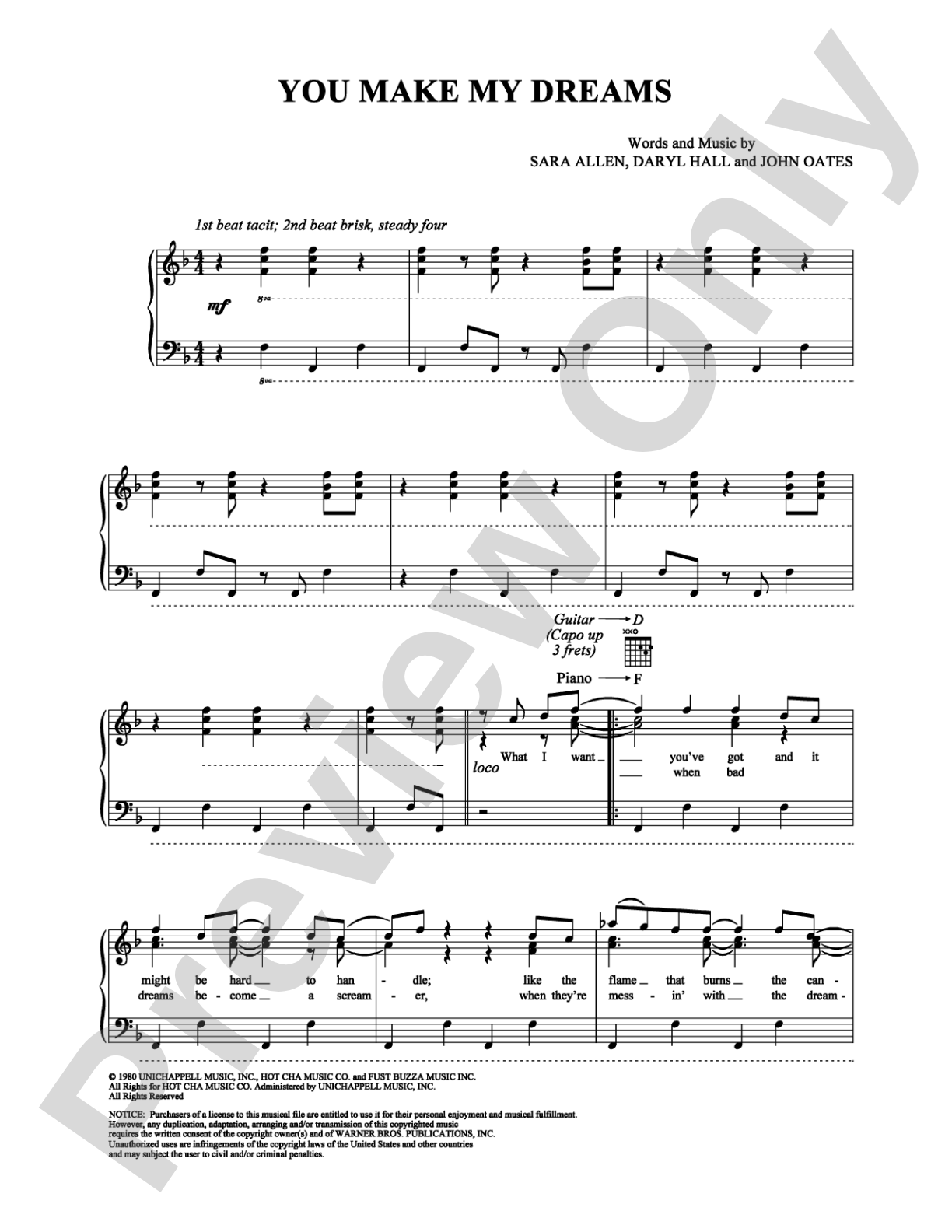
You Make My Dreams: Piano/Vocal/Chords Digital Sheet Music

You Make My Dreams: Piano/Vocal/Chords Digital Sheet Music

Daryl Hall, Hall and Oates, John Oates, Sara Allen

Item: 00-PS-0001152

Digital Download
$3.99
Description

You Make My Dreams: Piano/Vocal/Chords Digital Sheet Music isn't in MakeMusic Cloud just yet...but it could be. Let us know you'd like to see it, and you'll help shape what comes next. In the meantime, start a free trial and dive into thousands of interactive titles your students can play along with today.

Sample Audio
No sample audio found.
Sample Video
Additional Details
SKU: 00-PS-0001152

More about this title

About the Artist: Hall and Oates

Hall and Oates built one of the most successful careers in popular music by mastering the intersection of soul, rock, and pop. Daryl Hall and John Oates wrote and performed some of the 1970s and 1980s' most enduring hits, blending sophisticated chord progressions with radio-friendly melodies and tight vocal harmonies that influenced generations of songwriters.

Why we love this

This is a genuinely rewarding song to perform with strong melodic content, intuitive harmony, and a groove that students recognize immediately. The piano/vocal arrangement captures what makes Hall and Oates so appealing: the interplay between lead and supporting vocals, clear harmonic movement, and a hook that sticks with listeners long after the final chord.

What to expect

Warm, charming, and instantly familiar. The song radiates optimism and affection without ever tipping into sentimentality. Harmonically rich enough to hold a musician's interest while remaining accessible and joyful.

Who it's for

This works beautifully for pop/rock choirs, jazz singers incorporating contemporary standards into their repertoire, and piano teachers looking for engaging material that bridges classical training and popular music. Solo performers and duets will find this especially rewarding given the song's emphasis on vocal interaction.

How to get the most out of it

  • Lock the rhythmic pocket early. The song's infectious quality depends on confidence in the groove; even slight hesitation in the accompaniment will flatten the energy.
  • Pay attention to the vocal harmony voicing. If you're performing with multiple singers, the blend between lead and secondary voices should feel conversational, not mechanical.
  • Balance the piano accompaniment so it supports rather than competes with the vocal line. This song lives in the voice; the piano sets the mood and locks the rhythm.
  • Lean into the dynamics of the recorded version without losing the intimacy of the arrangement. The song benefits from building intensity through the bridge and final chorus.

How to use it

Position this as a lighter moment in a program dominated by classical or jazz repertoire, or anchor a pop/rock set with a song that audiences genuinely want to hear. It also pairs well with other 1970s-80s standards that emphasize strong melody and vocal arrangement, creating a cohesive contemporary segment.

Skills your students will build

  • Reading and interpreting chord symbols in popular music context
  • Vocal blend and balance between melodic and supporting lines
  • Understanding groove and rhythmic pocket in piano accompaniment
  • Phrasing and interpretation of conversational, character-driven lyrics

You May Also Like