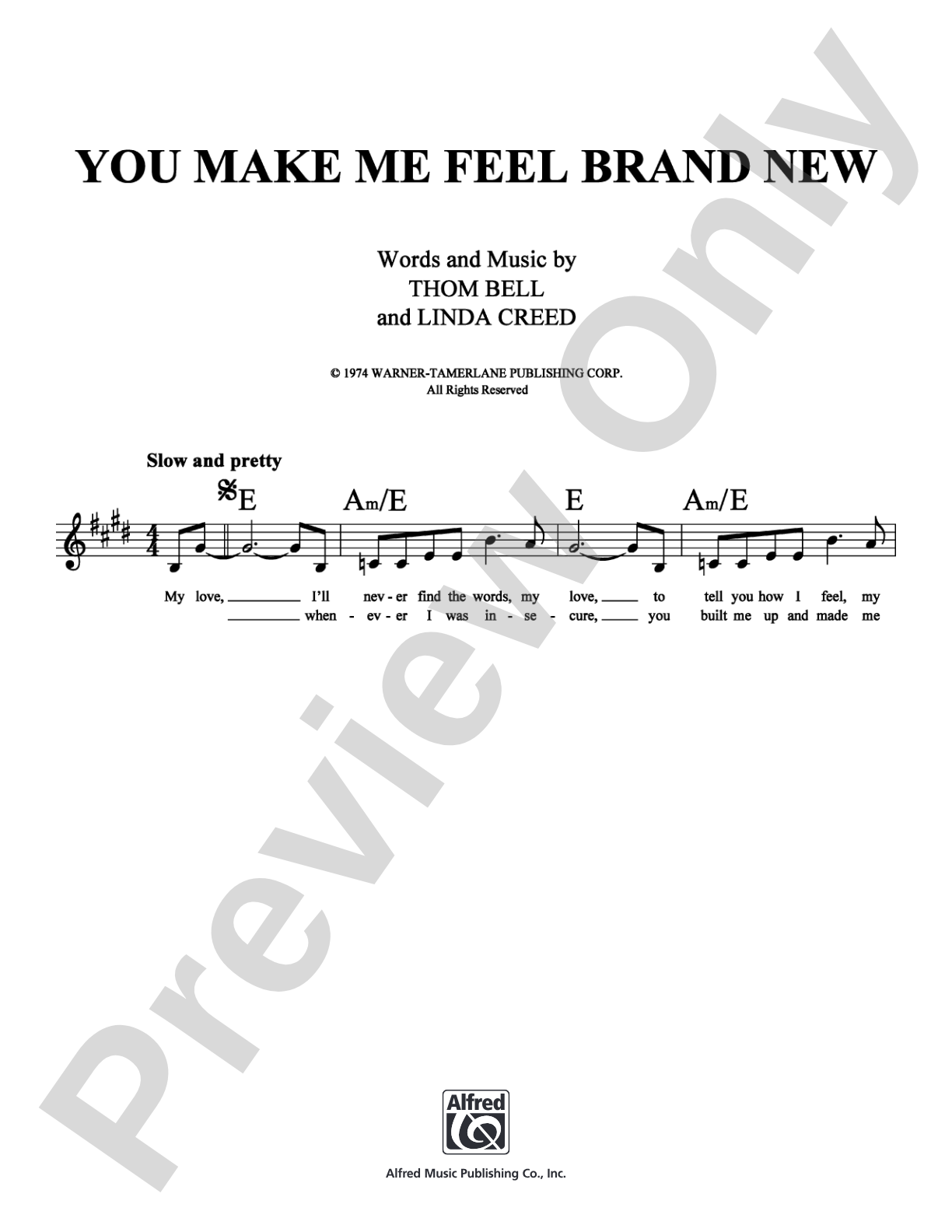
You Make Me Feel Brand New: Lead Sheet Digital Sheet Music

You Make Me Feel Brand New: Lead Sheet Digital Sheet Music

Thom Bell, Linda Creed, The Stylistics, Roberta Flack

Item: 00-PS-0007922

Digital Download
$1.99
Description

You Make Me Feel Brand New: Lead Sheet Digital Sheet Music isn't in MakeMusic Cloud just yet...but it could be. Let us know you'd like to see it, and you'll help shape what comes next. In the meantime, start a free trial and dive into thousands of interactive titles your students can play along with today.

Sample Audio
No sample audio found.
Sample Video
Additional Details
SKU: 00-PS-0007922

More about this title

About the Artist: The Stylistics

The Stylistics emerged from Philadelphia in the late 1960s as one of soul music's most distinctive vocal groups, known for their smooth harmonies and sophisticated arrangements that bridged R&B, soul, and pop sensibilities. Their recordings became standards in the soul canon, influencing generations of vocalists and arrangers with their approach to vocal blend and emotional restraint. Roberta Flack, a classically trained pianist and vocalist, became a major force in soul and jazz music during the same era, celebrated for her interpretive depth and technical command across multiple genres.

Why we love this

This lead sheet captures a soul standard that teaches the essentials of vocal line development and harmonic sophistication without requiring large ensemble resources. The melody sits naturally for singers across multiple voice types, and the underlying harmonic vocabulary offers real material for jazz and contemporary music study. Whether you're building a jazz combo book, supplementing a contemporary music unit, or developing students' ability to interpret classic soul and R&B, this piece delivers musicianship growth through a recording that students actually want to perform.

What to expect

Warm, intimate, and deeply soulful—this is music that moves at its own pace, inviting singers to inhabit each phrase with intention and vulnerability. The melody carries an unhurried grace, supported by harmonies that deepen the emotional resonance with each turn.

Who it's for

Jazz singers, contemporary vocalists, and small ensemble musicians working with soul and R&B repertoire will find this lead sheet essential. It's equally valuable for instrumental musicians developing improvisation skills, pianists building a jazz standards repertoire, and any student learning to read and interpret lead sheet notation with stylistic awareness.

How to get the most out of it

  • Study the original recordings to hear how The Stylistics and Roberta Flack shape the vocal line differently; each interpretation reveals distinct choices about phrasing, breath placement, and emotional arc.
  • Pay close attention to the harmonic progression and resist rushing through chord changes, especially in the bridge. Soul and R&B rely on the weight and space of each harmony.
  • Experiment with different comping approaches if using this with a rhythm section. The song's gentle tempo and intimate character benefit from sparse, well-placed accompaniment rather than constant rhythmic activity.
  • Sing this with attention to vowel consistency across the range, particularly through any sustained passages. The emotional power comes from clarity and connection, not volume.

How to use it

Include this in a jazz or contemporary music concert alongside other soul standards and R&B classics to build context and depth for your audience. It works beautifully as a small ensemble piece in programs exploring American vocal music traditions, and serves equally well as a solo recital selection for singers developing their interpretive range beyond classical repertoire.

Skills your students will build

  • Reading and interpreting lead sheet notation with stylistic fluency
  • Vocal phrasing and breath management in a slower, lyrical context
  • Understanding harmonic progression and voice leading in soul and R&B idioms
  • Interpreting chord symbols and making informed choices about accompaniment and comping
  • Developing expressive control and emotional authenticity in performance

You May Also Like