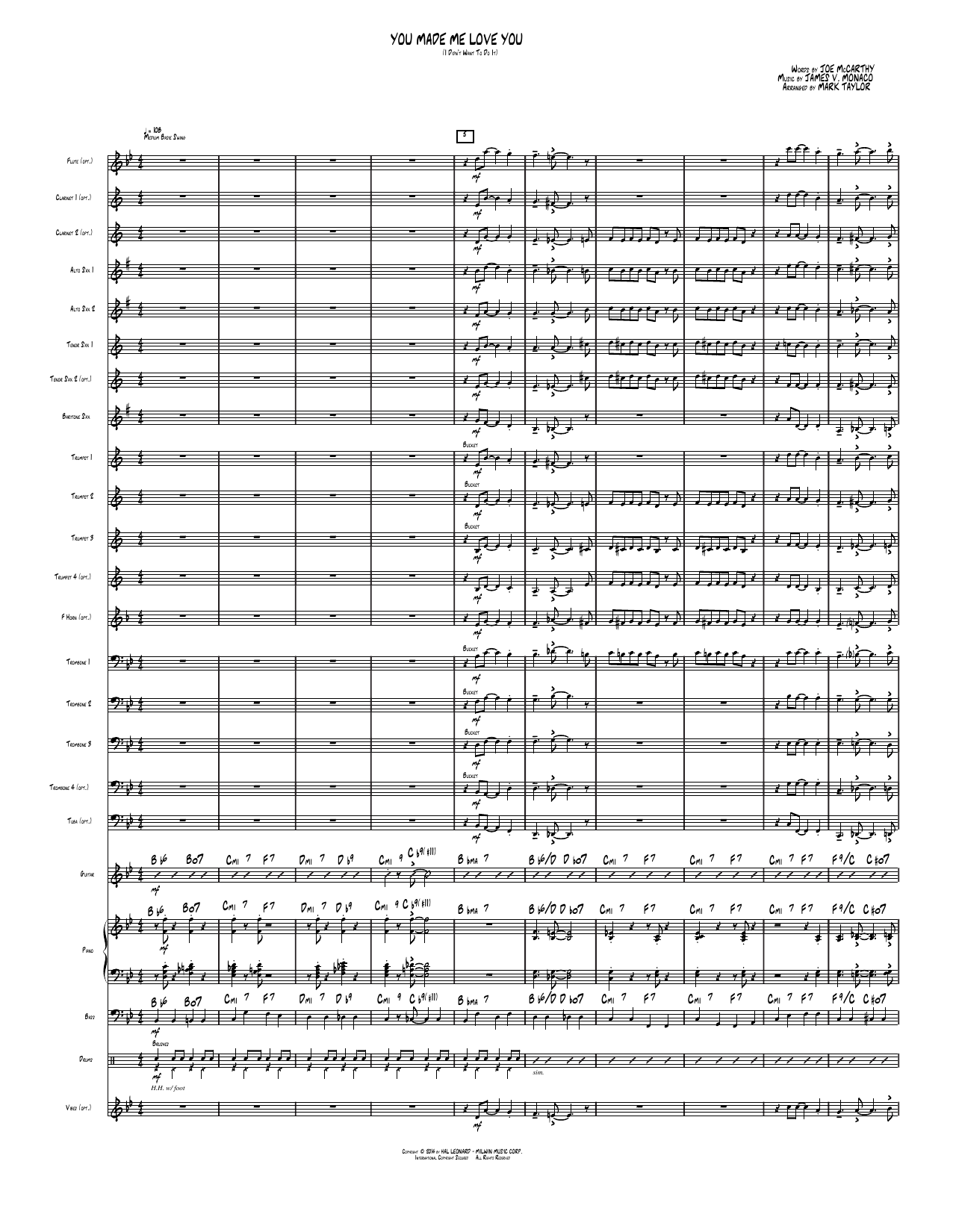
Mark Taylor's arrangements have become synonymous with accessible jazz that doesn't sacrifice musicality. His work appears regularly on the stands of high school and college ensembles across North America, where directors trust his instinct for what works both pedagogically and aesthetically. Taylor understands the jazz ensemble from the inside out, giving him the rare ability to write parts that challenge students without overwhelming them.
Why we love this
Taylor captures the warmth and swagger of this standard without any of the clutter. The arrangement sits perfectly at Grade 2, offering genuine jazz vocabulary (walking bass, section hits, tasteful solo spaces) while keeping the technical demands reasonable. Your students will sound like they're playing real jazz, not a watered-down approximation.
What to expect
Nostalgic without being sentimental. The melody carries its vintage charm, but Taylor's arrangement keeps everything moving forward with clean section work and space for individual voices to shine. It's a tune that makes you want to snap your fingers and lean into the pocket.
Who it's for
Grade 2 jazz ensembles ready to move beyond simple head arrangements into structured, composed writing. Equally valuable for directors building a standard repertoire and for students learning how a classic melody translates into ensemble jazz.
How to get the most out of it
Keep the rhythm section locked in on the groove. The bass and drums drive everything, so those two players should rehearse together separately until the pulse feels inevitable.
Balance the saxes against the trombones during the horn arrangements. Neither section should overpower the other; think blend rather than volume.
Let the melody sing. Whether it's played by trumpet or saxophone, this tune thrives on lyrical phrasing. Encourage your soloists to breathe naturally and shape the line.
Establish the swing feel in the first rehearsal. Once everyone feels the same triplet subdivision, the whole arrangement opens up.
How to use it
Pair this with other timeless standards to build a classic jazz concert program. It works beautifully as a early-season piece when students need confidence builders, or drop it into a spring concert alongside newer material to show the continuum of jazz repertoire.
Skills your students will build
Swing eighth-note subdivision and phrasing
Walking bass line construction and continuity
Section balance and blend in scored ensemble writing
Solo construction over a standard 32-bar form
Reading and responding to conductor cues in jazz context
You May Also Like
Scan to Complete Your Purchase
Use your phone's camera to scan the code below
You'll log in on your phone and the order will be added to your account