You'll Never Walk Alone (from Carousel) Sheet Music Preview

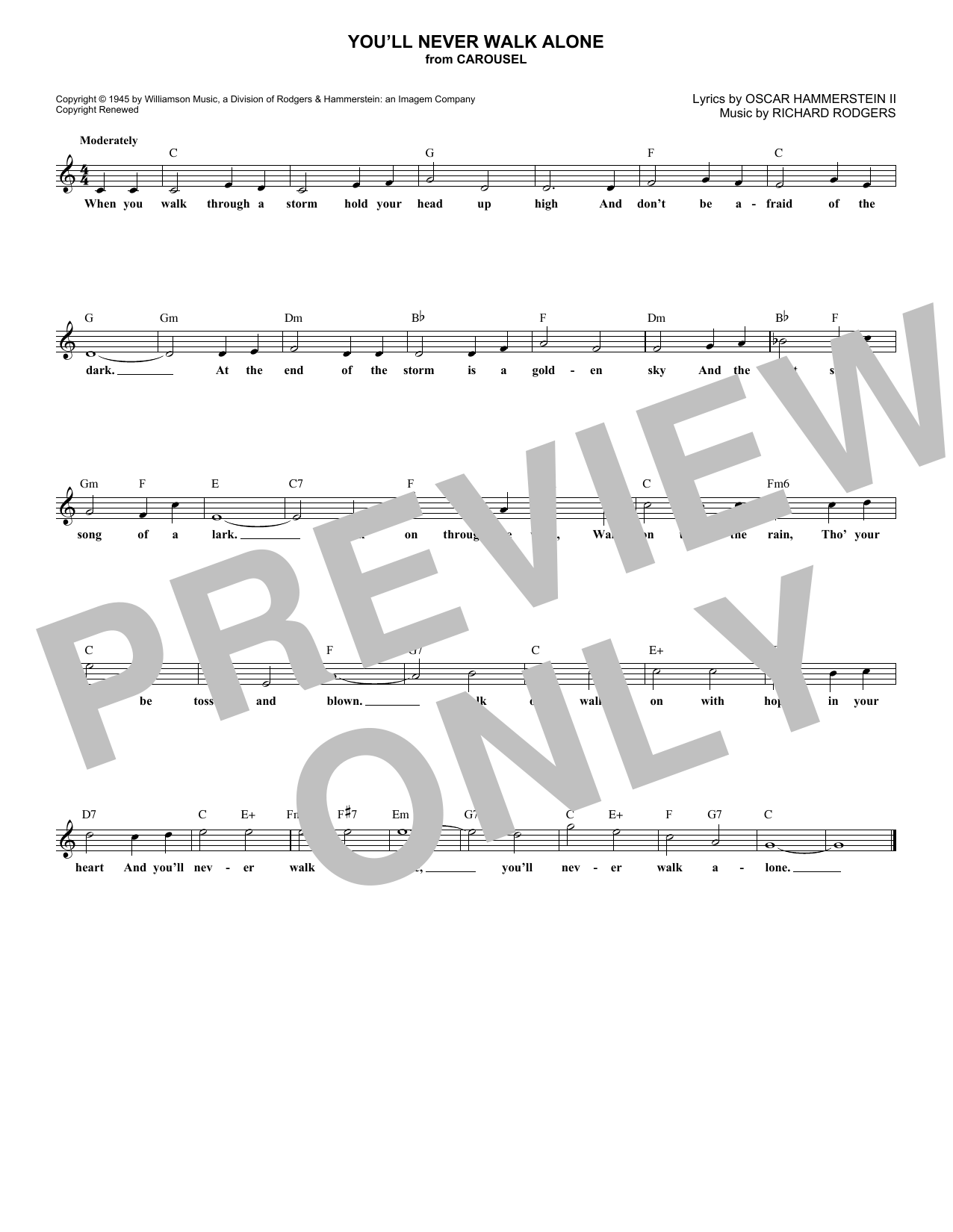
You'll Never Walk Alone (from Carousel): Lead Sheet / Fake Book

As performed by Rodgers & Hammerstein

Item: 35-DS00410555

Digital Download
$3.99
Description

You'll Never Walk Alone (from Carousel): Lead Sheet / Fake Book isn't in MakeMusic Cloud just yet...but it could be. Let us know you'd like to see it, and you'll help shape what comes next. In the meantime, start a free trial and dive into thousands of interactive titles your students can play along with today.

Sample Audio
No sample audio found.
Sample Video
Additional Details
Publisher: Hal Leonard
Page Count: 1
SKU: 35-DS00410555

More about this title

About the Artist: Rodgers & Hammerstein

Richard Rodgers and Oscar Hammerstein II shaped American musical theater through their partnership from 1943 until Hammerstein's death in 1960. Their collaborative output revolutionized the form by integrating storytelling, character development, and genuine emotional depth into every song. Rodgers' gift for melody combined with Hammerstein's poetic lyricism created works that have remained central to the American songbook for generations.

Their influence on music education runs deep. Teachers across classrooms and rehearsal halls return to Rodgers and Hammerstein scores because the songs teach voice leading, harmonic function, and lyrical phrasing all at once. The craftsmanship in every measure rewards careful study.

Why we love this

This is the emotional anchor of Carousel, and it demands nothing but sincerity from whoever sings it. The melody sits naturally in the voice, the harmony is rich without being overwrought, and the accompaniment pattern gives pianists room to breathe while supporting the singer completely. Audiences recognize it immediately, and that familiarity allows performers to focus entirely on connecting the text to the listener.

What to expect

Walking through difficulty with company. The melody moves with gentle assurance, never punching but never wavering either. There's comfort in the harmonic movement and genuine hope in the lyric, making it feel both grounded and transcendent at once.

Who it's for

Singers preparing for auditions, choir directors looking for congregational moments or special features, and pianists who want to understand how a standard lead sheet translates to performance. This single page gives you everything you need to work with the song in lessons, rehearsals, or performances.

How to get the most out of it

  • Treat the opening phrase as a statement of character, not a song beginning. The singer needs to own the space and the promise before any accompaniment enters.
  • Shape the melody across longer phrases rather than hitting each note individually. The arc matters more than the ornaments.
  • Balance the piano part so it supports rather than competes. This song lives or dies on the voice; the keys are there to frame and sustain.
  • Let the tempo breathe. Rushing this music undercuts the emotional weight that Hammerstein built into every line.

How to use it

Pair this with other Rodgers and Hammerstein selections for a Broadway showcase, or use it as a solo feature in a mixed concert where you need a moment of emotional clarity. It works equally well as a final selection for a vocal recital or as a rehearsal study in harmonic analysis and text interpretation.

Skills your students will build

  • Reading lead sheet notation and understanding chord symbols in context
  • Building sustained vocal phrases across longer melodic lines
  • Balancing accompaniment texture so the melody remains primary
  • Interpreting the relationship between lyrical content and melodic shape
  • Accompanying from a lead sheet with flexibility and musical support

You May Also Like