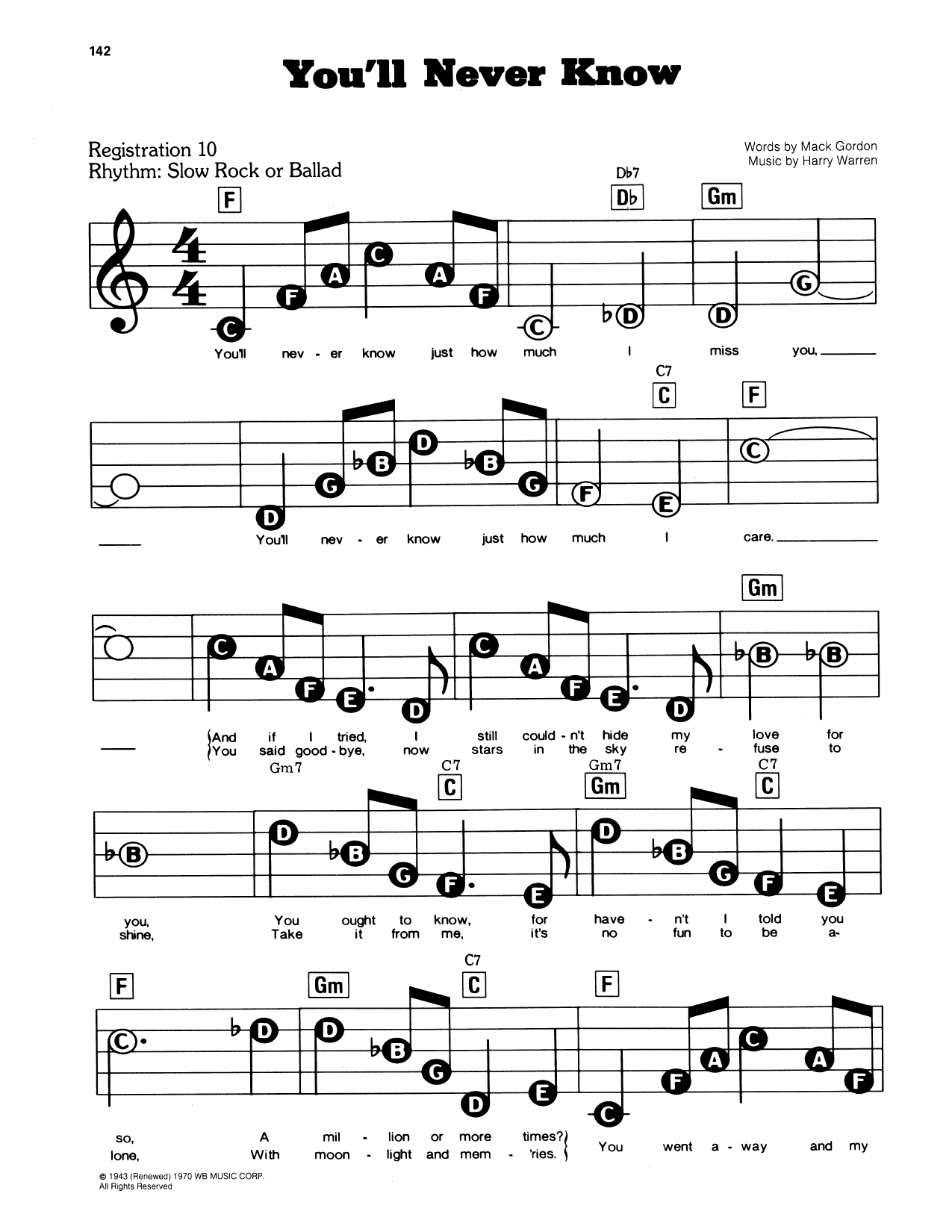
You'll Never Know Sheet Music Preview

You'll Never Know: E-Z Play Today

As performed by Frank Sinatra

Item: 35-DS01885968

Digital Download
$4.99

One moment…

Description

You'll Never Know: E-Z Play Today isn't in MakeMusic Cloud just yet...but it could be. Let us know you'd like to see it, and you'll help shape what comes next. In the meantime, start a free trial and dive into thousands of interactive titles your students can play along with today.

Sample Audio
No sample audio found.
Sample Video
Additional Details
Publisher: Hal Leonard
Page Count: 2
SKU: 35-DS01885968

More about this title

About the Artist: Frank Sinatra

Frank Sinatra shaped American popular music across seven decades, from his early big band years through his transformation into a solo artist who commanded concert halls and recording studios alike. His influence on phrasing, interpretive flexibility, and the marriage of jazz sensibility with popular song remains foundational to music education; his recordings serve as masterclasses in vocal and instrumental musicianship.

Why we love this

This E-Z Play arrangement strips away nothing essential from Sinatra's iconic standard. Piano students get direct access to a tune that shaped American song without wrestling unnecessary complexity, making it ideal for building interpretive confidence on repertoire that actually matters.

What to expect

Tender and unhurried, built on the kind of sophisticated chord changes that feel warm rather than academic. The melody floats above gentle harmonic support, capturing that particular Sinatra quality of intimate confession even in a crowded room.

Who it's for

Piano students developing comfort with jazz-inflected standards and teachers looking for accessible repertoire that connects students to the Great American Songbook. This works equally well as a solo vehicle or as accompaniment if a vocalist joins.

How to get the most out of it

  • Lean into the rubato naturally. Sinatra's phrasing rarely locked to a metronomic beat, so give yourself permission to breathe at the phrase endings and shape the melody without rigidity.
  • Balance the vocal line as your primary voice while keeping accompaniment harmonies warm underneath. The arrangement succeeds when listeners hear the song first, the piano second.
  • Reference the original recording to absorb Sinatra's interpretive choices around dynamics and tempo. Hearing how he sits into certain moments will inform your understanding of where the arrangement can breathe.

How to use it

Program this alongside other standards during a jazz or American song unit to give students hands-on experience with a tune they likely know by ear. The two-page format makes it manageable for recitals, student showcases, or informal performance settings where accessibility meets authenticity.

Skills your students will build

  • Reading jazz voicings and chord alterations
  • Interpreting rubato and rhythmic flexibility in notated form
  • Balancing melodic line with harmonic accompaniment
  • Applying dynamics to serve lyrical content and phrasing

You May Also Like