You'll Be Mine: 1st Trombone Sheet Music Preview

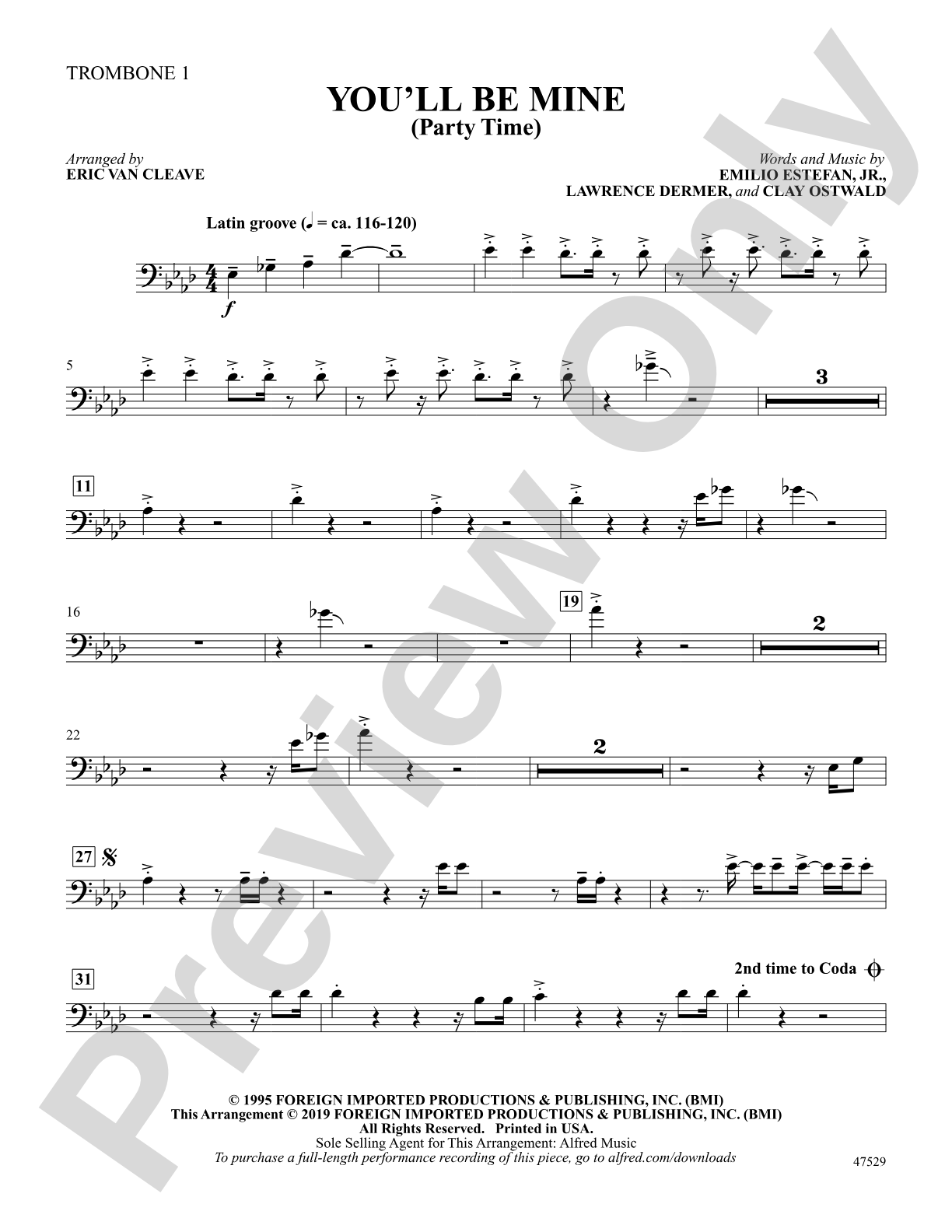
You'll Be Mine: 1st Trombone

(Party Time)

Words and music by Emilio Estefan, Jr., Lawrence Dermer, and Clay Ostwald / arr. Eric Van Cleave

Item: 00-PC-0018893_TN1

Digital Download
$3.00
Description
The Latin rhythms of this Gloria Estefan hit are hot, hot, hot. Spend a little time learning the rapid-fire lyrics, and then let the party begin! Optional solos are passed around during verses, but the scintillating harmonized hook is everybody's game. An eight-bar interlude at the coda doubles as a brief dance break just before the final choral riffs. A bonafide crowd-pleaser!

You'll Be Mine: 1st Trombone isn't in MakeMusic Cloud just yet...but it could be. Let us know you'd like to see it, and you'll help shape what comes next. In the meantime, start a free trial and dive into thousands of interactive titles your students can play along with today.

Sample Audio
0:00
0:00
Sample Video
Additional Details
Series: Alfred Pop Choral Series
Publisher: Alfred Music
Page Count: 52
SKU: 00-PC-0018893_TN1

More about this title

About the Composer: Emilio Estefan

Emilio Estefan is a Cuban-American musician, songwriter, and producer who became a defining force in pop and Latin music during the 1980s and 1990s. As the primary creative force behind the Miami Sound Machine and husband of Gloria Estefan, he crafted the infectious rhythmic textures and production sensibilities that made Latin pop accessible to mainstream audiences worldwide. His work bridges contemporary pop songwriting with Caribbean and Cuban musical traditions, creating highly singable, rhythmically engaging material that translates naturally to choral settings.

Why we love this

This arrangement captures everything that makes the original such a performance high: the propulsive Latin groove, the memorable hook, and the infectious energy that makes audiences move. The distributed solo passages keep singers engaged individually while the harmonized refrain gives the whole choir a moment to shine together. It's the rare pop arrangement that feels both authentically rooted in its source material and genuinely fun to rehearse and perform.

What to expect

Bright, propulsive, and irrepressibly fun. The Latin rhythms create forward momentum that pulls singers along, while the harmonized hook feels satisfying and achievable even as it sits in everyone's mind. There's a party-ready energy throughout, punctuated by moments of collective vocal power that land with real impact.

Who it's for

Directors programming pops concerts, spring shows, or end-of-year celebrations with mixed voices who want guaranteed audience engagement. Choirs comfortable with contemporary music and comfortable singers who can handle individual solo moments while maintaining group cohesion.

How to get the most out of it

  • Lock the rhythmic precision early in rehearsal. The Latin feel depends on tight, confident ensemble articulation, especially on repeated syllables and the hook. Record yourselves and listen back to spot where the rhythmic energy softens.
  • Prepare singers for the rapid-fire lyrical passages by isolating them in shorter segments first. Slow down to half tempo, lock the text clearly, then gradually build back to performance speed.
  • Use the recorded accompaniment to establish the authentic groove. Let singers hear how the percussion sits in the mix so they can find their rhythmic center without overthinking.
  • Shape the eight-bar dance break coda as a genuine moment of release. Encourage singers to feel the space as celebratory rather than technically demanding, which often results in better ensemble lock and audience connection.

How to use it

Program this as a high-energy anchor for a contemporary pop set, or use it to open a show that needs an immediate lift in audience mood. The optional solos and relatively short performance time (52 pages of score suggest a manageable rehearsal load) make it ideal for mixed-ability choirs looking to stretch into something more energetic than ballad-heavy repertoire.

Skills your students will build

  • Latin rhythm and groove internalization
  • Rapid text clarity and articulation at tempo
  • Solo confidence within an ensemble context
  • Harmonized melodic lines and blend
  • Ensemble precision on syncopated rhythmic figures

You May Also Like