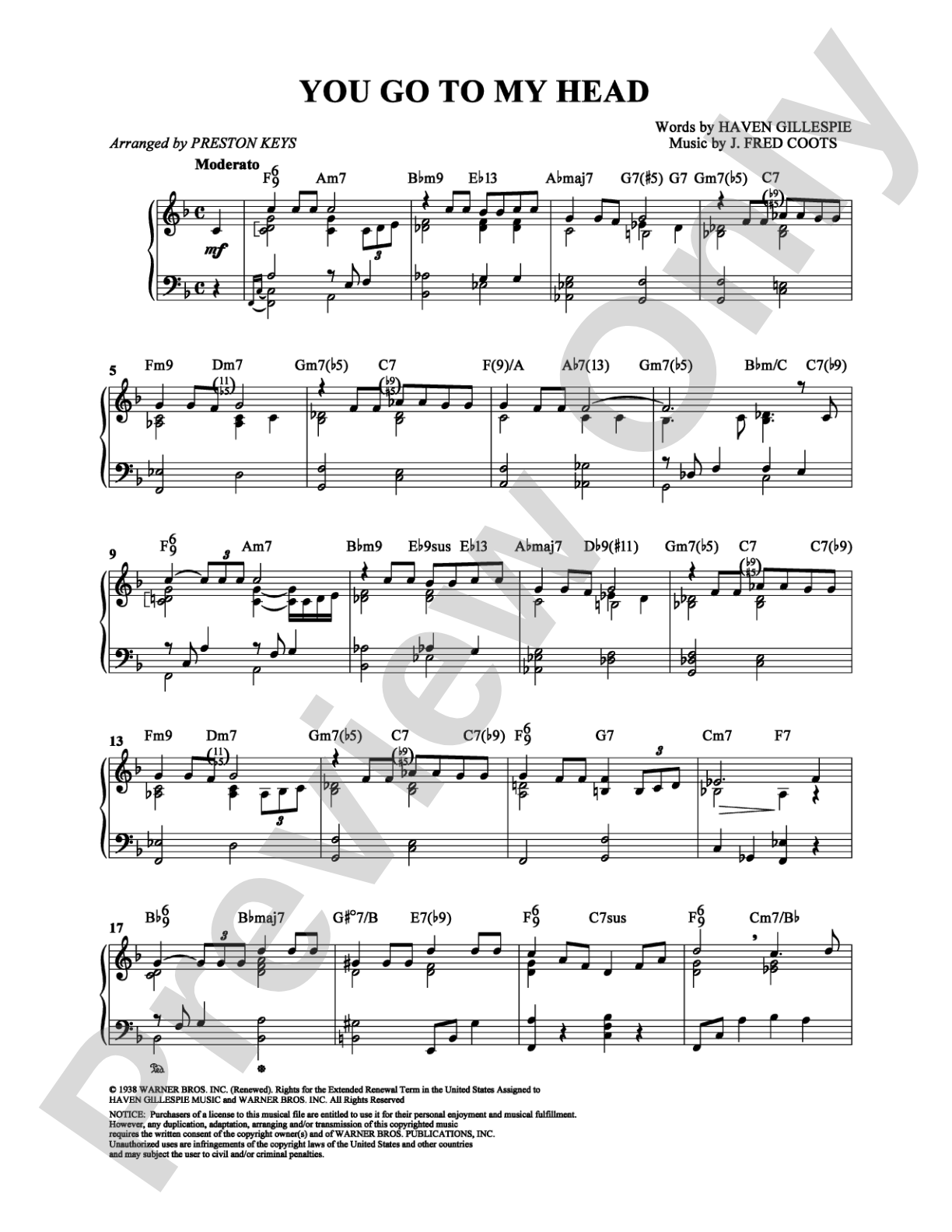
You Go To My Head: Piano Digital Sheet Music

You Go To My Head: Piano Digital Sheet Music

J. Fred Coots

Item: 00-PS-0008505

Digital Download
$3.99
Description

You Go To My Head: Piano Digital Sheet Music isn't in MakeMusic Cloud just yet...but it could be. Let us know you'd like to see it, and you'll help shape what comes next. In the meantime, start a free trial and dive into thousands of interactive titles your students can play along with today.

Sample Audio
No sample audio found.
Sample Video
Additional Details
SKU: 00-PS-0008505

More about this title

Why we love this

This standard sits perfectly in the jazz pianist's working repertoire, offering sophisticated harmony and a melody that rewards careful phrasing. The bridge demands real harmonic thinking, making it ideal for students ready to move beyond lead sheets into genuine interpretive work.

What to expect

Introspective and yearning, with the warm sophistication of a mid-century ballad. The harmony moves with gentle inevitability, and the melody curves through the changes like a confession delivered quietly but with complete honesty.

Who it's for

Jazz pianists working through the standard repertoire, from intermediate players building solid chord knowledge to advanced students developing a personal voice in ballad playing. This piece serves equally well in study, jam session, or recital contexts.

How to get the most out of it

  • Treat the melody line as a vocal line. Even at tempo, each phrase needs breath and shape; let the pianist's touch communicate where the singer would breathe.
  • Map the harmonic rhythm carefully before learning the tune. The changes move at different rates in different sections, and understanding that architecture helps anchor the interpretation.
  • Explore rubato in the opening statement. The romantic character of this ballad invites some flexibility; lock in with the accompanying harmony once the momentum builds.
  • Listen closely to how the reharmonization handles the return from the bridge. Small voice-leading choices there can transform the final A section.

How to use it

A natural choice for a solo jazz recital or as part of a ballad set that showcases interpretive range. It also works beautifully as the closer in a mixed program, offering a reflective moment that doesn't require ensemble coordination.

Skills your students will build

  • Reading jazz chord symbols and recognizing common harmonic movements (especially ii-V progressions and extended dominants)
  • Balancing melody and accompaniment in solo piano performance
  • Interpreting rubato and phrasing in ballad style
  • Navigating chromatic passing chords and reharmonization options
  • Developing touch control to sustain a lyrical line over several bars

You May Also Like