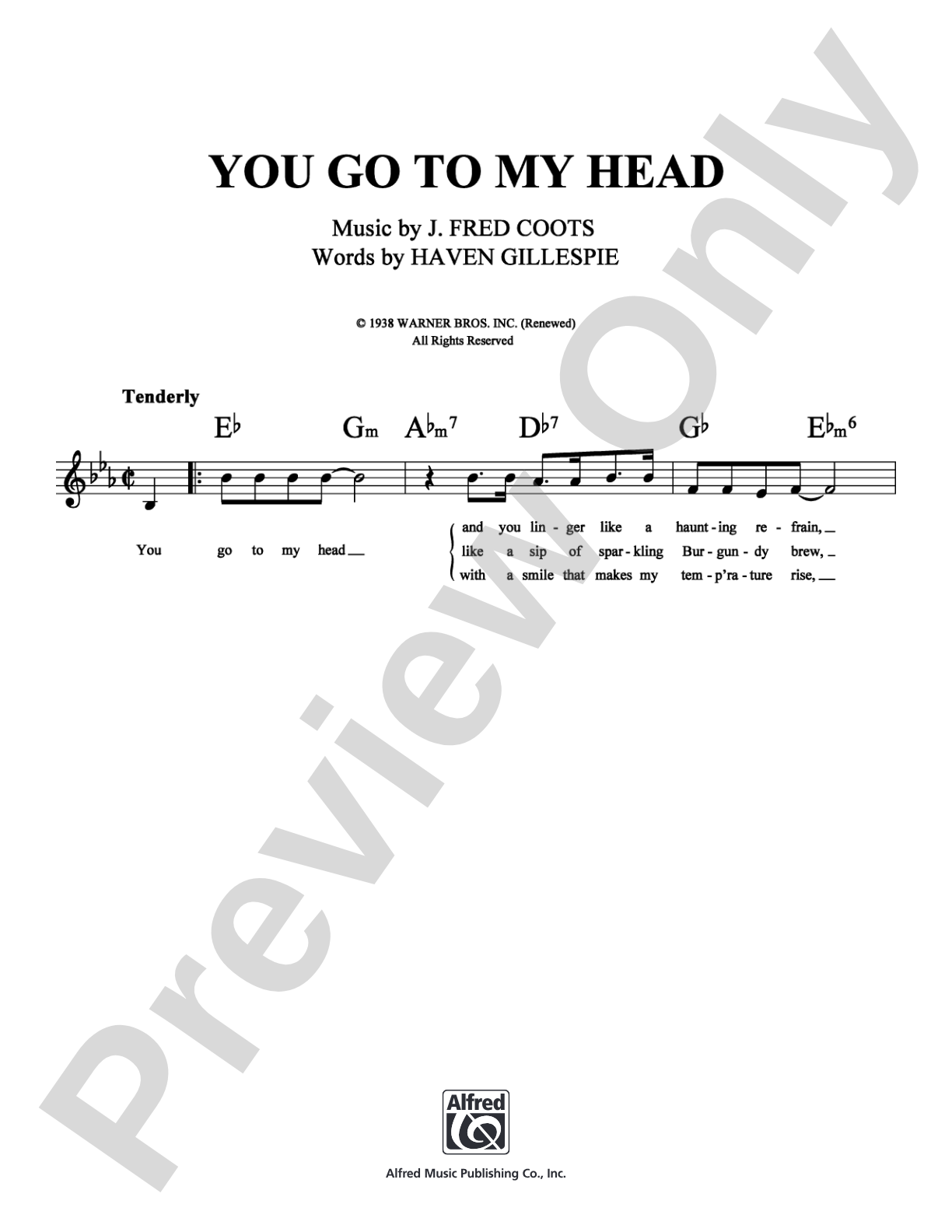
You Go To My Head: Lead Sheet Digital Sheet Music

You Go To My Head: Lead Sheet Digital Sheet Music

Clifford Brown, Frank Sinatra, Chet Baker, Louis Armstrong, Billie Holiday

Item: 00-PS-0008504

Digital Download
$1.99
Description

You Go To My Head: Lead Sheet Digital Sheet Music isn't in MakeMusic Cloud just yet...but it could be. Let us know you'd like to see it, and you'll help shape what comes next. In the meantime, start a free trial and dive into thousands of interactive titles your students can play along with today.

Sample Audio
No sample audio found.
Sample Video
Additional Details
SKU: 00-PS-0008504

More about this title

About the Artist: Frank Sinatra

Frank Sinatra (1915-1998) shaped American popular music across seven decades, establishing himself as a vocalist of unmatched interpretive depth and technical control. His approach to phrasing, breath management, and emotional storytelling became the gold standard for jazz singers and continues to influence vocalists across genres. Sinatra's recorded versions of standards remain essential references for musicians learning the jazz repertoire.

Why we love this

This standard has been recorded by some of jazz and popular music's greatest voices, making the lead sheet a window into how different artists interpret the same harmonic and melodic framework. The chord changes are sophisticated enough to challenge improvisers while remaining accessible to singers building their jazz vocabulary. Having multiple recorded versions on file means your students can study Sinatra's restraint alongside Baker's lyricism or Holiday's emotional weight.

What to expect

Wistful and introspective, with a romantic melody that sits comfortably in the middle register. The harmonic movement is smooth and warm, with chromatic voice leading that creates a sense of gentle inevitability. There's an intimacy to this standard that rewards careful listening and restrained delivery.

Who it's for

Vocalists working through the jazz standard repertoire, instrumentalists learning to improvise over sophisticated changes, and ensemble directors building a recorded reference library for teaching interpretation and arranging. This lead sheet works for singers at the intermediate level and up, as well as for pianists, guitarists, and horn players developing fluency with mid-century jazz harmony.

How to get the most out of it

  • Study the recorded versions listed to hear how melody and harmony sit differently depending on vocal range and interpretive choice; notice where singers breathe and reshape phrases.
  • Pay attention to the harmonic rhythm and where chord changes fall relative to the melody; this determines which notes land on strong harmonic moments and which float over passing chords.
  • Experiment with rubato in the bridge, which often features the song's most chromatic movement; slight flexibility in tempo can highlight the harmonic color.
  • Mark guide tones (root, third, seventh) through the changes as a soloing reference if you're improvising; they'll keep you anchored when exploring extensions and substitutions.

How to use it

Include this in a jazz standards unit where students compare interpretations across multiple artists, or program it as a solo feature alongside other ballads when you want to highlight a vocalist's interpretive maturity. It also works well as a repertoire choice for small ensemble or combo rehearsals, where rhythm section players can focus on comping over changes.

Skills your students will build

  • Reading lead sheet notation and chord symbols
  • Interpreting and executing rubato with harmonic awareness
  • Voice leading through chromatic harmony
  • Improvisation over jazz changes with guide tone navigation
  • Comparative listening across different vocal interpretations

You May Also Like