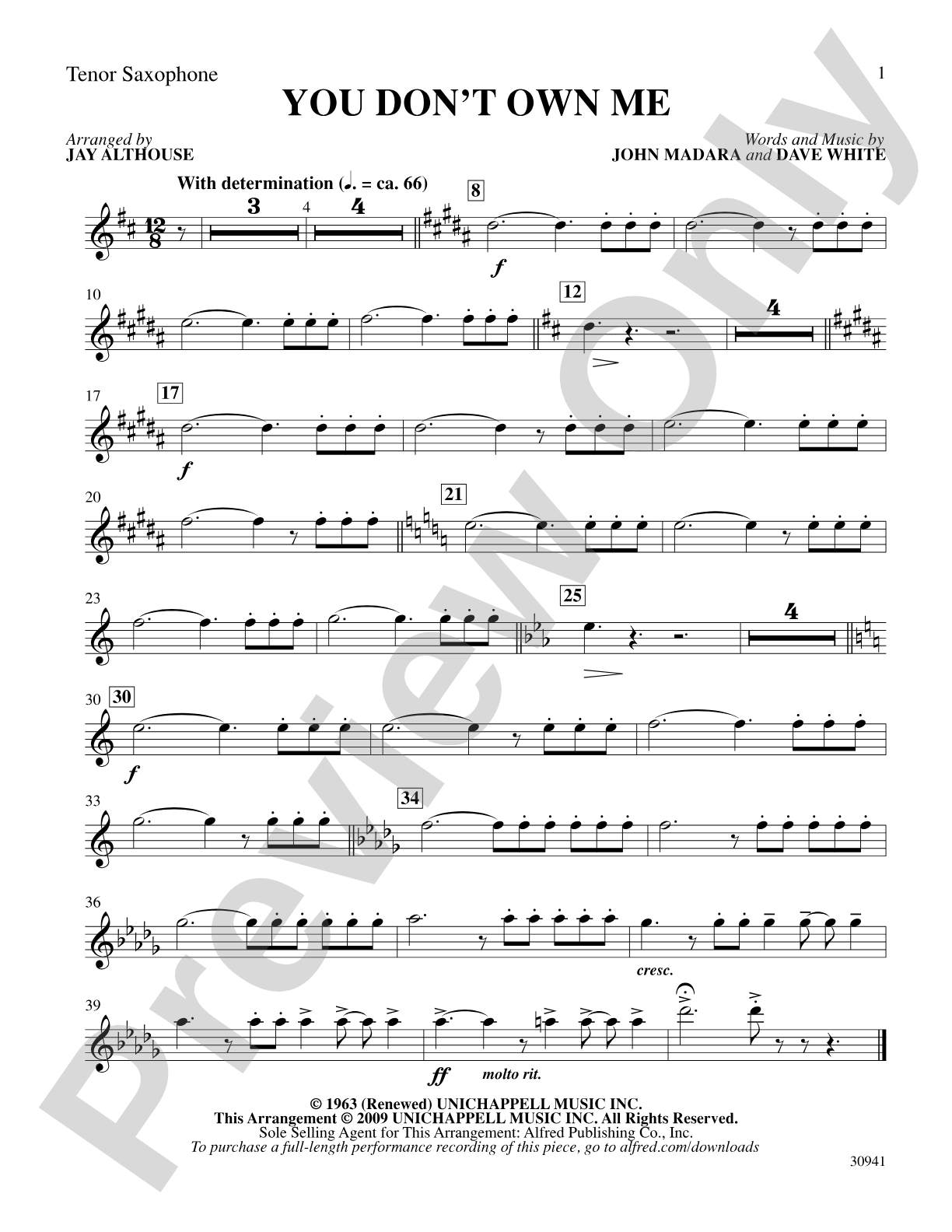
You Don't Own Me: B-flat Tenor Saxophone Sheet Music Preview

You Don't Own Me: B-flat Tenor Saxophone: Choral SoundPax

Words and music by John Madara and Dave White / arr. Jay Althouse

Item: 00-PC-0014831_TX1

Digital Download
$3.00
Description
Girl power! And a total blast to sing! This ultimate "declaration of independence" for SSA choirs was originally sung by Lesley Gore in the '60s. It was also featured in the movies Dirty Dancing and The First Wives Club. Great lyrics, great harmonies. You go, girls!

Don't just read it, hear it, play along with it, and watch your students grow with it. In MakeMusic Cloud, You Don't Own Me: B-flat Tenor Saxophone: Choral SoundPax comes alive with professional accompaniment, adjustable tempo, and built-in practice tools that turn solo practice into real progress.

Sample Audio
0:00
0:00
Sample Video
Additional Details
Series: Alfred Pop Choral Series
Publisher: Alfred Music
Page Count: 26
SKU: 00-PC-0014831_TX1
Instrumentation: SoundPax

More about this title

About the Composer: John Madara

John Madara co-wrote "You Don't Own Me" with Dave White in 1963, creating one of the era's most enduring pop anthems. The song became a defining moment in popular music, launched by Lesley Gore's powerful recording and later cemented in film culture through appearances in Dirty Dancing and The First Wives Club. Madara's gift for crafting melodies with genuine emotional weight made this declaration resonate across generations.

Why we love this

This arrangement preserves everything that made the original explosive while giving SSA singers the space to claim the song as their own. Jay Althouse's voicing captures the defiant spirit without sacrificing singability, and the lyrics land with particular clarity and impact when sung by young women discovering their voices. Programming this piece signals that your choir performs music with real cultural weight and contemporary relevance.

What to expect

Rebellious and joyful at once. The song channels the confidence of someone drawing a line and refusing to be moved, yet the harmonies are warm and the spirit is celebratory rather than angry. Singers feel the liberation in every phrase.

Who it's for

SSA choirs looking for repertoire that combines cultural relevance with genuine musical substance. This works equally well for middle school, high school, and community ensembles seeking a piece that resonates emotionally while remaining technically accessible.

How to get the most out of it

  • Lean into the attitude from the first phrase. This isn't a polite song, so encourage your singers to own the lyrics with confidence and directness.
  • Balance the homophonic sections with the harmonic ones by lifting the altos slightly when they carry inner parts. The arrangement depends on all three voices being heard.
  • Use the recorded accompaniment to lock the groove, but remind singers that this song swings slightly rather than landing metrically square. Let it breathe just enough to feel conversational.
  • Make the dynamic contrasts count. The softer moments feel more powerful when they follow sections sung with real presence and volume.

How to use it

Open a concert with this to immediately capture your audience's attention and set a confident tone for the program. It pairs beautifully in a set exploring women's voices in pop history, or stand it alone as a statement piece that reminds listeners why choral music matters in contemporary culture.

Skills your students will build

  • Singing with conviction and character intention
  • Balancing three-part SSA harmony with rhythmic precision
  • Interpreting lyrical meaning through vocal delivery and dynamics
  • Responding to recorded accompaniment while maintaining independent musicality

You May Also Like