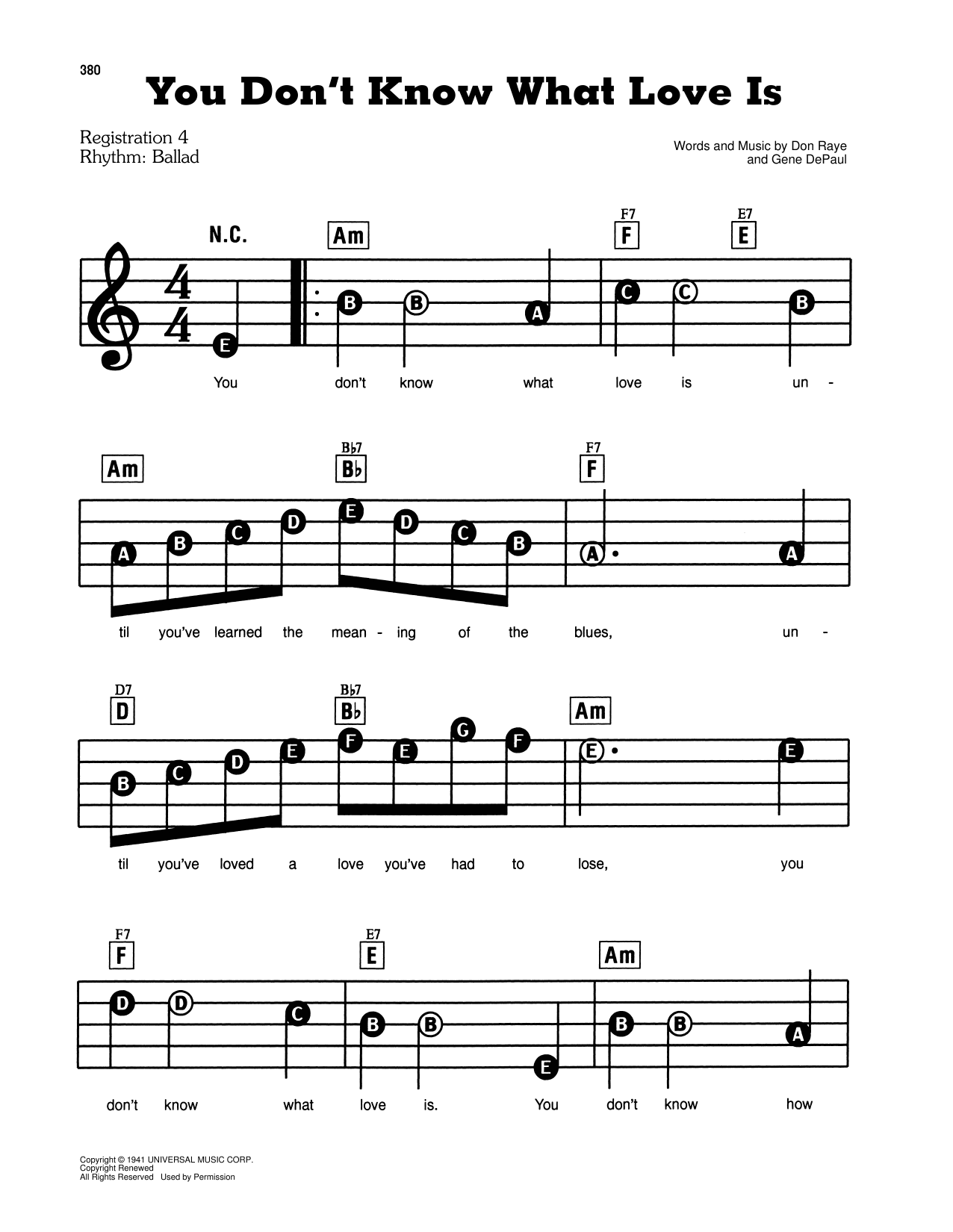
You Don't Know What Love Is Sheet Music Preview

You Don't Know What Love Is: E-Z Play Today

As performed by Carol Bruce

Item: 35-DS00460942

Digital Download
$4.99
Description

You Don't Know What Love Is: E-Z Play Today isn't in MakeMusic Cloud just yet...but it could be. Let us know you'd like to see it, and you'll help shape what comes next. In the meantime, start a free trial and dive into thousands of interactive titles your students can play along with today.

Sample Audio
No sample audio found.
Sample Video
Additional Details
Publisher: Hal Leonard
Page Count: 3
SKU: 35-DS00460942

More about this title

About the Artist: Carol Bruce

Carol Bruce (1919-2007) was an American jazz and musical theatre vocalist whose rich contralto voice and interpretive depth made her a standout performer across decades. Though she recorded relatively few albums during her lifetime, her influence on jazz vocal standards and her work in Broadway productions secured her place in the history of American popular music.

Why we love this

This arrangement captures the introspective melancholy of a true jazz standard without overwhelming intermediate pianists. The E-Z Play format preserves the essential harmonic language and melodic shape that made this song a staple for singers while keeping the left hand manageable and musically coherent.

What to expect

Tender and introspective, with an undertone of longing. The harmonic language unfolds slowly, inviting the pianist to sit with each chord change and discover its emotional resonance rather than rush through the arrangement.

Who it's for

Piano students at the intermediate level who are ready to explore jazz standards beyond classical repertoire. Teachers introducing students to the vocabulary of American songwriting and the interpretive freedom that jazz performance demands will find this accessible entry point valuable.

How to get the most out of it

  • Shape the melody by breathing with the lyrical phrasing rather than the barline; the song's emotional weight comes from sustained, unhurried delivery of key phrases.
  • Lean into the chromatic movement in the harmony. Even in a simplified arrangement, these passing tones create the jazz color that defines the standard.
  • Allow space for rubato in the opening statement. A slight tempo flexibility in the first phrase sets the reflective tone before settling into a steady groove.

How to use it

Pair this with other mid-century standards for a jazz standards recital or use it as a bridge between classical technique and contemporary popular music study. It works equally well as a solo piece or as accompaniment for a vocalist exploring the Great American Songbook.

Skills your students will build

  • Reading jazz chord symbols and realizing appropriate voicings
  • Interpreting lyrical phrasing in an instrumental context
  • Balancing rubato with rhythmic stability
  • Understanding chromatic harmonic movement in standards
  • Developing touch sensitivity for accompanying a vocal line

You May Also Like