You Do Something to Me: String Bass Sheet Music Preview

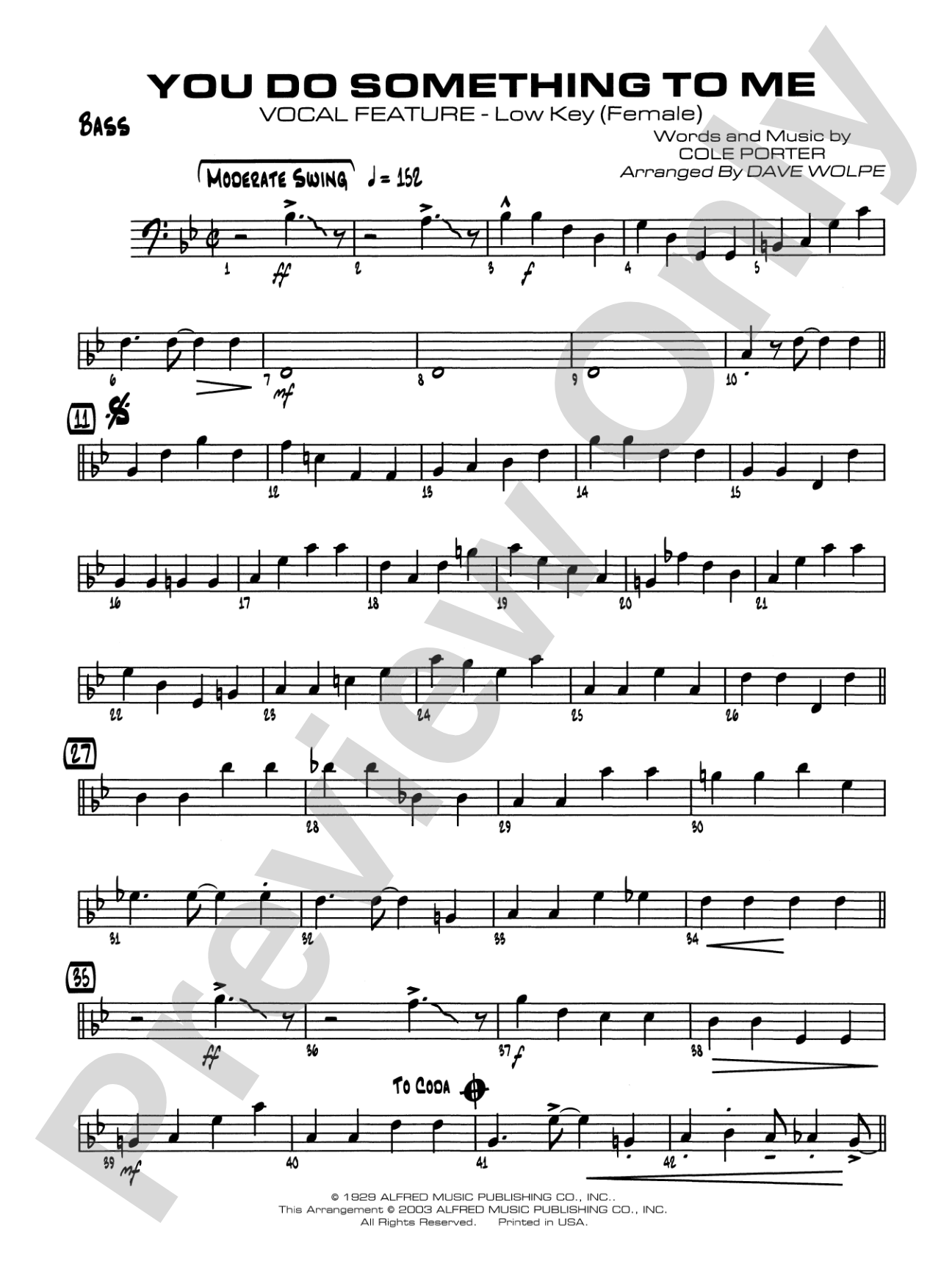
You Do Something to Me: String Bass

Vocal Feature

Words and music by Cole Porter / arr. Dave Wolpe

Grade: 3 (Medium)

Item: 00-PC-0015247_SB

Digital Download
$3.00
Description
This swingin' vocal chart with jazz ensemble is written in two keys. The high key (male) is E-flat with the range from middle C to top line F treble clef. The low key (female) is B-flat with the range from F below middle C to third space C. The parts are reversible - just flip the page for the key that suits your vocalist. A tenor sax solo is included also. Composed by Cole Porter and arranged by Dave Wolpe, this chart assures a great concert.

Don't just read it, hear it, play along with it, and watch your students grow with it. In MakeMusic Cloud, You Do Something to Me: String Bass comes alive with professional accompaniment, adjustable tempo, and built-in practice tools that turn solo practice into real progress.

Sample Audio
0:00
0:00
Sample Video
Additional Details
Series: Jazz Vocal Series
Publisher: Alfred Music
Page Count: 82
SKU: 00-PC-0015247_SB

More about this title

About the Composer: Cole Porter

Cole Porter (1891-1964) was an American composer and lyricist who defined the golden age of musical theatre and the American songbook. His sophisticated harmonies, witty lyrics, and elegant melodic lines became standards of jazz and popular music, recorded by countless artists across generations. Porter's songs remain central to vocal jazz repertoire because they reward both technical precision and interpretive depth.

Why we love this

Dave Wolpe's arrangement captures the sophisticated swing of a Porter standard while keeping the ensemble writing accessible at Grade 3. The reversible keys (E-flat and B-flat) solve a real programming challenge: you can feature different vocalists without rearranging, and the tenor sax solo adds texture that keeps the ensemble engaged throughout.

What to expect

Smooth, sophisticated swing with a hint of elegance. Porter's harmonic language feels jazz-inflected but refined, and this arrangement honors that balance. The vocal melody floats over a supportive ensemble backdrop, creating an intimate moment that still fills the room.

Who it's for

This chart works for jazz ensembles with a strong vocalist on the roster. Whether you're fielding a high or low voice, the dual-key format accommodates both, and the Grade 3 difficulty level keeps the ensemble parts manageable for developing players while the standard itself demands musicianship.

How to get the most out of it

  • Balance the vocalist against the ensemble carefully in rehearsal. The chart is scored to support a featured voice, but the jazz ensemble parts can easily overshadow a microphone-shy singer. Mark dynamics in the parts and do a full run-through with the vocalist present before the first sectional.
  • Lock in the swing feel as a full ensemble before isolating the vocalist's entries. Have the rhythm section (piano, bass, drums) establish the groove first, then layer in horns, then add the vocal line. This foundation makes the vocalist's phrasing sit naturally against the accompaniment.
  • Highlight the tenor sax solo in rehearsals with that section. It's a feature moment within the feature; give the saxophonist space to interpret the melody and encourage them to listen to classic recordings of the tune for stylistic reference.
  • Check which key suits your vocalist's instrument and range before printing. The reversible pages are convenient, but you'll want to confirm the fit covers their entire passage without strain or register breaks.

How to use it

Program this in a jazz concert when you want to shift energy toward a more elegant, songbook-centered piece. It pairs well alongside blues-based charts or bebop tunes because the harmonic sophistication and vocal centerpiece offer contrast. This is also effective as a first vocal feature for a jazz ensemble that hasn't performed many standards.

Skills your students will build

  • Swing rhythm and phrasing in a small-combo context
  • Ensemble balance and listening when accompanying a featured soloist
  • Interpretation of standards from the American songbook
  • Tenor saxophone solo phrasing and swing articulation
  • Transposition awareness and key selection based on vocalist range

You May Also Like