
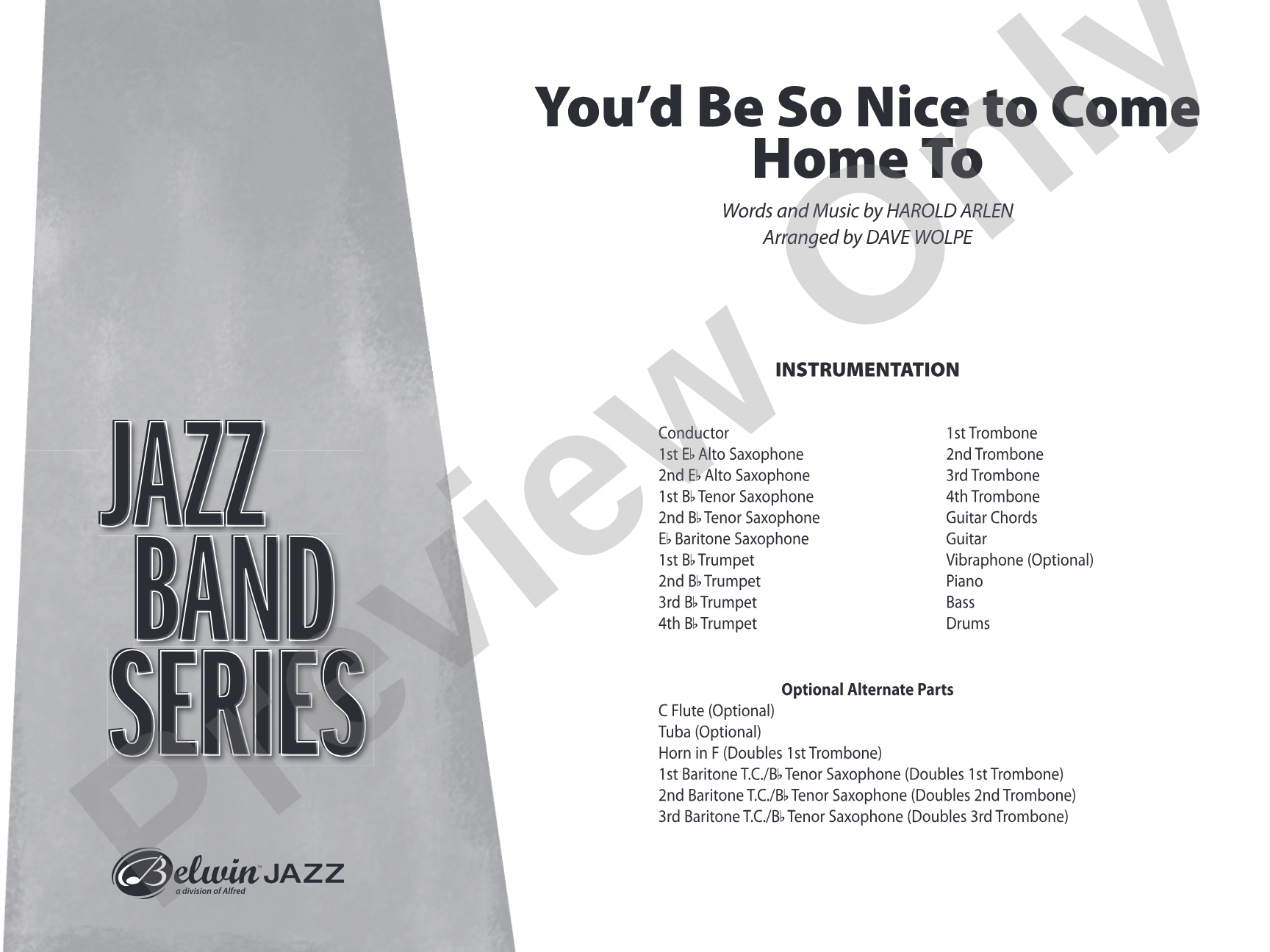
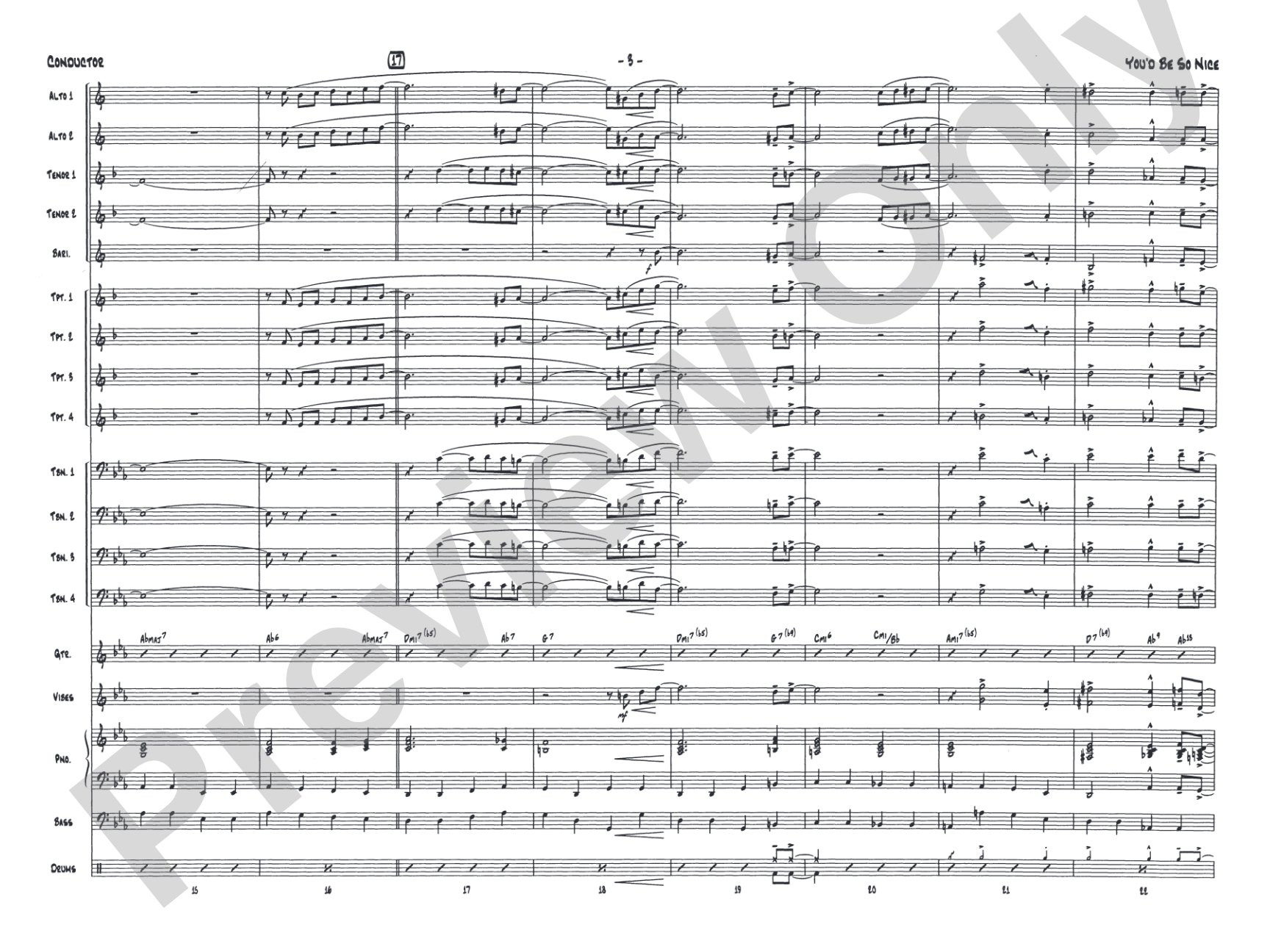
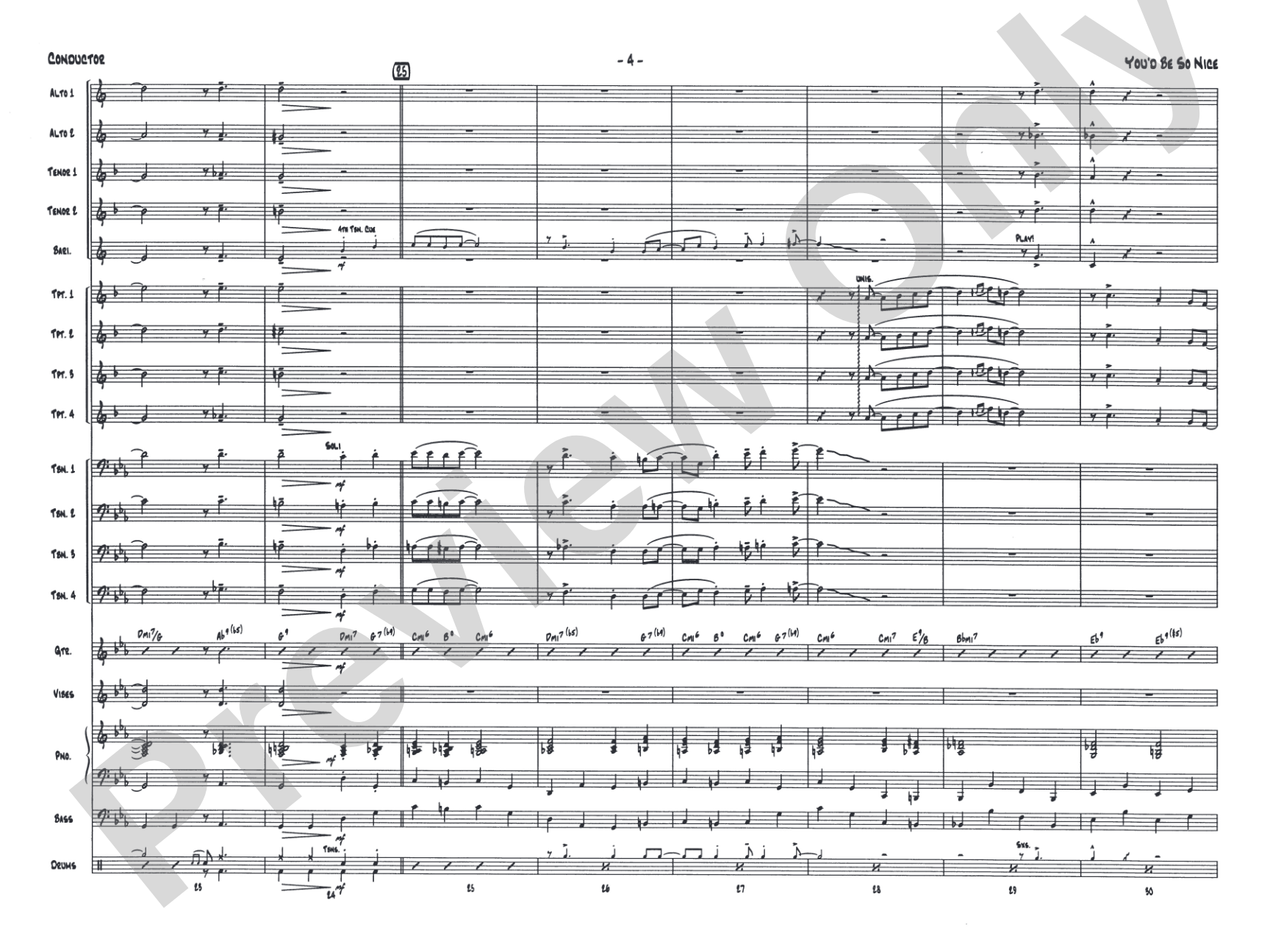
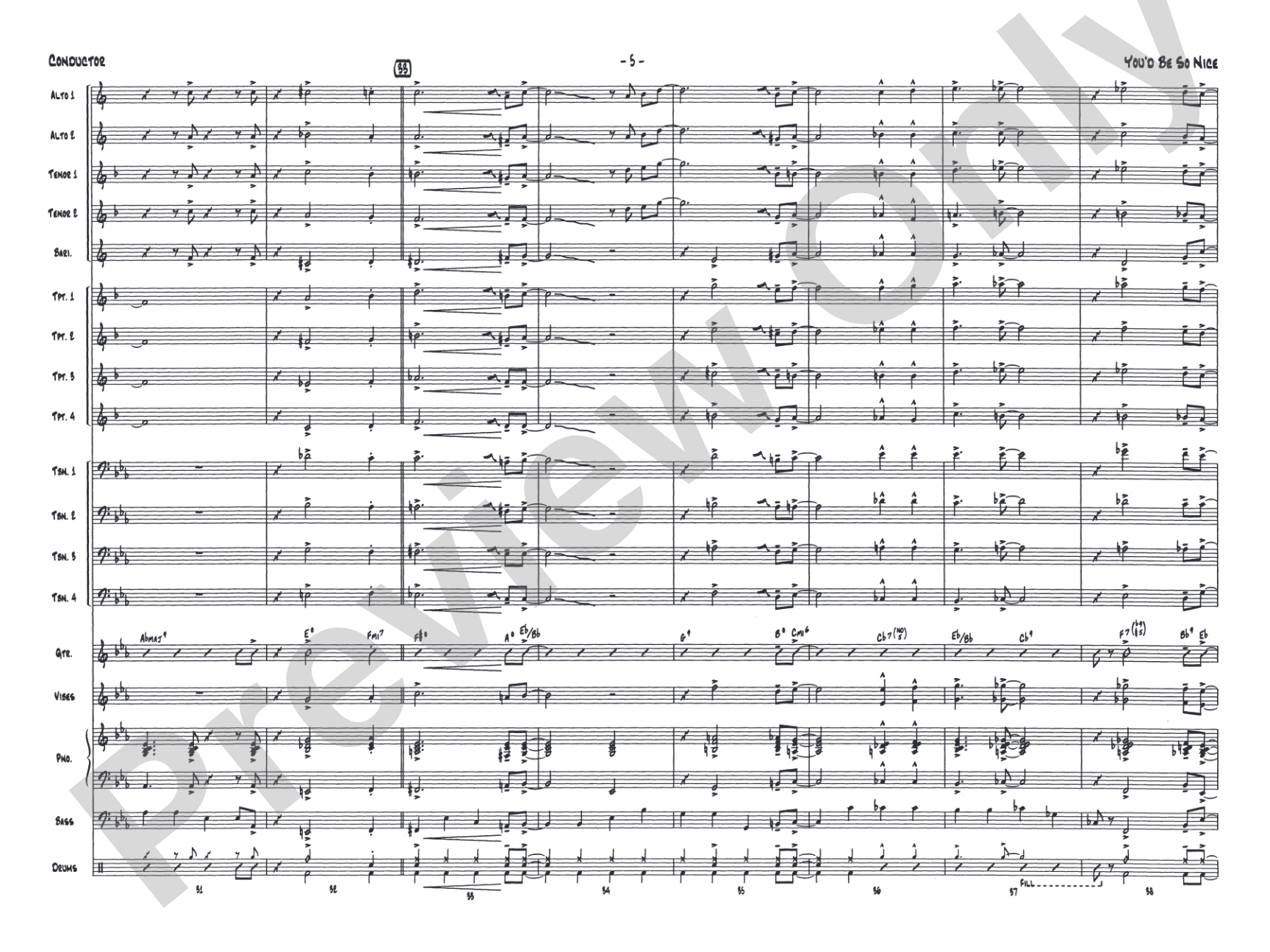
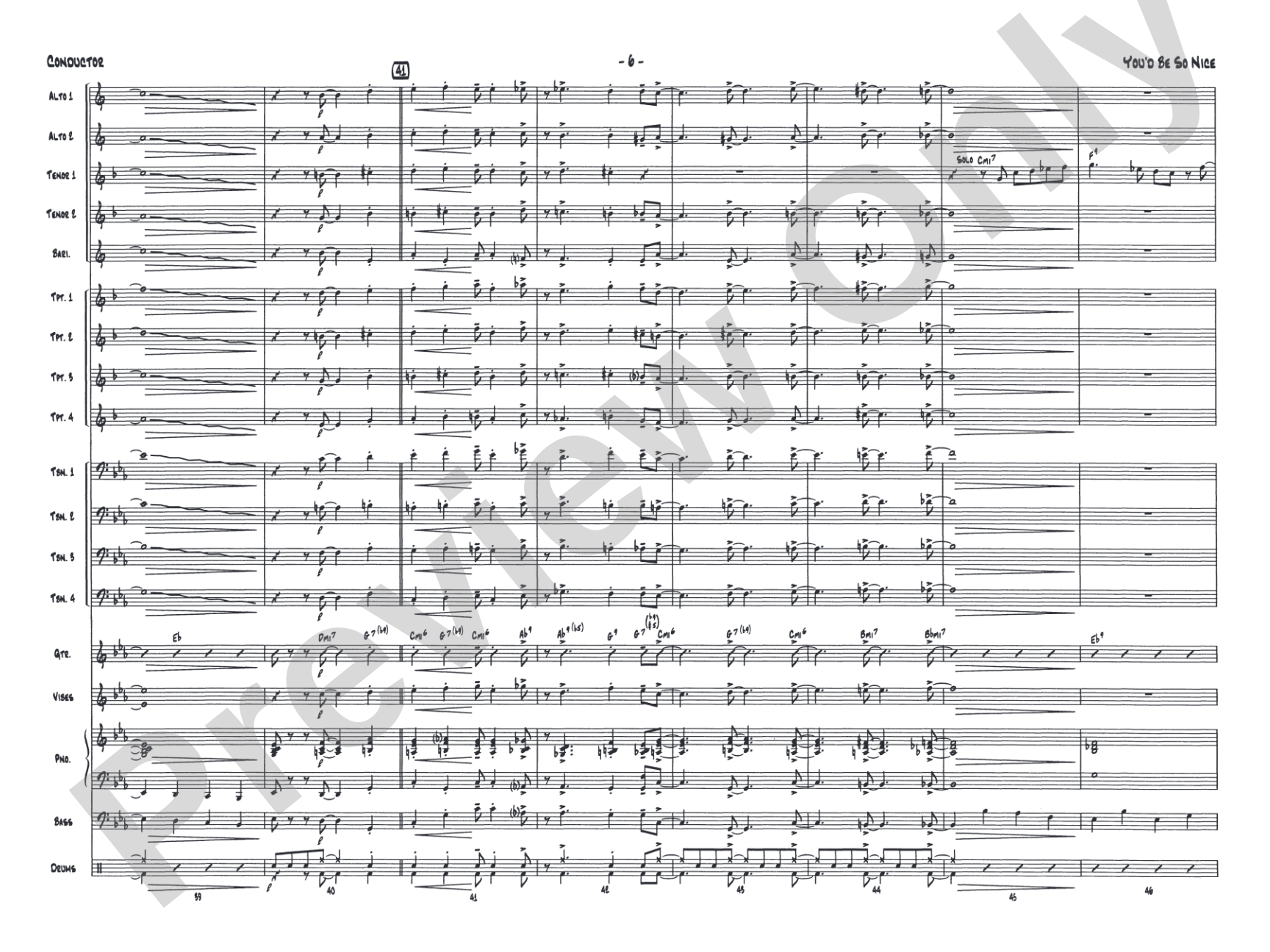
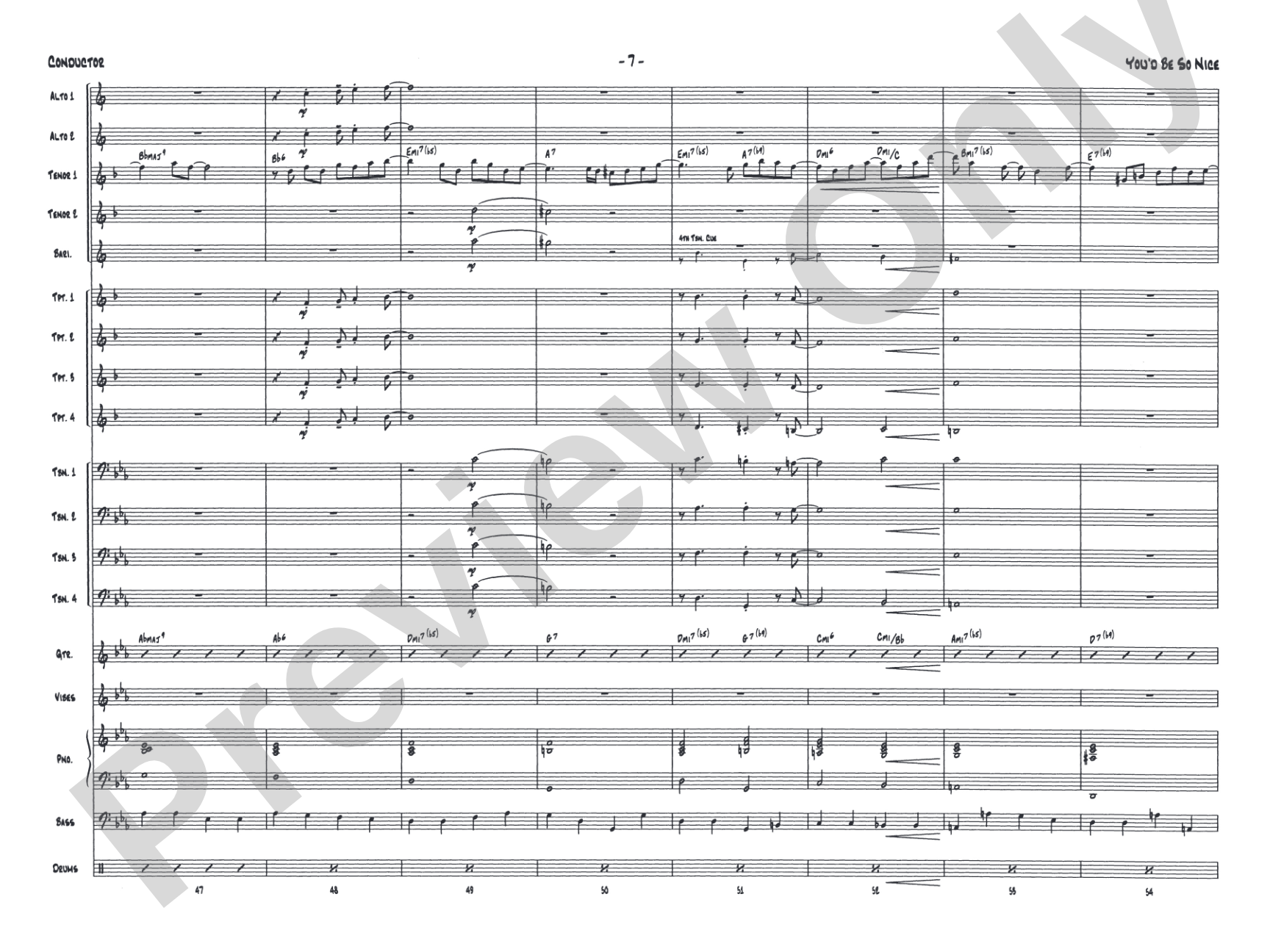
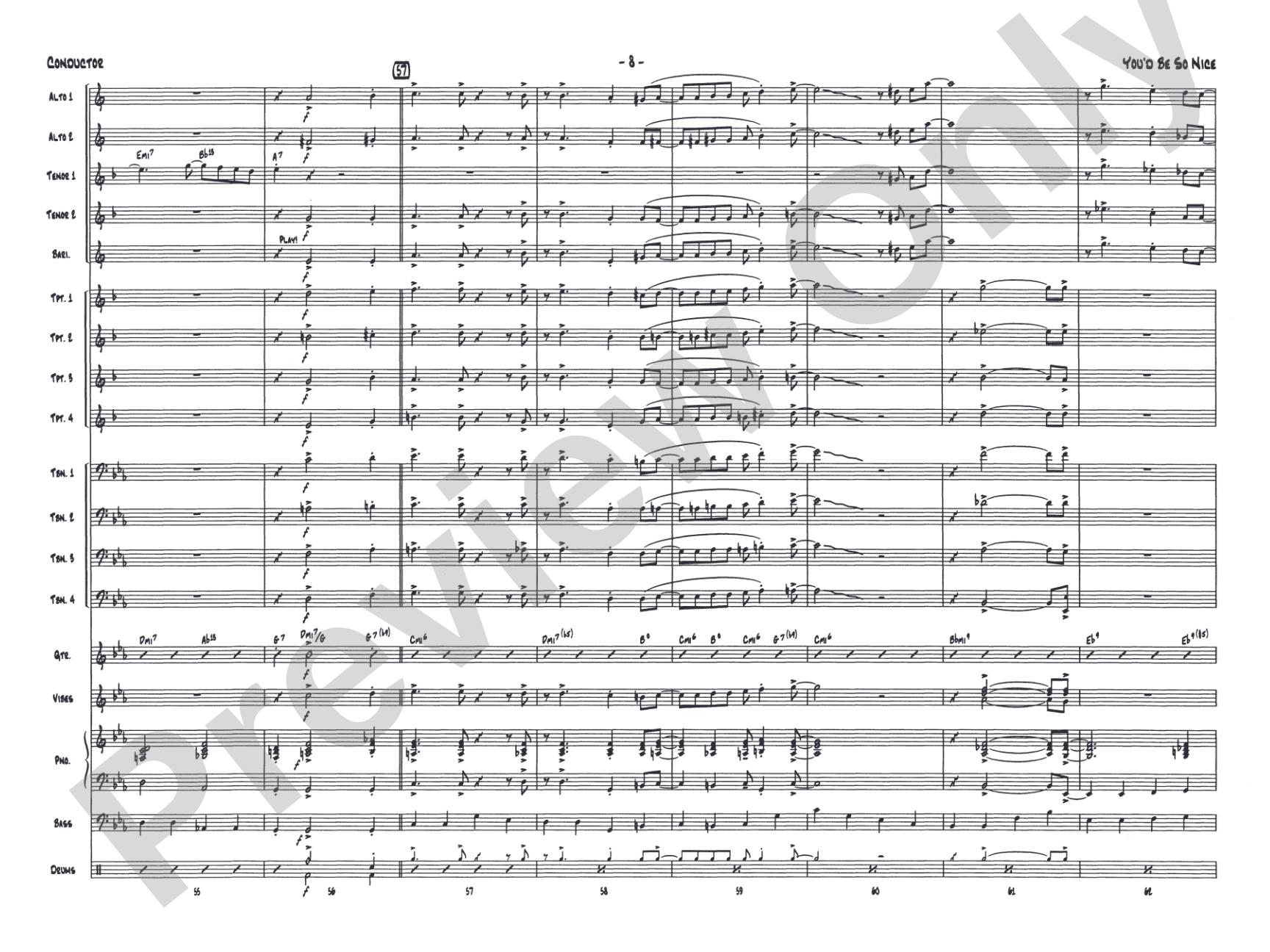
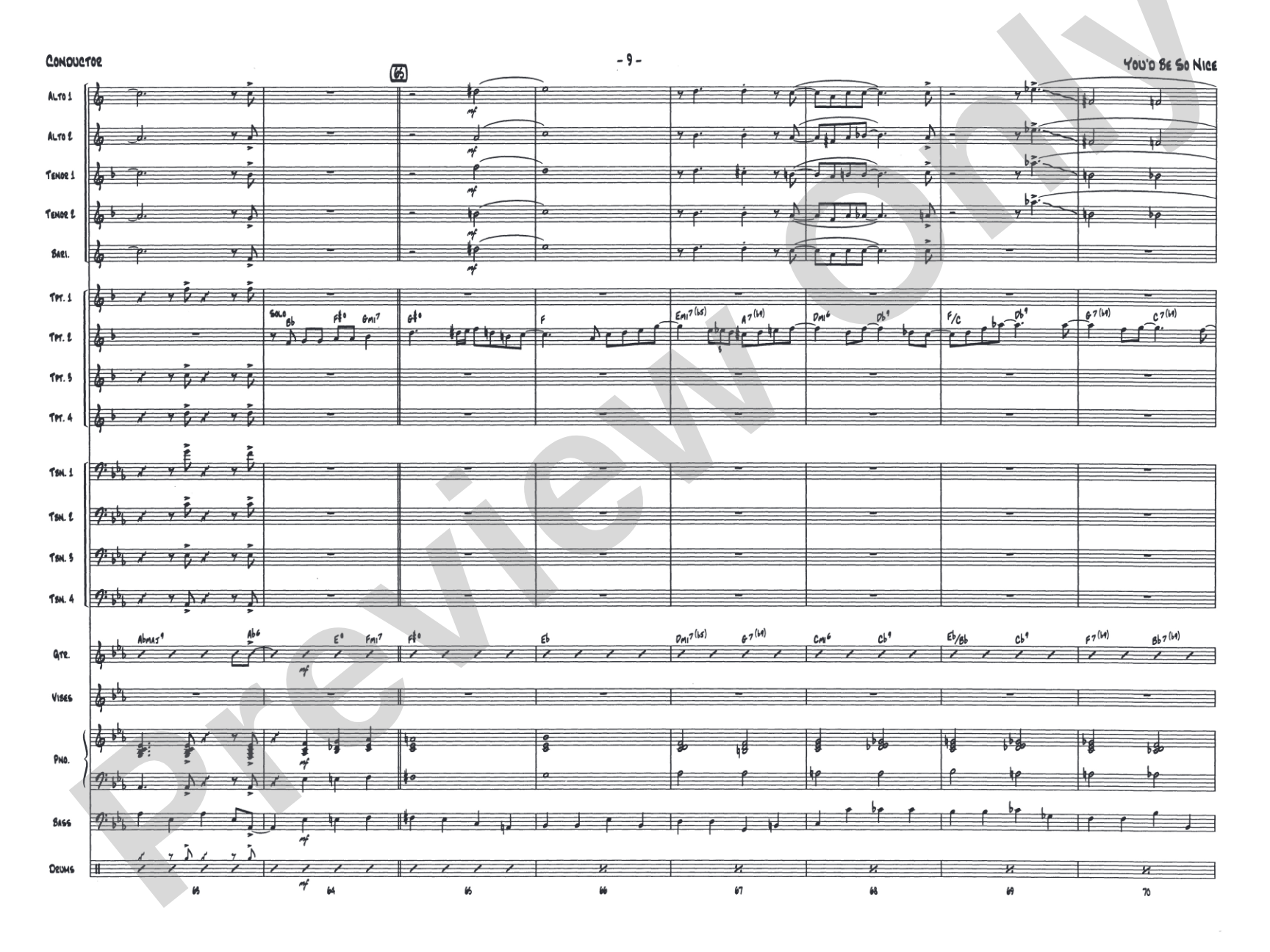
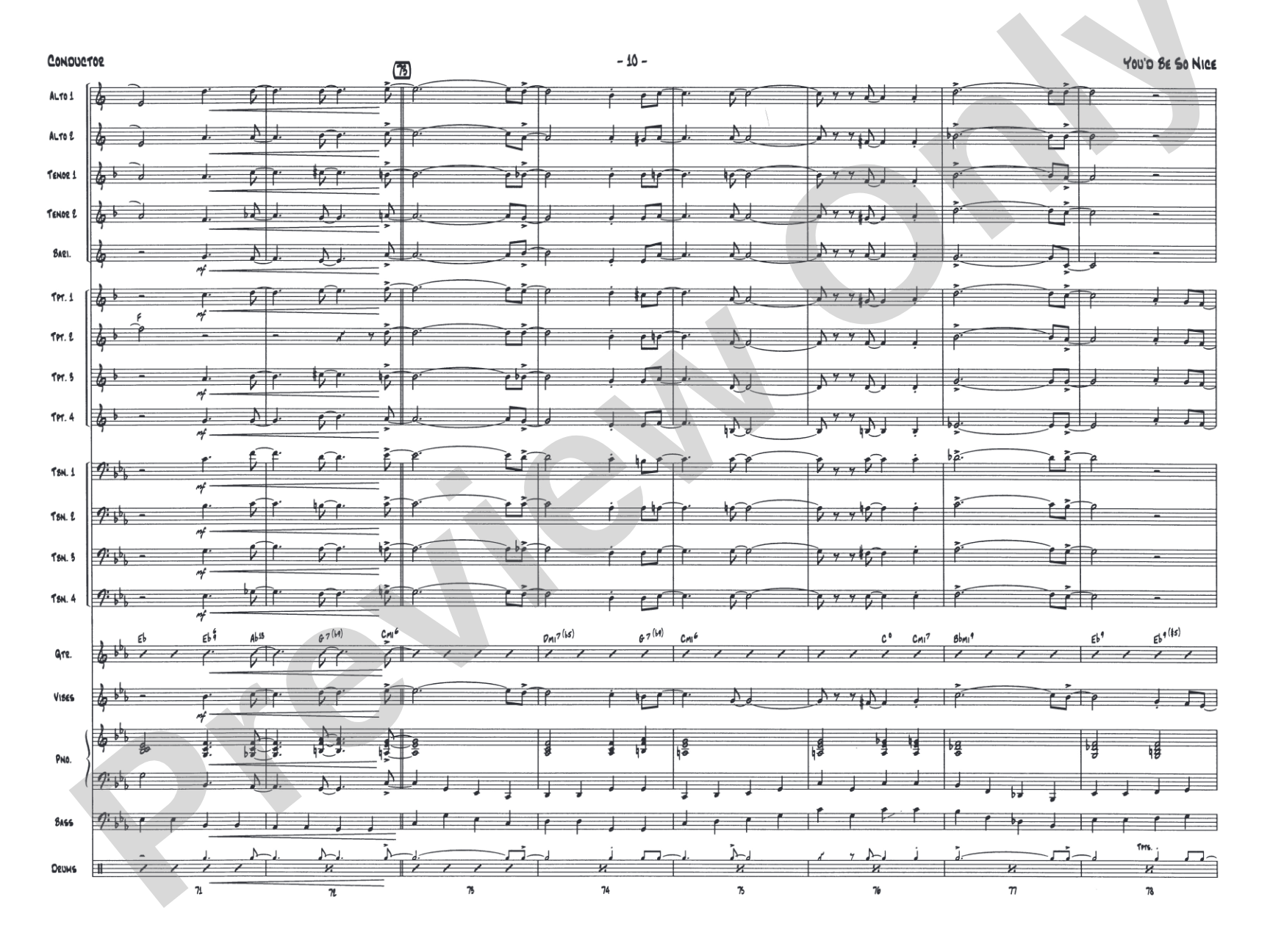
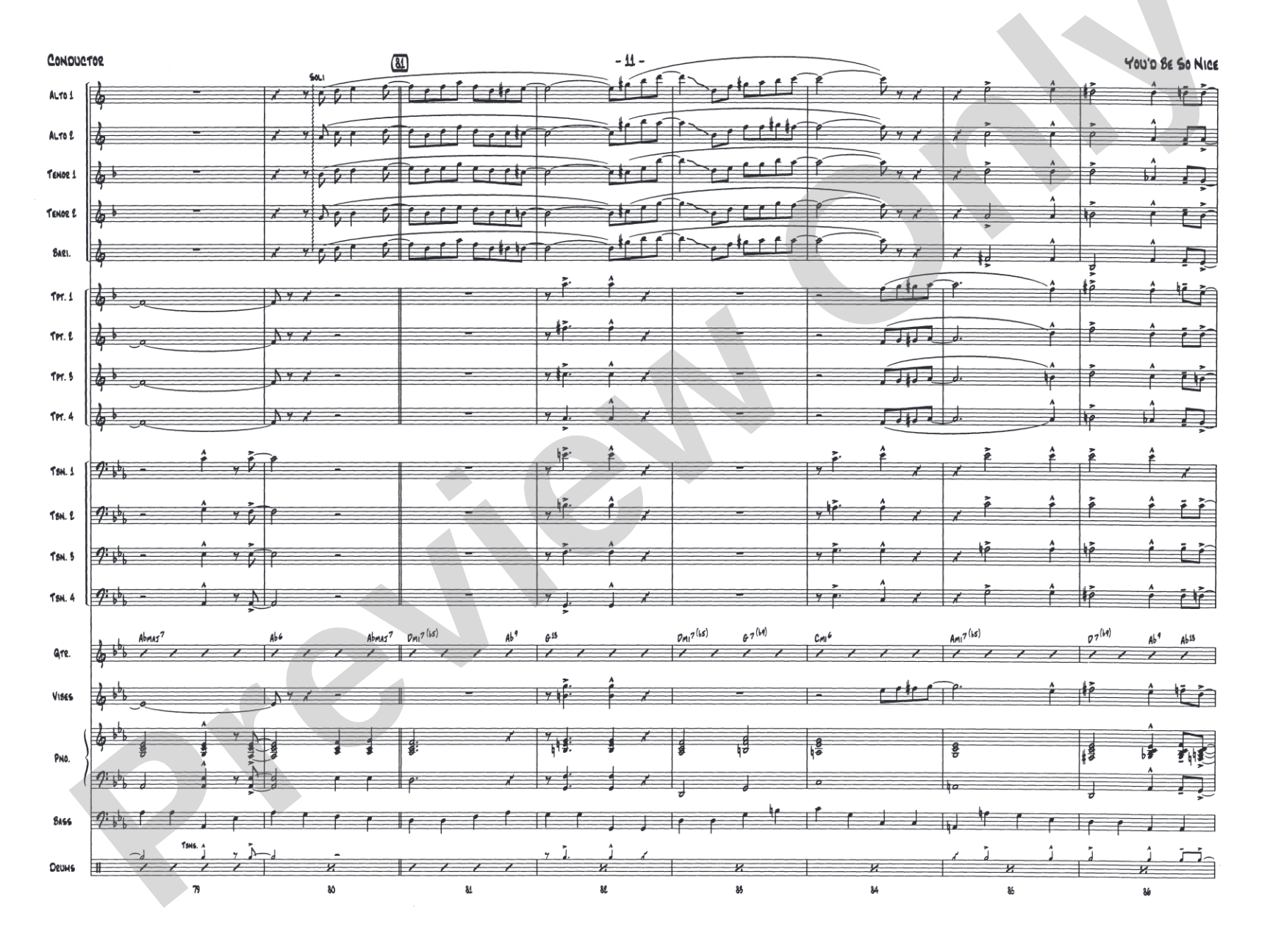
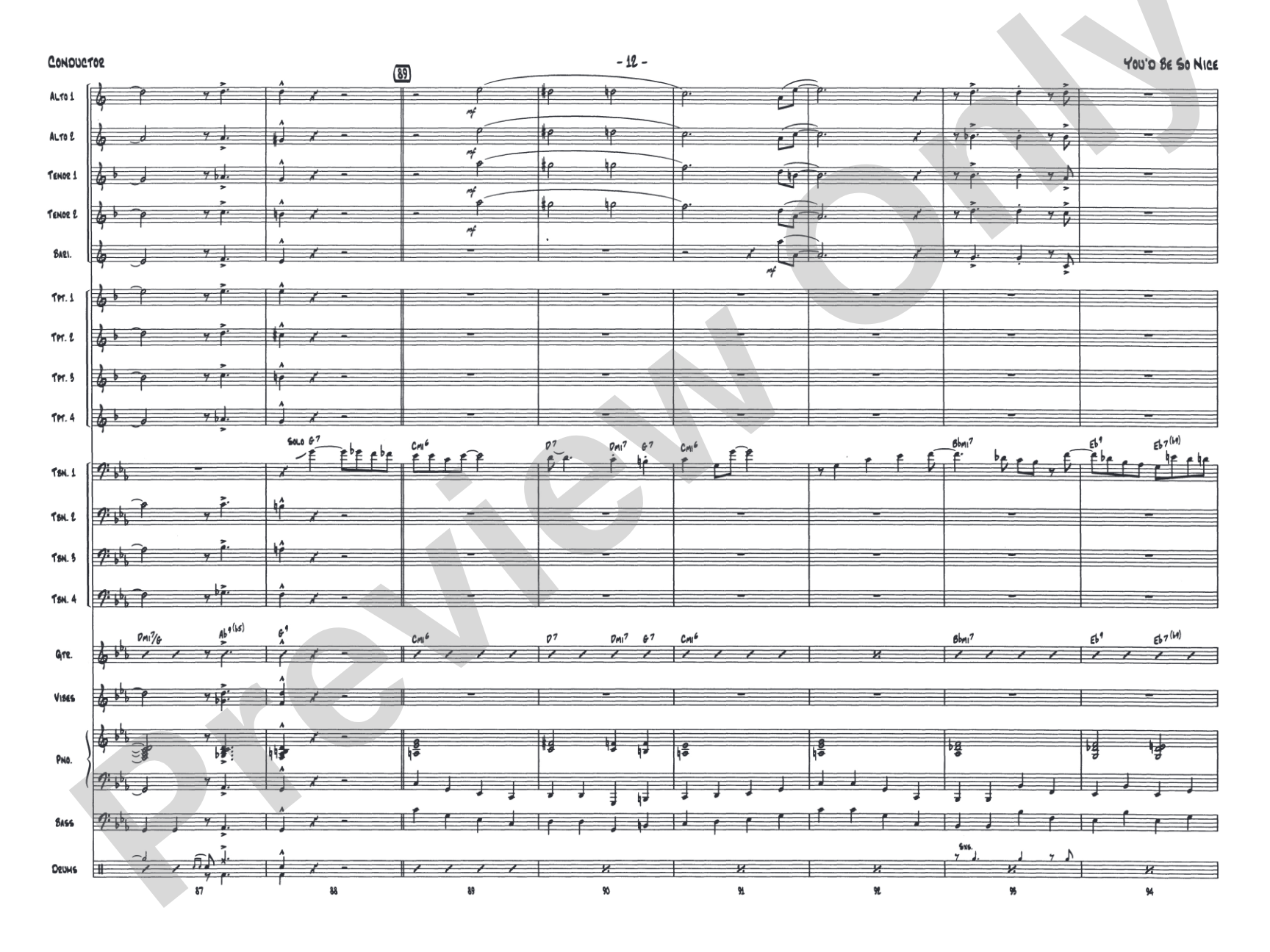
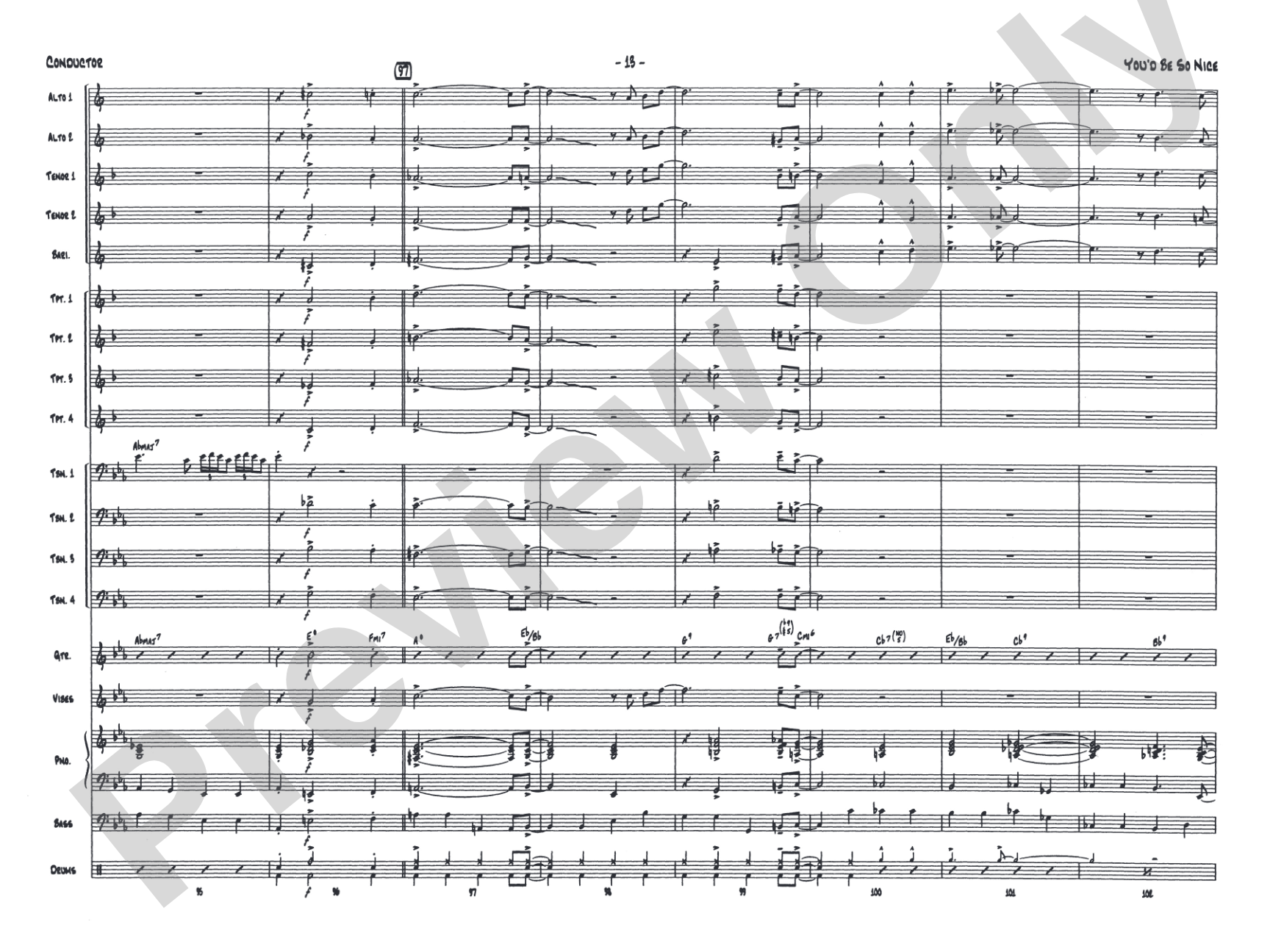
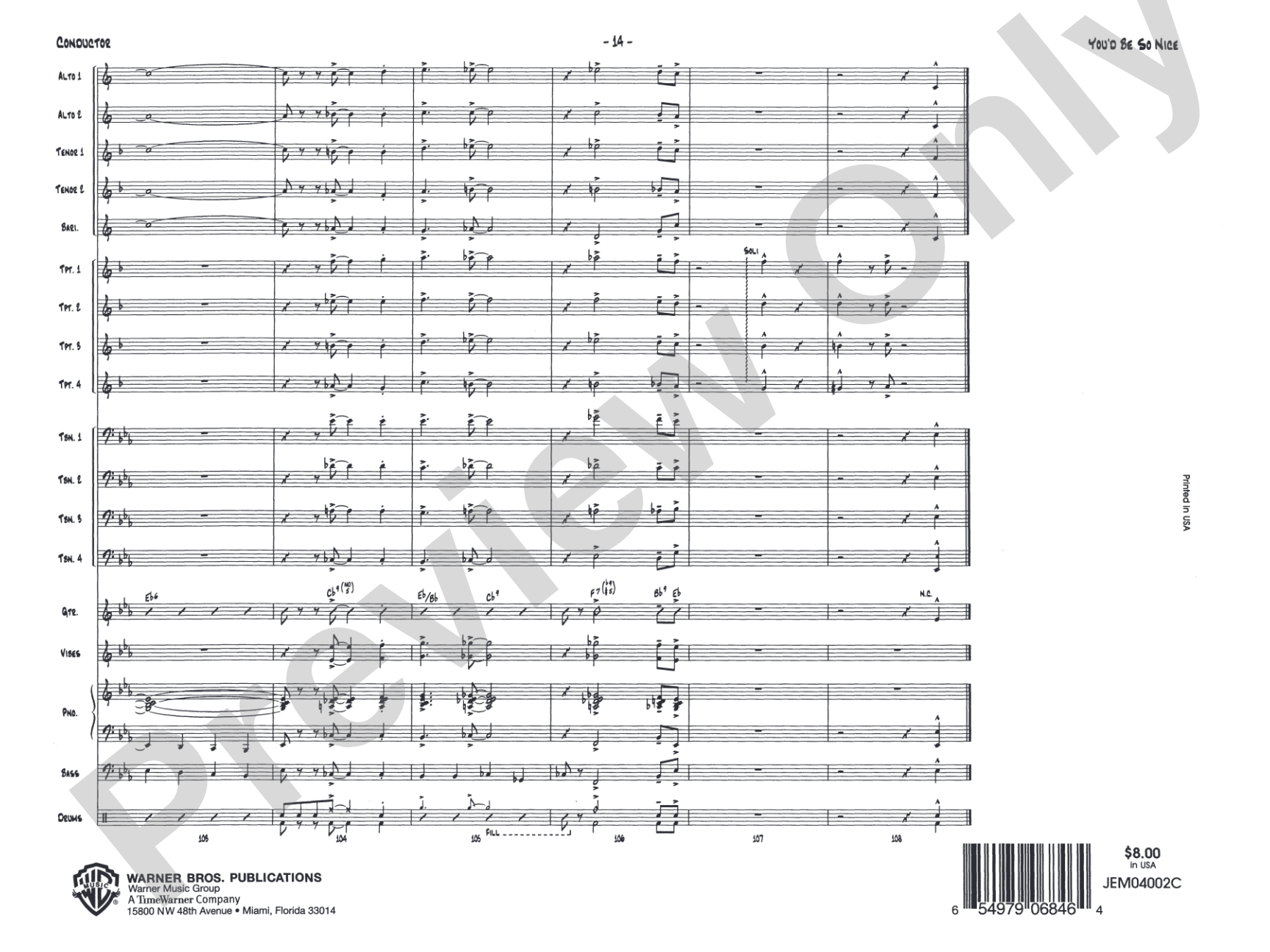

You'd Be So Nice to Come Home To: Score
Words and music by Cole Porter / arr. Dave Wolpe
Grade: 3 (Medium)
Item: 00-PR-0005554
$8.00
Pickup currently not available
Description
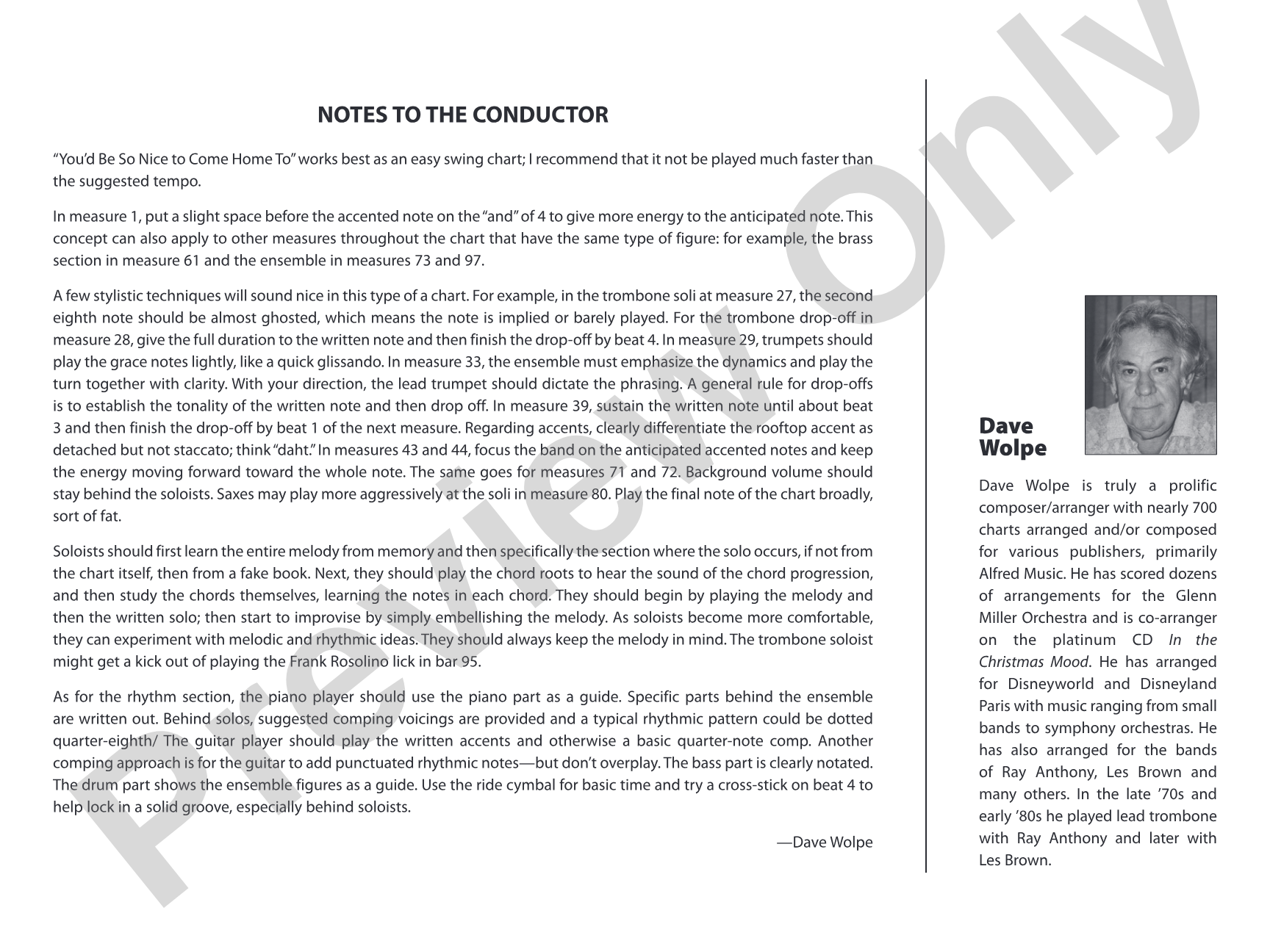
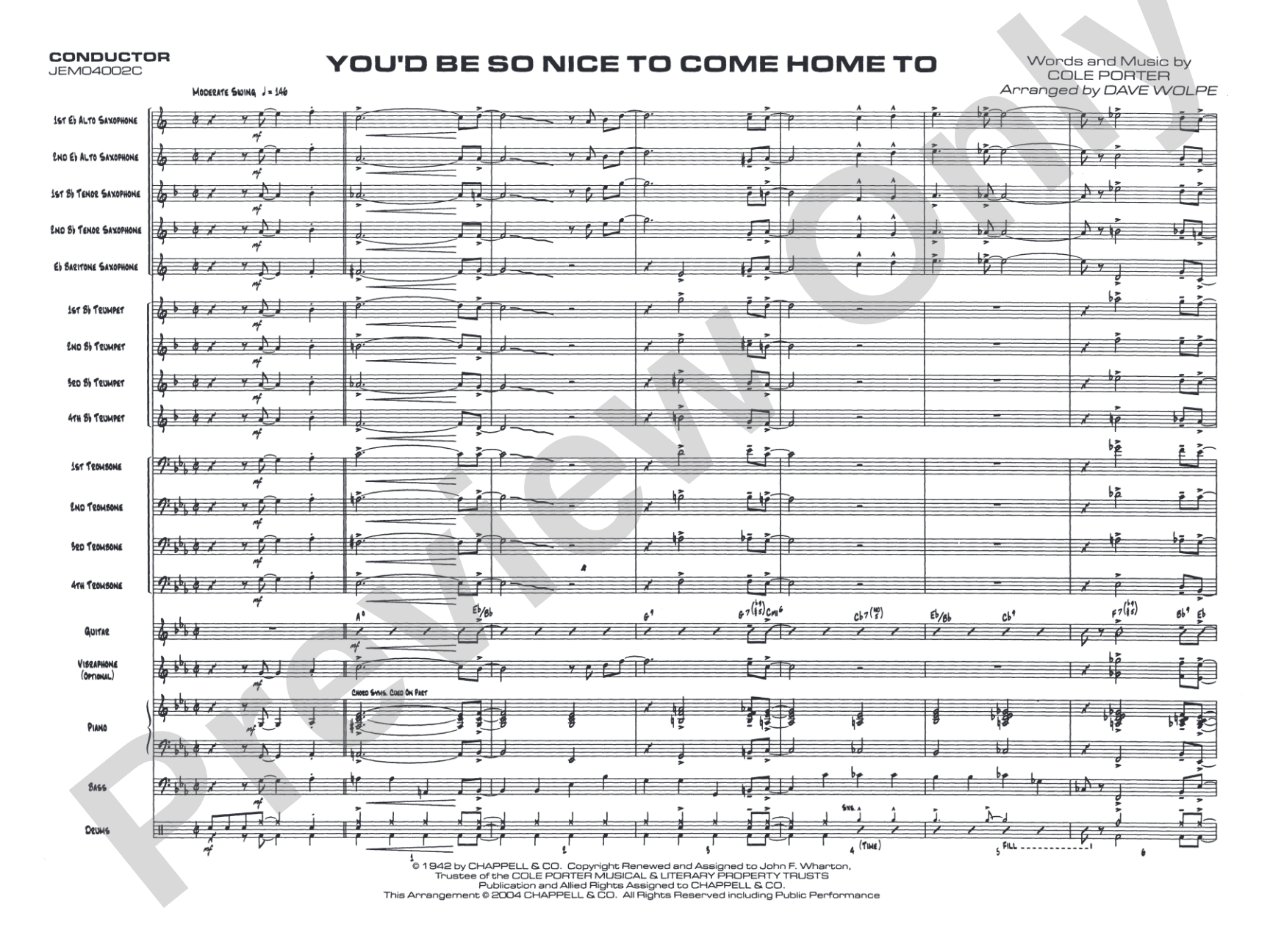
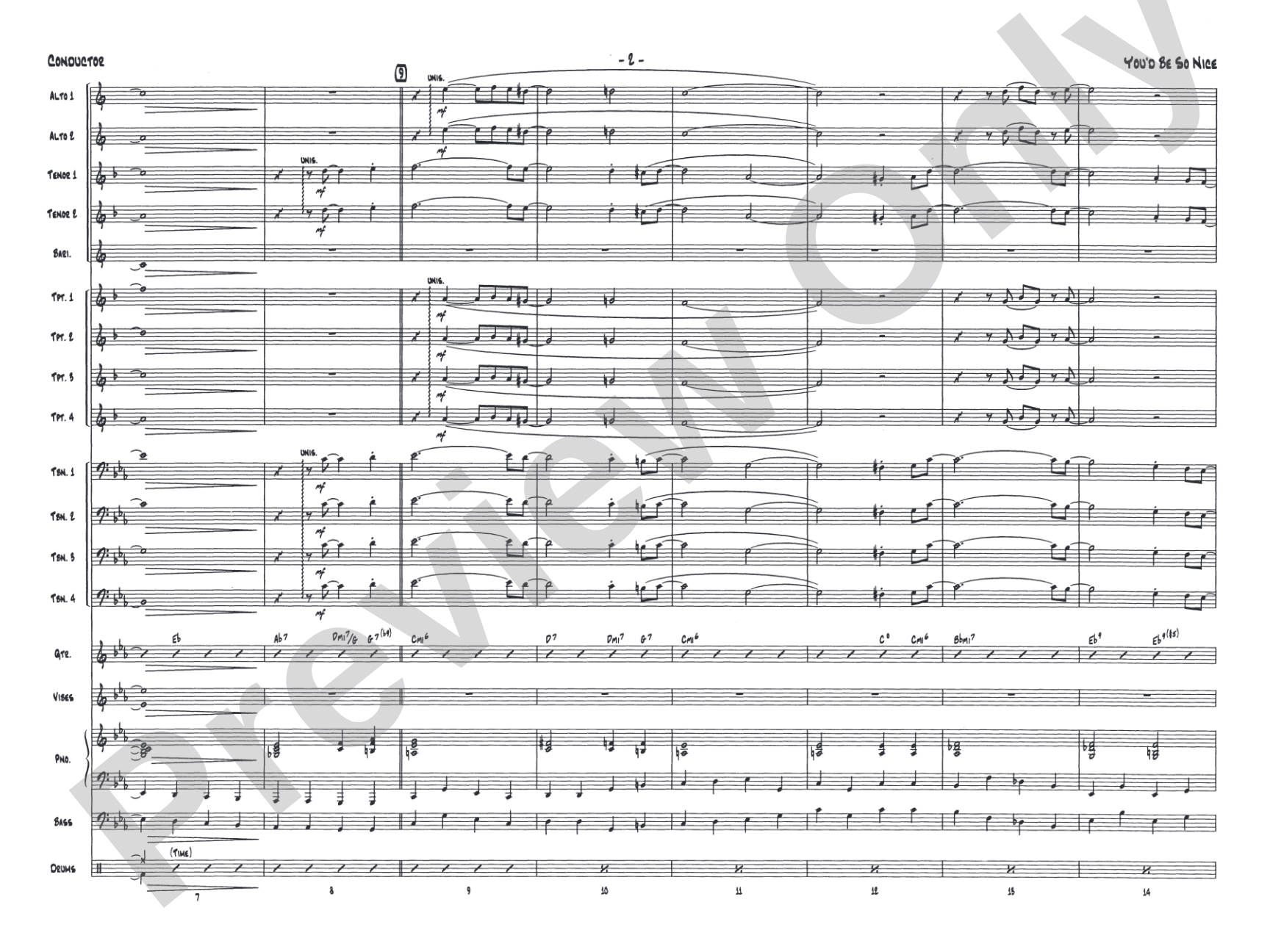
You can't beat a Cole Porter melody superbly arranged by Dave Wolpe. This chart has a moderate swing tempo to feature the ensemble, and written or ad-lib solos by 1st tenor sax, 2nd trumpet, and 1st trombone. Contrapuntal lines, solis, and plenty of Wolpe ensemble writing make this one of Dave's best charts. Clear articulation and rhythm section parts make for effective rehearsal and performance. (3:01)


Don't just read it, hear it, play along with it, and watch your students grow with it. In MakeMusic Cloud, You'd Be So Nice to Come Home To: Score comes alive with professional accompaniment, adjustable tempo, and built-in practice tools that turn solo practice into real progress.
Open in the Player
Jump straight in and assign it today.
Start Your Free Trial
Open this title and explore the full library in minutes.
Sample Audio
1
Audio File
--:--
0:00
0:00
Sample Video
No sample videos found.
Additional Details
Series:
Jazz Band Series
Publisher:
Alfred Music
Page Count:
104
SKU:
00-PR-0005554
More about this title
About the Composer: Cole Porter
Cole Porter (1891-1964) brought sophisticated wit and elegant melody to American musical theater and popular song. His compositions balance harmonic complexity with memorable, singable lines, making them enduring fixtures in jazz repertoire. Porter's songs became standards not by accident but by design: each melody and lyric pair was crafted with meticulous attention to craft, which is why jazz musicians continue to build arrangements around his work nearly a century later.
Why we love this
Dave Wolpe's arrangement respects Porter's melodic sophistication while building a chart that lets your ensemble shine. The balance of written material, strategic solos, and contrapuntal writing creates something that sounds fully realized in ensemble but never overwhelms individual voices. At Grade 3, it sits at that sweet spot where students feel the style and structure without drowning in technical complexity.
What to expect
Sophisticated and swinging. Wolpe honors Porter's elegant melodic gift while adding textural layers that keep the ensemble engaged throughout. The moderate tempo and clear part writing create space for individual voices to emerge without losing the collective energy.
Who it's for
Jazz ensemble directors seeking a Grade 3 chart with serious arranging credentials and real solo opportunities. This works for groups that have basic swing feel and section balance in place and are ready to explore ensemble writing beyond the melody-and-comping model.
How to get the most out of it
- Establish the swing feel in the rhythm section before tackling the ensemble lines. Clean, articulate comping and a steady walking bass anchor everything that happens on top.
- Prepare your soloists (1st tenor sax, 2nd trumpet, 1st trombone) by mapping out whether they're reading from the chart or taking an ad-lib chorus. Clarify bar counts and ensemble re-entry cues so soloists know exactly when to come back in.
- Listen for balance between the contrapuntal lines and solis. These aren't background parts; they carry the harmonic and melodic conversation. Each section needs to hear itself without drowning out the feature.
- The moderate tempo should breathe. Avoid pushing the time; let the swing feel settle and the melody speak.
How to use it
Program this alongside other swing-era standards to show how different arrangers approach the same repertoire, or pair it with a vocal feature if you have a capable singer. It sits comfortably in a concert that mixes jazz classics with contemporary work, and the 3-minute duration makes it a flexible fit in any set.
Skills your students will build
- Swing articulation and feel in ensemble context
- Comping and rhythm section communication
- Reading contrapuntal lines while maintaining harmonic awareness
- Solo preparation and managing written-to-ad-lib transitions
- Dynamic balance between ensemble writing and featured parts