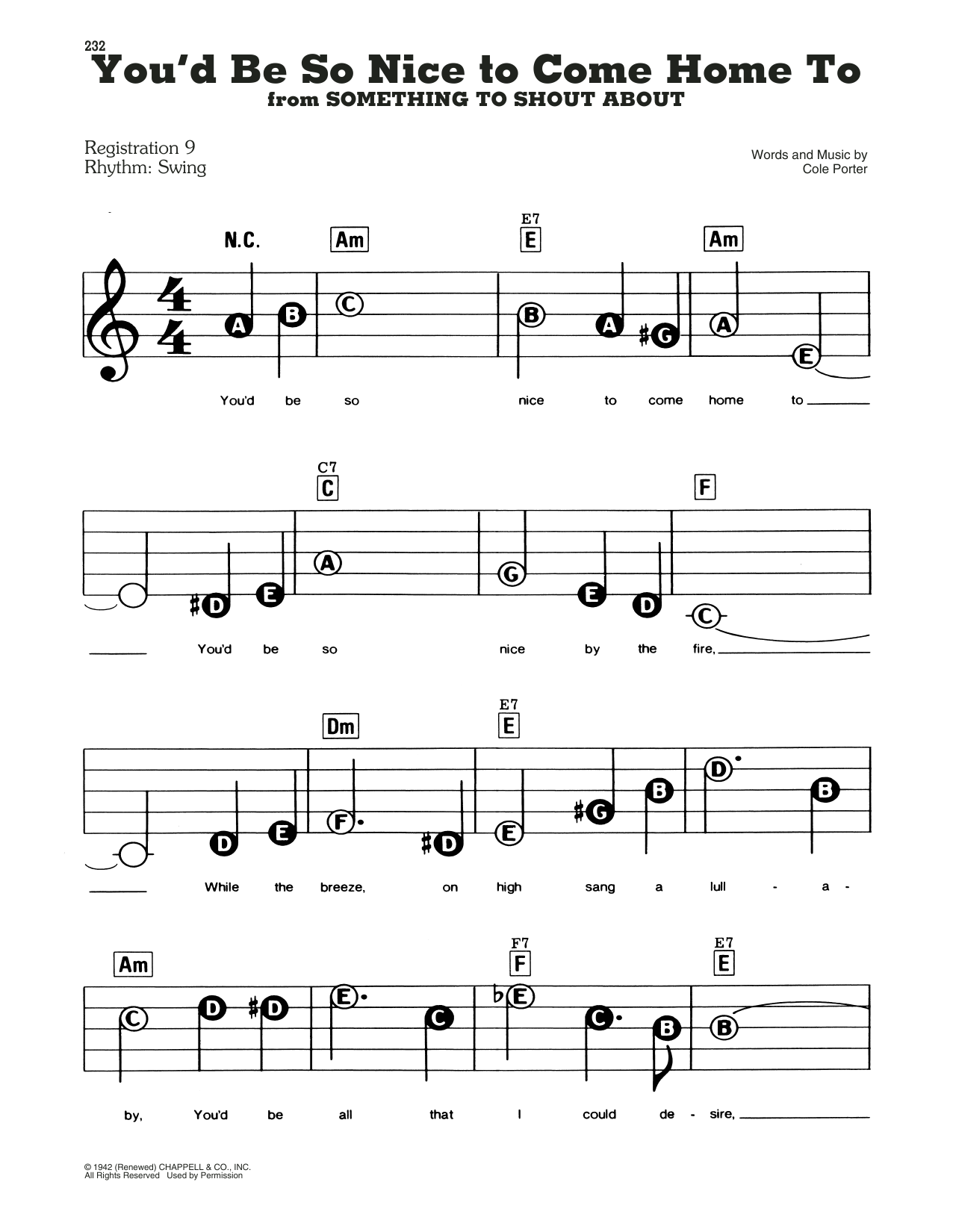
You'd Be So Nice To Come Home To Sheet Music Preview

You'd Be So Nice To Come Home To: E-Z Play Today

As performed by Frank Sinatra

Item: 35-DS00447947

Digital Download
$4.99
Description

You'd Be So Nice To Come Home To: E-Z Play Today isn't in MakeMusic Cloud just yet...but it could be. Let us know you'd like to see it, and you'll help shape what comes next. In the meantime, start a free trial and dive into thousands of interactive titles your students can play along with today.

Sample Audio
No sample audio found.
Sample Video
Additional Details
Publisher: Hal Leonard
Page Count: 2
SKU: 35-DS00447947

More about this title

About the Artist: Frank Sinatra

Frank Sinatra shaped American popular music across seven decades, establishing himself as one of the 20th century's most influential vocalists and interpreters of the American songbook. His approach to phrasing, dynamics, and emotional storytelling set the standard for jazz singers and continues to influence how musicians across all genres approach text and melody.

Why we love this

Sinatra's interpretations reveal how great musicians shape melody through rubato, dynamics, and harmonic awareness. This E-Z Play arrangement makes the song's sophisticated harmony accessible without oversimplifying it, giving students a direct window into how a master vocalist communicates emotion through musical choices.

What to expect

Wistful and intimate, with the character of late evening conversation. The harmony supports vulnerability; warm chord substitutions and gentle voice leading create a setting that invites both quiet reflection and subtle expressiveness.

Who it's for

Piano students and teachers exploring the jazz standard repertoire, particularly those ready to move beyond lead sheet reading into fuller arrangements. Singers learning to work with pianists on this classic will benefit from the written accompaniment as both a teaching tool and a performance reference.

How to get the most out of it

  • Listen closely to Sinatra's vocal phrasing and mirror his rhythmic flexibility in the accompaniment; he rarely plays strictly on the beat, and your piano work should breathe with that same independence.
  • Shape the harmonic movement by voicing the block chords with slight variations in inversion and register; consistent voicing flattens the emotional arc of this introspective song.
  • Allow space around the melody rather than filling every moment with accompaniment. This piece rewards restraint.

How to use it

Pair this with other Sinatra standards or Cole Porter material in a concert featuring American song. It works equally well as a solo performance piece or as accompaniment for a singer in a chamber or jazz ensemble setting.

Skills your students will build

  • Voicing jazz chord extensions and substitutions
  • Reading and interpreting lead sheet notation
  • Playing with rhythmic independence and flexibility
  • Accompanying singers with appropriate dynamic support
  • Shaping harmonic progressions for emotional effect

You May Also Like