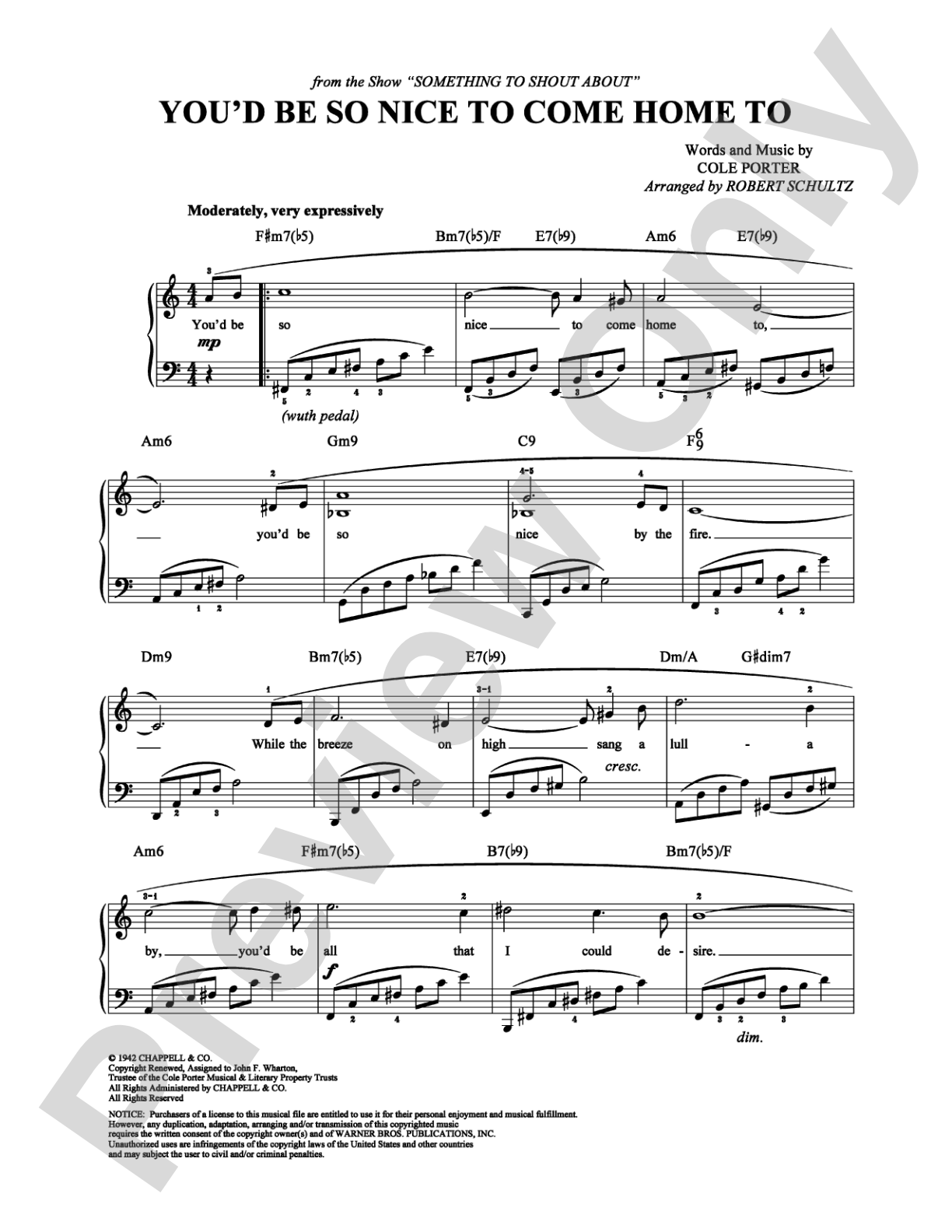
You'd Be So Nice To Come Home To: Piano/Vocal/Chords Digital Sheet Music

You'd Be So Nice To Come Home To: Piano/Vocal/Chords Digital Sheet Music

Cole Porter, Frank Sinatra

Item: 00-PS-0009212

Digital Download
$3.99
Description

You'd Be So Nice To Come Home To: Piano/Vocal/Chords Digital Sheet Music isn't in MakeMusic Cloud just yet...but it could be. Let us know you'd like to see it, and you'll help shape what comes next. In the meantime, start a free trial and dive into thousands of interactive titles your students can play along with today.

Sample Audio
No sample audio found.
Sample Video
Additional Details
SKU: 00-PS-0009212

More about this title

About the Artist: Frank Sinatra

Frank Sinatra (1915-1998) defined American popular song for generations. His phrasing, rhythmic flexibility, and interpretive depth set the standard for jazz-inflected vocal performance that music educators continue to study and teach.

Why we love this

This standard offers singers a direct connection to one of the most influential vocal interpreters in American music history. The accessible melody and timeless harmonic language make it ideal for students exploring jazz phrasing and rubato within a familiar, beautifully crafted framework.

What to expect

Warm, inviting, and tinged with longing. The melody floats over gentle harmonic movement with an intimate quality that feels like a personal conversation rather than a performance. Every moment radiates the comfort of belonging.

Who it's for

Vocalists preparing for jazz or popular music performance who want to study phrasing from one of the masters, and pianists seeking to understand how accompaniment functions within the Great American Songbook. This is equally valuable for music students analyzing standard form and harmonic language.

How to get the most out of it

  • Lean into the space between phrases rather than rushing them; Sinatra's mastery lay in what he left unsaid.
  • Experiment with the piano part's flexibility in tempo and dynamics to support the vocalist's interpretation rather than lock into strict time.
  • Pay close attention to how the harmonic movement supports emotional storytelling; each chord change carries meaning.
  • Use the chord symbols to explore contemporary voicings that honor the song's era while bringing your own sound to it.

How to use it

Pair this with other standards of the same era to create a concert segment exploring classic American songwriting. It works equally well as a solo recital piece or as part of a jazz ensemble concert that connects historical performance practice to contemporary interpretation.

Skills your students will build

  • Phrasing with rubato and lyrical flexibility in jazz idiom
  • Reading and interpreting chord symbols for improvisation and reharmonization
  • Understanding form and harmonic analysis in 32-bar song structure
  • Vocal technique for legit singing with rhythmic independence from the piano

You May Also Like