
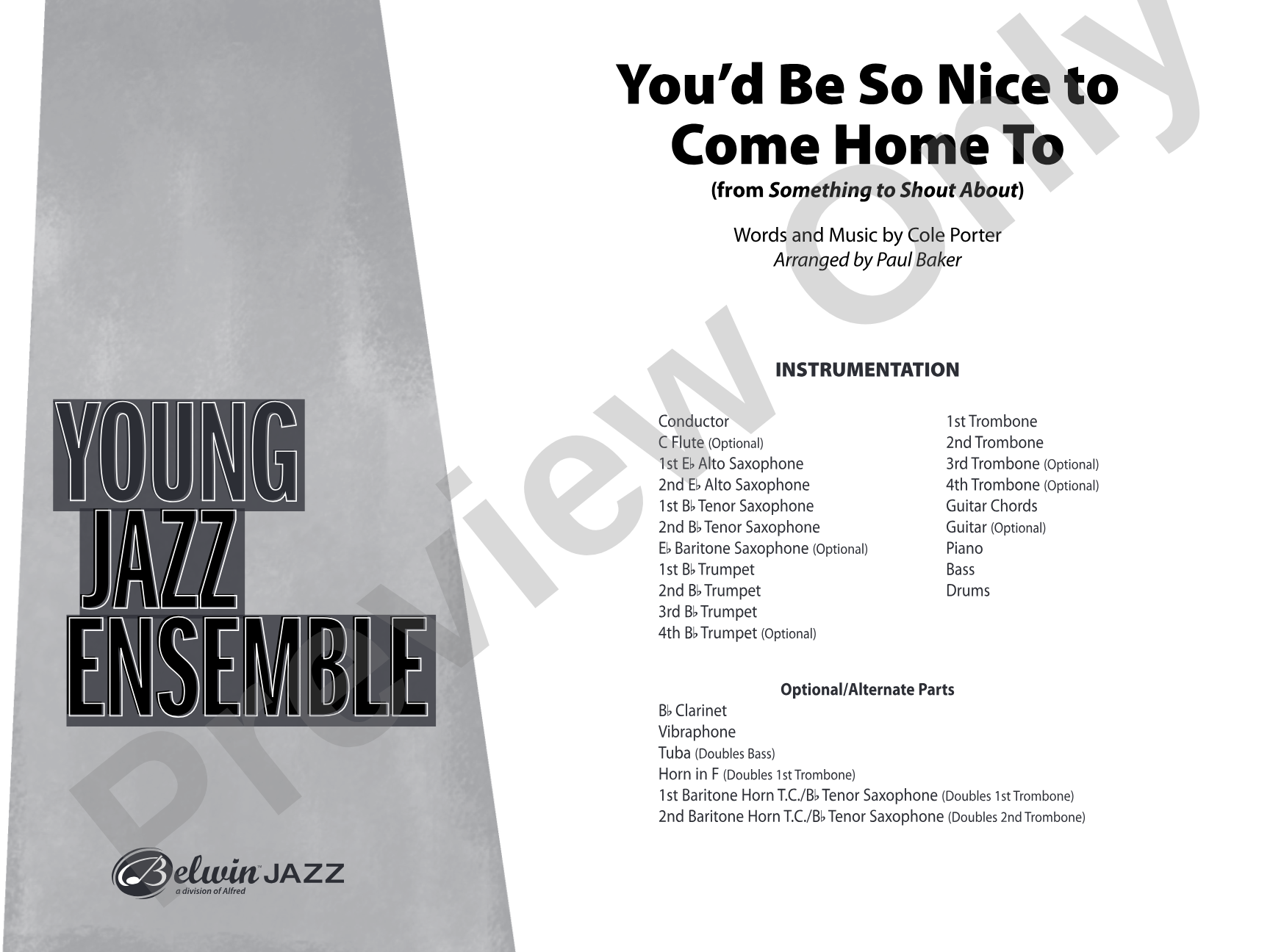
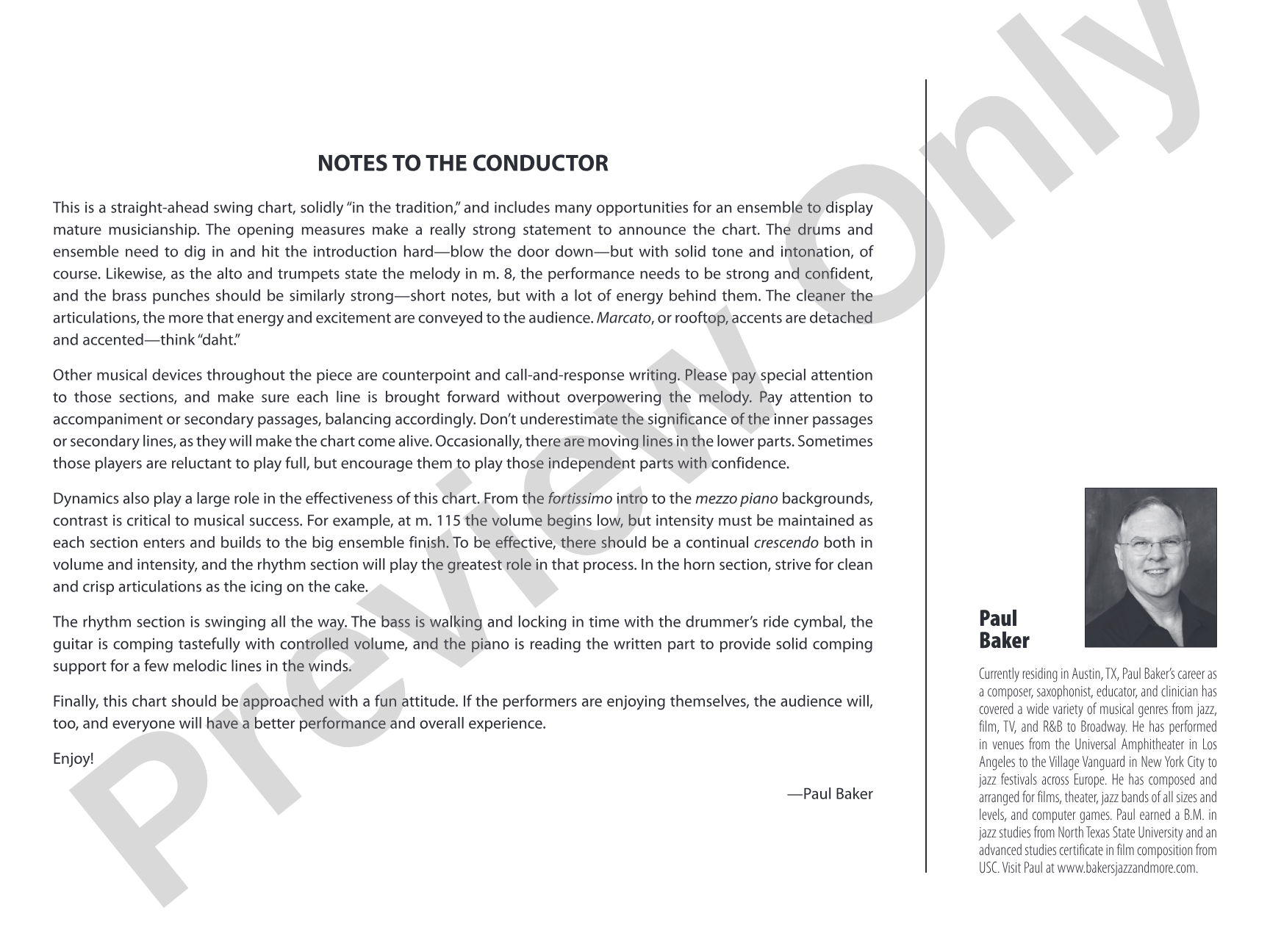
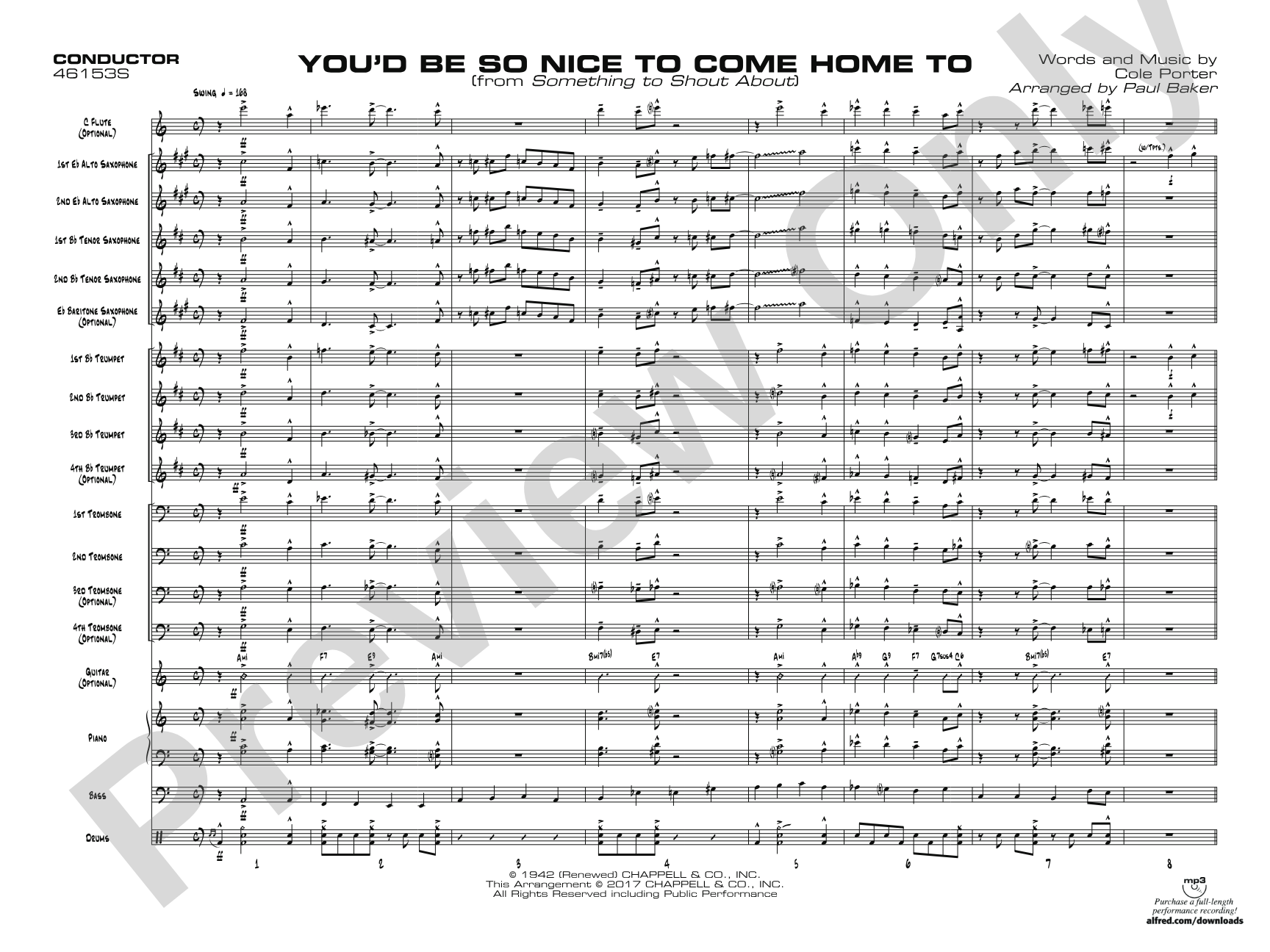
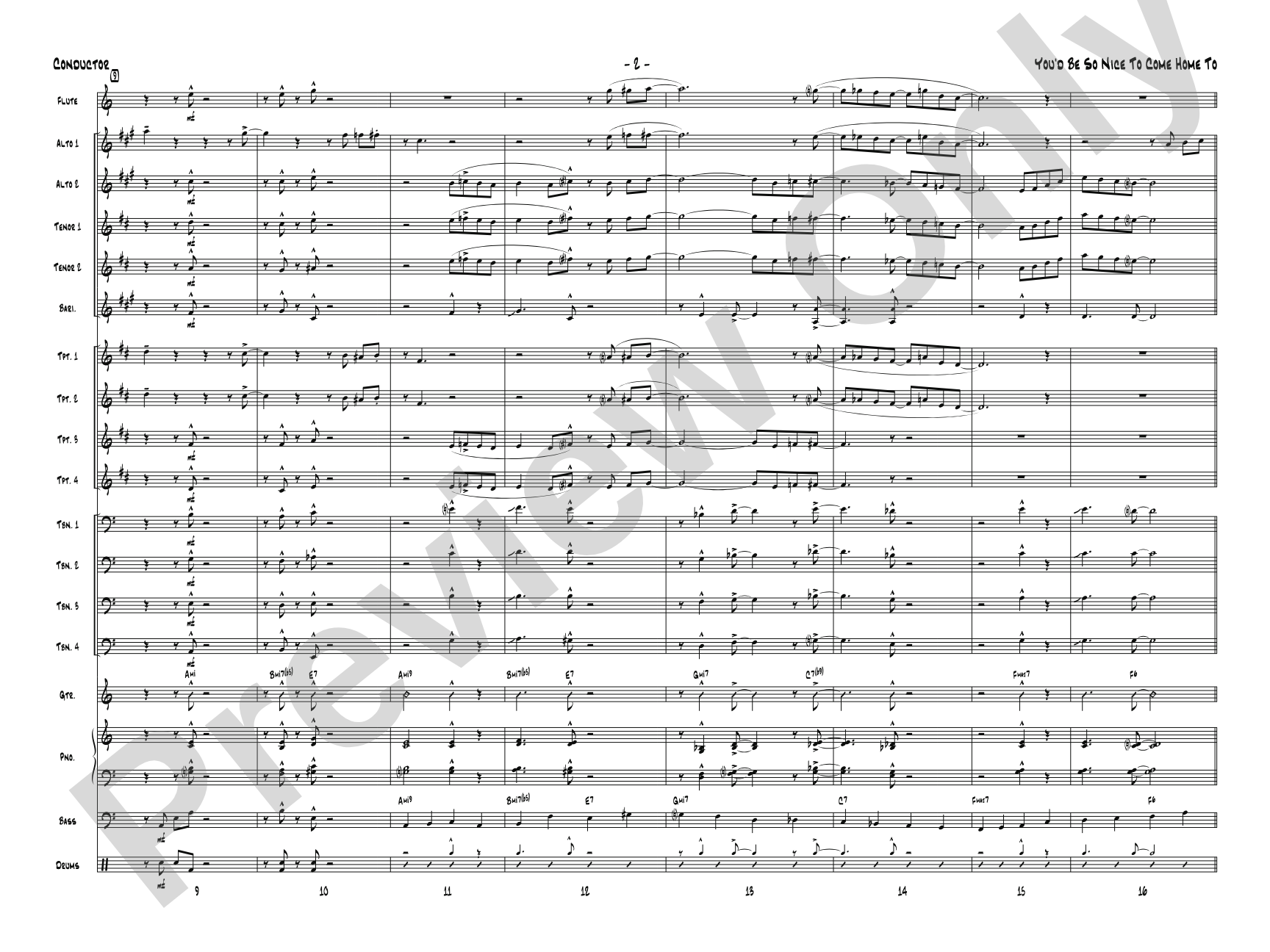
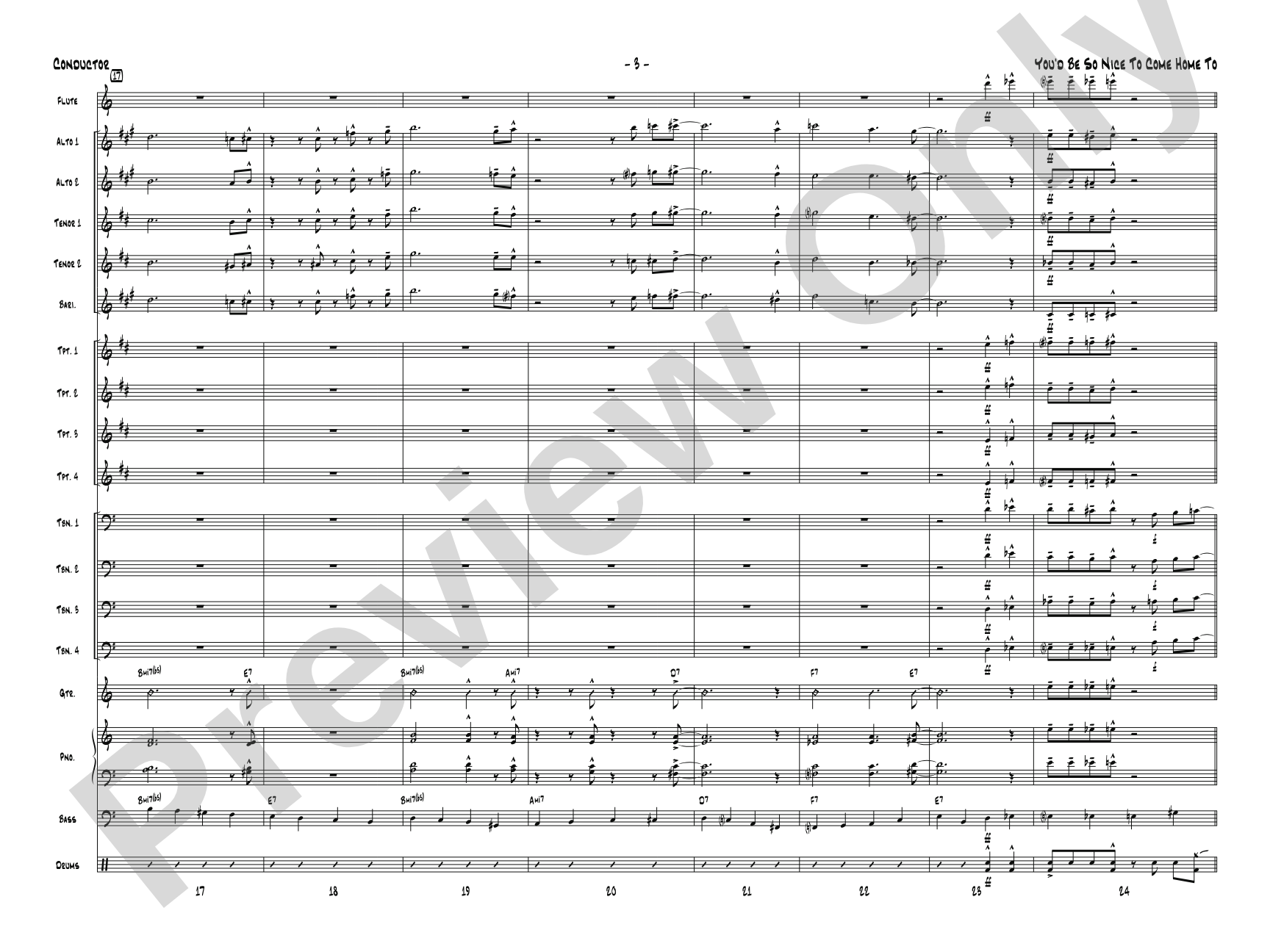
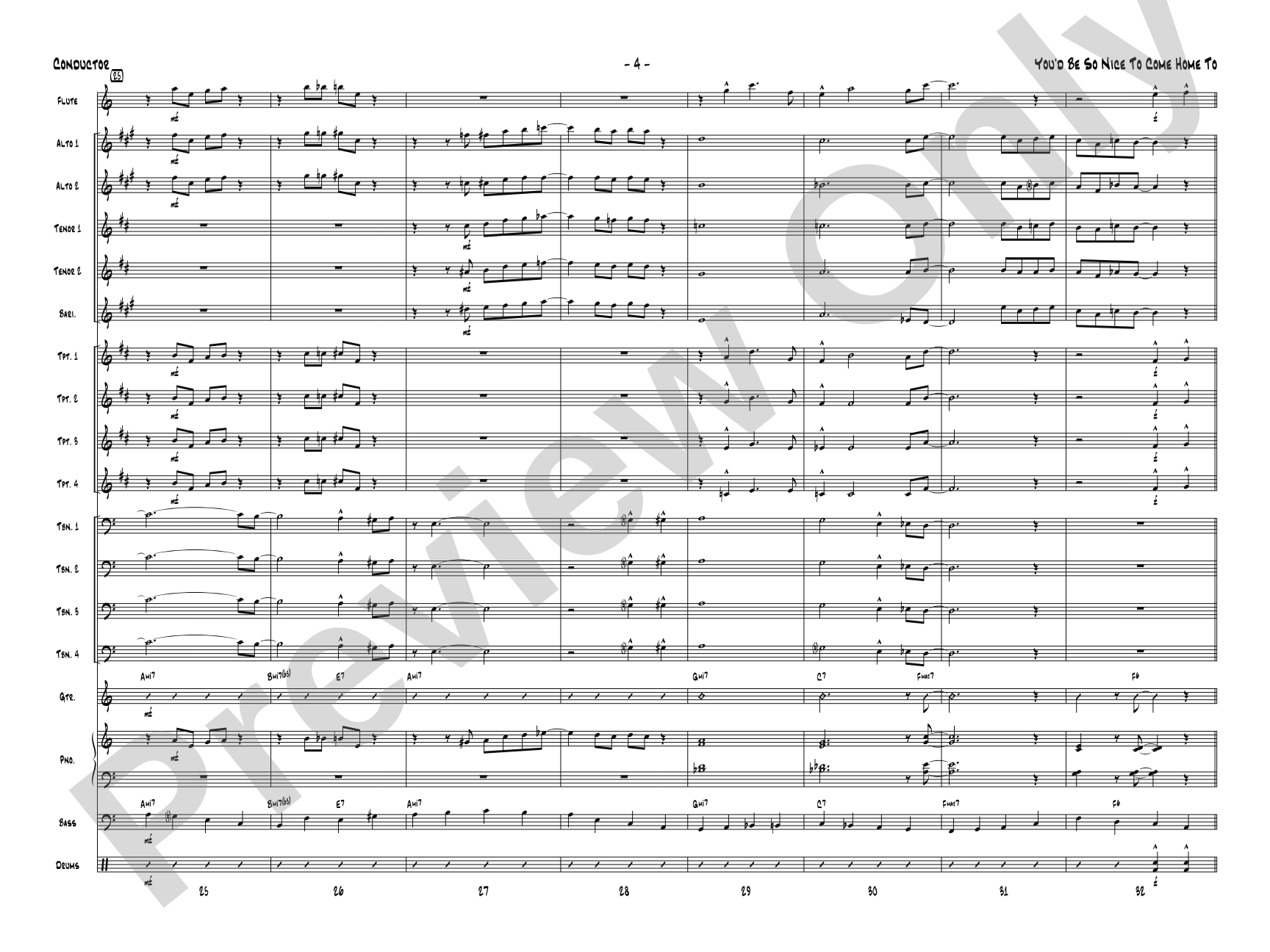
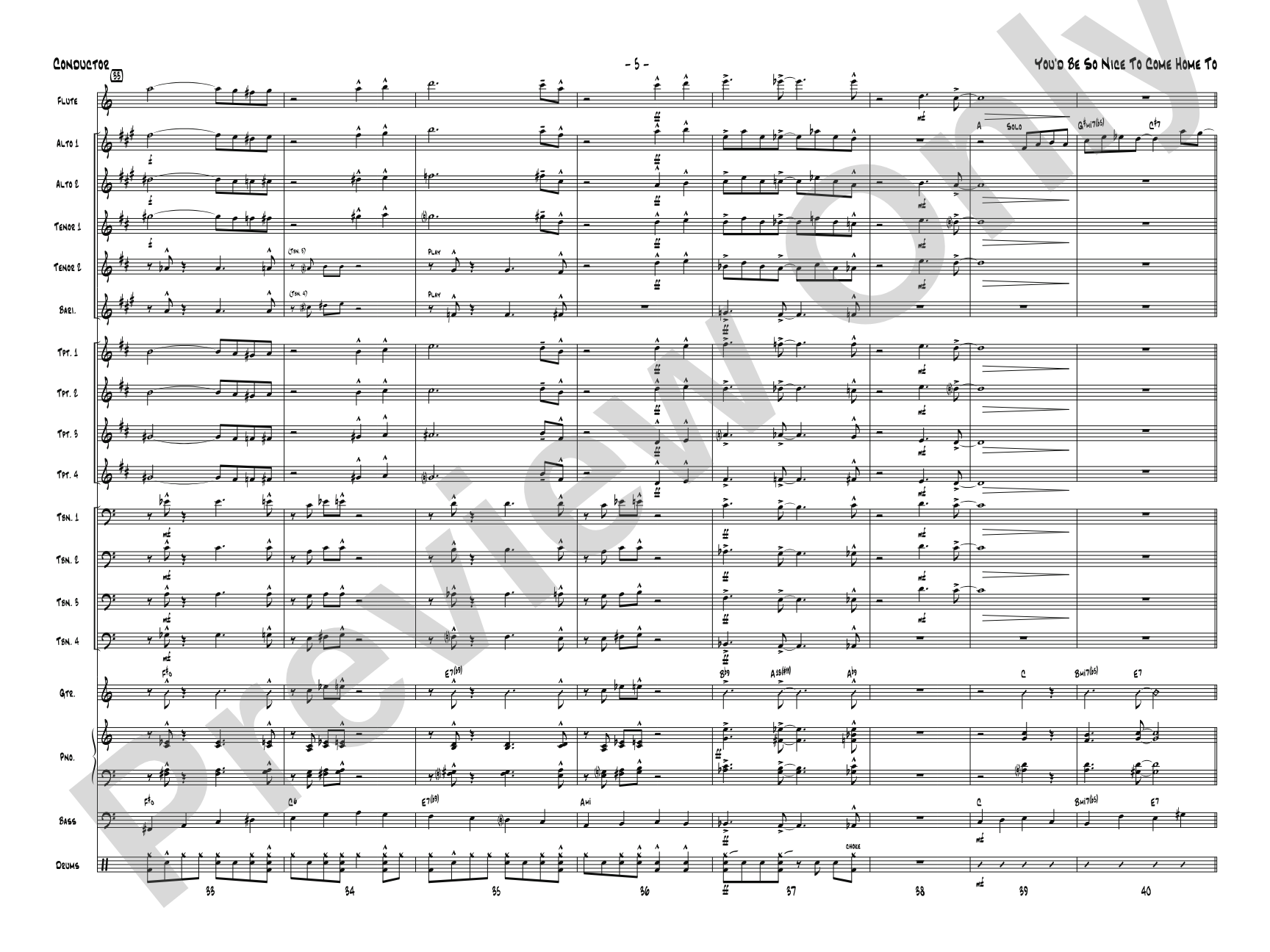
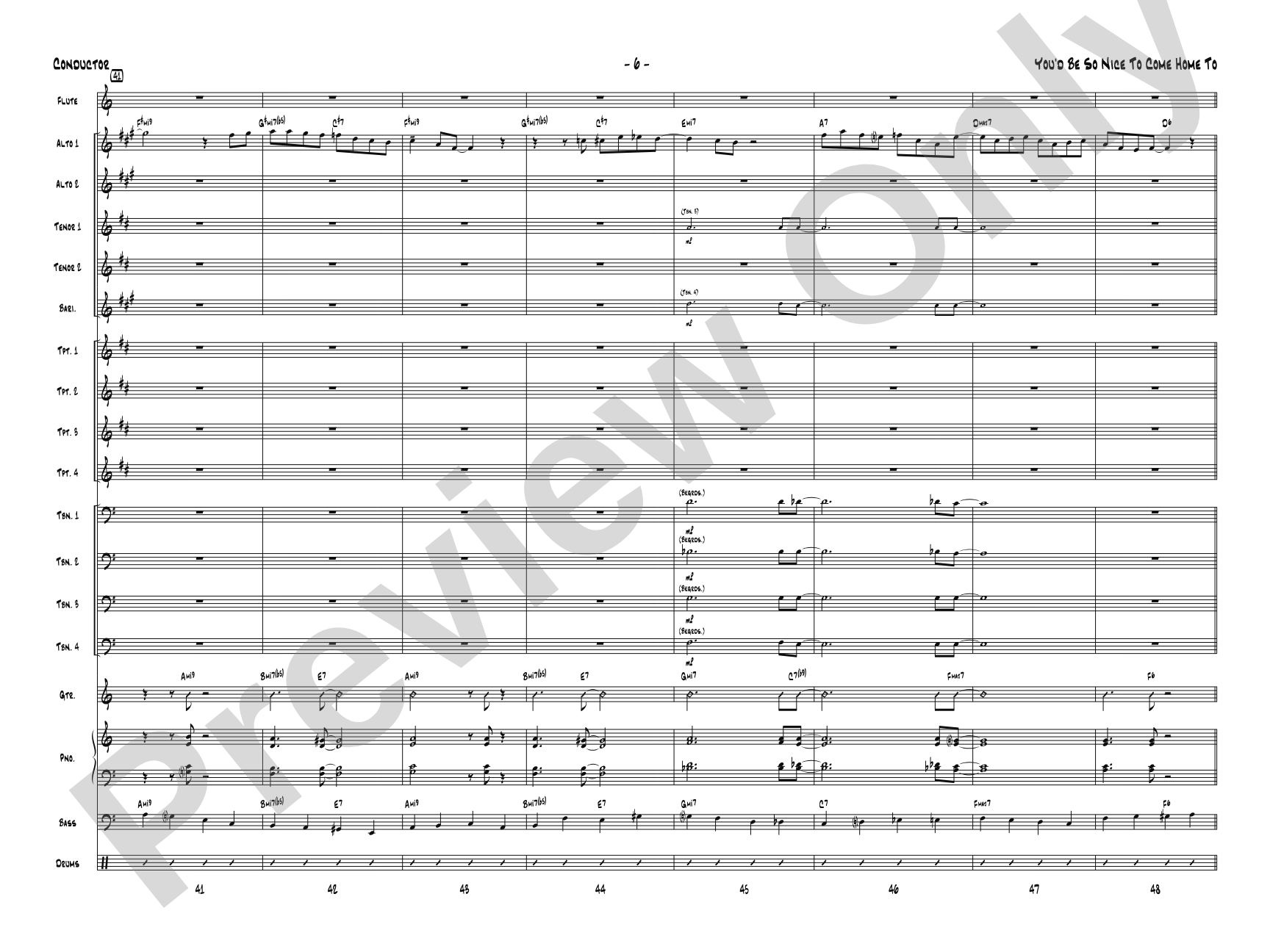
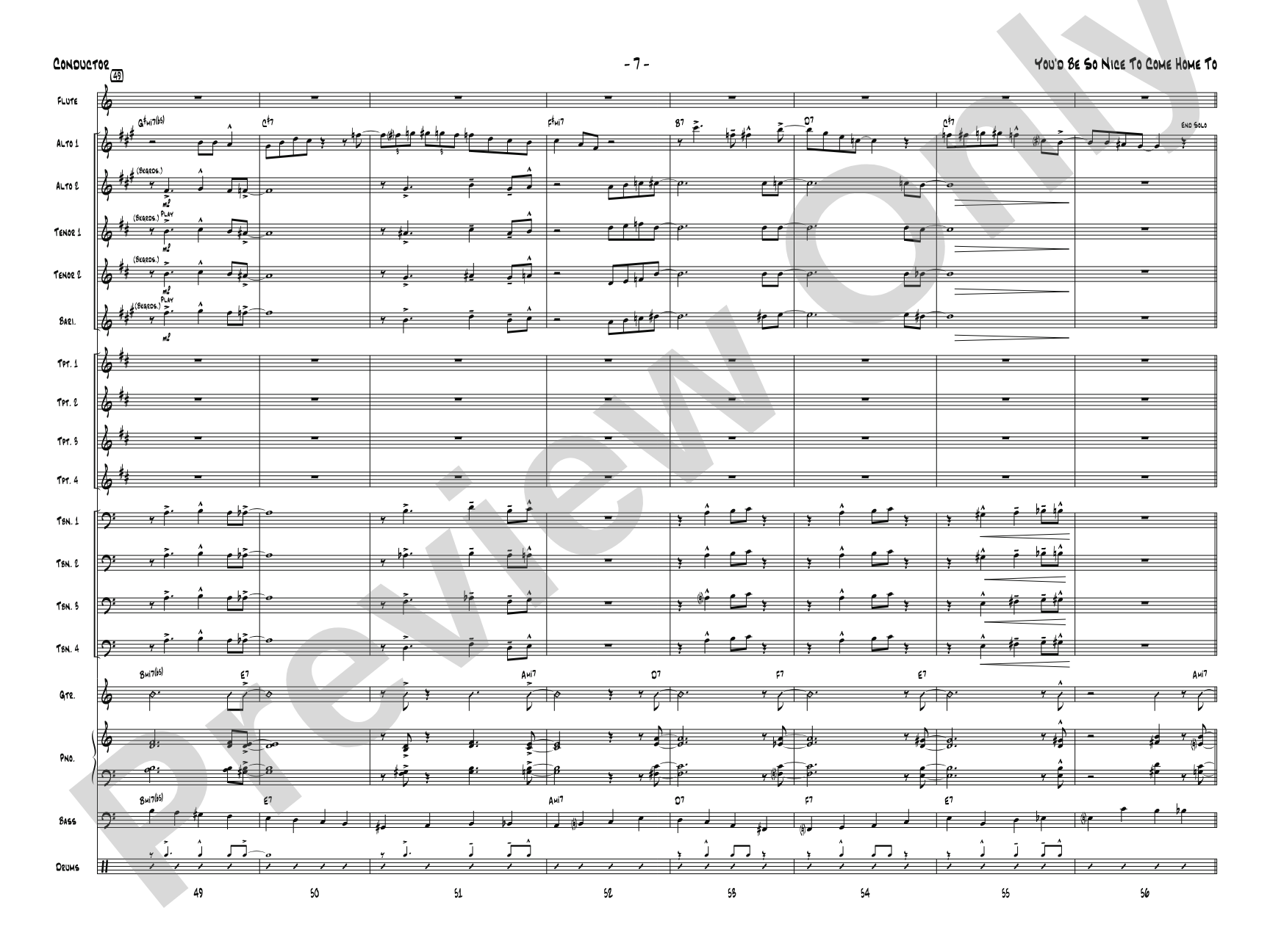
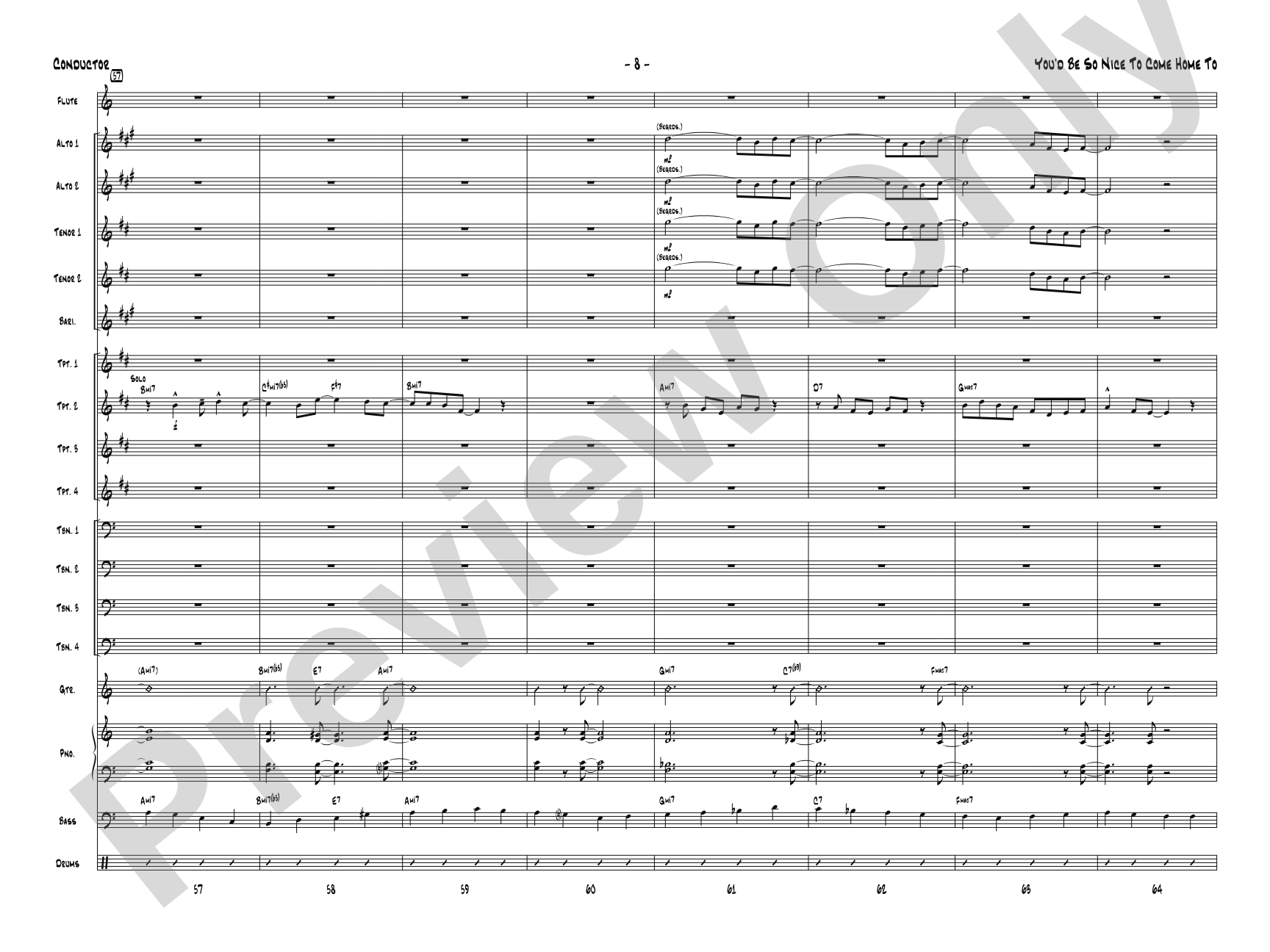
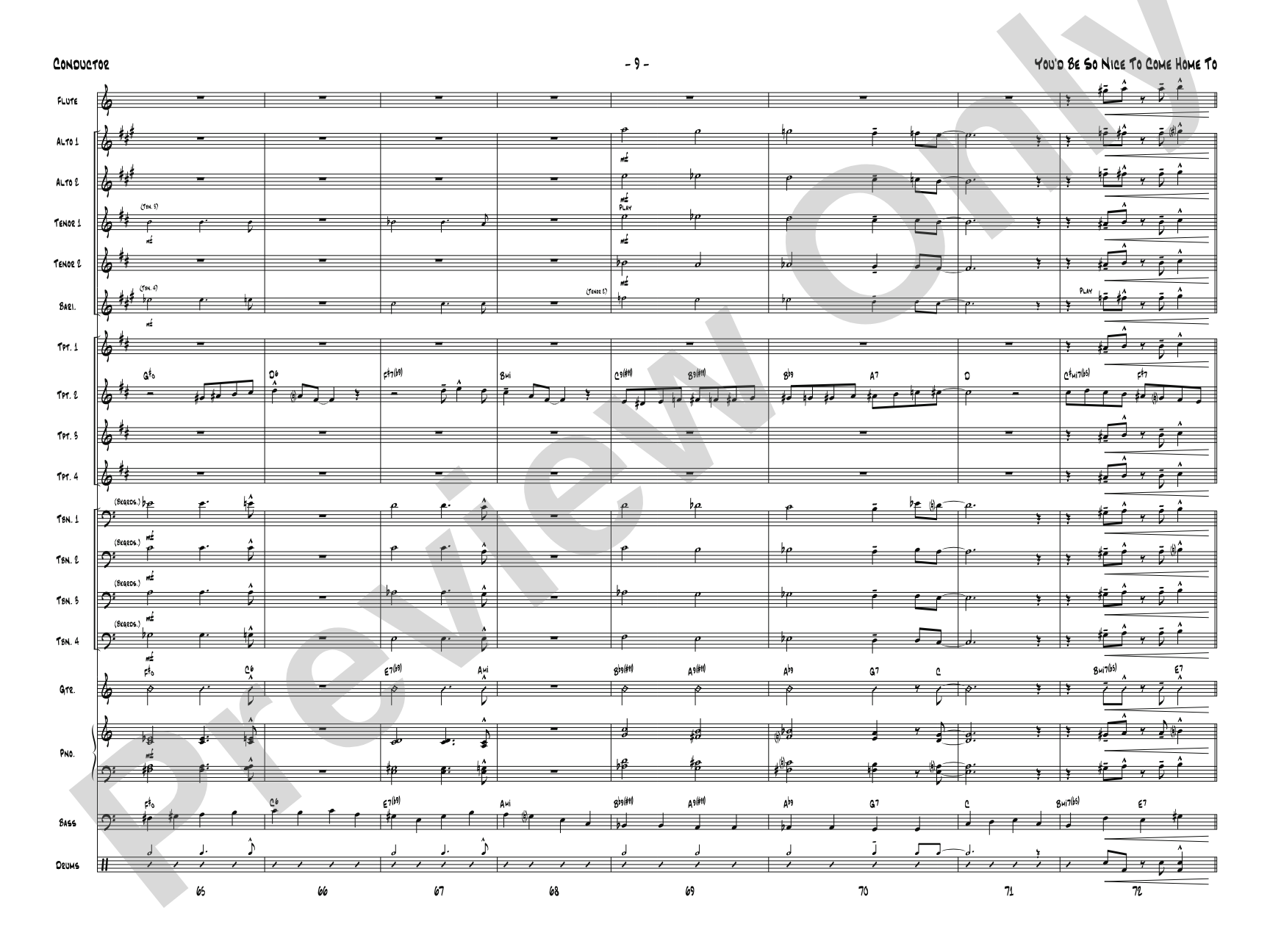
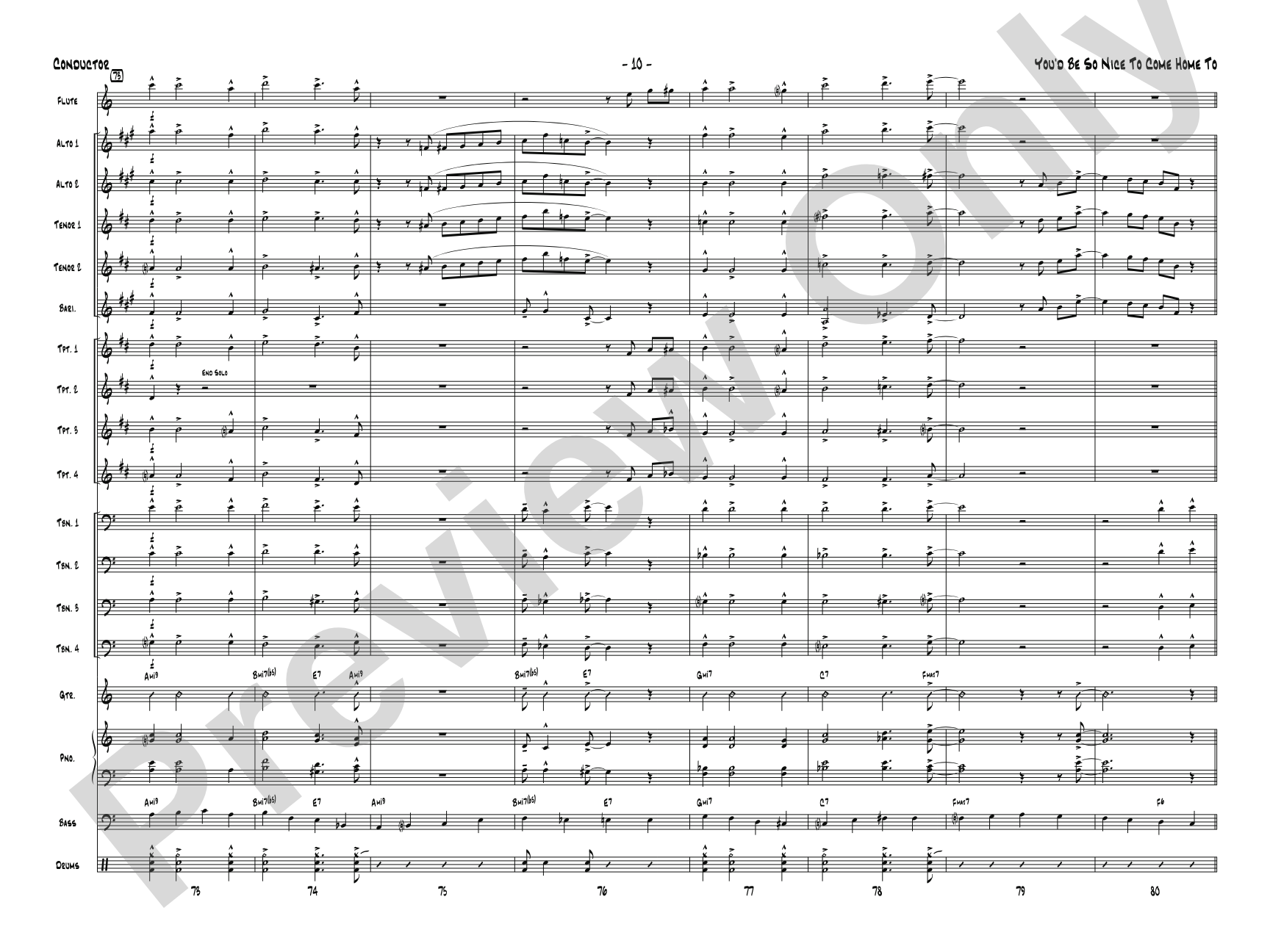
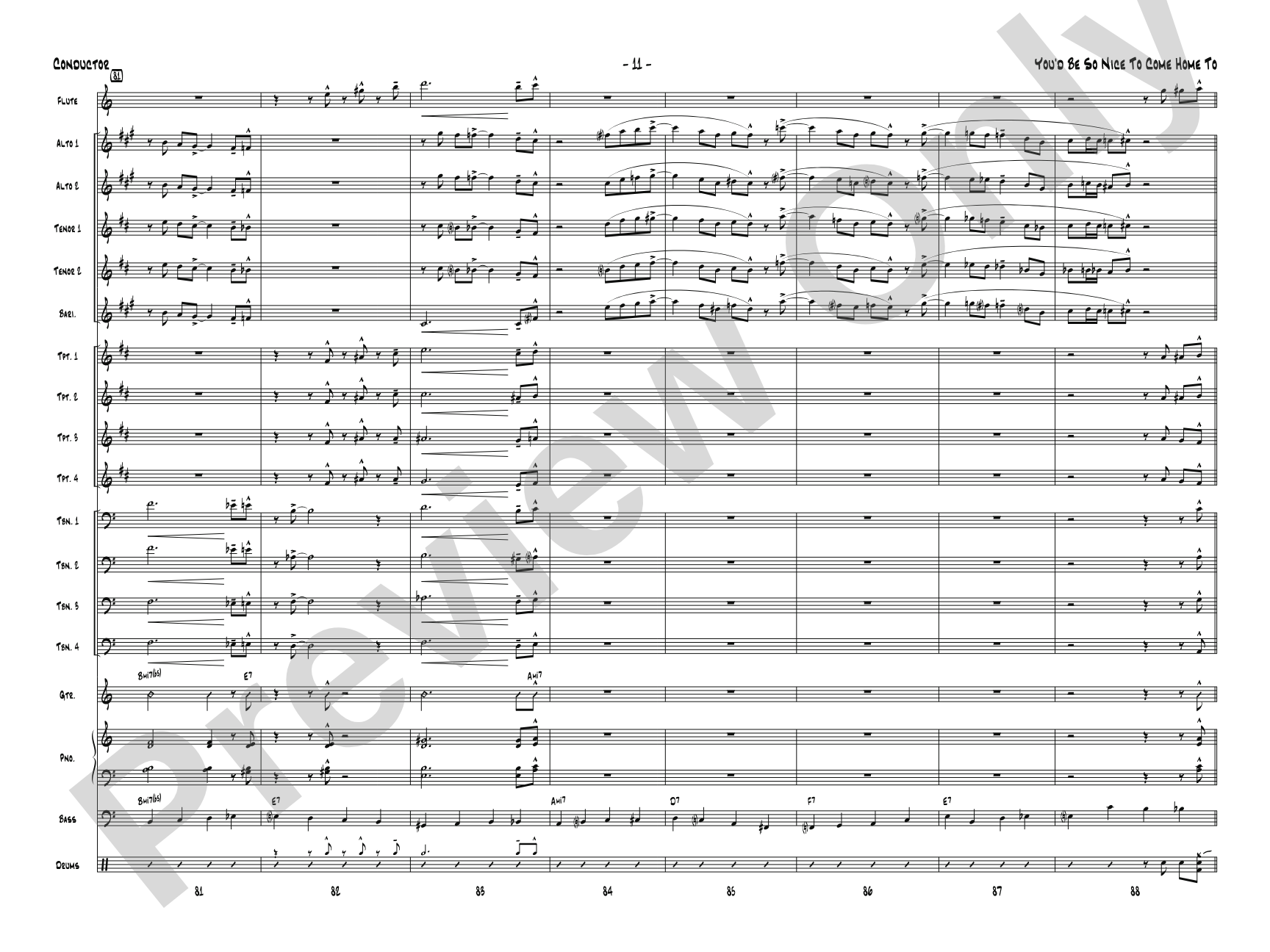
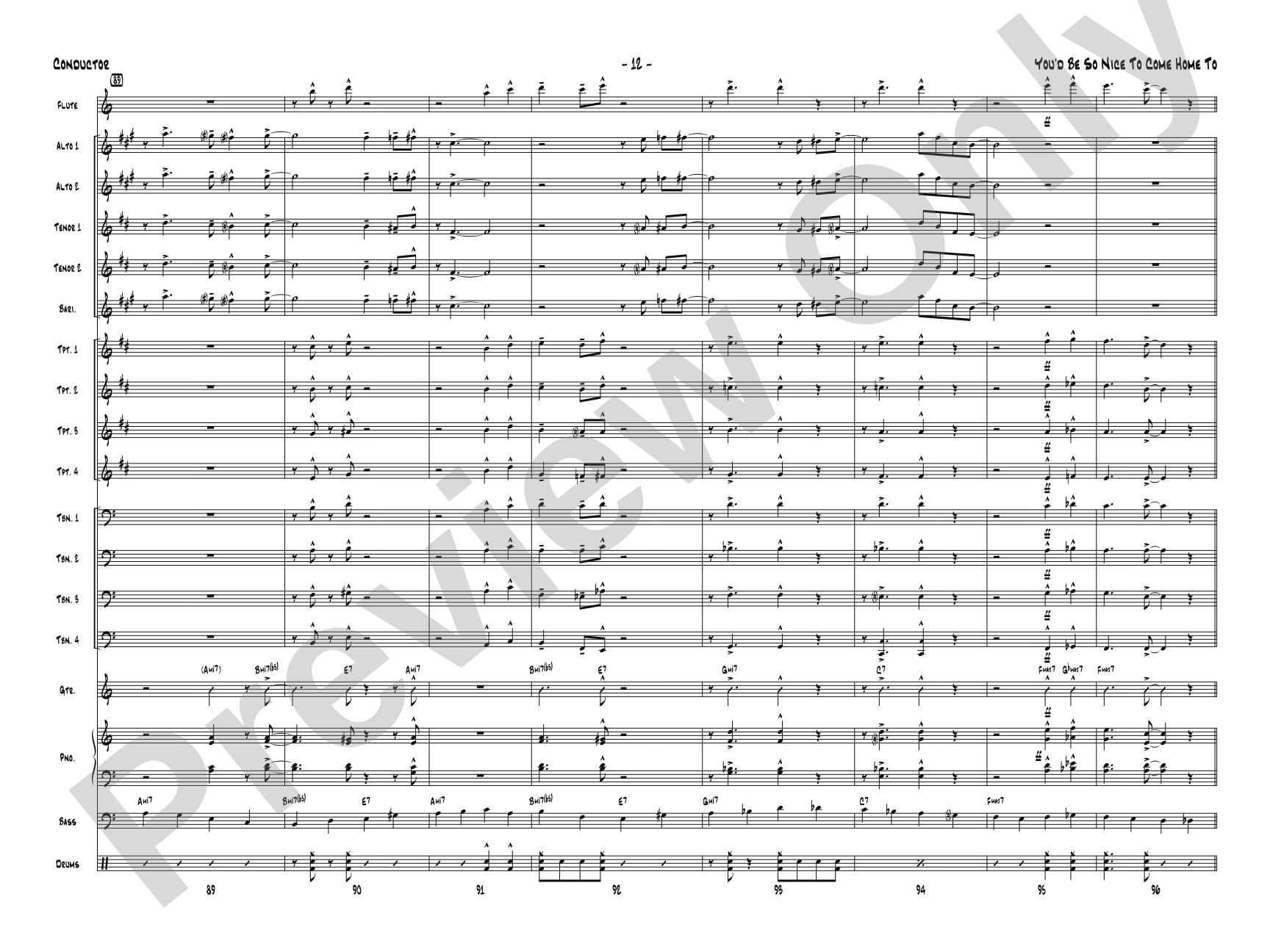
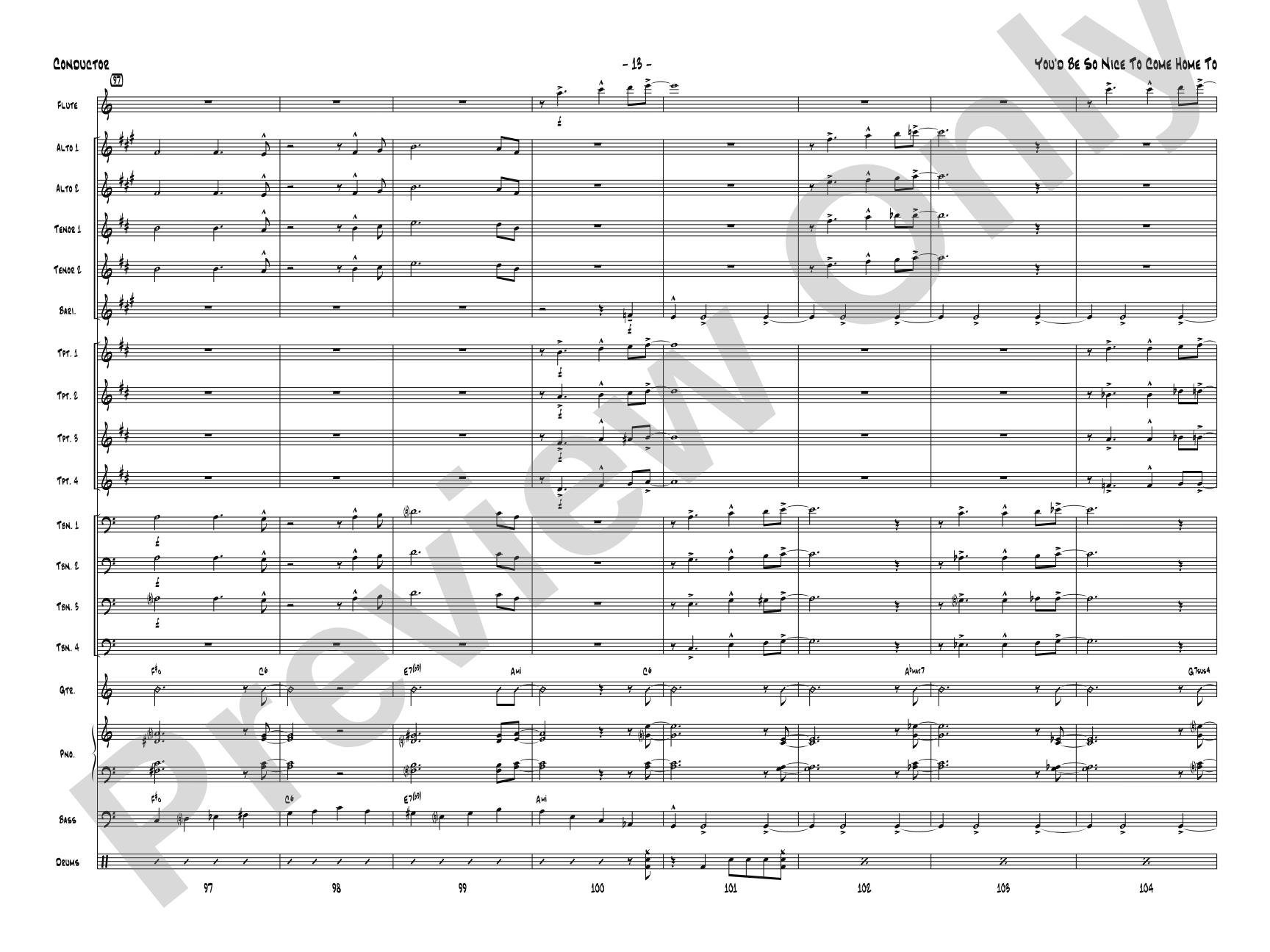
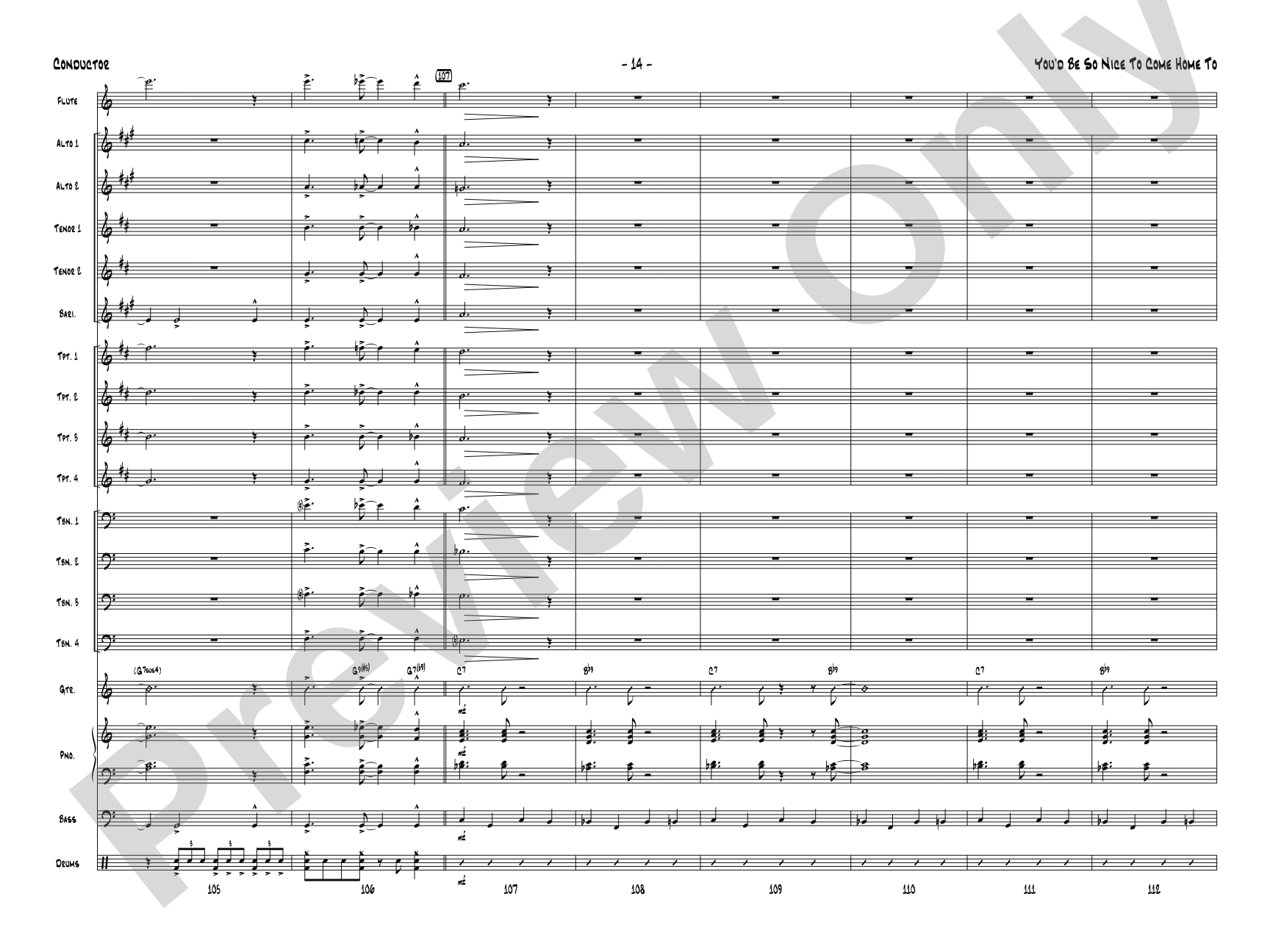
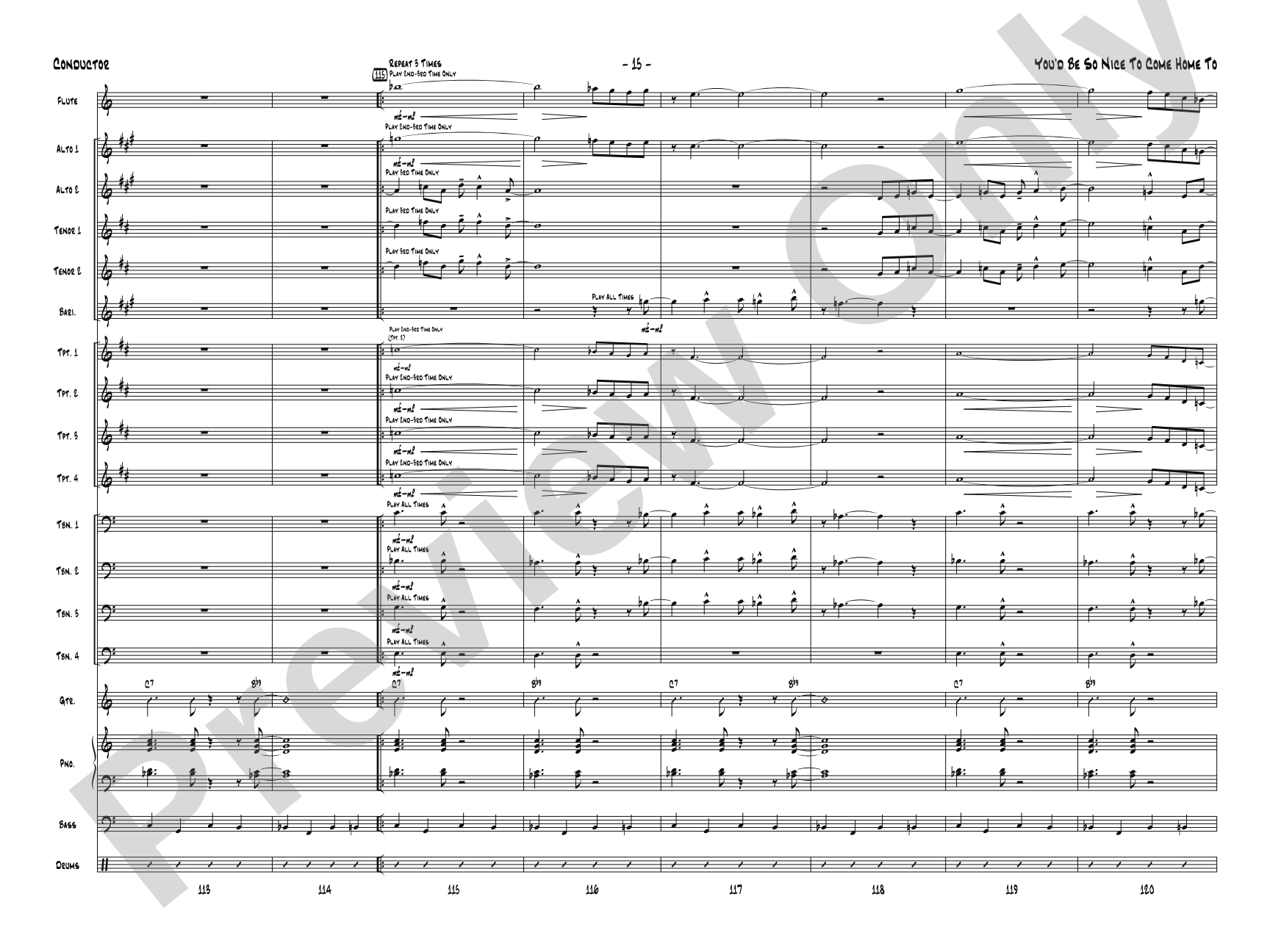
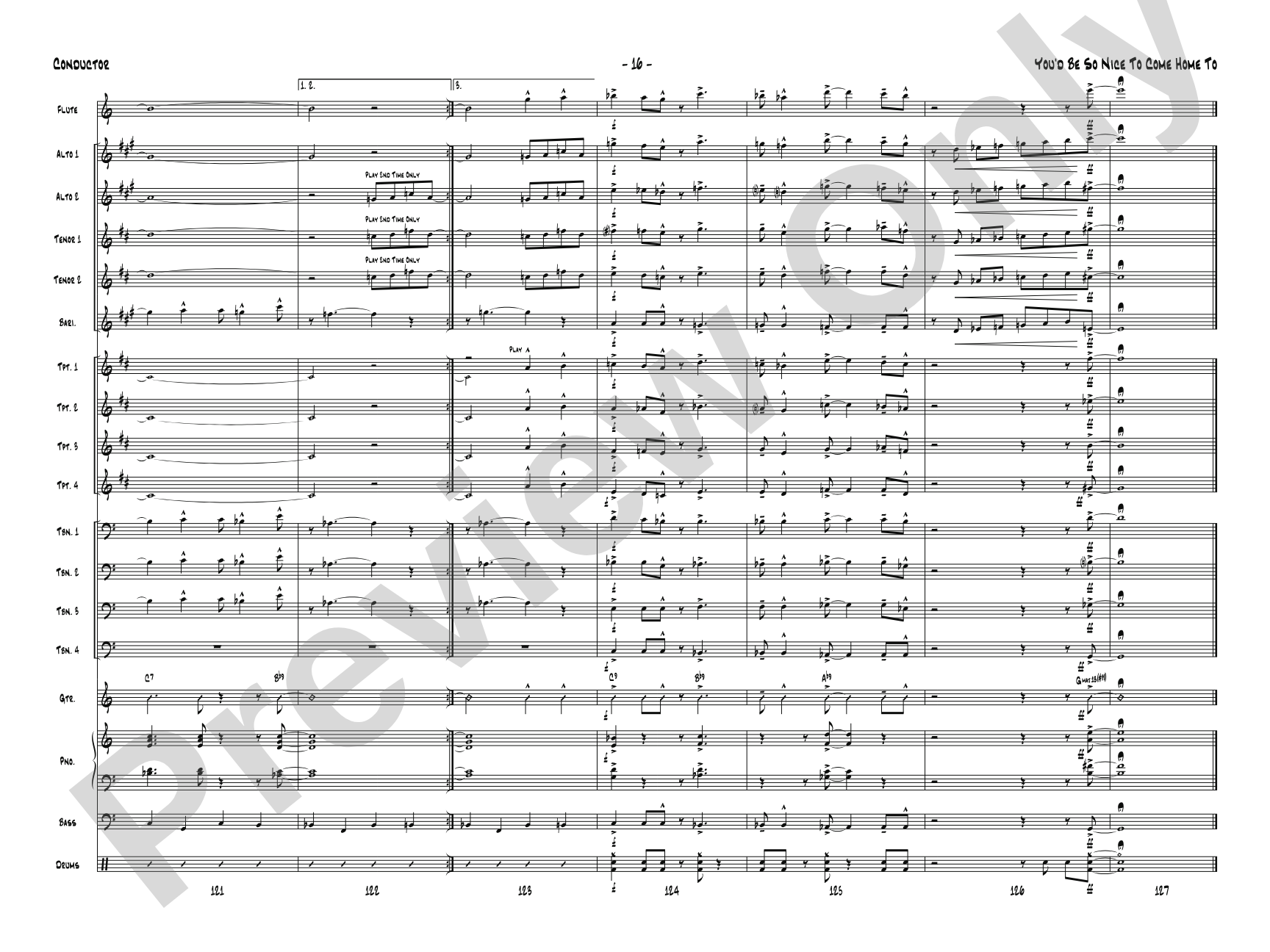

You'd Be So Nice to Come Home To: Jazz Ensemble Conductor Score & Parts
From Something to Shout About
Words and music by Cole Porter / arr. Paul Baker
Grade: 2 (Medium Easy)
Item: 00-PK-0007452

$50.00
Pickup currently not available
Buy Extra Parts (Digital PDF Download)
Parts Added to Cart!
Description
You'll love this swinger that is played around 168 BPM. This chart is outstanding, the song is a jazz standard, the lead trumpet range is to written F-sharp, and written-out solos are provided for alto and trumpet. Check out the great sax soli and the hip interlude that builds right up to the fine. Quality writing! (3:35) This title is available in MakeMusic Cloud.


Don't just read it, hear it, play along with it, and watch your students grow with it. In MakeMusic Cloud, You'd Be So Nice to Come Home To: Jazz Ensemble Conductor Score & Parts comes alive with professional accompaniment, adjustable tempo, and built-in practice tools that turn solo practice into real progress.
Open in the Player
Jump straight in and assign it today.
Start Your Free Trial
Open this title and explore the full library in minutes.
Sample Audio
1
Audio File
--:--
0:00
0:00
Sample Video
Additional Details
Series:
Young Jazz Ensemble
Publisher:
Alfred Music
Page Count:
202
SKU:
00-PK-0007452
More about this title
About the Composer: Cole Porter
Cole Porter (1891, 1964) brought sophistication and wit to American popular song like few composers before or since. His melodies are instantly memorable, his lyrics clever without being precious, and his harmonic language struck a perfect balance between accessibility and jazz-friendly chromaticism. For music educators, Porter's catalog offers an ideal entry point into the Great American Songbook: his tunes reward careful listening, sit beautifully in ensemble voices, and continue to captivate students who might otherwise dismiss standards as old-fashioned.
Porter's theatrical background meant his songs were written to be performed, not just played. That performative DNA translates directly to the concert stage. When your ensemble tackles a Porter tune, students experience what happens when a composer understands both the craft of writing for voices and instruments and the psychology of audience engagement.
Why we love this
Paul Baker's arrangement hits that sweet spot between accessibility and musicianship. The Grade 2 level keeps it manageable for developing ensembles, but the written solos, the sax soli, and that hip interlude keep the chart engaging for both players and listeners. At 168 BPM, this swinger has real momentum without feeling reckless, making it equally at home in a festival setting or a concert program.
What to expect
This is pure swing sophistication. The melody has that characteristic Porter elegance, and Baker's arrangement respects it while adding jazz texture through the soli sections and the interlude that builds toward the ending. Players will feel like they're part of a real jazz band, not an imitation.
Who it's for
Jazz ensembles at the middle school through early high school level will find this arrangement friendly but rewarding. The Grade 2 difficulty means students can focus on phrasing, ensemble blend, and swing feel rather than wrestling with technical demands. This is an ideal choice for directors building a festival-ready chart that doesn't require students to have advanced soloing skills.
How to get the most out of it
- Keep the tempo steady and relaxed. At 168 BPM, the quarter note should feel easy and conversational, not rushed. Lock in with the rhythm section early in rehearsal.
- Shape the written solos with forward motion. The alto and trumpet solos should sing through the changes without dragging; let them breathe naturally but keep the line moving toward the resolution.
- Balance the sax soli carefully so the blend is tight but each voice remains audible. This section is where the ensemble voice shines, so make sure no one section overshadows the others.
- Build the interlude section with intention. The chart is designed to climb dynamically here, so track your crescendos during rehearsal and hit the fine with confidence.
How to use it
Program this as a showcase piece in a jazz concert or festival. Its length (3:35) and medium difficulty make it a solid mid-set number that keeps the energy up without exhausting your ensemble. It also works well as a confidence-builder earlier in the season when you're introducing students to jazz standards.
Skills your students will build
- Swing articulation and phrasing in a medium-tempo setting
- Reading and balancing written ensemble soli
- Supporting and listening to featured soloists
- Maintaining steady tempo and relaxed energy in a swinger
- Harmonic listening (following changes as backdrop for the melody)