You Can't Hurry Love (arr. Jo Annemans) Sheet Music Preview

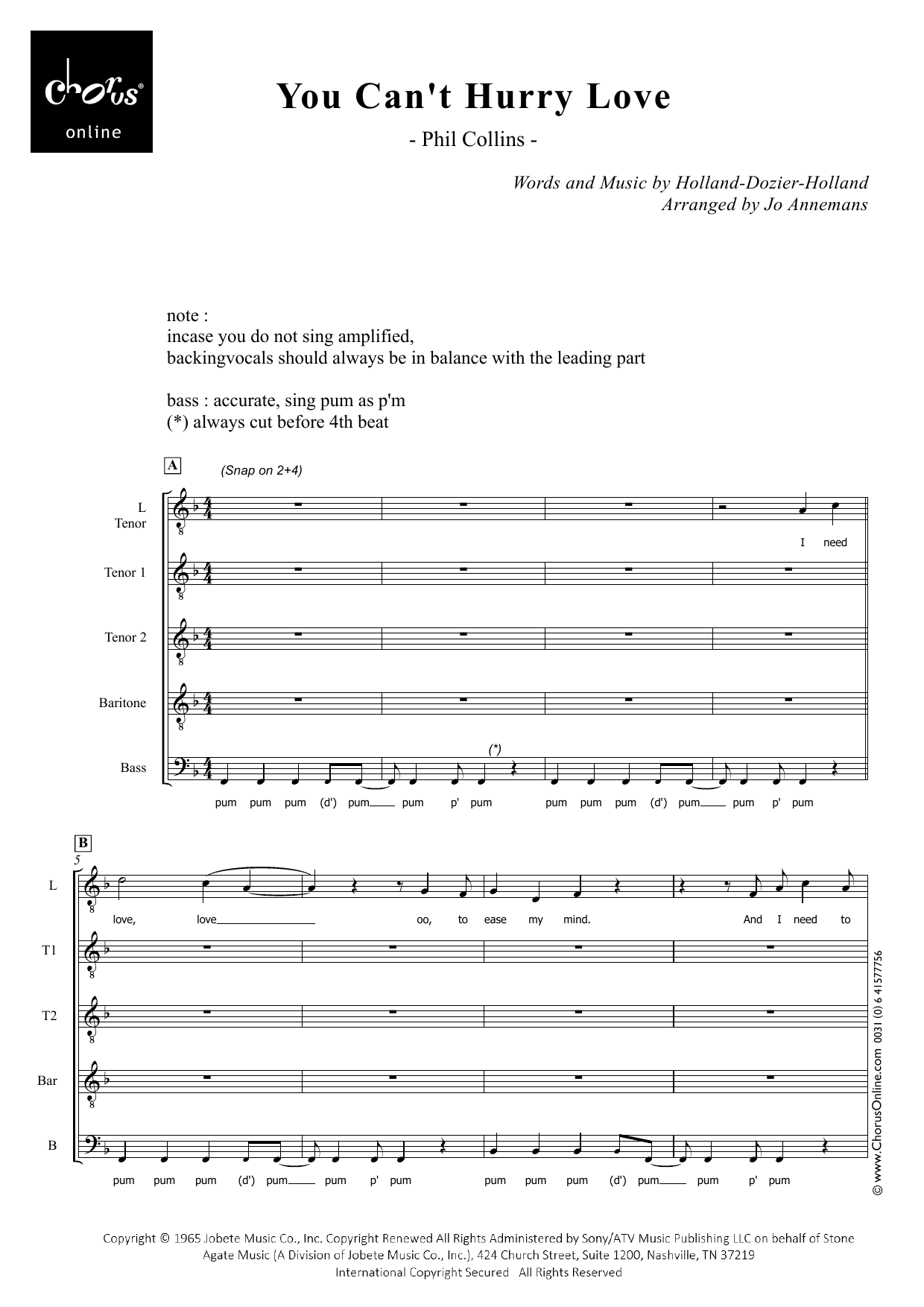
You Can't Hurry Love (arr. Jo Annemans): TTBarB Choral Octavo

As performed by Phil Collins / As performed by The Supremes / Arranged by Jo Annemans

Item: 35-DS00488370

Digital Download
$2.99
Description

You Can't Hurry Love (arr. Jo Annemans): TTBarB Choral Octavo isn't in MakeMusic Cloud just yet...but it could be. Let us know you'd like to see it, and you'll help shape what comes next. In the meantime, start a free trial and dive into thousands of interactive titles your students can play along with today.

Sample Audio
No sample audio found.
Sample Video
Additional Details
Publisher: Hal Leonard
Page Count: 12
SKU: 35-DS00488370

More about this title

About the Artist: Phil Collins

Phil Collins rose to prominence as the drummer and later vocalist for Genesis, one of progressive rock's most influential bands. His solo career, which began in the 1980s, produced some of the era's most enduring pop hits, blending his rock sensibilities with accessible melodies and sophisticated production.

Why we love this

Jo Annemans has crafted an arrangement that honors the song's infectious groove while making it genuinely singable across mixed voices. The flexible voicing options (TB/TTB/TBB/TTBB) mean you can program this regardless of your ensemble's composition, and the a cappella setting keeps rehearsal straightforward while the song's iconic melody carries everything.

What to expect

Warm, grooving, and surprisingly sophisticated underneath its pop exterior. The arrangement breathes with the conversational ease of the original while giving your singers harmonic depth that feels earned rather than imposed.

Who it's for

Mixed choirs with flexible voicing needs will find immediate value here. This works equally well for concert programming, pops series, or teaching arrangements that respect popular music's harmonic and rhythmic sophistication.

How to get the most out of it

  • Lock the rhythmic precision early. This song lives in its pocket, so establish a clear internal pulse before layering harmony parts.
  • Shape the melody line with intentional phrasing rather than singing it straight through. The original's conversational feel depends on breath and emphasis choices.
  • Balance the upper voices against the lower foundation. The bass and baritone voices anchor the harmonic movement, so they need clarity without overwhelming.
  • Consider the recorded original during rehearsals to absorb the song's personality, then trust the arrangement to deliver that character without imitation.

How to use it

This fits naturally into any pops or contemporary concert, but consider pairing it with other soul or pop standards to build a thematic set. The relatively compact length (12 pages) makes it an excellent closer that leaves audiences smiling.

Skills your students will build

  • Maintaining rhythmic precision in a cappella settings
  • Balancing melody against harmonic accompaniment
  • Singing contemporary popular repertoire with musical authenticity
  • Navigating flexible voicing across varied ensemble sizes

You May Also Like