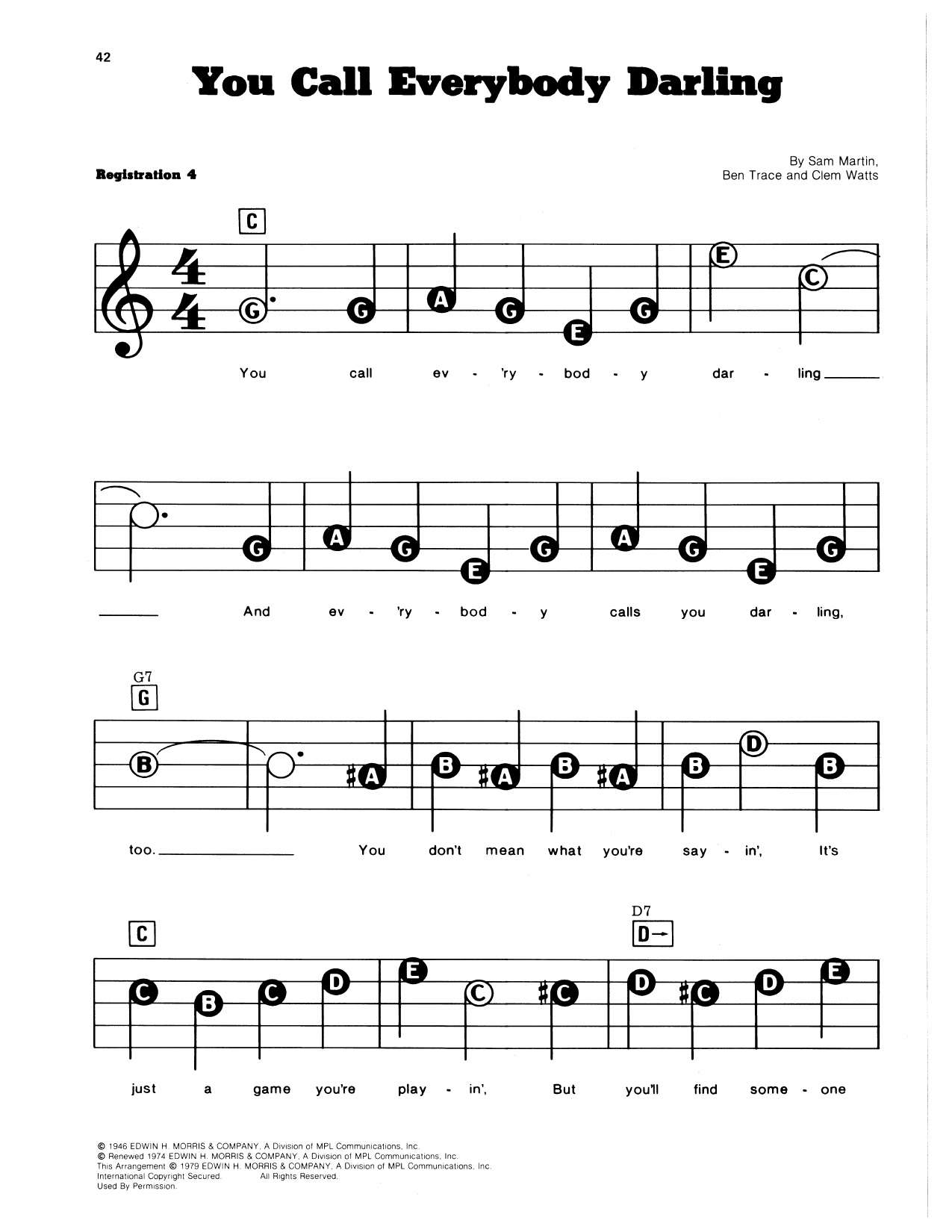
You Call Everybody Darling: E-Z Play Today

As performed by Sam Martin

Item: 35-DS01915062

Digital Download
$4.99
Description

You Call Everybody Darling: E-Z Play Today isn't in MakeMusic Cloud just yet...but it could be. Let us know you'd like to see it, and you'll help shape what comes next. In the meantime, start a free trial and dive into thousands of interactive titles your students can play along with today.

Sample Audio
No sample audio found.
Sample Video
Additional Details
Publisher: Hal Leonard
Page Count: 2
SKU: 35-DS01915062

More about this title

Why we love this

This E-Z Play arrangement strips away unnecessary complexity while keeping the swing and warmth of the original intact. It's the kind of piece that reminds students why they started playing piano in the first place: pure musicality without pretension.

What to expect

Warm, conversational, and unpretentious. The arrangement has the ease of a friend playing something they love at the piano; there's swing in the rhythm but nothing showy about the execution. It breathes.

Who it's for

Pianists comfortable with lead sheet reading and basic jazz chord voicings will find this accessible and musically satisfying. It works equally well for students exploring American songbook standards or adult learners returning to piano through familiar material.

How to get the most out of it

  • Let the left hand groove sit slightly behind the beat to create that relaxed, conversational swing feel the song demands.
  • Color the repeated phrases differently each time they appear; small dynamic shifts and rubato variations prevent the repetition from feeling mechanical.
  • Balance vocal melody with accompaniment so the piano support never overshadows the lyrical content of the text.

How to use it

Pair this with other American standards or pop classics in a recital focused on accessible, singable repertoire. It also serves as an excellent bridge for jazz-curious classical pianists first encountering chord symbols and swing rhythms.

Skills your students will build

  • Reading lead sheets with jazz voicing symbols
  • Executing swing eighth-note rhythms with appropriate feel
  • Balancing accompaniment textures with melodic material
  • Interpreting chord symbols and building left-hand comping patterns

You May Also Like