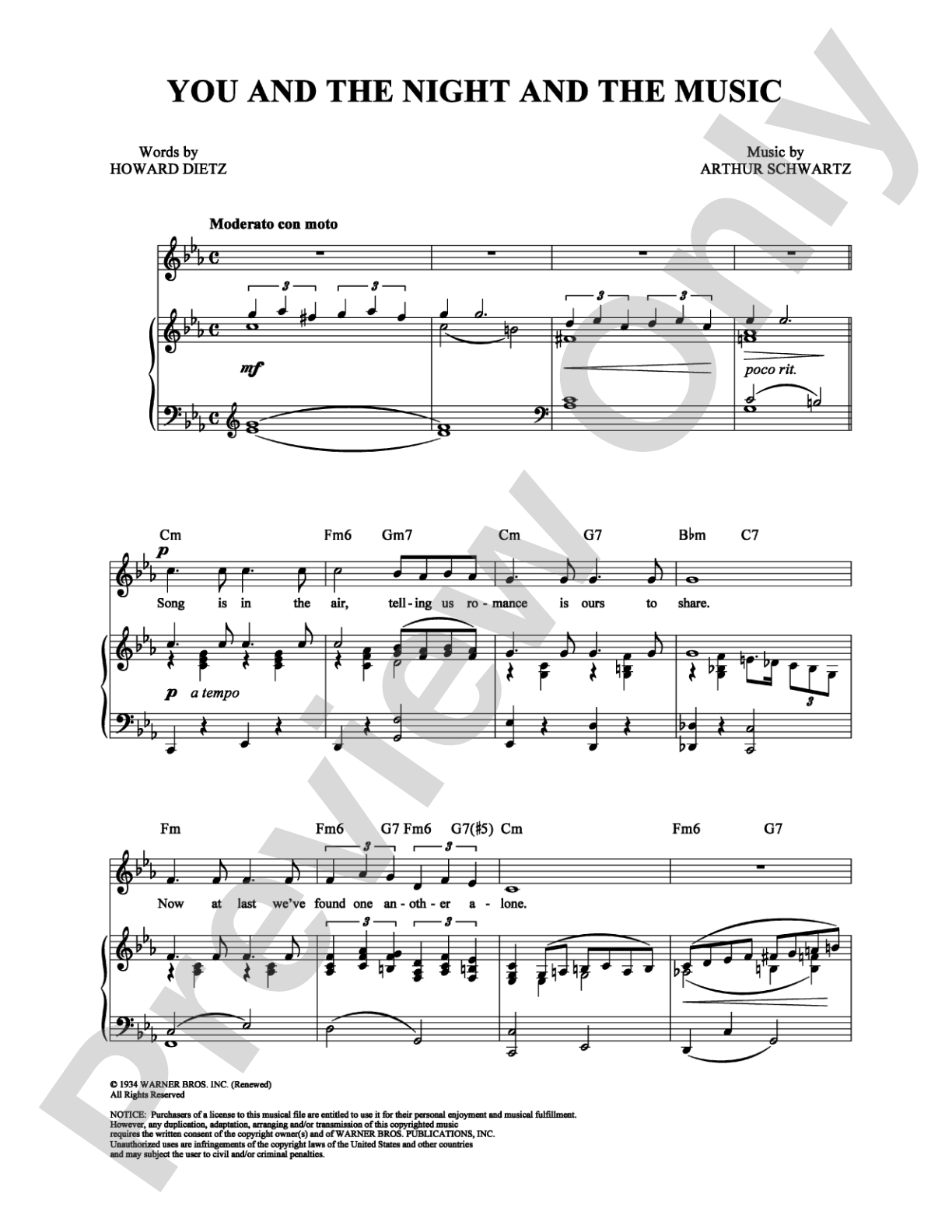
You and the Night and the Music: Piano/Vocal/Chords Digital Sheet Music

You and the Night and the Music: Piano/Vocal/Chords Digital Sheet Music

Arthur Schwartz, Libby Holman

Item: 00-PS-0001994

Digital Download
$3.99
Description

You and the Night and the Music: Piano/Vocal/Chords Digital Sheet Music isn't in MakeMusic Cloud just yet...but it could be. Let us know you'd like to see it, and you'll help shape what comes next. In the meantime, start a free trial and dive into thousands of interactive titles your students can play along with today.

Sample Audio
No sample audio found.
Sample Video
Additional Details
SKU: 00-PS-0001994

More about this title

About the Artist: Libby Holman

Libby Holman (1904-1971) was a mezzo-soprano and torch singer whose distinctive alto voice and dramatic interpretation defined American popular song in the 1920s and 1930s. She originated the role of Lucy in "The Threepenny Opera" on Broadway and became known for her sultry, emotionally direct performances of jazz standards and show tunes, influencing generations of cabaret and jazz vocalists.

Beyond her recording and stage career, Holman was a dedicated arts patron and social activist. Her interpretations of songs like "You and the Night and the Music" showcase the theatrical intensity and rhythmic sophistication that made her a model for singers interested in the jazz vocal tradition and American song repertoire.

Why we love this

This standard sits at the intersection of sophistication and accessibility, students encounter sophisticated harmonic language and expressive demands without needing flashy technique to sound mature. The song's structure rewards careful attention to lyrical phrasing and rubato, making it an excellent vehicle for teaching how pianists and singers communicate as partners rather than soloists.

What to expect

Romantic and introspective, with a gentle melancholy beneath the surface. The song unfolds like a memory being quietly shared, there's intimacy in the harmonic movement and a sense of longing woven throughout.

Who it's for

This song suits intermediate to advanced vocalists comfortable with jazz phrasing and harmonic complexity, and pianists who can handle jazz voicings and accompaniment textures. It works well in recital settings, studio lessons, or performance ensembles focused on American song and jazz standards.

How to get the most out of it

  • Treat the piano part as a conversational partner, not mere background. The accompaniment contains chromatic movement and jazz voicings that should be voiced with clarity so they support rather than obscure the vocal line.
  • Shape the melody through subtle dynamic changes and breath placement rather than broad tempo shifts. This song lives in nuance; small decisions about where to lean into a phrase create its intimacy.
  • Listen closely to the harmonic rhythm in the accompaniment, especially in passages with chromatic movement. Aligning your phrasing with the harmonic changes will deepen the song's emotional arc.
  • Resist over-romanticizing. Holman's approach was direct and confident; let the song's inherent elegance speak rather than adding extra portamento or excessive rubato.

How to use it

Pair this with other American standards or jazz-influenced songs to explore the connection between Broadway song and jazz interpretation. It also serves as a valuable study piece for singers developing their jazz vocal vocabulary and learning how to navigate harmonic changes with musical intention.

Skills your students will build

  • Phrasing and interpretation within a jazz vocal style
  • Navigating chromatic harmonic changes
  • Coordination between jazz-voiced piano accompaniment and vocal melody
  • Stylistic accuracy in interpreting American standards from the 1920s-30s era

You May Also Like