

Yesterdays: Jazz Ensemble Conductor Score & Parts
By Jerome Kern / By Otto Harbach / Arranged by John Berry
Grade: 1.5
Item: 35-PK00246352
$35.00
Pickup currently not available
Buy Extra Parts (Digital PDF Download)
| Product | Price | Quantity |
|---|---|---|
| Yesterdays - Conductor Score (Full Score) | $6.00 | |
| Yesterdays - Alto Sax 1 | $6.00 | |
| Yesterdays - Alto Sax 2 | $6.00 | |
| Yesterdays - Tenor Sax 1 | $6.00 | |
| Yesterdays - Tenor Sax 2 | $6.00 | |
| Yesterdays - Baritone Sax | $6.00 | |
| Yesterdays - Trumpet 1 | $6.00 | |
| Yesterdays - Trumpet 2 | $6.00 | |
| Yesterdays - Trumpet 3 | $6.00 | |
| Yesterdays - Trombone 1 | $6.00 | |
| Yesterdays - Trombone 2 | $6.00 | |
| Yesterdays - Trombone 3 | $6.00 | |
| Yesterdays - Guitar | $6.00 | |
| Yesterdays - Piano | $6.00 | |
| Yesterdays - Bass | $6.00 | |
| Yesterdays - Drums | $6.00 | |
| Yesterdays - Flute | $6.00 | |
| Yesterdays - Bb Clarinet 1 | $6.00 | |
| Yesterdays - Bb Clarinet 2 | $6.00 | |
| Yesterdays - F Horn | $6.00 | |
| Yesterdays - Tuba | $6.00 |
Parts Added to Cart!
Description
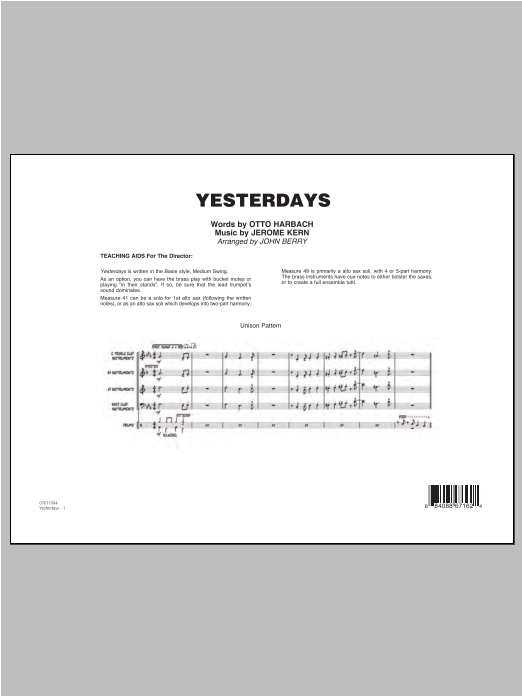
Although written in the 1930s, this tuneful standard has been a popular choice through the years and recorded by countless artists. Here is an appealing version for young players in a moderate swing style that features rich ensemble sonorities and limited technical demands.


Yesterdays: Jazz Ensemble Conductor Score & Parts isn't in MakeMusic Cloud just yet...but it could be. Let us know you'd like to see it, and you'll help shape what comes next. In the meantime, start a free trial and dive into thousands of interactive titles your students can play along with today.
Request This Title
Tell us you want it.
Start Your Free Trial
Explore everything that's ready to play right now.
Sample Audio
No sample audio found.
Sample Video
No sample videos found.
Additional Details
Publisher:
Hal Leonard
SKU:
35-PK00246352
More about this title
About the Composer: Jerome Kern
Jerome Kern (1885-1945) revolutionized American musical theater by elevating the craft of songwriting to an art form. His melodic gifts and harmonic sophistication shaped the Great American Songbook, and his influence on jazz standards remains unmatched. For music educators, Kern's work offers accessible entry points into jazz repertoire without sacrificing musical substance.
Kern's songs have become essential teaching tools because they balance singability with harmonic interest. Young musicians benefit from studying his approach to melody and form, which combines clarity with subtle sophistication. His catalog continues to reward both performers and listeners across generations.
Why we love this
John Berry's arrangement captures what makes this standard enduring: a melody so natural it feels inevitable, paired with swing rhythms that don't demand technical virtuosity from young players. The rich ensemble voicings give even beginning jazz ensembles a sense of sophistication and polish in performance. Programming this early in the rehearsal calendar builds confidence while introducing fundamentals of jazz style without overwhelming your section leaders.
What to expect
The piece unfolds with the ease and grace of a conversation between old friends. Berry's arrangement settles into a comfortable swing pocket while the melody floats above warm, supportive harmonies. Young players experience what jazz ensemble playing can feel like when everything works: relaxed, musical, and genuinely swinging.
Who it's for
Young jazz ensembles working at the beginning levels of jazz study benefit most from this arrangement. Players new to swing style, ensemble balance, and jazz idioms will find manageable technical demands alongside genuine jazz content. Directors seeking confidence-building repertoire for early-season concerts or festival readings will appreciate how this standard delivers musical satisfaction without requiring advanced section capabilities.
How to get the most out of it
- Shape the melody with subtle dynamic swells rather than steady forte playing. The tune's strength lies in its inherent singability, not in volume.
- Lock the ensemble's articulation tightly during tutti passages. Inconsistent tonguing patterns will muddy the clean swing feel the arrangement requires.
- Anchor the rhythm section's confidence first. Once your rhythm players trust the pocket, the horn lines settle naturally above them.
- Reference the recorded accompaniment to internalize the swing feel. Hearing the style before attempting it smooths the transition from straight eighths to swung rhythms.
How to use it
Place this early in a jazz ensemble concert to establish the ensemble sound and build audience connection with a recognizable melody. It pairs naturally with other standards and provides a sophisticated opener that allows your rhythm section to groove confidently before tackling more demanding material. Consider it for spring concerts when players have absorbed the basics of jazz interpretation and can focus on ensemble blend rather than individual technique.
Skills your students will build
- Swing rhythm interpretation and articulation (straight eighth notes versus swung eighths)
- Jazz ensemble balance in five-part texture (maintaining melody clarity while supporting with harmony)
- Reading chord changes and understanding harmonic function in jazz standards
- Blend and intonation in moderate tempo ensemble passages
- Stylistic listening and imitation of recorded jazz interpretation