
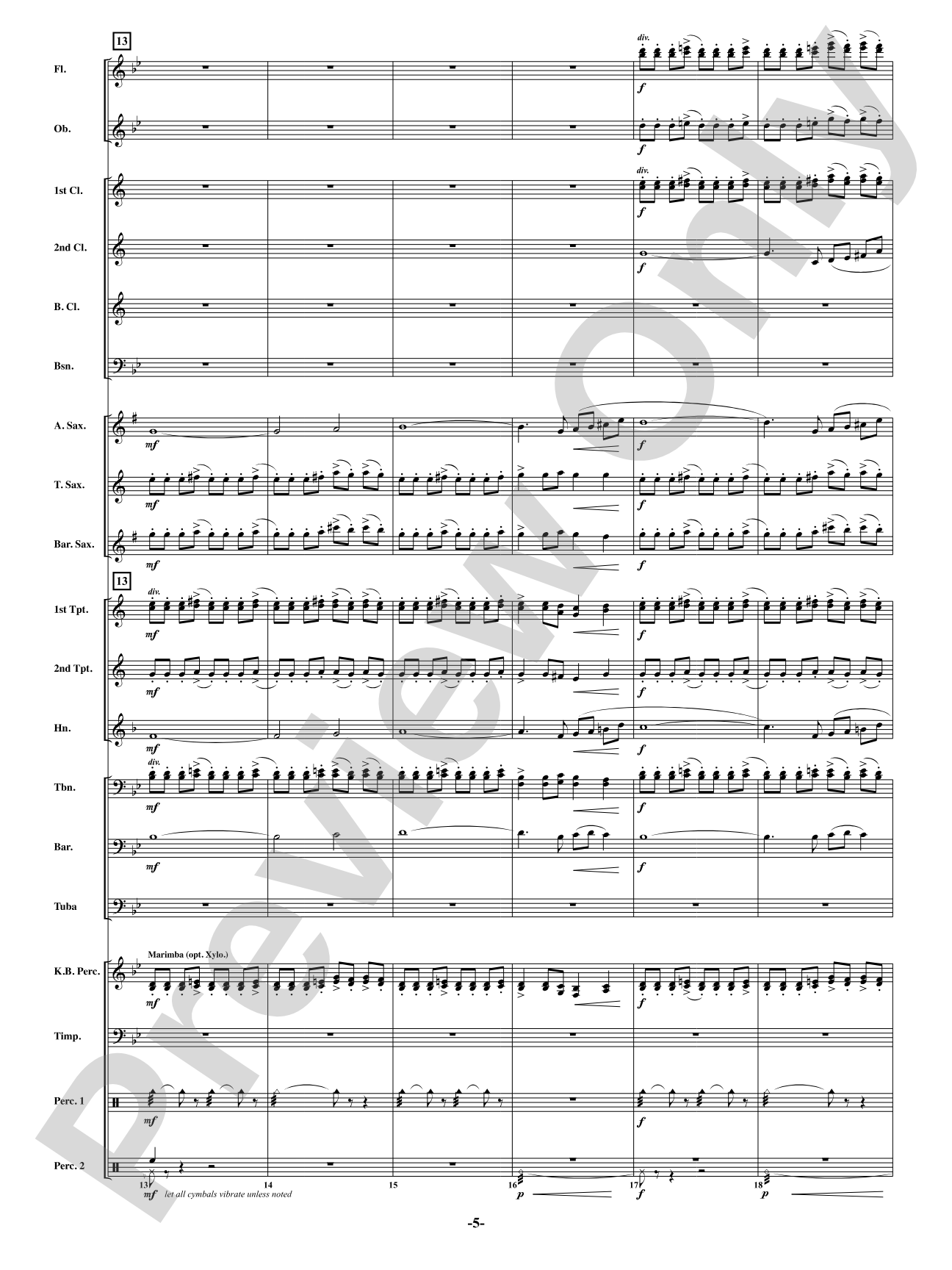
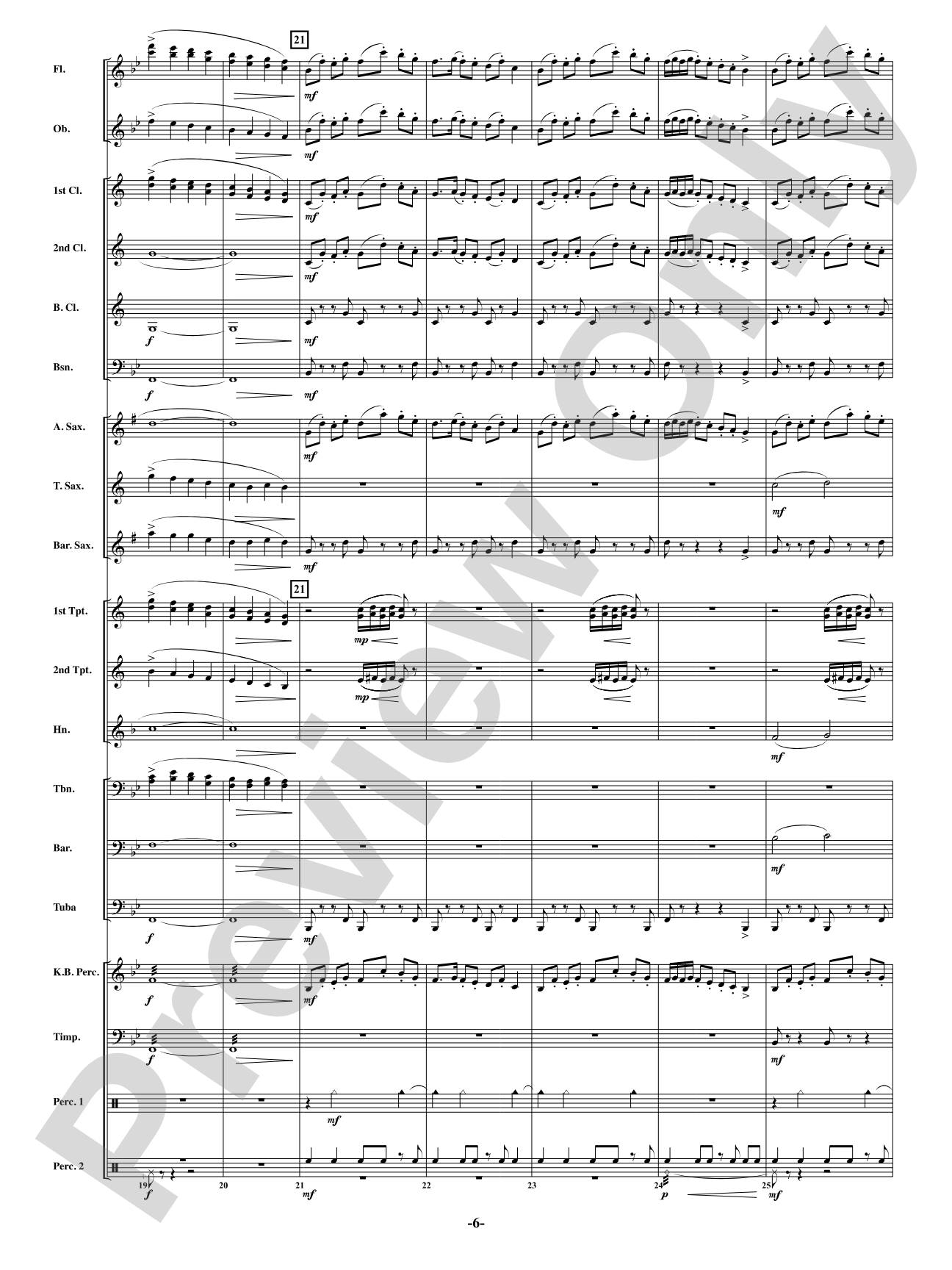
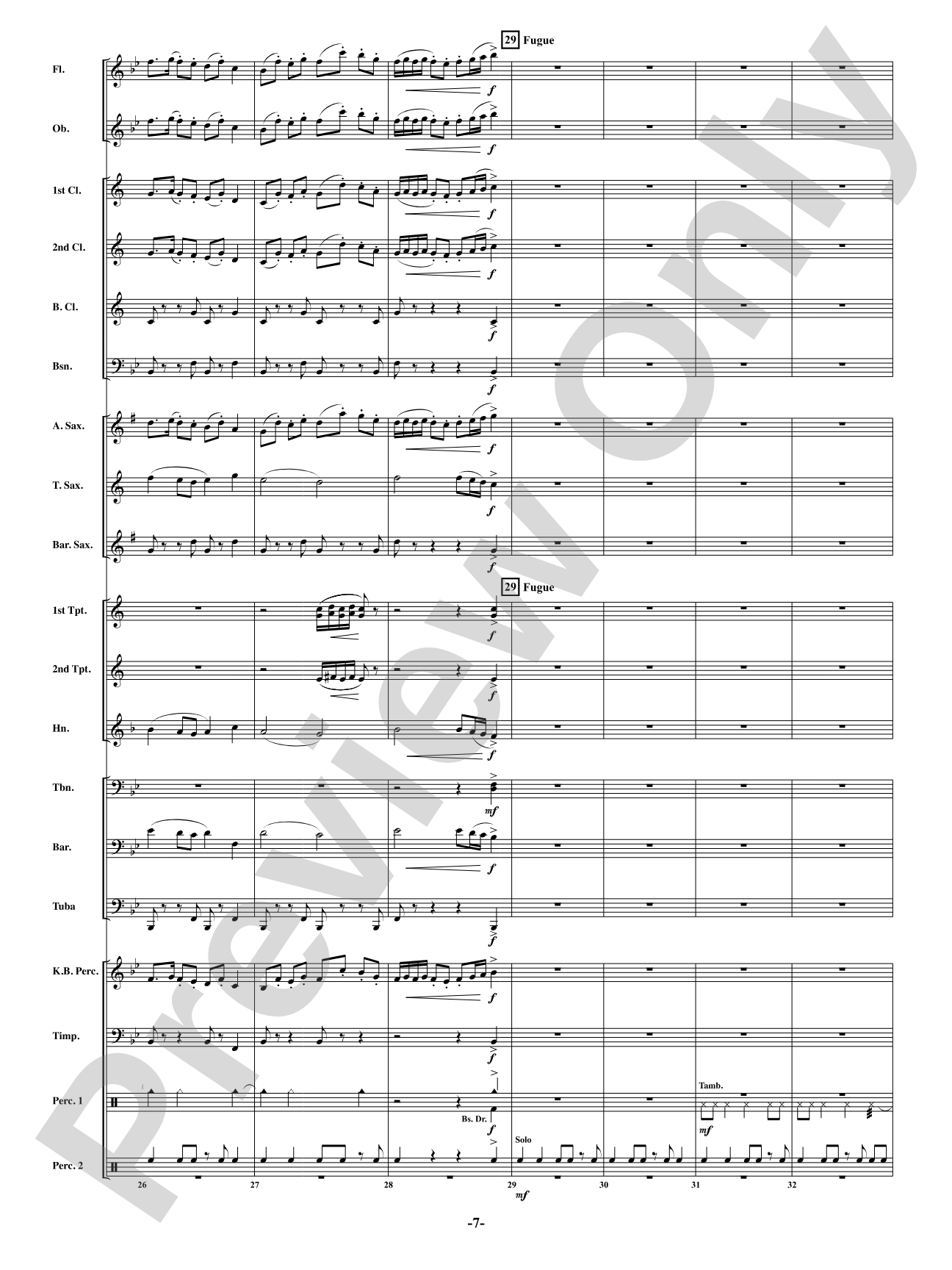
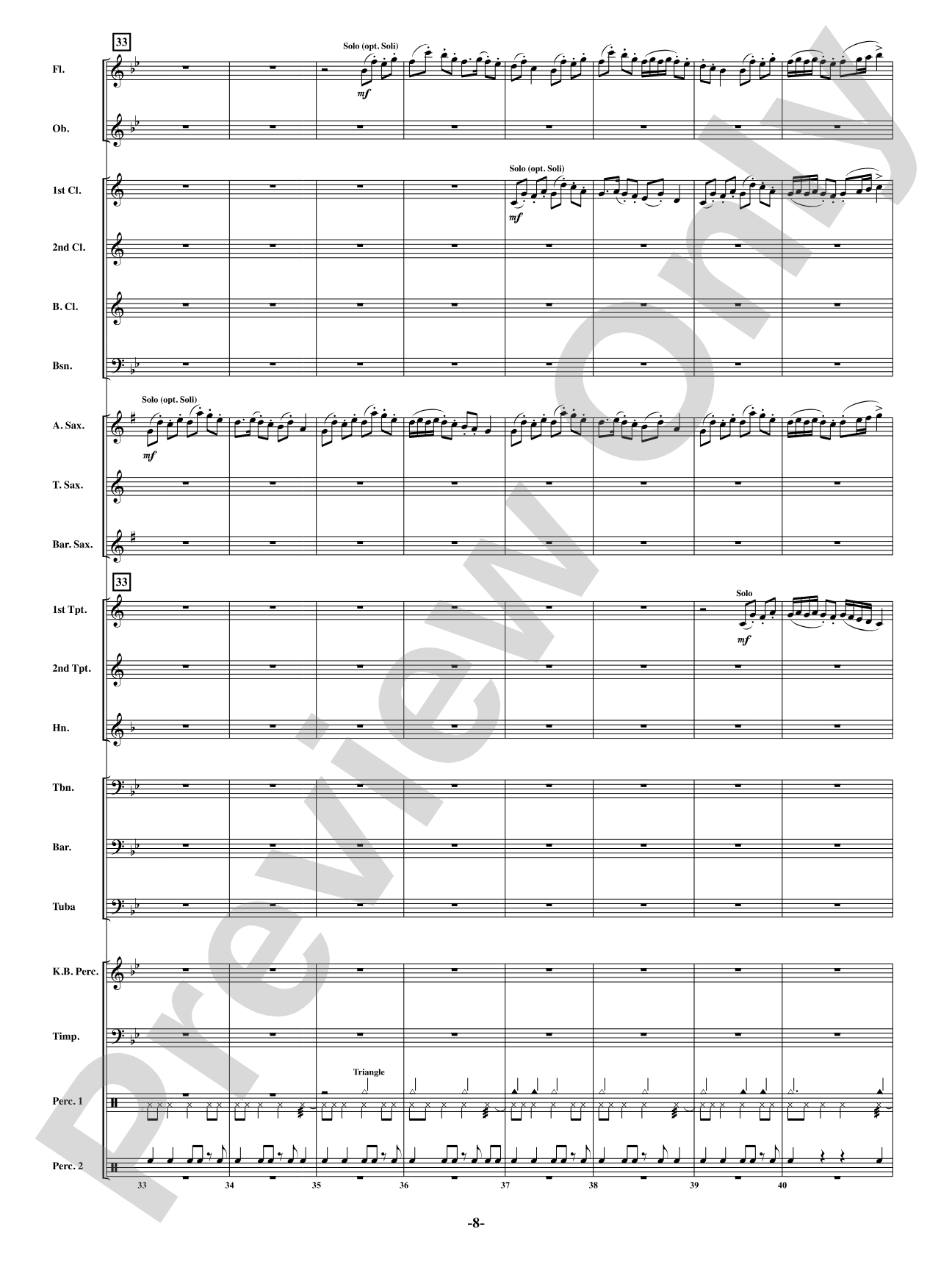
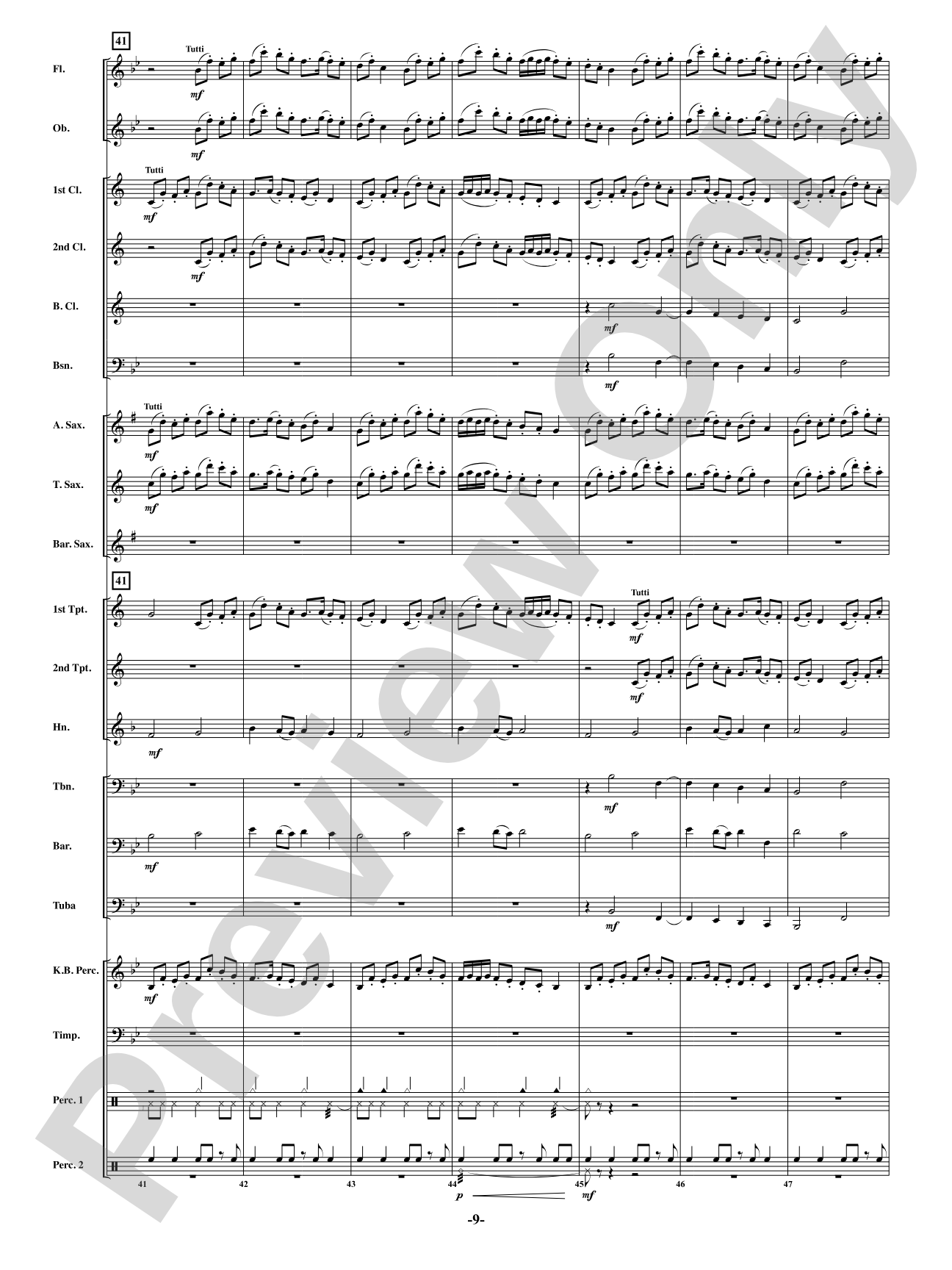
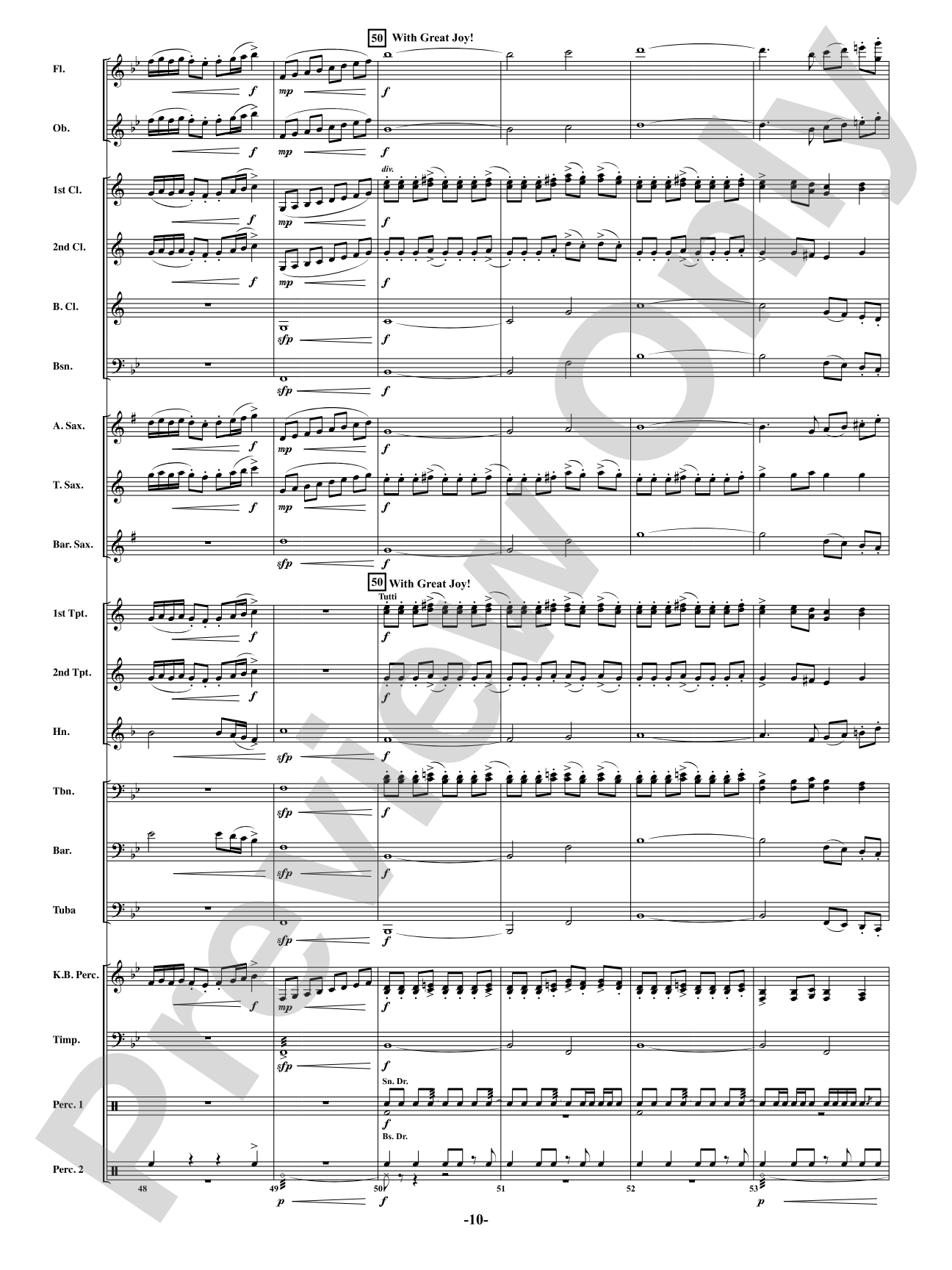
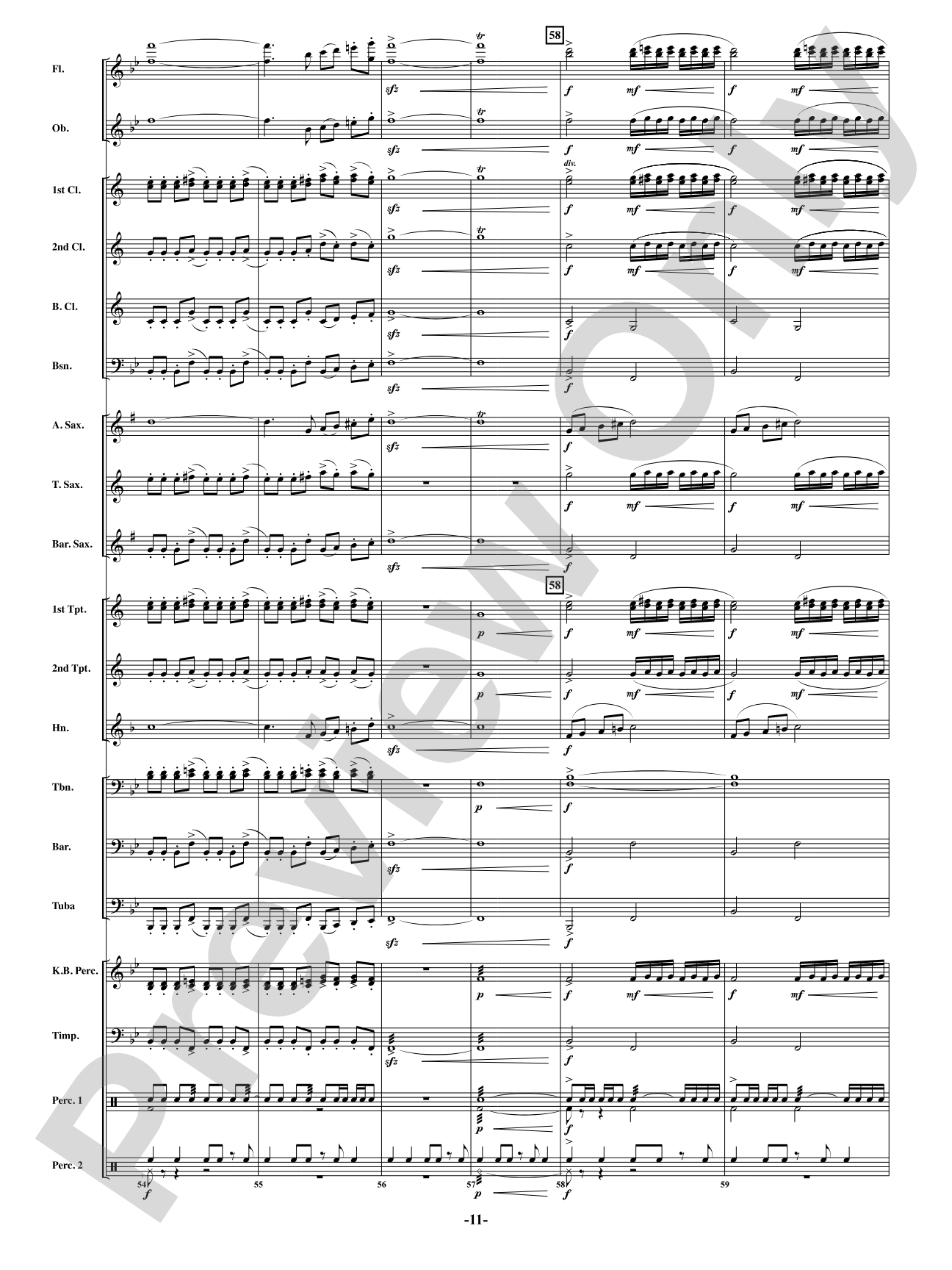
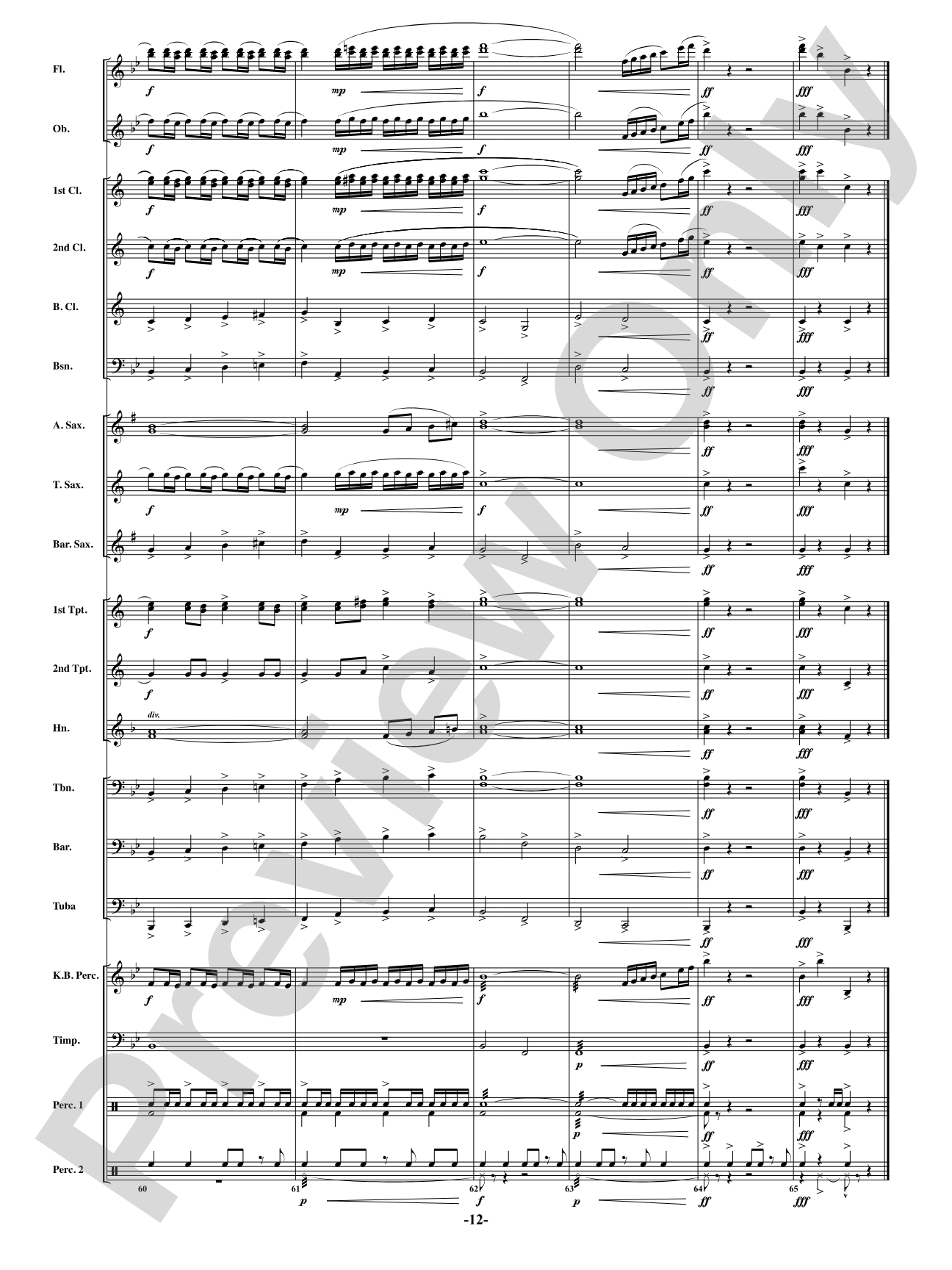

Yellow: Score
By Robert W. Smith
Grade: 2.5
Item: 98-PR-RWS1614
$10.00
Pickup currently not available
Description
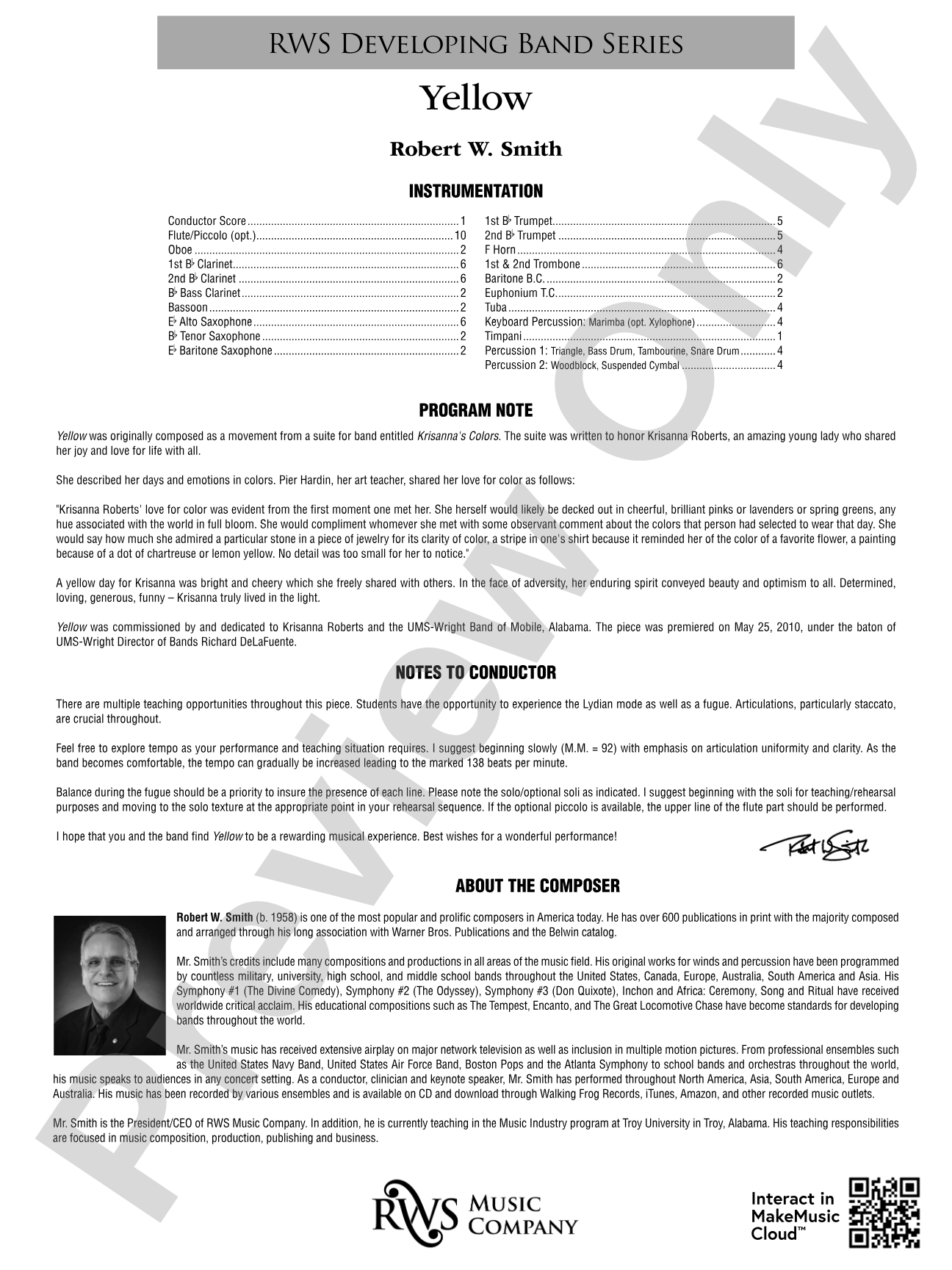
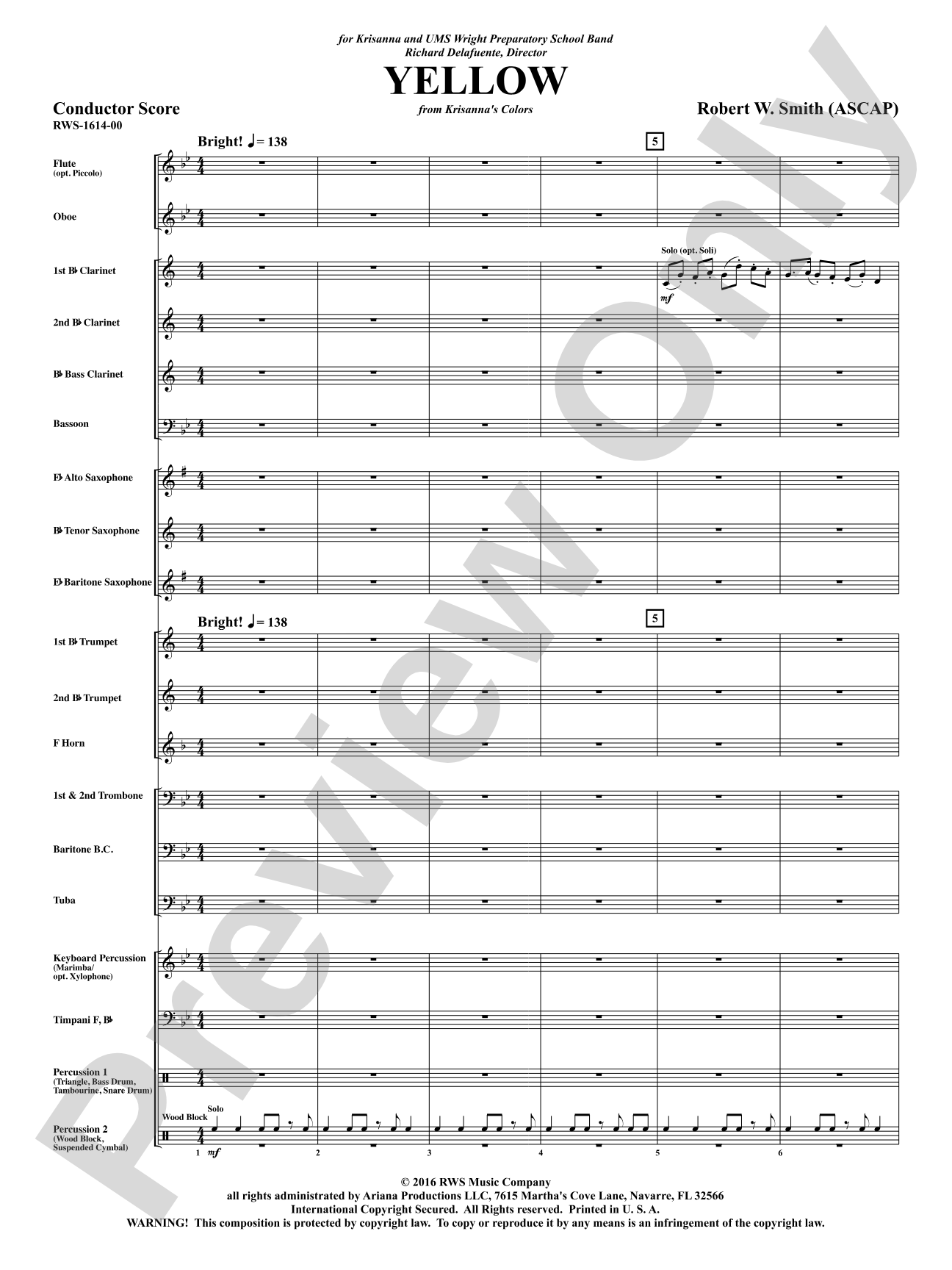
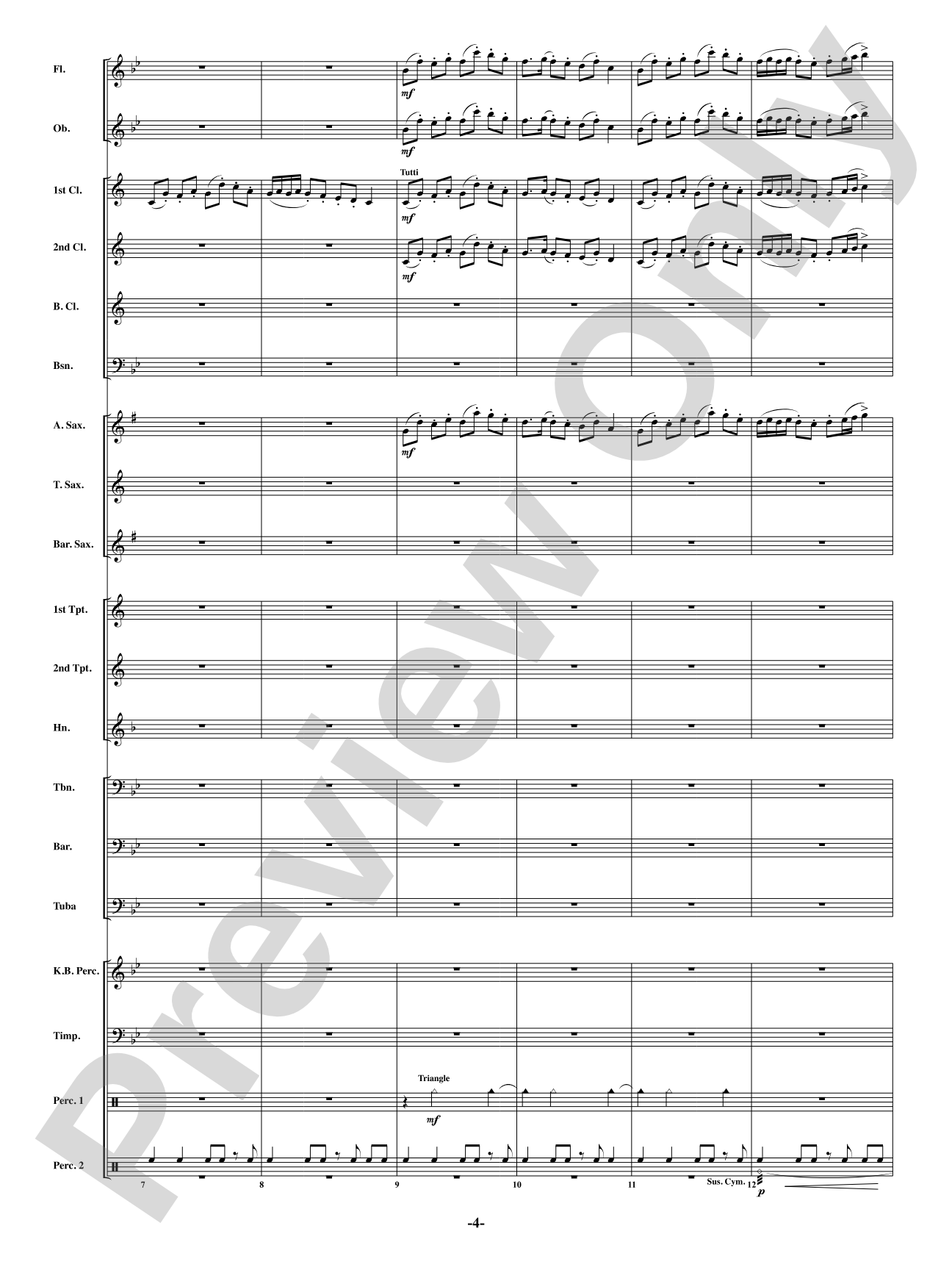
"Yellow" is a delightful and energetic selection for concert and festival performance. As the third movement from "Krisanna's Colors," the piece is inspired by her color choice used to describe a bright, happy and energetic day. The infectious melody is presented throughout the band including a fugue statement. You may consider programming "Yellow" (Mvt. 3) along with "Blue" (Mvt. 2) for even greater effect. An excellent choice for your concert/festival program!
Original Item#: RWS-1614-00


Original Item#: RWS-1614-00
Yellow: Score isn't in MakeMusic Cloud just yet...but it could be. Let us know you'd like to see it, and you'll help shape what comes next. In the meantime, start a free trial and dive into thousands of interactive titles your students can play along with today.
Request This Title
Tell us you want it.
Start Your Free Trial
Explore everything that's ready to play right now.
Sample Audio
1
Audio File
--:--
0:00
0:00
Sample Video
No sample videos found.
Additional Details
Series:
RWS - Developing Band
Publisher:
RWS Music Company
SKU:
98-PR-RWS1614
More about this title
About the Composer: Robert W. Smith

Robert W. Smith stands among the most frequently performed American composers for concert band and orchestra, with more than 400 published works to his credit. Educated at Troy State University in music education and the University of Miami with a master's degree in music, Smith has established himself as both a prolific composer and an active conductor and clinician, traveling extensively across North America, Europe, Asia, and Australia to share his work.
Smith's original compositions have achieved remarkable reach and recognition. His symphonies The Divine Comedy and The Odyssey have circulated through major performance venues worldwide, while works like The Tempest have become foundational pieces in developing band repertoires. Beyond the concert hall, his music has appeared in televised events ranging from the Macy's Thanksgiving Day Parade broadcast to the Olympic Games, presidential ceremonies in Japan, and Opening Day at Dodger Stadium.
Why we love this
Yellow delivers exactly what a Grade 2.5 ensemble needs: a straightforward, joyful work that doesn't talk down to your players while remaining completely achievable. The fugue statement gives musicians a genuine contrapuntal moment to execute within a piece that's fundamentally fun, and the option to program it alongside Blue from the same set opens programming possibilities that feel intentional rather than scattered.
What to expect
Bright and propulsive from the first note, Yellow radiates the cheerful energy of a sunny day. The melody is instantly memorable and moves naturally through the band, while the fugue brings a moment of compositional sophistication that rewards attentive listening and careful ensemble balance.
Who it's for
Grade 2.5 concert bands preparing for festival or concert performances. This is ideal for groups with solid fundamentals seeking accessible repertoire that includes genuine musical substance, such as a fugal passage, without technical intimidation.
How to get the most out of it
- Emphasize the bright, forward character of the melody from the opening; resist any tendency to play heavily or with drag, even in the slower moments.
- Balance the fugal section carefully so each voice can be heard independently without sacrificing the overall ensemble sound.
- Use the varied instrumentation to shape the melody's journey through the band, allowing different sections to own their phrases before passing forward.
How to use it
Program Yellow as a standalone concert selection, or strengthen the impact by pairing it with Blue (Movement 2) to create a two-movement arc within your program. Either approach works well as a mid-program energizer that demonstrates both melodic clarity and structural awareness.
Skills your students will build
- Sustaining a bright, energetic articulation over an extended passage
- Balancing independent melodic lines within a fugal texture
- Responding to conductor cues that shape phrase direction and phrasing across multiple measures
- Listening across the ensemble to identify and support the primary melody