
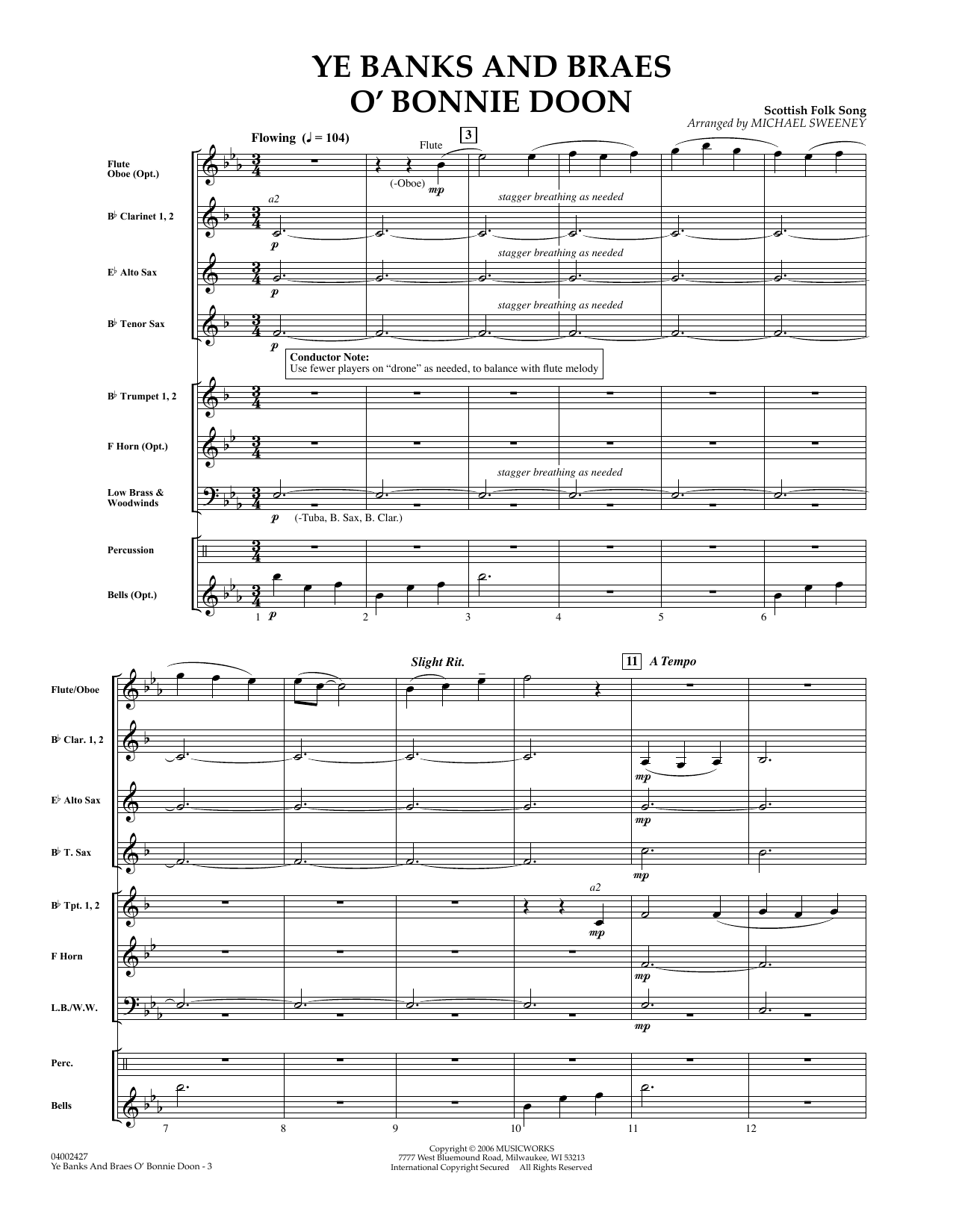

Ye Banks and Braes o' Bonnie Doon: Concert Band Conductor Score & Parts
As performed by Charles Miller, 1788 / Arranged by Michael Sweeney
Grade: 1.5
Item: 35-PK00316391
$55.00
Pickup currently not available
Buy Extra Parts (Digital PDF Download)
Parts Added to Cart!
Description
Ye Banks and Braes o' Bonnie Doon


Ye Banks and Braes o' Bonnie Doon: Concert Band Conductor Score & Parts isn't in MakeMusic Cloud just yet...but it could be. Let us know you'd like to see it, and you'll help shape what comes next. In the meantime, start a free trial and dive into thousands of interactive titles your students can play along with today.
Request This Title
Tell us you want it.
Start Your Free Trial
Explore everything that's ready to play right now.
Sample Audio
No sample audio found.
Sample Video
No sample videos found.
Additional Details
Publisher:
Hal Leonard
SKU:
35-PK00316391
More about this title
About the Artist: Charles Miller, 1788
Charles Miller was a Scottish songwriter and musician active in the late 18th century. His melodies, rooted in the folk traditions of Scotland, captured the lyrical quality and emotional depth that defined the era's most enduring songs.
Miller's work represents a crucial bridge between oral folk tradition and written composition. His melodies continue to be performed and arranged across ensembles of all sizes, making his contributions foundational to how we understand Scottish musical heritage in educational settings.
Why we love this
Michael Sweeney's arrangement respects the melodic integrity of this classic Scottish tune while making it genuinely accessible for young bands. At Grade 1.5, the voicing stays transparent enough that students can hear the tune clearly, yet the harmonic support gives the piece musical substance that rewards careful listening and balanced playing.
What to expect
This arrangement carries the quiet dignity of a folk melody at rest by a riverside. The harmonic support provides warmth without eclipsing the tune's inherent simplicity and sincerity, creating a moment of stillness within a concert program.
Who it's for
Beginning to early intermediate concert bands seeking a musically substantive arrangement that doesn't overload young players technically. Directors programming Scottish repertoire, holiday concerts with a folk focus, or ensemble pieces that emphasize musicality over virtuosity will find this ideal.
How to get the most out of it
- Shape the melody with slight dynamic swells at phrase peaks rather than terraced dynamics; the lyrical nature of this Scottish tune calls for continuous musical flow.
- Let the accompaniment parts sit slightly back in the mix so the primary melody can sing without fighting for space.
- Find a tempo that allows the tune to breathe; rushing it flattens the emotional character that makes this arrangement special.
- Pay attention to articulation consistency across sections; a unified approach to tonguing or slurring across the band creates textural coherence.
How to use it
Pair this with other Celtic or British Isles folk arrangements to build a thematic concert segment, or use it as a ballad moment that provides textural contrast to more rhythmically driven pieces. It works particularly well in fall or spring concert programs where reflective material balances out faster selections.
Skills your students will build
- Sustaining long melodic lines with consistent tone quality
- Balance between solo lines and harmonic accompaniment
- Phrase shaping and dynamic control in lyrical contexts
- Reading and executing Scottish folk-influenced melodic contours