Ye Banks and Braes: E-flat Baritone Saxophone Sheet Music Preview

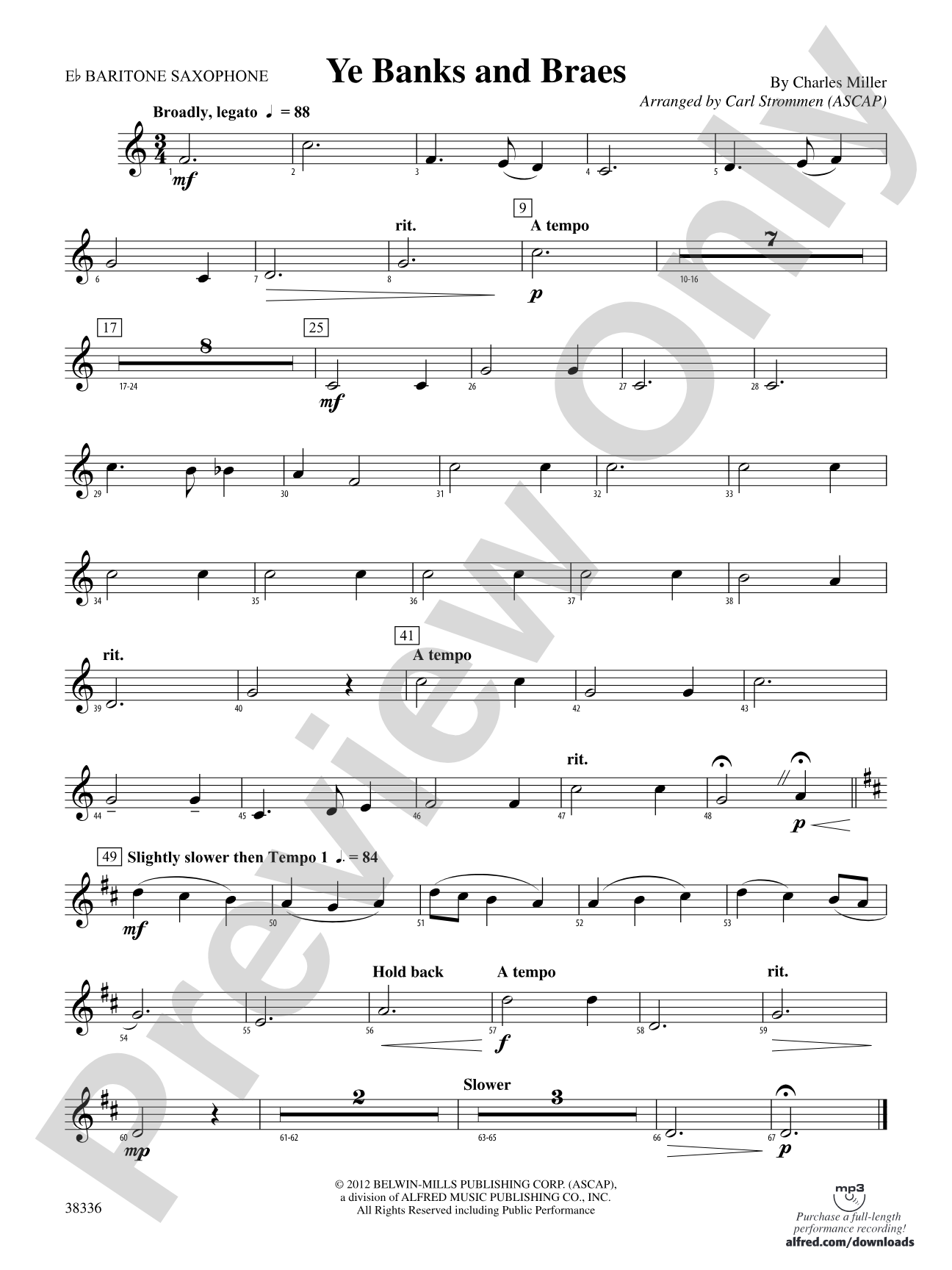
Ye Banks and Braes: E-flat Baritone Saxophone

By Charles Miller / arr. Carl Strommen

Grade: 2 (Easy)

Item: 00-PC-0015429_BTX

Digital Download
$3.00
Description
The melody of "Ye Banks and Braes," written in 1788, is attributed to Charles Miller. The lush yet melancholy character of the melody matches the pastoral images and feelings alongside a serene river bank in Scotland. Scored in 3/4 for rhythmic ease, this rich-sounding chorale will ensure a glorious sound! (2:30)

Don't just read it, hear it, play along with it, and watch your students grow with it. In MakeMusic Cloud, Ye Banks and Braes: E-flat Baritone Saxophone comes alive with professional accompaniment, adjustable tempo, and built-in practice tools that turn solo practice into real progress.

Sample Audio
0:00
0:00
Sample Video
Additional Details
Series: Belwin Young Band
Publisher: Alfred Music
Page Count: 118
SKU: 00-PC-0015429_BTX

More about this title

About the Composer: Charles Miller

Charles Miller composed this melody in 1788, during a period of revival in Scottish folk music. His gift for writing singable, emotionally direct melodies made him a significant figure in preserving and creating the musical voice of his homeland.

Why we love this

Carl Strommen's arrangement captures the gentle melancholy of this Scottish melody without overwhelming Grade 2 players, making it genuinely musical rather than merely note-reading. The 3/4 meter and rich harmonic palette give young musicians the satisfaction of producing mature, resonant sound from relatively straightforward parts.

What to expect

The melody evokes a quiet Scottish landscape where water, stone, and sky meet in contemplative stillness. There is melancholy here, but not darkness; instead, a wistful beauty that calms and centers the listener. The chorale texture allows even young players to feel the weight and dignity of serious musical expression.

Who it's for

Grade 2 concert bands seeking repertoire that sounds sophisticated without technical demand. Directors programming contest festivals or concert festivals need dependable pieces that build musicality; this delivers on both counts.

How to get the most out of it

  • Shape phrases across the measure rather than stopping at bar lines; the melody breathes in longer arcs even though the rhythms are simple.
  • Balance the inner voices carefully so they support without burying the tune. Grade 2 bands often play secondary parts too loudly out of enthusiasm.
  • Let the tempo breathe. This is pastoral music, not march tempo. A slightly expansive 3/4 will reveal the harmonic richness Strommen wrote.
  • Attend to dynamic contrasts marked in the score. Even at this level, subtle shading transforms a competent reading into an expressive one.

How to use it

This works beautifully as a contrasting middle movement in a concert, providing quiet reflection between lighter or more energetic pieces. It also suits festival programs where adjudicators value mature musical choices and bands that demonstrate dynamic range beyond popular selections.

Skills your students will build

  • Sustaining tone quality across longer phrase lines in 3/4 meter
  • Playing supporting harmonic voices without overshadowing the melody
  • Responding to subtle dynamic and expressive markings
  • Shaping Scottish folk melody with appropriate rubato and phrasing

You May Also Like