
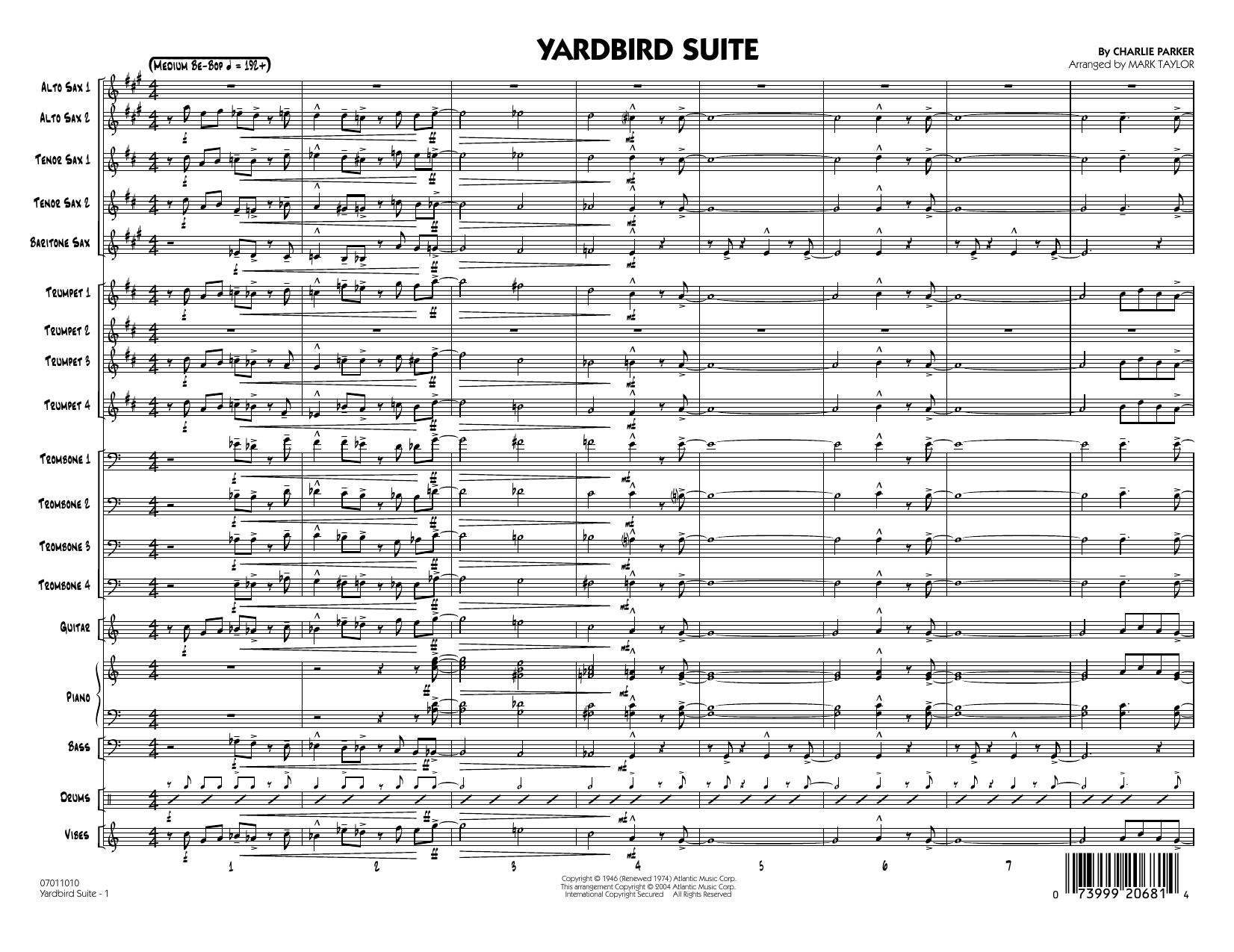

Yardbird Suite (arr. Mark Taylor): Jazz Ensemble Conductor Score & Parts
By Charlie Parker / Arranged by Mark Taylor
Grade: 4
Item: 35-PK00470611
$55.00
Pickup currently not available
Buy Extra Parts (Digital PDF Download)
Parts Added to Cart!
Description
Jazz Ensemble Library - Grade 4. Although bebop master Charlie Parker is known for his blazing improvisations and advanced melodies, this is one of his most approachable and melodic compositions. Lending itself perfectly to a big band setting, and in the hands of Mark Taylor, this swingin' tune becomes an impressive-sounding chart for jazz ensemble.


Yardbird Suite (arr. Mark Taylor): Jazz Ensemble Conductor Score & Parts isn't in MakeMusic Cloud just yet...but it could be. Let us know you'd like to see it, and you'll help shape what comes next. In the meantime, start a free trial and dive into thousands of interactive titles your students can play along with today.
Request This Title
Tell us you want it.
Start Your Free Trial
Explore everything that's ready to play right now.
Sample Audio
No sample audio found.
Sample Video
No sample videos found.
Additional Details
Publisher:
Hal Leonard
SKU:
35-PK00470611
More about this title
About the Composer: Charlie Parker
Charlie Parker revolutionized jazz in the 1940s by developing bebop, a style that prioritized harmonic complexity and rapid melodic invention over the swing conventions of the day. His virtuosity on alto saxophone and his prolific output of compositions gave him a towering influence that extends far beyond his lifetime; his tunes remain standards in jazz curricula because they balance sophistication with genuine musicality.
Why we love this
Mark Taylor's arrangement captures the spirit of bebop without overwhelming a Grade 4 ensemble; the soloists get genuine opportunities to stretch, while the section parts remain playable and purposeful. The tune swings hard and sounds substantial on stage, which means your students experience the satisfaction of authentic jazz performance without the grinding difficulty of transcriptions aimed at specialists.
What to expect
The tune bounces with an irrepressible joy, combining the quirky melodic angles that made Parker famous with a big band energy that feels both vintage and immediate. It's the sound of bebop translated for an ensemble that's still learning the vocabulary, but already capable of speaking it with conviction.
Who it's for
Directors building a jazz 2 or 3 program need solid Grade 4 material that challenges without alienating students, and this arrangement fits that need precisely. It works equally well for a festival set list or as the centerpiece of a jazz concert focused on American standards.
How to get the most out of it
- Lock the swing feel early in rehearsals. Bebop demands a precise sense of behind-the-beat phrasing, so establish the groove before layering in the written hits and punches.
- Balance the solo sections carefully. Soloists need clear signposts from the rhythm section, especially where the chart returns from rubato or written passages back into the groove.
- Shape the head with forward momentum. The melody has natural contours, but young players often rush the tighter passages or hesitate during the wider intervallic jumps; practice the melodic line as one continuous phrase.
- Keep the reeds light and articulate on the fast runs. Diction matters more than volume here; the clarity of the articulation is what gives the bebop style its personality.
How to use it
Pair this with other Parker or post-swing standards to illustrate how bebop composition shaped modern jazz, or program it as the opener to a jazz concert where it establishes tone and energy for the entire evening. It also serves beautifully in a mixed concert setting where you want to introduce concert audiences to jazz repertoire that's recognizable yet sophisticated.
Skills your students will build
- Swing articulation and behind-the-beat phrasing
- Reading chord symbols and improvising over jazz changes
- Balancing solo and ensemble sections in a big band texture
- Interpreting bebop melody with its characteristic wide intervals and rapid passages
- Listening across the band to maintain groove and groove coherence