
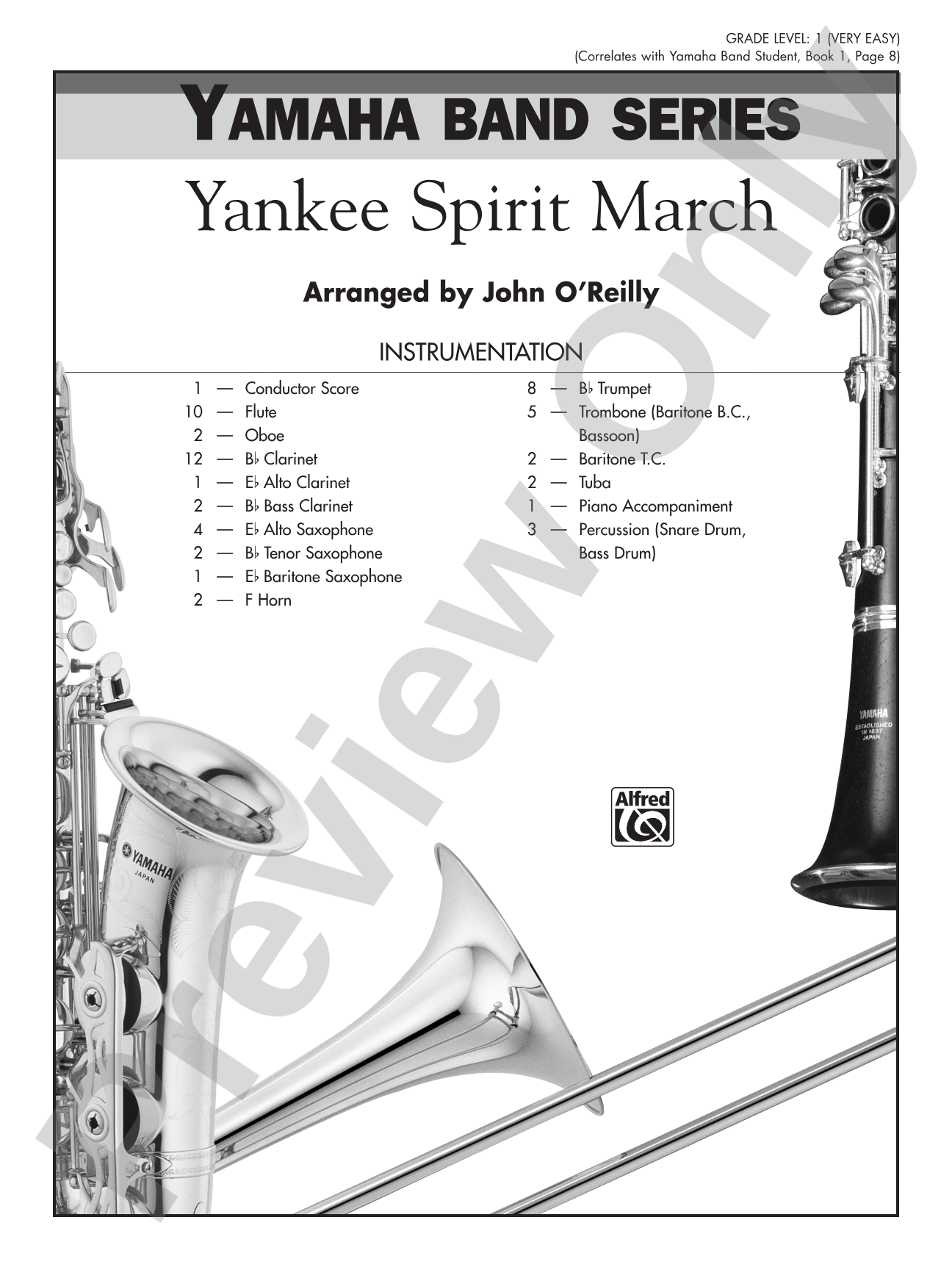
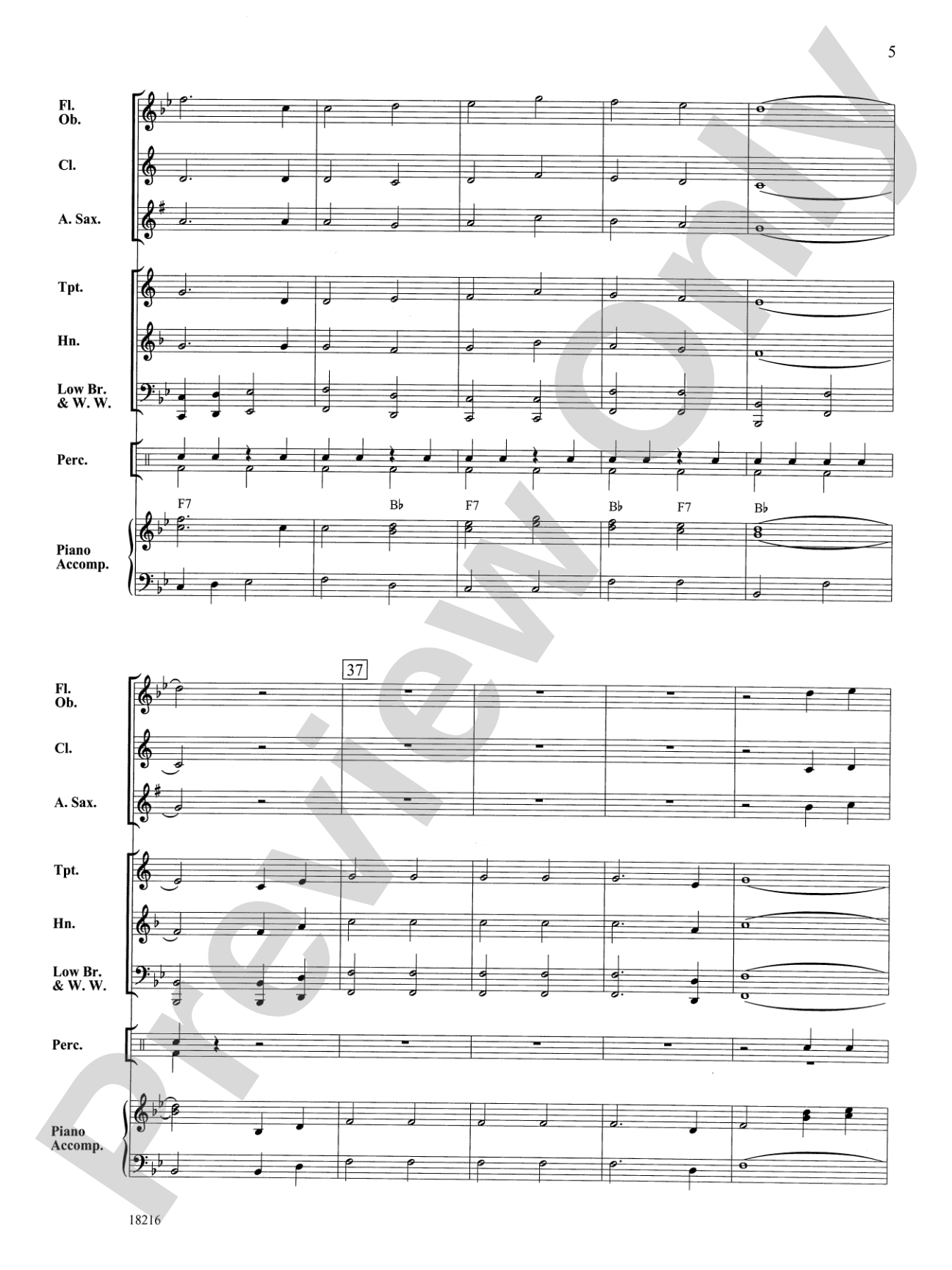
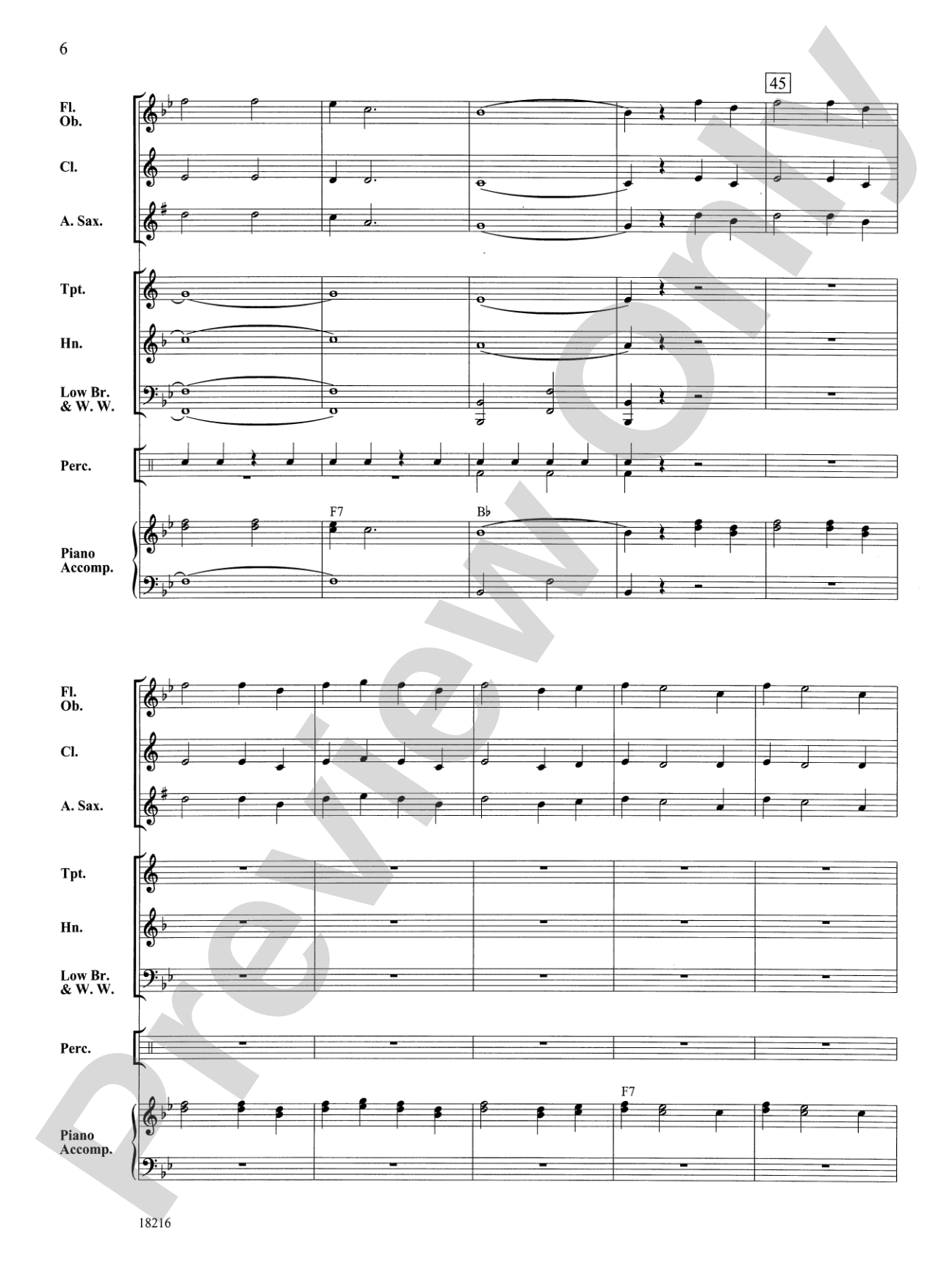
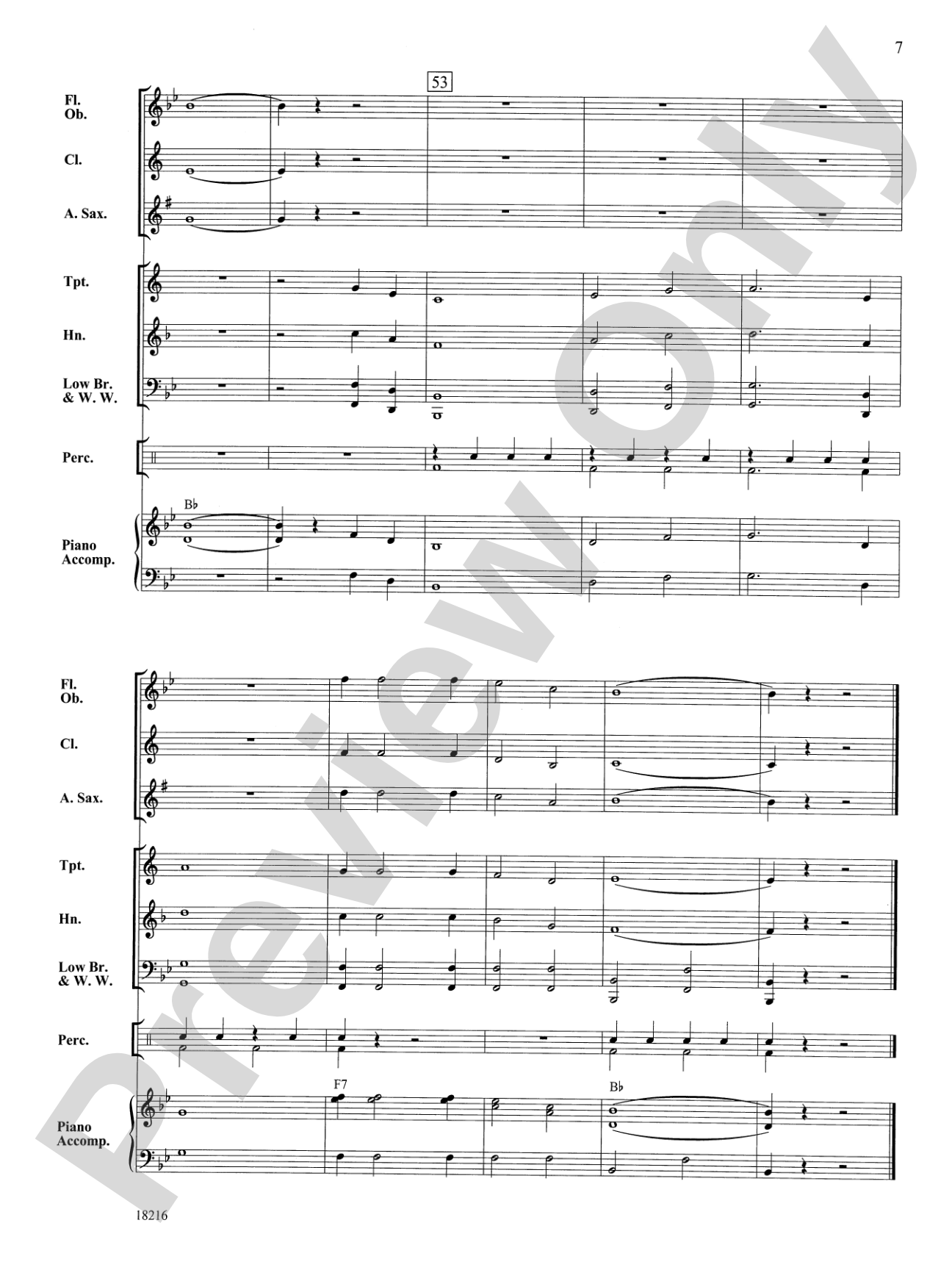


Yankee Spirit March: Concert Band Conductor Score & Parts
Arr. John O'Reilly
Grade: 1 (Very Easy)
Item: 00-PK-0000253

$47.00
Pickup currently not available
Buy Extra Parts (Digital PDF Download)
Parts Added to Cart!
Description
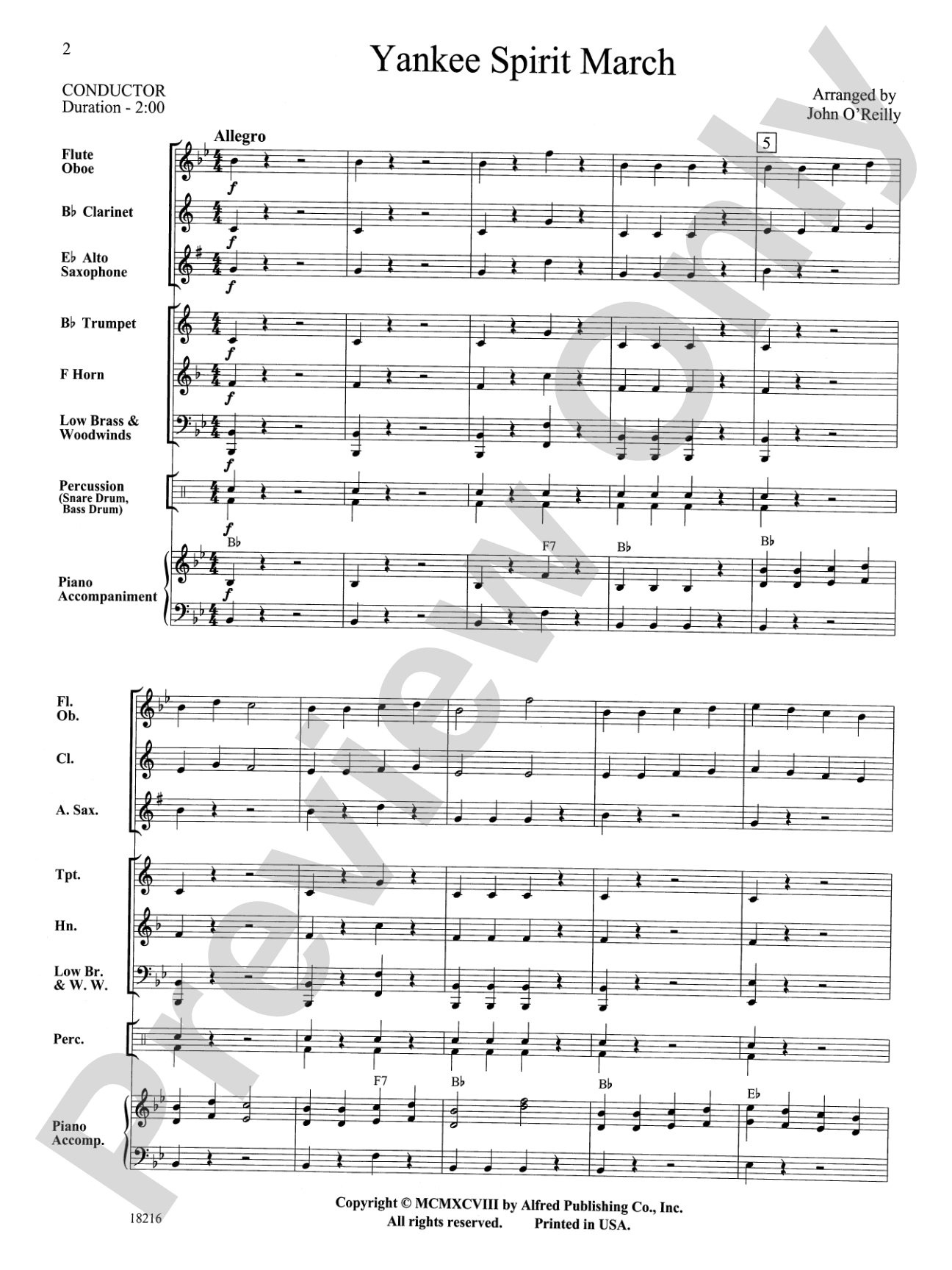
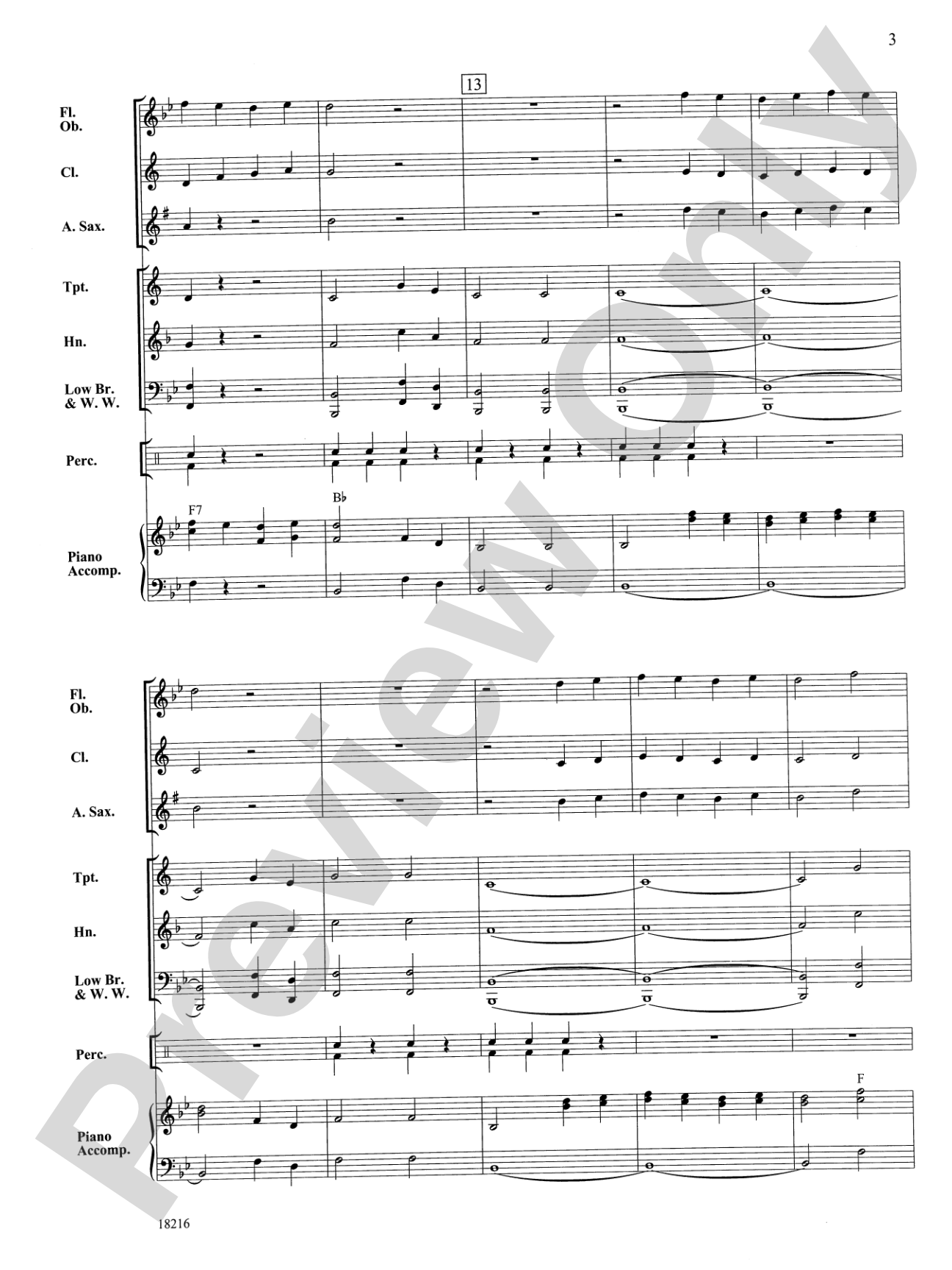
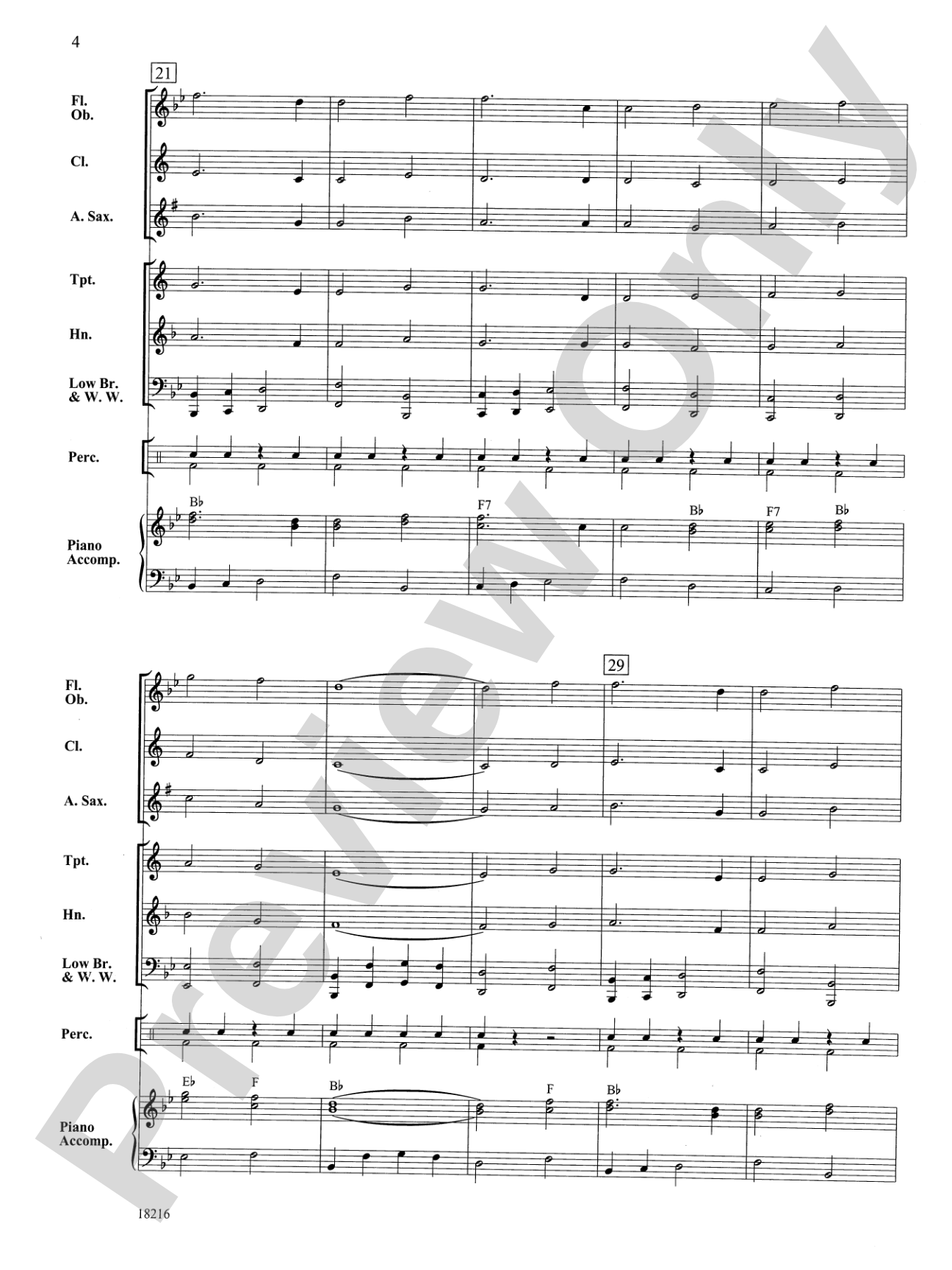
Here's a patriotic medley that is perfect for that very first concert. Yankee Spirit March uses only six notes (concert B-flat to G) and no eighth notes. John O'Reilly has arranged sections of the following all-time favorites: "Yankee Doodle," "You're a Grand Old Flag," "America the Beautiful," "The Marines' Hymn," "Caisson Song" and "Anchors Aweigh." Correlated with Yamaha Band Student, Book 1, page 8.


Don't just read it, hear it, play along with it, and watch your students grow with it. In MakeMusic Cloud, Yankee Spirit March: Concert Band Conductor Score & Parts comes alive with professional accompaniment, adjustable tempo, and built-in practice tools that turn solo practice into real progress.
Open in the Player
Jump straight in and assign it today.
Start Your Free Trial
Open this title and explore the full library in minutes.
Sample Audio
1
Audio File
--:--
0:00
0:00
Sample Video
No sample videos found.
Additional Details
Series:
Yamaha Band Series
Publisher:
Alfred Music
Page Count:
116
SKU:
00-PK-0000253
More about this title
About the Arranger: John O'Reilly
John O'Reilly is a respected arranger and educator whose work for beginning band has shaped countless students' first experiences with concert music. His arrangements for the Yamaha Band Student series have become foundational repertoire in elementary and middle school band programs, known for their careful pedagogical sequencing and engagement with recognizable melodies.
Why we love this
O'Reilly's arrangement captures the energy of American patriotic music while respecting the genuine limitations of absolute beginners. Six notes and no eighth notes sounds restrictive until you hear how he weaves six beloved melodies together, proving that constraint breeds creativity. Your students will recognize every tune, feel like real musicians playing real concerts, and stay engaged because they're playing music that matters.
What to expect
Patriotic and triumphant, yet comfortable and accessible. The familiar melodies create immediate warmth and familiarity, while the straightforward writing lets young players focus on blending with their section neighbors and responding to the conductor. There's real pride in performing recognizable music well, even when the technical demands are minimal.
Who it's for
This arrangement belongs in every Grade 1 band's first concert. Students who have just opened their instruments and learned their first notes can play a cohesive, recognizable medley. Experienced directors use it as a confidence builder and a vehicle for teaching basic ensemble concepts without fighting instrumental or technical limitations.
How to get the most out of it
- Establish a steady pulse in rehearsal before adding the melody. With such a narrow pitch range, rhythmic clarity becomes your primary texture.
- Balance the parts so that whichever section carries the tune at any moment stands out naturally. Remind students that being part of the accompaniment is supporting something meaningful, not playing less important music.
- Let the patriotic character breathe. These melodies don't need aggressive energy; a warm, forward tone with clear articulation honors the music's dignity.
- Use the familiar melodies as teaching moments about phrase shape. Have students sing the original tunes, then mark where phrases begin and end in the score.
How to use it
This is essential programming for a first or second concert when your band is still finding its footing. Use it as an opener to energize an audience with immediate recognition and warmth, or close your concert with patriotic pride. It also works beautifully in summer concerts, Independence Day celebrations, or community events where the blend of American melodies is both musically and socially appropriate.
Skills your students will build
- Reading notes within a limited range (B-flat to G concert pitch)
- Quarter note and half note rhythm reading and execution
- Blending within sections at the beginning band level
- Following conductor cues and maintaining ensemble pulse
- Playing with steady tone and clear articulation
- Understanding phrase structure through familiar melodies