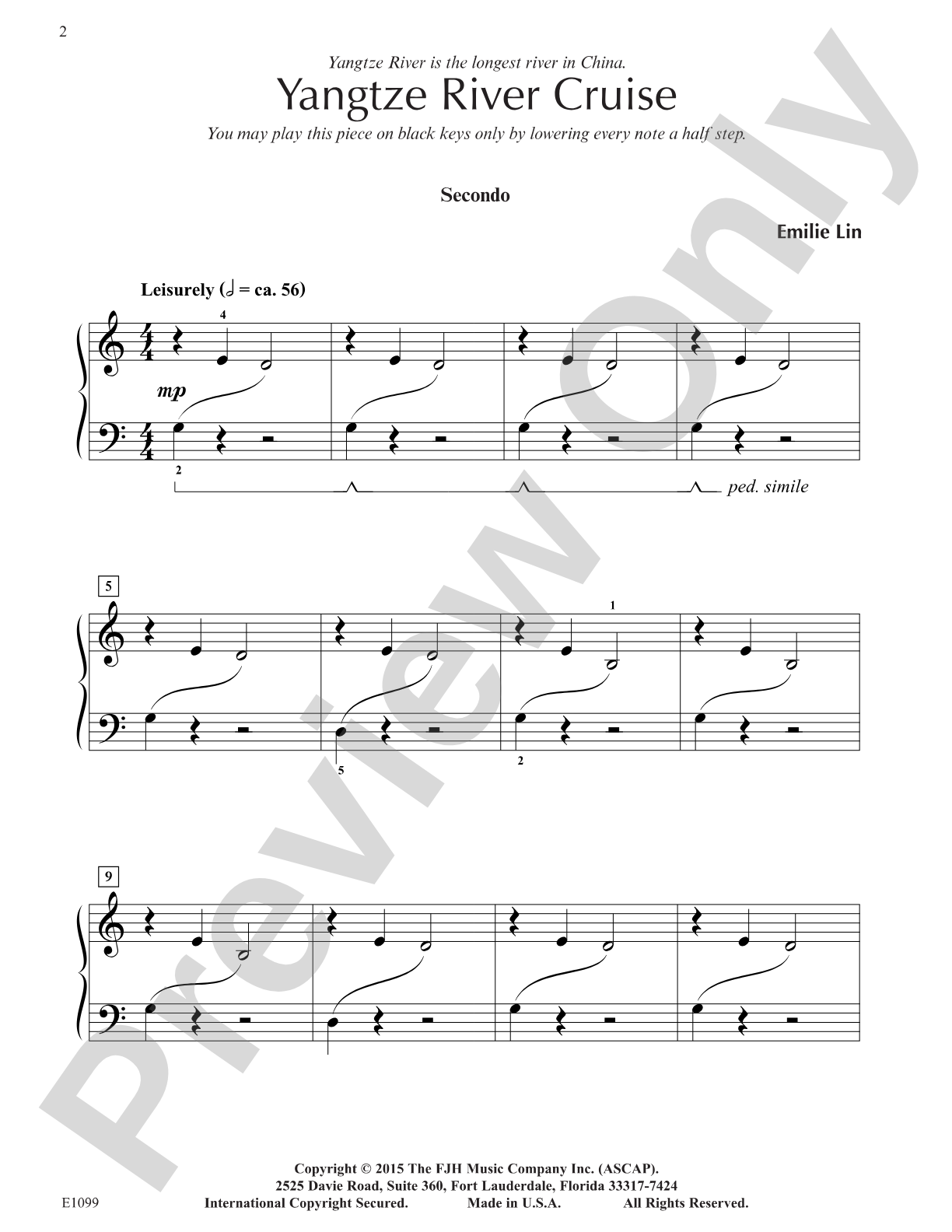
Yangtze River Cruise Sheet Music Preview

Yangtze River Cruise: Piano

By Emilie Lin

Item: 98-DE1099

Digital Download
$5.50
Description
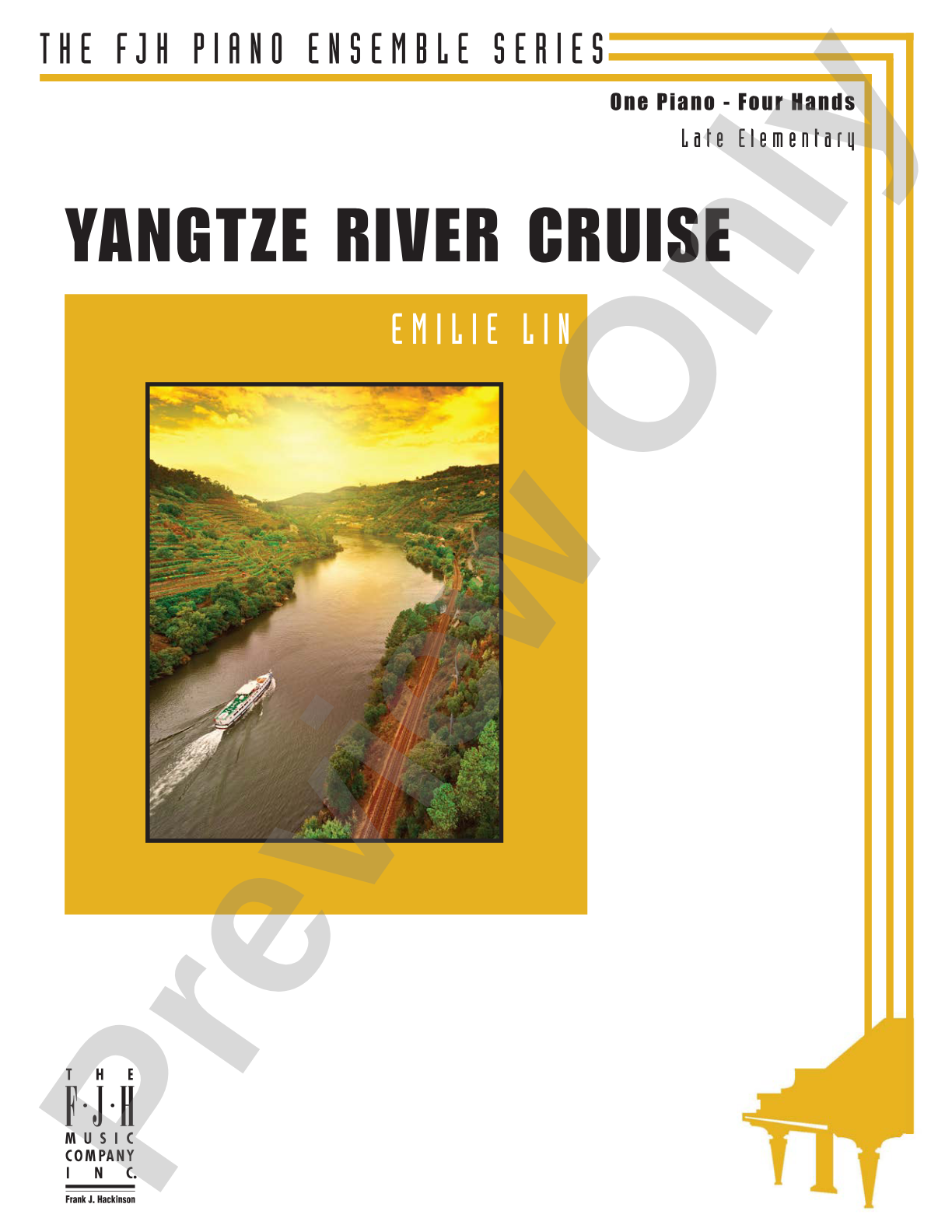
This lovely pentatonic duet can be played on white keys or black keys. It evokes cruising down China’s largest river. It’s a recital piece that can be learned quickly by young students or adults.

Yangtze River Cruise: Piano isn't in MakeMusic Cloud just yet...but it could be. Let us know you'd like to see it, and you'll help shape what comes next. In the meantime, start a free trial and dive into thousands of interactive titles your students can play along with today.

Sample Audio
No sample audio found.
Sample Video
Additional Details
Series: The FJH Piano Ensemble Series
Publisher: The FJH Music Company, Inc.
SKU: 98-DE1099

More about this title

Why we love this

Lin writes with genuine understanding of what makes a duet work at this level. Two pianists sit at one instrument playing different ranges, which immediately solves the practical challenge of ensemble rehearsal for young students while keeping the musical experience genuinely collaborative and fun.

What to expect

Pentatonic writing creates a serene, open quality that evokes the gentle flow of water. The piece breathes with the landscape it describes, moving without urgency yet with clear forward motion.

Who it's for

Late elementary pianists ready for their first duet experience, or young adult beginners looking for accessible ensemble repertoire. This piece works equally well for two students of similar ability or for a teacher and student to perform together.

How to get the most out of it

  • Decide together whether you'll use white keys or black keys before the first rehearsal. Once chosen, stay consistent so both players develop secure finger patterns.
  • Balance the melody and accompaniment by listening to your duet partner. Even in a quick-learning piece, attention to dynamic shading makes the performance memorable.
  • Practice hands separately on your own part first, then sit down together to match tempos and phrasing. Young students especially benefit from soloing their line before combining.

How to use it

Program this alongside other duets in a student recital to showcase collaborative playing, or use it as a confidence builder when introducing ensemble work. It's short enough to learn quickly mid-year and works as a bridge between solo and group performance experiences.

Skills your students will build

  • Reading two independent melodic lines while maintaining ensemble unity
  • Understanding pentatonic tonality and its role in world music
  • Listening and responding to a duet partner's tempo and dynamics
  • Playing at the same instrument with spatial awareness of hand placement

You May Also Like